
Black Powder, White Smoke
Gettysburg Redux and the Mysterious Mr. Reader
By Joe Bilby · Originally published October 2018 · pp. 6–7
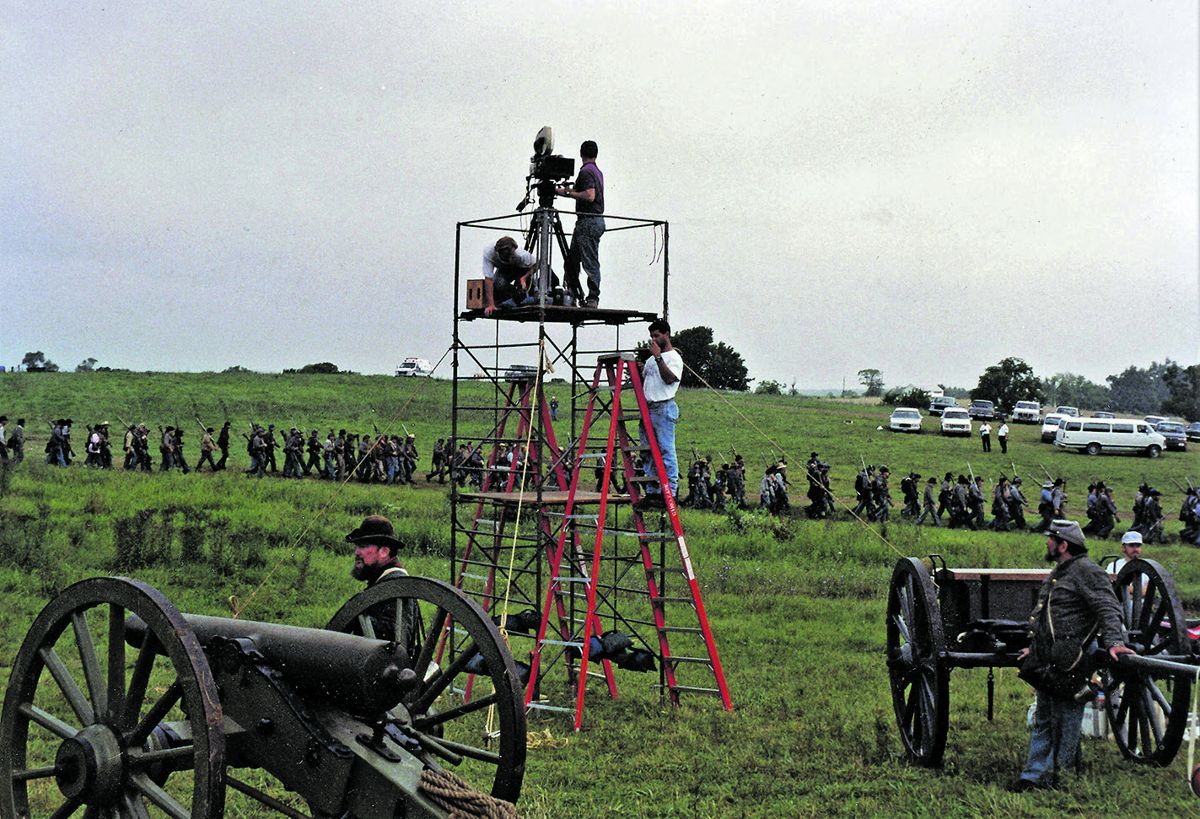
I am writing this in August, just after returning from a family trip to Gettysburg. Living in New Jersey, I am fortunate enough to be a little over three hours (providing I miss a road construction jam on the Pennsylvania Turnpike) from the iconic battlefield. I have been there a number of times, of course, since my first visit as a youngster in 1957, including with a press pass during the filming of the movie Gettysburg, which I, among others, covered for Civil War News. This time, however, I was accompanied by my son, my daughters and their spouses and children. I had not been to Gettysburg for over a decade, when I last wandered over the battlefield with a range finder in hand as part of the research for my book, Small Arms at Gettysburg (Westholme, 2007), so I had not seen the new visitor center. What can I say but that it was impressive. The introductory film was spot on historically and the presentation of the cyclorama painting was, to use an often-overused word these days, awesome. The firearms display in the museum was, as expected, first rate.
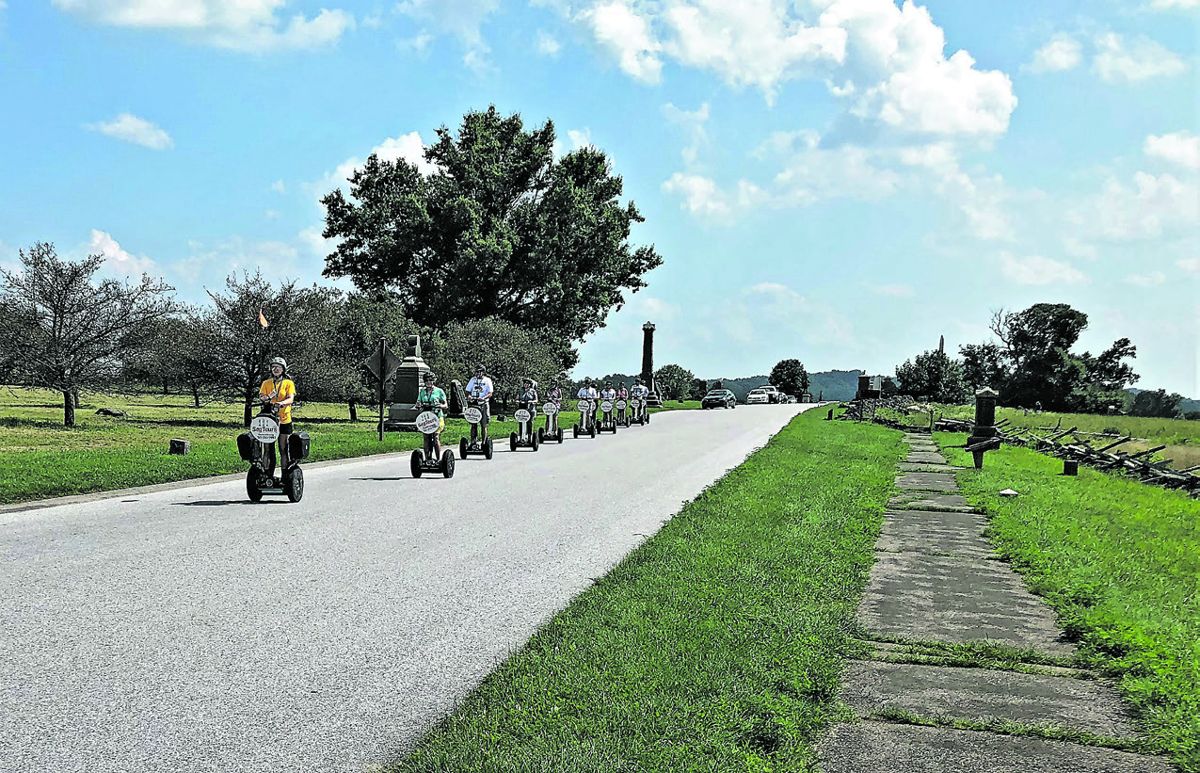
There are some interesting new eateries in Gettysburg and we sampled some, although the Lincoln Diner was a must for a traditional battlefield breakfast. One unexpected new thing was the Segway Tour I saw zipping along Cemetery Ridge. Aside from my initial visit, when my parents hired a Licensed Battlefield Guide for an auto tour, I always guided myself and my family around the battlefield. This time, however, I wanted a good, experienced guide to present a more coherent view and tell the story of the battle to my children and their spouses. I asked around with friends and one I trusted implicitly recommended Licensed Battlefield Guide Eric Lindblade. I contacted Eric and we arranged to meet for a “point to point” tour, as we had several cars and had to caravan. We traveled from the site of General Reynolds’ death to the Confederate lines opposite the Peach Orchard, to Little Round Top, and then Cemetery Ridge. Eric’s tour was outstanding. His grasp of the battle and ability to explain it clearly to an audience ranging from history majors, army officers and a medical doctor was superb. He was able to articulate the importance of terrain and the various personalities involved in the battle’s outcome as well as frame the fight and its importance in the context of the war and American history superbly—and we shared the same sense of humor. If you are going to Gettysburg and looking for a guide, I heartily recommend Eric.
Mr. Reader and his Gun
So, who was “Mr. Reader”? And why have we not heard about his remarkable invention that should have changed the nature of warfare forever? I had never heard of him myself, and it appears that few if any other students of Civil War era arms have either. His name first came to my attention in an email from reader Georgiann Baldino, who edited a collection of Civil War era letters to and from Joseph and William Medill entitled A Family and Nation under Fire, for Kent State University Press. The book was published in July 2018. William served as a captain and major in the 8th Illinois Cavalry and died of wounds on July 16, 1863. Although Georgiann had permission to publish both war time and pre-war correspondence from the collection, an 1859 letter written by the Medill brothers’ father William regarding an apparently notable firearms invention by the mysterious Mr. Reader was not reproduced in the book. Georgiann sent me a copy to see if I was familiar with Reader or his invention. As noted above, I was not, but it certainly piqued my interest. Mr. Medill wrote his sons that: “We are living in an age of wonders. There is a near neighbor [Mr. Reader] of mine who has invented a gun that will exceed any gun that ever the world of mankind has invented. It is a rifled gun out of which he can fire one hundred balls in two minutes and a half.” Medill went on to note that the gun’s magazine feed involved two tubes, one containing powder and the other bullets, and that the percussion caps needed for ignition were loaded into the weapon’s breech, 500 at a time. According to him, the “balls are about 150 to the pound.” Medill described local machine shop worker and Ohioan Reader as “a small man with weak eyes and [who] has no appearance of being possessed with such inventive genius.” According to Medill, who claimed he had seen the Reader gun fired numerous times, the inventor had gone to Washington, “where he got the promise of a patent.” I ran the story past my panel of experts, none of whom had heard of Mr. Reader either. Bill Adams commented that 150 balls to the pound would be around .15 caliber, which did not seem right, although Medill could have made a mistake. Bill conducted a search of issued patents, and there were none describing Reader’s gun. So, the mystery remains. Any further information will be appreciated.
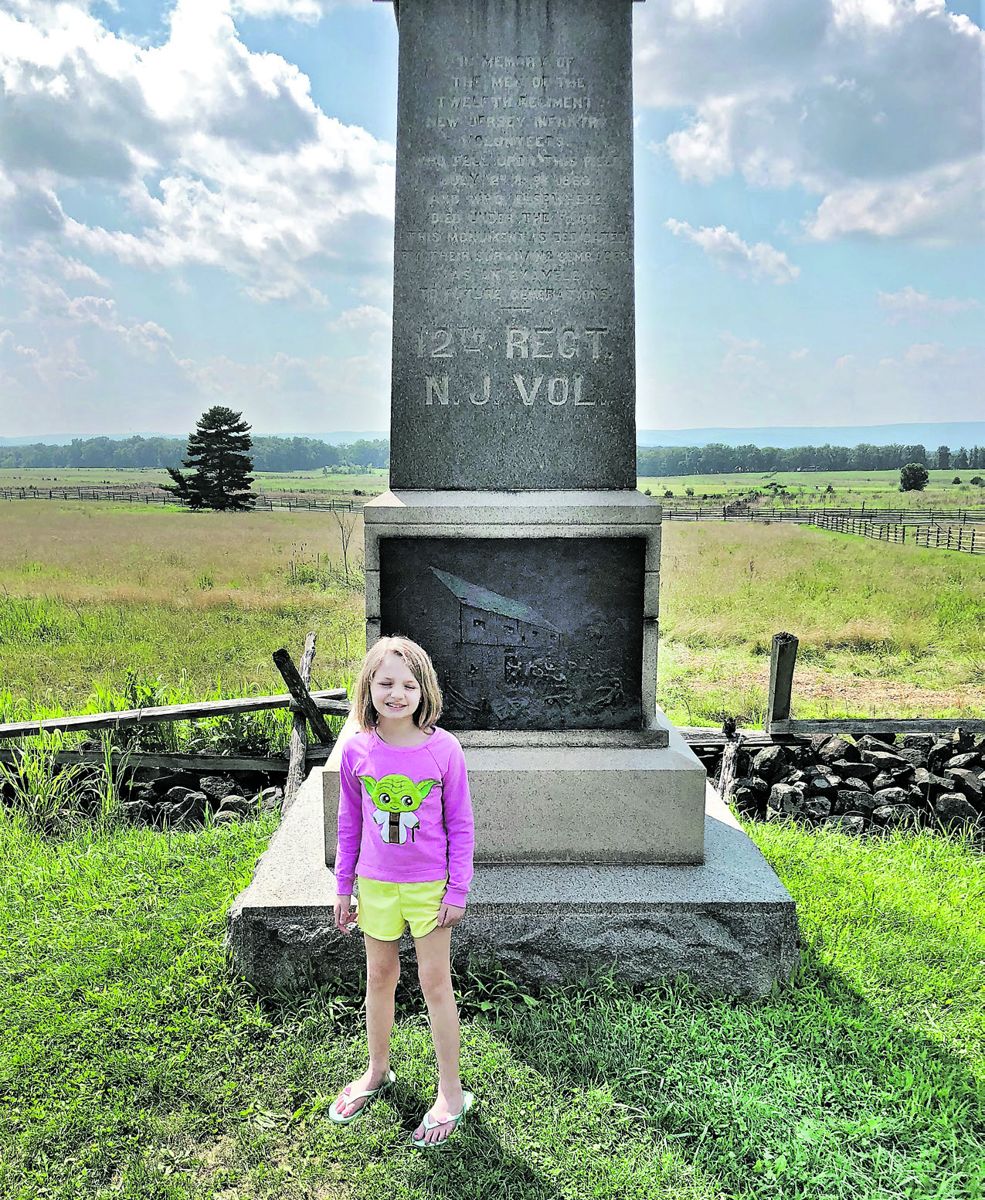
(Joseph Bilby) (Joseph Bilby)
Joseph G. Bilby received his BA and MA degrees in history from Seton Hall University and served as a lieutenant in the 1st Infantry Division in 1966–1967. He is Assistant Curator of the New Jersey National Guard and Militia Museum, a freelance writer and historical consultant and author or editor of 21 books and over 400 articles on N.J. and military history and firearms, and as publications editor for the N.J. Civil War 150 Committee edited the award winning New Jersey Goes to War. His latest book, New Jersey: A Military History, was published by Westholme Publishing in 2017. He has received an award for contributions to Monmouth County (N.J.) history and an Award of Merit from the N.J. Historical Commission for contributions to the state’s military history. He can be contacted by email at [email protected].