
Emerging Civil War
The Emerging Civil War Series: Telling the Story of America’s Defining Event
By Chris Mackowski · Originally published November 2018 · pp. 32–33
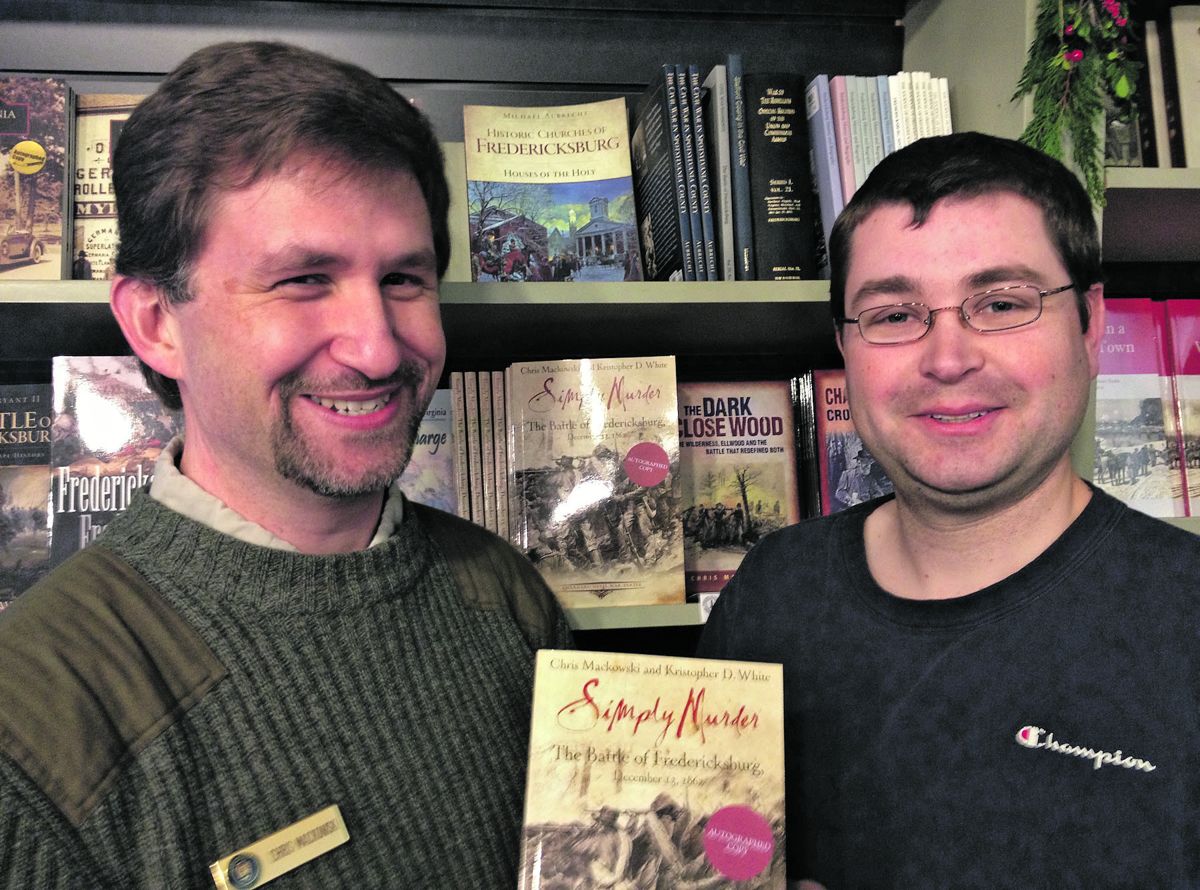
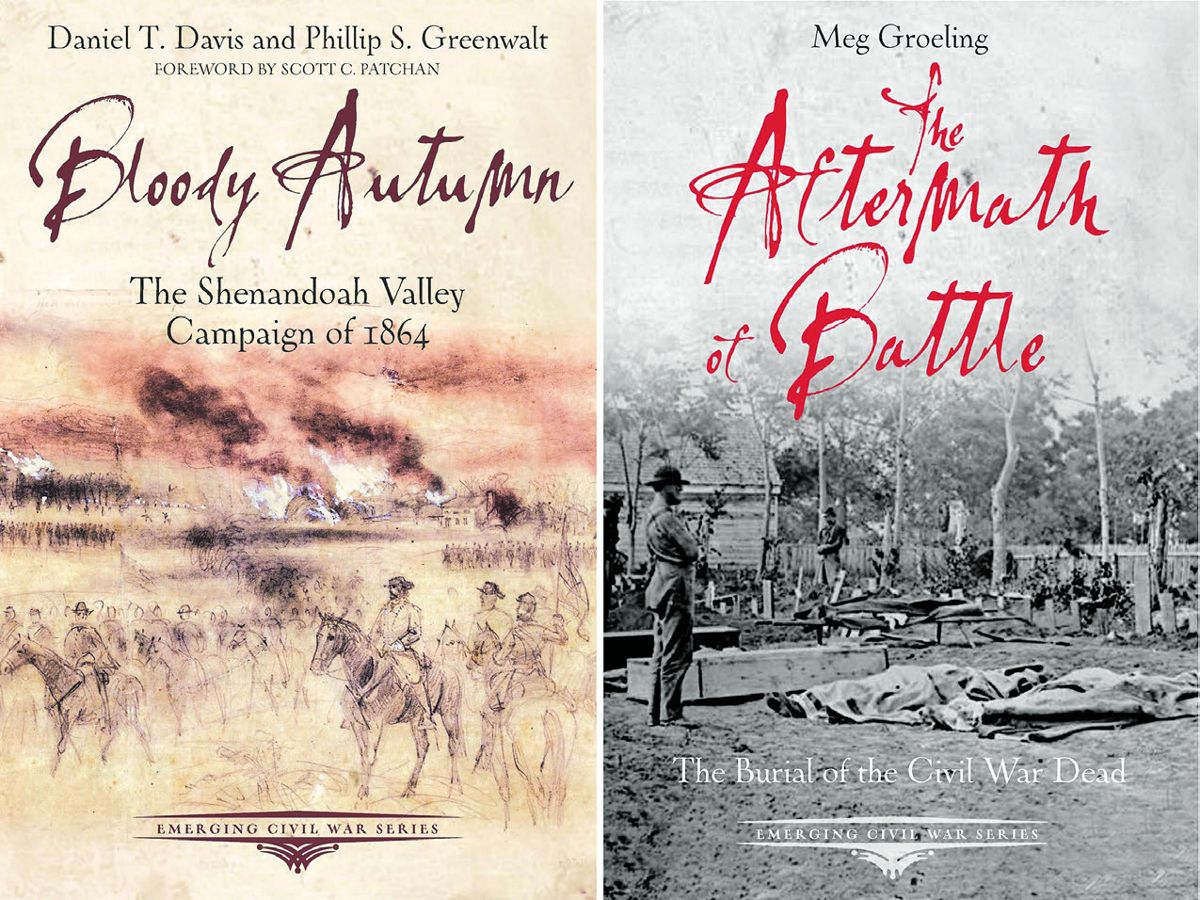
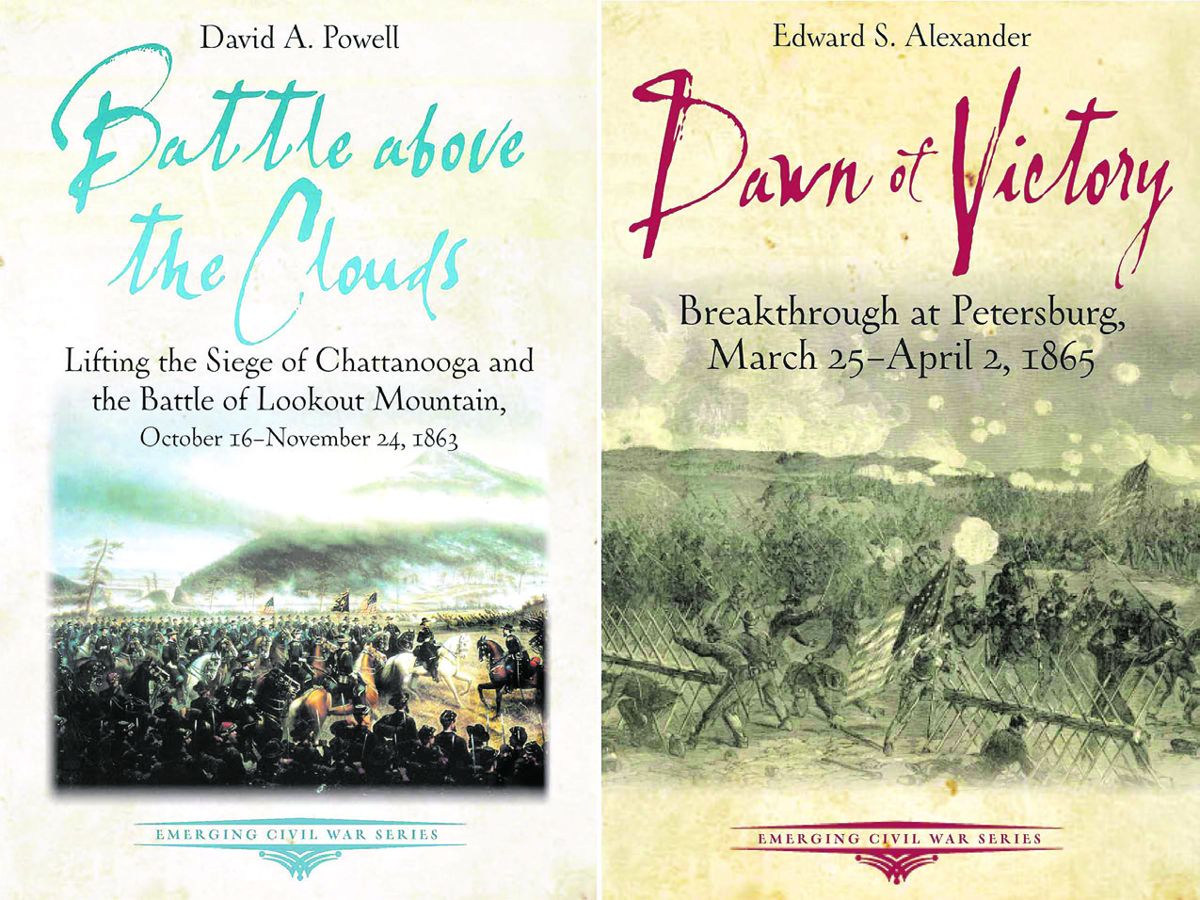
Editor-in-Chief, Emerging Civil War There’s an old saying about one door closing and another opening. We writers sometimes like to put a writerly spin on that: The close of one chapter means the beginning of the next. That’s how the Emerging Civil War Series first came about back in 2012. Kris White and I, along with former colleague Jake Struhelka, came up with the idea for Emerging Civil War as a blog back in 2011. At the time, Jake lived in the caretaker’s cottage at the Stonewall Jackson Shrine. One summer evening, sitting on the screened-in porch, we smoked cigars while Kris and I drank beers and Jake drank cream sodas, and we talked about writing. “We should start a blog,” one of us suggested—I can’t remember who, to be honest—but as the conversation evolved, the idea evolved. It wouldn’t just be a collaborative effort between the three of us; rather, we would recruit other up-and-coming historians to also contribute. Our goal was to create a platform for “emerging voices” in the field. By that point, Kris and I had worked on several writing projects together: a few magazine and journal articles and a few short paperbacks for the National Park Service. We were well into a full-length microtactical battle study of Second Fredericksburg and Salem Church, the “forgotten front” of the Chancellorsville campaign. It had long been Kris’s passion project, and we were excited to be bringing it to fruition. We knew of at least four other historians who attempted to chronicle the battles and never saw their projects through, so we were bound and determined to make it happen. Fortunately, we found a publisher as committed to the project as we were: Ted Savas of Savas Beatie, LLC. Ted had green-lighted the project and given us wide latitude on how to tackle it. In the meantime, Kris and I had several other irons in the fire, including a 35,000-word guidebook on the battle of Fredericksburg that we intended to publish in conjunction with the battle’s upcoming 150th anniversary. The book would provide a basic overview of the battle, something someone could read in a couple hours, while also offering a suggested route for seeing the battlefield beyond the basic NPS tour. Unfortunately, on that project we’d fallen in with a publisher who, unbeknownst to us, turned out to be unscrupulous. Kris and I learned some hard lessons about publishing through that experience. It’s little wonder and, I admit, more than a little satisfying, that the publisher has since gone out of business. As the fall of 2012 matured, the publisher kept stringing Kris and me along until it finally reached the point where the entire project was in jeopardy. The publisher refused to give us final instructions for submitting the manuscript. “This is B.S.,” Kris finally said. “Let me make a phone call to Ted.” We’d had a great experience with Savas Beatie thus far with Chancellorsville’s Forgotten Front. Maybe he’d be interested in this new book, which we hoped would be the first in a series. Kris called and made the pitch, and Ted took it on the spot—the book and the series. “I’m always looking for something fresh and original, both in presentation and content,” Ted later explained, “and this fit the bill perfectly.” One chapter closed, and a new one opened. * * * Not only did Ted greenlight the series, he gave us full creative control. We controlled the design and layout, the art direction, and the contents. Eventually, as our partnership developed, he gave us carte blanche for choosing what books to include in the series. We’re fortunate that he came to trust us so completely. As part of the creative process for the first book, we did most of the modern photography ourselves. This would be something we’d pay particular attention to as the series developed. Whenever possible, we try to incorporate photos that not only relay information but are also artistically interesting. In time, this would become a hallmark of the series but also one of its greatest challenges. The photography demands for an ECWS book are surprisingly onerous! Kris and I also put the Fredericksburg manuscript through a peer-review process. After all, since we had both worked at times at Fredericksburg and Spotsylvania National Military Park, we knew the world’s foremost authorities on the battle. This would become another hallmark of the series: our authors would be peer reviewed by the experts on the battles they wrote about. We don’t do blind peer review the way an academic press would; rather, we rely on a more collegial approach that often begins with “Would you mind looking at this for me?” That has, in turn, made the revision process for books more of a conversation than an anonymous list of strong suggestions. It becomes a true exchange of ideas. By this point, we were getting close to the printer’s deadline, so the one part of the process we didn’t have much control over was proofreading. “Supposedly, the author(s) teach (taught) at the university level in journalism,” one Amazon reviewer later wrote. “I wonder who they had review/ proof read their manuscript before going to press.” The comment embarrassed me because it was true, although proofreading is its own skill within the journalism profession, and one I’ve never trained in. A year later, when the book went into a second printing, we had a pair of proofreaders go through the book. I was appalled at everything they found but glad for the chance to clean the book up. I’m embarrassed that copies of the first edition are still floating around out there, but I appreciate everyone who bought one to support that first book in the series. Gremlins creep into every book, and I know more than one author who refuses to look at their work once it’s in print because, otherwise, the inevitable typos jump off the page and slap them across the face. This is a particularly frustrating aspect of publishing for me, and so we’ve continually tried to improve our proofreading process. We’ve also taken criticism because the books lack footnotes and indexes. Because the books are geared toward a general readership, not just buffs, we catered the content to that broader audience. These are people who go to a battlefield, find it interesting, and say, “Hey, I wish there was something I could pick up to read about this place.” Those people want to know more about the battle and the battlefield; they don’t care about footnotes. Footnotes and indexes also make the books longer, which affects the price. Ted has always wanted to keep the books affordable. Now, because the books have become so popular with buffs, and those buffs have railed for footnotes, we’ve begun publishing footnotes for most books on our blog. That seemed like a good compromise, and it’s true to our digital roots. Some people still complain that the footnotes are not in the books themselves, but I figure, at that point they’re just being lazy. If they really want footnotes so badly, they can go online and get them. * * * Simply Murder: The Battle of Fredericksburg, December 13, 1862 came out just in time for the battle’s anniversary. Books shipped straight to the Fredericksburg Battlefield bookstore just in time for a scheduled book signing. The following spring, two more books came out: The Last Days of Stonewall Jackson and A Season of Slaughter: The Battle of Spotsylvania Court House. Kris and I co-wrote both. We knew we’d have to carry the load to get the series up and going while we helped our ECW colleagues get up to speed on their own. By September 2013, in time for the 150th anniversary of Chickamauga, Lee White’s Bushwhacking on a Grand Scale: The Battle of Chickamauga came out—the first ECWS book written by a different author. I went to Chickamauga for a couple of days to tour the battlefield and take pictures for the book. Lee, no relation to Kris, is an historian at Chickamauga-Chattanooga National Military Park, and his encyclopedic memory amazed me. Books followed by Dan Davis and Phill Greenwalt; Bert Dunkerly, Don Pfanz, and Dave Ruth; Meg Groeling; Eric Wittenberg; Steve Davis; and more. As of this fall, we’ve published 27 books by 19 authors (with two more books due by year’s end). Eight books were by first-time authors, too, keeping in line with our mission to develop “emerging” talent. We’ve also developed that talent through the books’ appendices. We’ve had more than three dozen historians, many of them emerging voices, who contribute appendices and forewords to the books. “The thing I enjoy about our books is the fresh perspectives we offer in the appendixes, where guest authors contribute to the volume’s topic,” historian Bert Dunkerly, one of our authors, once wrote. “Sometimes they debunk well-established myths, address common misconceptions, or offer thoughts on lesser-known aspects of the battle or campaign. The appendices go beyond the topic at hand to explore issues in its historiography, its preservation, and new thoughts or angles on common assumptions. The articles also allow many guest historians, new to writing, to gain a voice and begin their own journeys as writers.” Through it all, Ted has remained a big fan and supporter, which has allowed the series to keep growing. “There are so many things I like about it,” he recently told me. “Three come readily to mind. First, ECW is branded in the minds of customers. They know what they will get, how it will be delivered, style-wise, the length, and the cost. Good branding is priceless. “Second, this series has allowed many up-and-coming young authors to get published by a traditional, award-winning house with real marketing and distribution. It has helped their careers, and that makes me very happy. Doing well by doing good. “Last, the books are introducing new readers to the Civil War. Most visitors to battlefields, for example, don’t want to read a lengthy and expensive book on, say, Fredericksburg, but will readily spend less than fifteen bucks for Simply Murder, a solid, readable and entertaining study. Then they want to read another one, and another. We have new customers getting deep into the study of the war because of ECW.” As the series expanded, I still manage to write about one book a year or so, but the bulk of my energy goes into the editing. I spend a lot of time working with authors to develop their manuscripts, including the selection of topics for appendices and authors to write them. We’ve brought on additional help with other editing duties, and while I still oversee the art direction, I’ve turned over layout duties to another designer. Kris has since moved on as our chief historian, a role later filled by Dan Davis and now filled by Chris Kolakowski. Their job has been to oversee the historical content of the books, serving as both devil’s advocates and the last set of eyes to ensure factual accuracy. In 2015, as part of its Distinguished Writing Awards, the Army Historical Foundation honored the Emerging Civil War Series with its special Lieutenant General Richard G. Trefry Award for contributions to the literature on the history of the U.S. Army, calling the series “an invaluable collection of Civil War battlefield guides.” We felt honored to be recognized by the same people whose stories we were trying to share. The series has also done well enough that it has spawned a sister series, the Emerging produce and the stories we tell Revolutionary War Series, also because we’re helping broad aupublished by Savas Beatie. The diences stay connected to one of ERWS released its first two America’s most important events. volumes earlier this year. We also “No harm’s done to history by have a book series with Souta sister series, the Emerging Revolutionary War Series, also published by Savas Beatie. The ERWS released its first two volumes earlier this year. We also have a book series with Southern Illinois University Press, the Engaging the Civil War series, which combines the rigor of an academic press with a public-history sensibility.
I had always wanted to be a writer when I was growing up. Now that I’m living the dream, I find great satisfaction in helping other writers live that dream, too. I’m proud of the books we produce and the stories we tell because we’re helping broad audiences stay connected to one of America’s most important events.
“No harm’s done to history by making it something someone would want to read,” historian David McCullough once said. That idea sits at the very center of everything we do with the Emerging Civil War Series.
Kris’s wife once said, “Not too bad for three idiots sitting on a porch.” We’ve written a lot of chapters since then, and I’m pleased that we have many more to go.