
Second Annual CWRT Congress
By Matthew Borowick · Originally published November 2018 · pp. 13–20
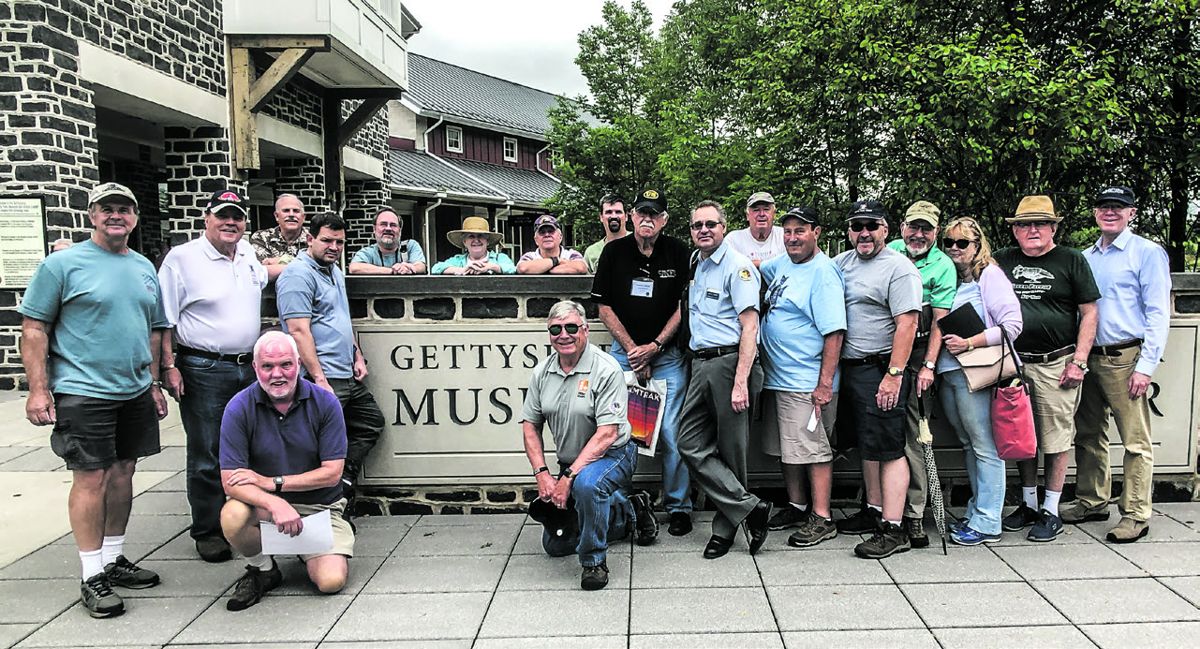
Increasing membership. Raising money. Connecting with the public. Attracting interesting speakers. Improving advisory and governing boards. Having a first-rate web site. These and many other topics drew 62 round table leaders from 16 different states to the 2nd Civil War Round Table Congress. Following last year’s hugely successful inauguration in Manassas, this year’s gathering was held in Pennsylvania. More importantly, it was at the absolutely fascinating National Civil War Museum. The Museum features over 24,000 artifacts, manuscripts, documents, photographs, and other printed matter. While many items have been donated since its opening in 2001, the vast majority of its collections were acquired by the City of Harrisburg between 1994 and 1999 under the auspices of Mayor Stephen R. Reed. Three-dimensional objects (artifacts) comprise 4,000 items, of which onefourth are on display in the permanent galleries of the building. “We could not have selected a better partner than the National Civil War Museum,” says Congress organizer Mike Movius. “With its wealth of artifacts, its knowledgeable and welcoming staff and its engaging displays, our attendees were treated to an experience they will never forget. Wayne and his team know just how to treat their guests.” The Congress began with a reception on the evening of Friday, August 17. Attendees networked, sharing information about their organizations while enjoying a catered meal. In addition to building valuable relationships, attendees were treated to a behind the scenes tour of Museum artifacts not currently on display. These items included the Union General John Buford’s military commission, the tactical manual of Union Captain Henry F. Fuller of the 64th NY Infantry, the sword used by Confederate General Joseph B. Kershaw and the coat worn by Union General George Sears Greene at Gettysburg. Wayne Motts, Museum CEO, says that hosting such an event is important for the Museum and the round table community. “We are honored to be the host location for the second Congress. We are near the Gettysburg Battlefield. We have an incredibly unique collection of artifacts. We’re located in the heart of Harrisburg, Pennsylvania’s capital. And our displays have consistently received very high ratings. With all that, we are honored the Congress leaders chose us as the location for this year’s event.” Networking, a wonderful meal, a behind the scenes tour. And yet, the first night’s activities were not finished. The night capped off with an enthralling presentation by Chris Mackowski, the editor-in-chief and co-founder of Emerging Civil War. Chris gave an energetic talk titled “That Furious Struggle: Chancellorsville and the High Tide of the Confederacy.” Attendees afterward said Chris’ presentation was the highlight of the evening. And that’s after holding Kershaw’s sword! Saturday, August 18, brought everyone together for breakfast and an early start. There would be much to cover throughout the day. First up was Jay Jorgensen of the Robert E. Lee CWRT. Jay gave a brief history of the round table community since its Chicago-based founding in 1940. He then took us through a review of the various types of governing structures: how to effectively use advisory and governing boards; meetings, their frequency and locations; financial considerations and including nonprofit status. “Round tables love Civil War history,” notes Jay, “but they also appreciate hearing about how round tables themselves came about. It gives us all a sense of the larger picture in which we operate.” Dr. John Bamberl was the second presenter. During John’s brief leadership at the Scottsdale, Arizona CWRT, membership has grown from 100 to over 400. John shared the secrets to success. I would title his presentation: “Things Round Tables Can Do to Greatly Increase Their Membership That Don’t Cost Much to Accomplish.” John reviewed 14 low-cost initiatives that helped Scottsdale grow into one of the largest round tables in the nation. “These simple steps require only one thing,” says John, “determination.” He adds, “Even round tables with small bank accounts can use these steps to get their groups on track, just as we have done in a round table that is many miles from the nearest Civil War battlefield.” Wally Rueckel of the 1,200-member Brunswick, NC CWRT shared the story of the incredible growth of this group—in only eight years! Wally covered succession planning, board development, a Women’s Forum and fundraising ideas. These, along with other experiences, resulted in the group’s rise to becoming the largest round table in the world. “I don’t think Brunswick has any distinct advantage that has enabled us to get to 1,200,” notes Wally. “I just think we have been fortunate to have a cadre of dedicated leaders and volunteers who are willing to put in the ‘sweat equity’ to making sure we provide our members, current and future, with a memorable experience.” Mike Movius of the Puget Sound Civil War Round Table spoke about communication— specifically electronic. Puget Sound’s website is second to none. Comprehensive, yet simple, it’s easily navigated but provides a wealth of information to members and visitors alike. Beyond a fantastic website, Puget Sound connects members and the community through a variety of secondary means. Social media keeps the PSCWRT on the cutting edge of 21st-century communication. “Our 160 members appreciate the ability to stay in touch virtually,” states Mike. “And we have also increased our membership by 30% in the past couple years thanks in large part to our presence on the internet. While we meet in person, we stay in touch between meetings online. That has helped us with member recruitment and retention.” The individual presentations were followed by a 90-minute panel discussion. Attendees submitted a variety of questions in writing. The four speakers, now-turned panelists, answered their burning questions. These ranged from “What time and day is best to meet?” to “How and whether to actively recruit school-age members?” to “Why do round tables exist?” All demonstrated the many issues confronting CWRT leaders. The Congress sessions concluded with a two-hour open house where attendees wandered through the Museum’s incredible exhibits. A twelve-author book signing supplemented this. Nationally-known experts joined to share their knowledge and books. On Sunday, about 20 attendees partook in an expansive Motts-led tour of the Gettysburg Battlefield with a focus on the first day’s action. This gave participants from near and far an insider-view of that fateful day in July of 1863. “The Second Civil War Round Table Congress was a tremendous success,” says Movius. “Our goals were to gather round table leaders from around the nation, provide them with practical secrets to success, give them a little something ‘extra’ and provide plenty of opportunities for information-sharing and networking.” He adds, “The location provided the first. The speakers and panel discussion did the second. The open house, behind-thescenes tour, authors’ book signing and battlefield trip did the third. We are going to build on this experience. The feedback we get will help us plan the third annual Congress for next summer.”
To contact Matthew email him at [email protected] welcomes attendees to Harrisburg.
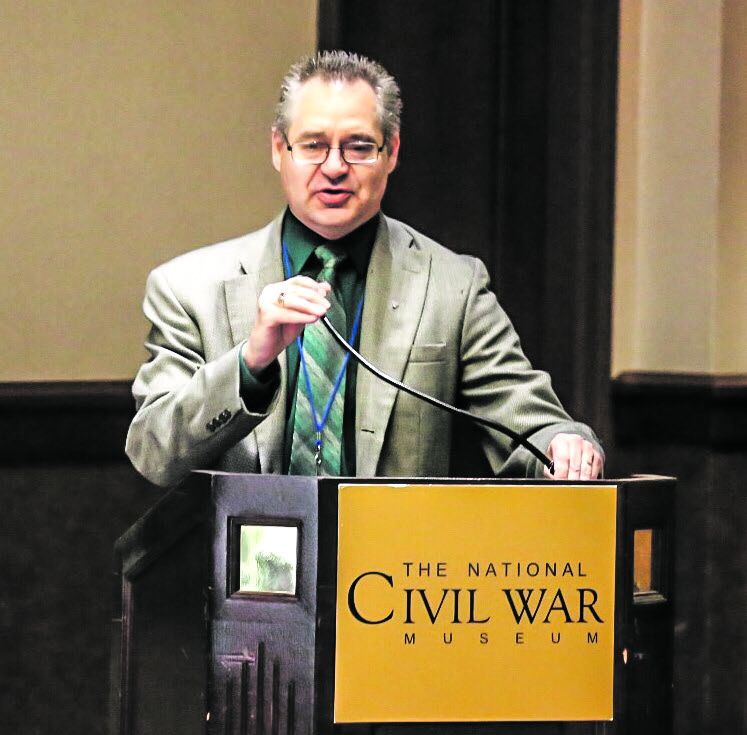
CWRT Congress organizer Mike Movius discussing social media.