
This And That
A Special Exchange
By Gould Hagler · Originally published November 2018 · pp. 26–27
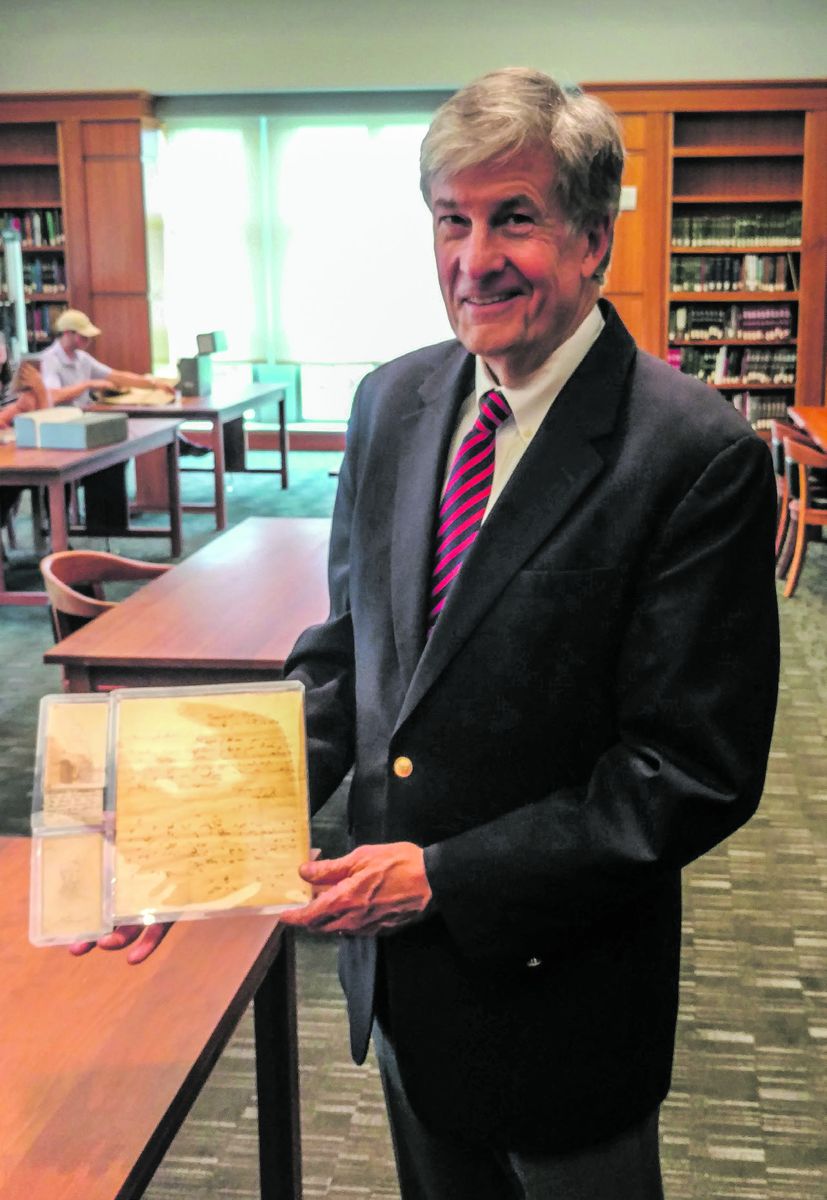
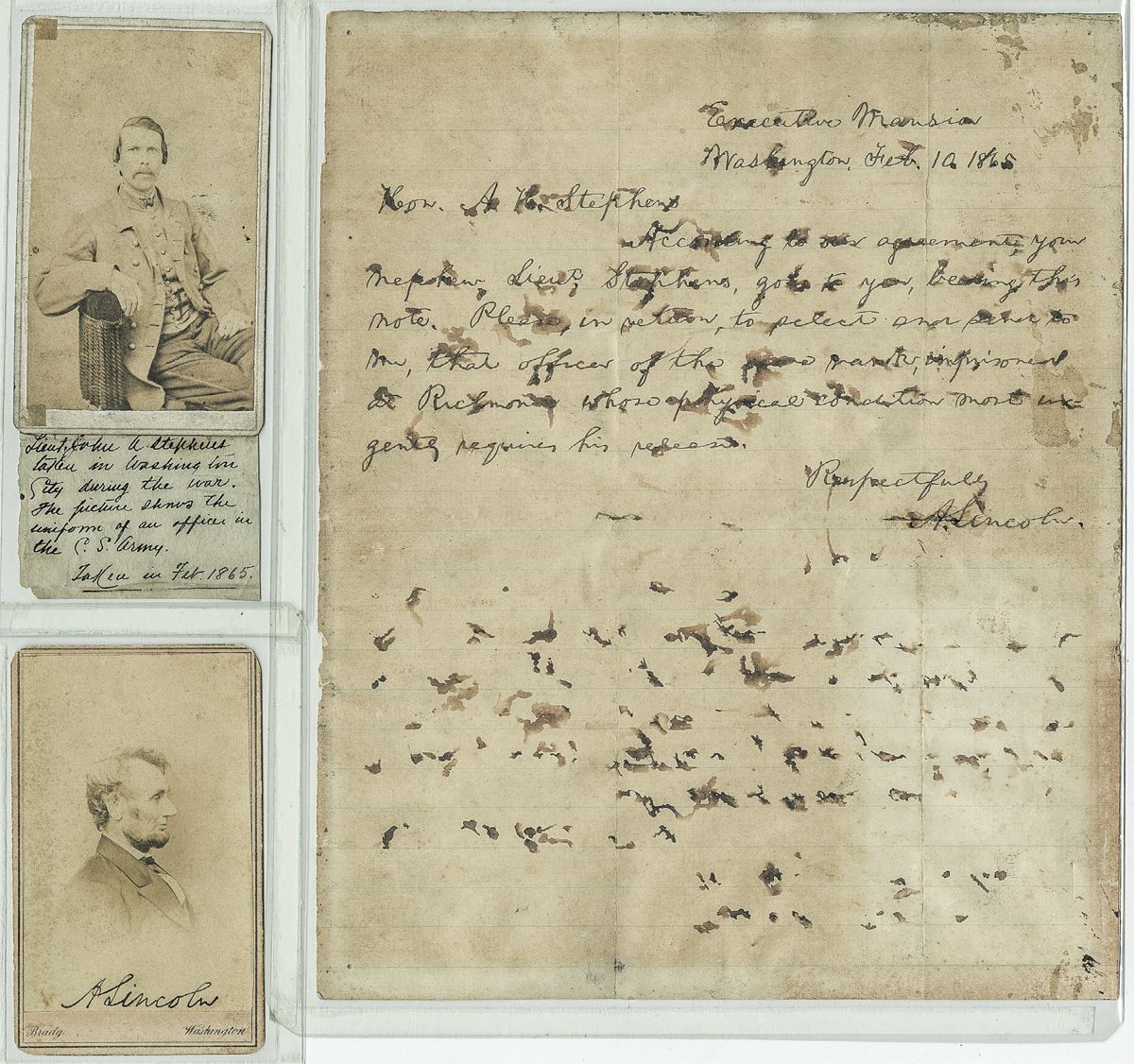
The young Georgian enlisted as a private in Co. D, 15th Georgia Infantry six days before the First Battle of Manassas. Two months later he transferred to Co. G of the 1st Regiment Georgia Regulars and was elected 2nd Lieutenant. Here he served while the regiment fought at Seven Days, Second Manassas and Sharpsburg. When he joined the Signal Corps in late 1862 he moved west. Captured at Port Hudson on July 9, 1863, he spent the next 18 months as a prisoner of war, first in New Orleans, then at Johnson’s Island in Ohio. On a cold winter day in early 1865, the lieutenant was summoned to the office of the prison’s commandant. There the Confederate officer was shown a telegram ordering that he be paroled. The person who sent the order said that the officer was “report to me here in person.” The telegram, dated February 4, had come from Washington. It was signed “A. Lincoln.” The paroled prisoner was John A. Stephens, a nephew of Alexander Hamilton Stephens, the Confederacy’s vice-president. Lieutenant Stephens was conducted to the Executive Mansion in Washington City. He was soon taken into the president’s office where he was cordially greeted by his uncle’s friend from former days, when they had a close association during Lincoln’s single term in Congress. Both were Whigs at the time, and were charter members of a club known as the Young Indians, a group of House Whigs formed in 1847 to support Zachary Taylor for President. Lincoln told Lieutenant
Earliest confirmed photograph of Lincoln, taken at the time of his election to Congress.
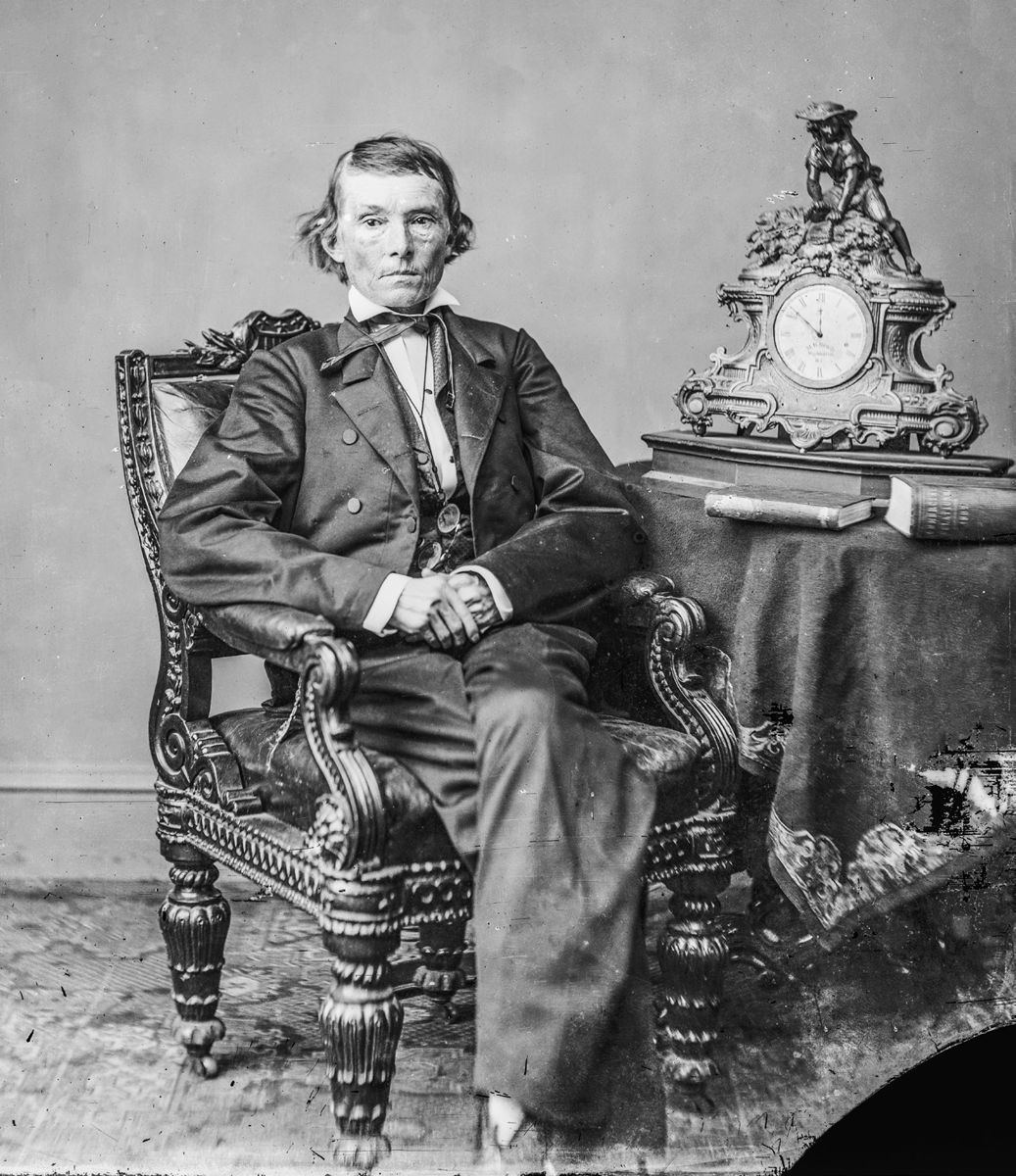
Stephens that he had seen his uncle recently. Stephens learned from the president that his uncle was well, as were his widowed mother and sister. Lincoln said that the paroled officer could stay in Washington for long as he needed to regain his strength. When he had rested he was to report back to the president. On February 10 the lieutenant had his second interview with President Lincoln. After another amiable chat, Lincoln gave Stephens a letter addressed to his uncle. Executive Mansion Washington, Feb. 10 1865 Hon. A.H. Stephens, According to our agreement your nephew, Lieut. Stephens, goes to you bearing this note. Please, in return, to select and send to me, that officer of the same rank imprisoned at Richmond whose physical condition most urgently requires his release. Respectfully, A. Lincoln As he bade his visitor farewell, on Feb. 3, 1865, at a meeting Lincoln also gave him his own known as the Hampton Roads signed photograph, and said Conference. Stephens and two (according to an account written other Confederate officials had by Lieutenant Stephens’ son) met informally with Lincoln “Suppose you take this along and Secretary of State William with you. I don’t expect there are H. Seward. The Confederates had hoped for an armistice, but many of them down south.” The U.S. president had seen Lincoln was insistent that there the Confederacy’s vice-president would be no halt to the fighting until the South laid down its arms and recognized the national authority. The conversation was cordial and lasted four hours, but Lincoln was adamant. Restoration of the Union was his sine qua non. There was but “one common country” and the errant states must return. The Confederate representatives saw this as a demand for unconditional submission and could not accept it. There was no agreement on any issue; the Confederates returned; the war continued. However, as the conference concluded, Stephens raised the issue of prisoner exchanges. In A Constitutional View Stephens says that Lincoln favored doing something and said he would refer the matter to General Grant. “Some propositions were then made for immediate special exchanges, which were readily agreed to,” Stephens writes. In his prison diary Stephens is more specific. The entry for June 1, 1865, states that Lincoln “had granted [John A. Stephens]
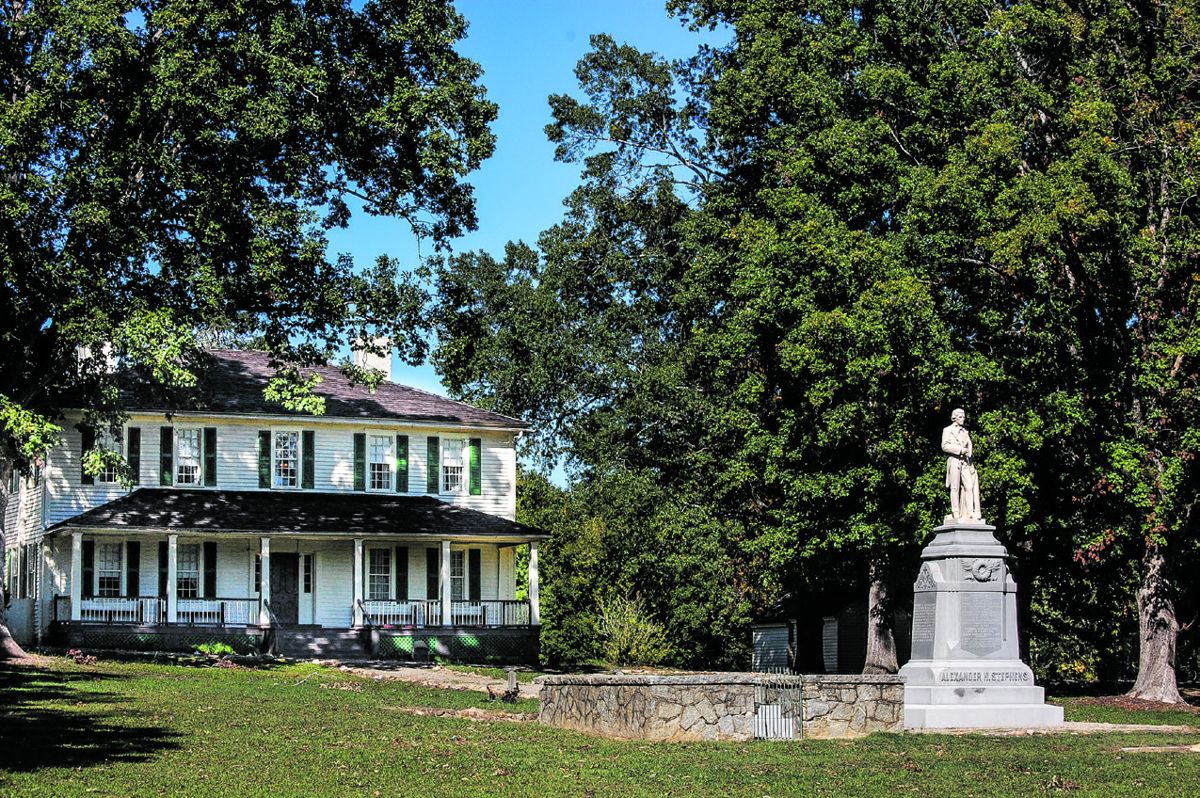
a special parole, for which I was truly obliged; this parole he had promised me at Hampton Roads, and had complied with his promise.” Lincoln did not procrastinate. He sent the telegram to Johnson’s Island the very next day. Following his second meeting with Lincoln, Stephens, rested up, and carrying the letter and the carte de visite, headed south. Duly exchanged for “an officer of the same rank imprisoned at Richmond,” Stephens remained in the Confederate Army until it was an army no more, serving on the staff of Gen. John Echols with the rank of major. After the war Stephens practiced law and served in the state senate and as Georgia’s Adjutant General. He died in 1887. The letter and the signed photograph remained in the family of John A. Stephens until 1996, when they were acquired by the University of Georgia. They are housed in the Hargrett Rare Book and Manuscript Library. Alexander Hamilton Stephens returned to Georgia soon after the February 3 conference. According to his diary, he did not see the letter until May, at a family gathering shortly before his arrest. “I almost wept when I saw it,” Stephens wrote of the letter written by his old friend, who had been assassinated the month before. Sources and further reading: I am grateful to Judge Lawton E. Stephens of Athens, great grandson of John A. Stephens, who provided me with a copy of an account written by Dr. Robert Stephens (John Stephens’ son) in 1933. The account was published in June 1943 in the Lincoln Herald under the title “An Incident of Friendship.” Also valuable are the Recollections of Alexander H. Stephens, a diary written during his imprisonment, and Stephens’ A Constitutional View of the Late War Between the States. The latter contains a 20-page discussion of the Hampton Roads Conference. Jefferson Davis also has a lot to say about the conference in volume two of The Rise and Fall of the Confederate Government. David Herbert Donald’s Lincoln has a concise account of the meeting, with some emphasis given to the discussion of slavery and the Emancipation Proclamation. Gould Hagler is a retired lobbyist living in Dunwoody, Ga. He is a past president of the Atlanta Civil War Round Table and is the author of Georgia’s Confederate Monuments: In Honor of a Fallen Nation, published by Mercer University Press in 2014. He speaks frequently on this topic and others related to different aspects of the Civil War and has been a regular contributor to CWN since 2016. He can be reached at [email protected].
The Other Party in the Special Exchange As I was researching this column I began to wonder about the “officer of the same rank imprisoned at Richmond.” Whom did the Confederate authorities deem to be the one “whose physical condition most urgently requires his release”? Who was the Federal lieutenant selected, and what was his fate? I made some inquiries but no one I spoke with knows, or knows how to find out. If any CWN reader has any suggestions, please pass them along. There could be descendants of this officer, somewhere, who, like Judge Stephens and others in his family, know that without that special exchange they might not be on this Earth. Gould Hagler, [email protected].