
Through The Lens
Tubman’s Raiders
By Stephanie Hagiwara · Originally published May 2018 · p. 8
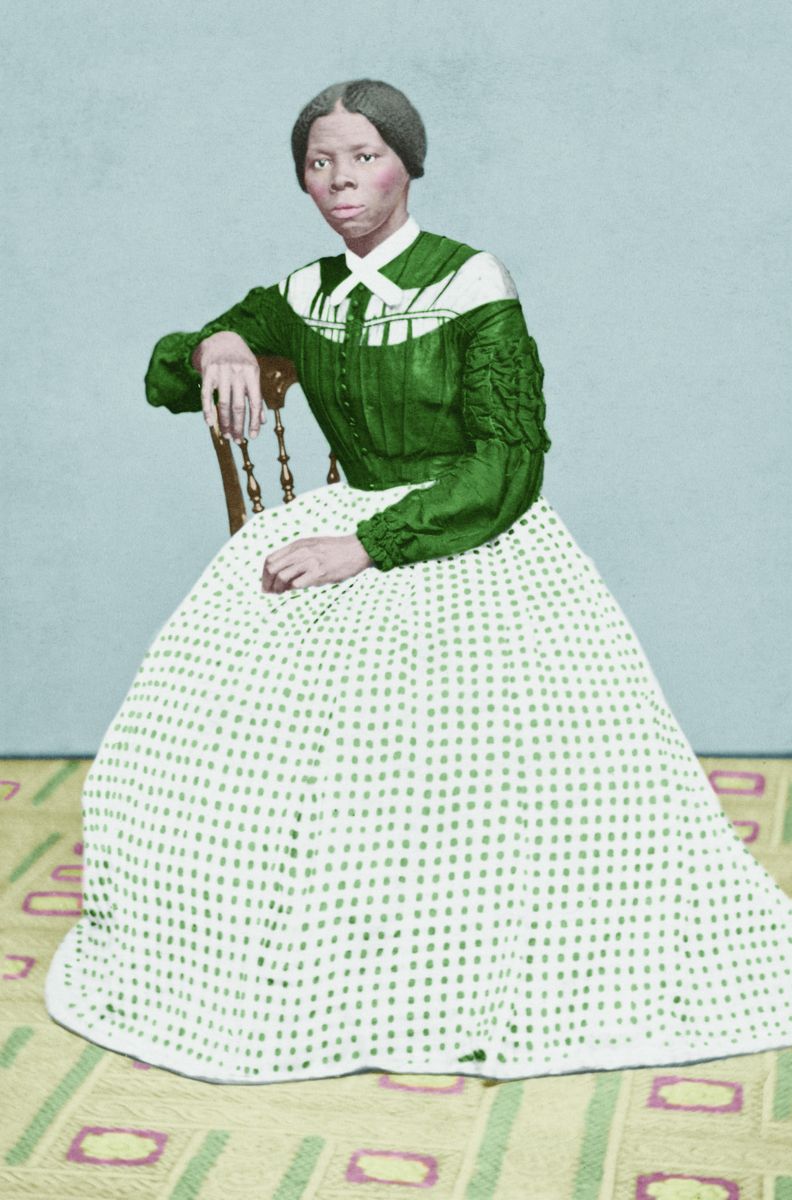
“Pass the Bearer, Harriet Tubman, to Beaufort [S.C.] and back to this place, and wherever she wishes to go, and give her free passage at all times.” – U.S. Gen. David Hunter On November 7, 1861, the U.S. Navy’s victory at the Battle of Port Royal Sound, S.C., located between Savannah, Ga., and Charleston, S.C., gave the South Atlantic blockading squadron a harbor that “a whole navy can ride at anchor in the bay in uninterrupted health and security.” The northern victory resulted in the white population fleeing the area. It became the Army’s task to manage thousands of newly freed slaves. The situation attracted abolitionists, including Harriet Tubman, wanting to enable the former slaves to become selfsufficient. At the time, Tubman, then about 40 years old, was already well known for her work on the Underground Railroad. She officially worked as a cook and nurse for the Army. In an era when upper class white women traveled with an escort, rarely worked outside of the home, and had to fight for higher education, Tubman planned and led the June 1–2, 1863, military raid on Combahee Ferry in S.C. It began with U.S. Gen. David Hunter, Commander of the Dept. of the South, wanting more troops, both to defend his location and to capture that bane of the Union, Charleston, where the War began. Anti-slavery advocate Hunter believed in arming black men to fight, not only for their freedom, but for the right of citizenship. He turned to Tubman to gather intelligence and recruit local black men to serve as soldiers. “She has made it a business to see all contrabands escaping from the rebels, and is able to get more intelligence than anybody else. There would be slaves coming out, this guy coming from Newport, that guy coming from Heyward [Plantation], taking maybe a couple weeks to get to the lines, hiding in the swamps taking their chances, moving at night. …The others would talk to them, and say, you need to go see Miss Harriet. She’ll give you money for good information. So they would tell her – there are 350 slaves at Newport, there are 538 slaves at Heyward, if you land here and here you can take them off,” wrote Lt. George Garrison. Despite being unable to speak Gullah, the coastal slaves’ common language, or having any familiarity with the area, she visited the camps of liberated slaves. Nine out of ten scouts Tubman recruited had escaped from local plantations. Disguised as a field hand or a poor farm wife, she went on planning trips into the interior with her local guides. The Confederates knew the raid was coming as early as May 29, from a published report in the New York Tribune. To defend the area and the Charleston and Savannah Railroad, the Confederate strategy was to build batteries and fortifications near rivers, protected by pickets, patrolling cavalry, and by troops arriving by rail. Combahee Ferry was targeted as a transportation node. The Tribune’s story helped the raid by causing false reports of Federal sightings. Furthermore, some soldiers had recently rotated out for the summer due to the “extreme unhealthiness” of the area. The goal of the raid was to damage the Confederates ability to supply food and materials for the war effort and to free slaves to join the army. Tubman agreed to go if Col. James Montgomery of the 2nd SC Infantry USCT would lead the mission. Montgomery was a militant abolitionist who had fought with John Brown in Kansas. Tubman had known Montgomery previously and trusted him. As the scouts and local troops trusted Tubman more than the white officers, she too went on the raid. On the evening of June 1, U.S. Navy boats Harriet A. Weed, John Adams and Sentinel departed for the Combahee River with 300 men from 2nd SC USCT and the 3rd RI Heavy Artillery manning the guns. Within a few miles, the Sentinel ran aground so her troops transferred to the Weed. By day break the side paddlewheel boats made it to Field’s Point, where a company was left to guard the road. Soon another company was detached to guard the road at Tar Bluff. Upriver the boats reached Colleton village. Slaves were tending in the fields. The overseers fled as the Federals “…landed and threw out a picket rapidly, and then began our work. Immeasurable quantities of thrashed rice and rice in the stack we burned, together with the rice barns, and the just-deserted mansions of the planters. Smoke soon appeared in the direction of Colleton. Smoke rose also in our rear, and for an extent of fifteen miles along the river the country was in flames,” wrote Col. William Apthorp on the Weed. The men also destroyed the floodgates controlling water level in the fields. Montgomery continued up river on the Adams and reached Combahee Ferry about 6:30 a.m. The Confederate pickets fled on horseback over the causeway as the Adams fired, destroying a pontoon bridge. Reaching William Middleton’s plantation, the men advanced across the fields burning all the buildings, sparing only the brick slave houses. The C.S. Combahee Rangers watched from the woods, focused on stopping fleeing slaves from reaching the ships. The Adams tied up at the causeway. Without any cover, the black troops marched across the milelong causeway. The Federals torched the plantation of C.S. Col. W.C. Heyward on the left side of the river and the rice mill and stores of rice and cotton belonging to C.T. Lowndes on the right. Heyward had been watching “a large ferry boat, with the United States flag flying, upper deck crowded with people,” for about an hour. Heyward asked one of the fleeing pickets why he had waited so long to report. He replied, “Ordered not to report until we are certain of facts— thought they might be our boats.” The slaves were initially frightened by the sight of the gunboats and hid in the woods. “Well,” said one old negro, “Mas’r said de Yankees had horns and tails, but I nebber beliebed it till now.” Somehow, the word spread that, “Lincoln’s gun-boats come to set them free.” Ignoring the drivers’ whips to hurry them back into their quarters, the slaves ran for the gunboats, carrying babies, chickens, and pigs. Some fine horses, including a colonel’s prized horse and saddle also made it. According to Apthorp, there were more runaways than space. “Remembering the treatment that these poor people would suffer for their attempt to escape to the Yankees it was hard to leave them. But it was impossible to take another one, and sadly we swung away from the landing.” Before U.S. Gen. William T. Sherman’s March to the Sea, destruction of civilian homes was not considered appropriate. The South protested the action of the “vandals.” Newly arrived U.S. Col. Robert Shaw of the 54th Mass. Inf. , condemned the action. Montgomery, having fought in Kansas border skirmishes considered, “the destruction of private property as a means to punish the slave owners.” Hunter considered the raid a success. The destroyed plantations were abandoned throughout the War. Of the 725 slaves rescued, about 100 enlisted in the army. Tubman didn’t receive an enlistment bonus. She considered her only real flaw was wearing a dress, which was torn by eager slaves boarding the boats, instead of bloomers made of coarse material. Sources: • Grigg, Jeff W., The Combahee River Raid: Harriet Tubman & Lowcountry Liberation • Apthorp, William Lee, Montgomery’s Raids in Florida, Georgia, and South Carolina • Bradford, Sarah H., Scenes in the Life of Harriet Tubman Stephanie Hagiwara is the editor for Civil War in Color.com and Civil War in 3D.com. She also writes a weekly column for History in Full Color.com that covers stories about photographs of historical interest from the 1850’s to the present. Her articles can be found on Facebook, Tumblr and Pinterest.