St. Luke’s Church in Isle of Wight County Offers Civil War Weekend
By Bob Ruegsegger · Originally published May 2018 · pp. 28–29
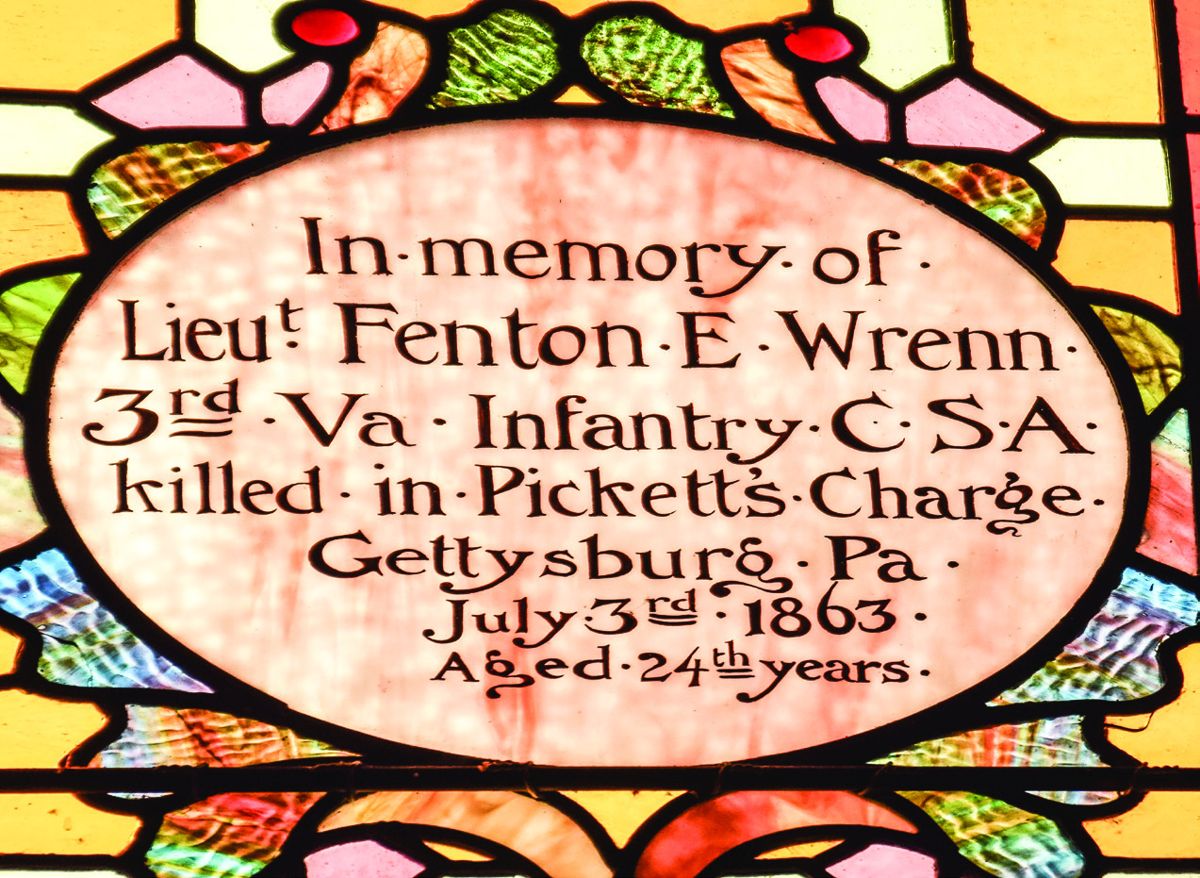
For over three centuries, St. Luke’s Church in Isle of Wight County near Smithfield, Va., has been a religious beacon in Southeastern Virginia. Stained-glass windows in the church sanctuary honor a host of saints. Others evoke the names of Confederate soldiers who died on Civil War battlefields. One stained-glass window in the bell tower recalls the memory of Lt. Fenton Wrenn of the 3rd Virginia Infantry who died at Gettysburg during Pickett’s Charge on July 3, 1863. Lt. Wrenn was only 24 years old. The surrounding churchyard cradles the remains of generation after generation of patriots, planters, soldiers, churchmen, and their families and loved ones.
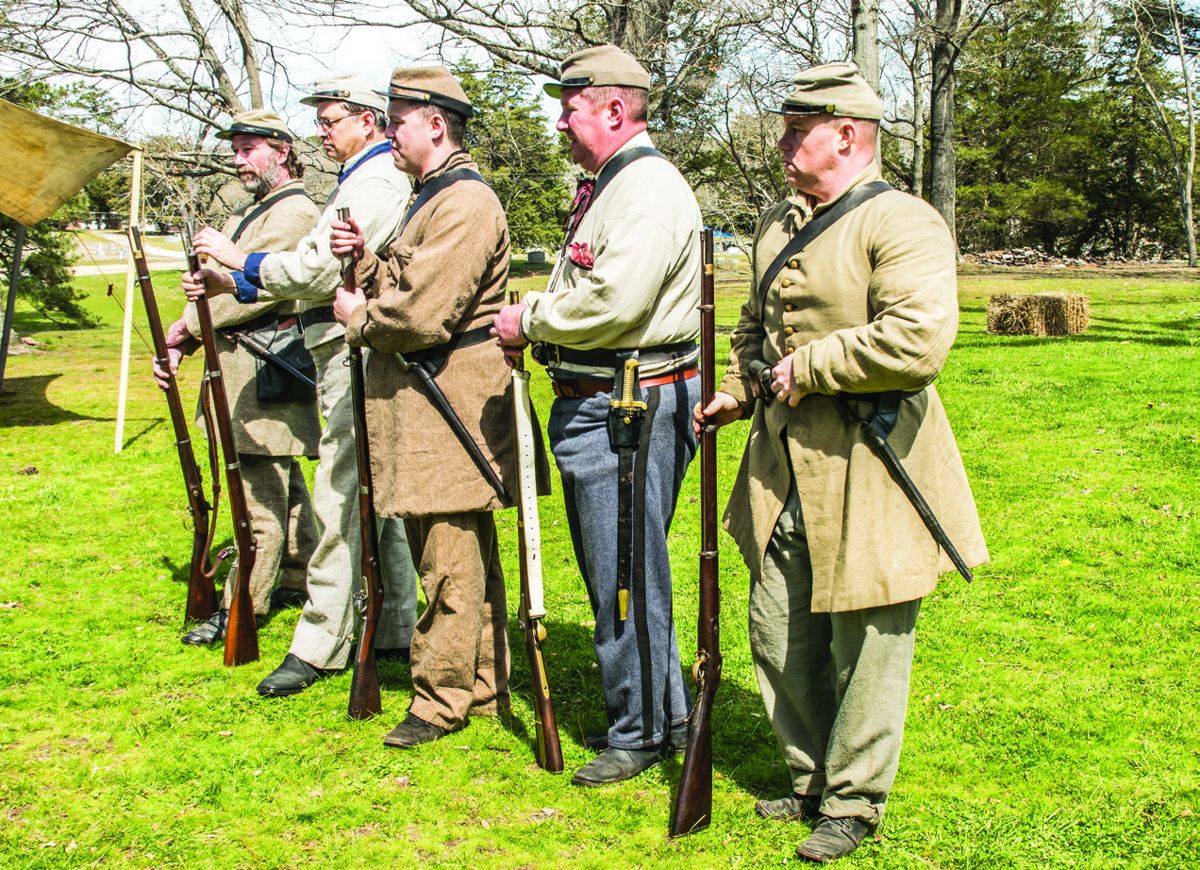
Musket firing demonstration.
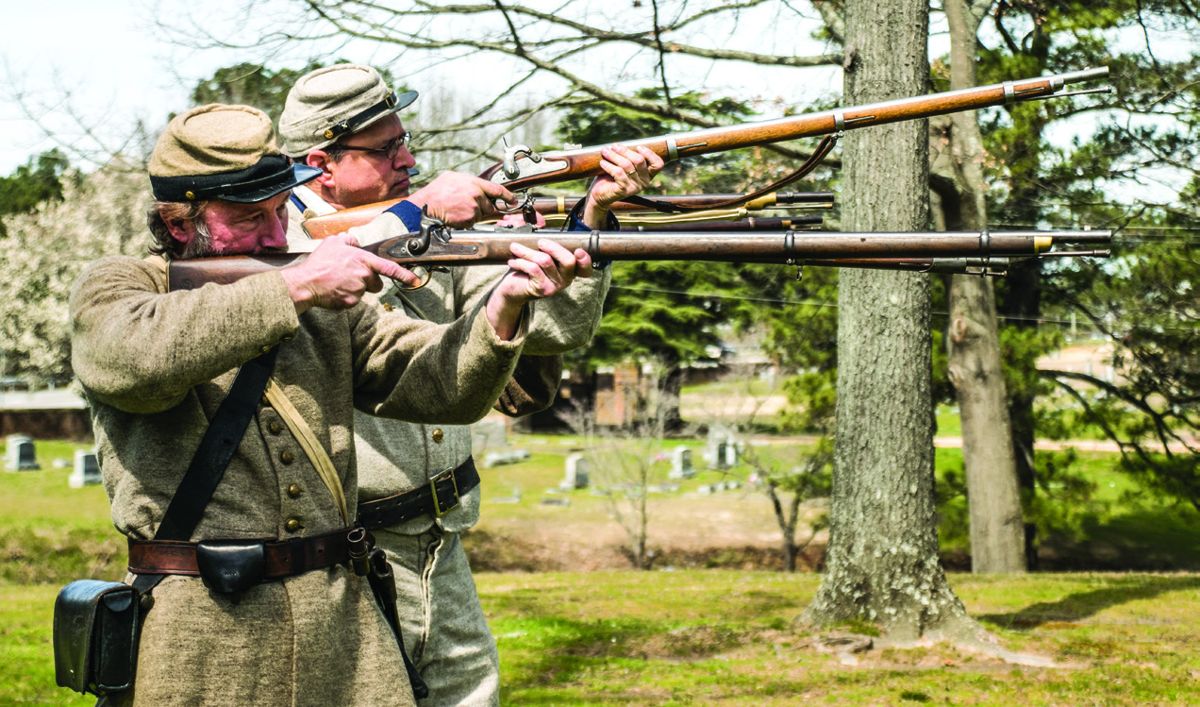
Headstones of Confederate veterans scattered throughout the churchyard are often marked with the Southern Cross of Honor for honorable service to the Confederacy. St. Luke’s Church—Historic St. Luke’s Restoration—sees the historic church site as sacred ground, and more. “People see St. Luke’s as a sacred site, but for our organization it’s more than just that,” said Todd Ballance, executive director of Historic St. Luke’s Restoration. “We also see ourselves as an educational nonprofit. We’re a National Historic Landmark. We’re also a Virginia Historic Landmark.” This historic landmark promotes the organization’s educational programs through an amalgamation of activities hosted on site, including living history events, cemetery preservation workshops, church tours, and lectures. “We’re an educational—intellectual beacon of light— not just a religious beacon,” said Ballance. “We’re both to different people. We’re very proud to be able to do that.” The Civil War in Smithfield—A Living History Weekend was a recent program hosted by Historic St. Luke’s that focused the church’s “educational beacon of light” on Civil War history in Southeastern Virginia. A living history encampment presented by reenactors with the Princess Anne Grays and the 3rd Va. Inf. offered a glimpse of camp life during the early war. Isle of Wight County, south of the James River, was a hotbed of military activity in Southeastern Virginia. Militia units gathered at courthouses and churches where new units were recruited and formed. “Companies trained in the areas where they were first formed,” said Mike Dougherty who reenacts with the Princess Anne Grays. “In this particular area, a lot of units were pushed over to the Warwick Line located on the Peninsula between Newport News and Yorktown in 1861 and 1862.” The Confederate strategy was to isolate Fort Monroe on the Lower Peninsula and prevent Federal forces at Fort Monroe from moving up the Peninsula to attack the Confederate capital. Camp Ruffin near St. Luke’s Church was among the Confederate training sites in rural Isle of Wight County. Men who trained in the Smithfield area were formed into units and sent to man the defensive positions along the Warwick Line. On the Peninsula between the James and York rivers, they were essentially deployed to fight in their own backyards. The 3rd Va. Inf. was originally formed in 1856, and served as part of the Virginia militia force. In the 19th century, they were (All photos by Bob Ruegsegger)

what the Virginia Army National Guard is today. They were volunteers—citizen soldiers—who assembled once a month for drill sessions. They were called on if there was a crisis or an emergency. “A couple of companies from the 3rd Va. were sent to Harpers Ferry not long after John Brown’s raid to provide security during his trial,” said Corporal Barry Davis, a reenactor with the Third.
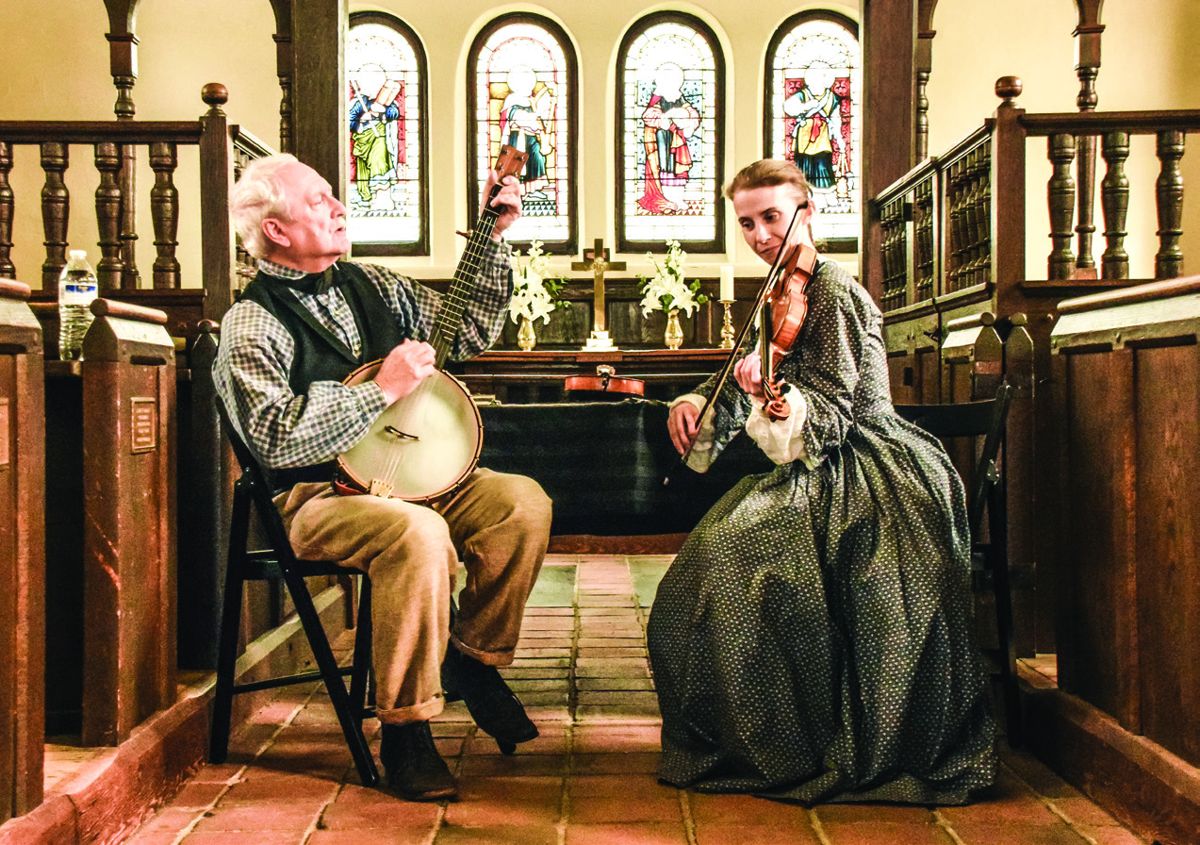
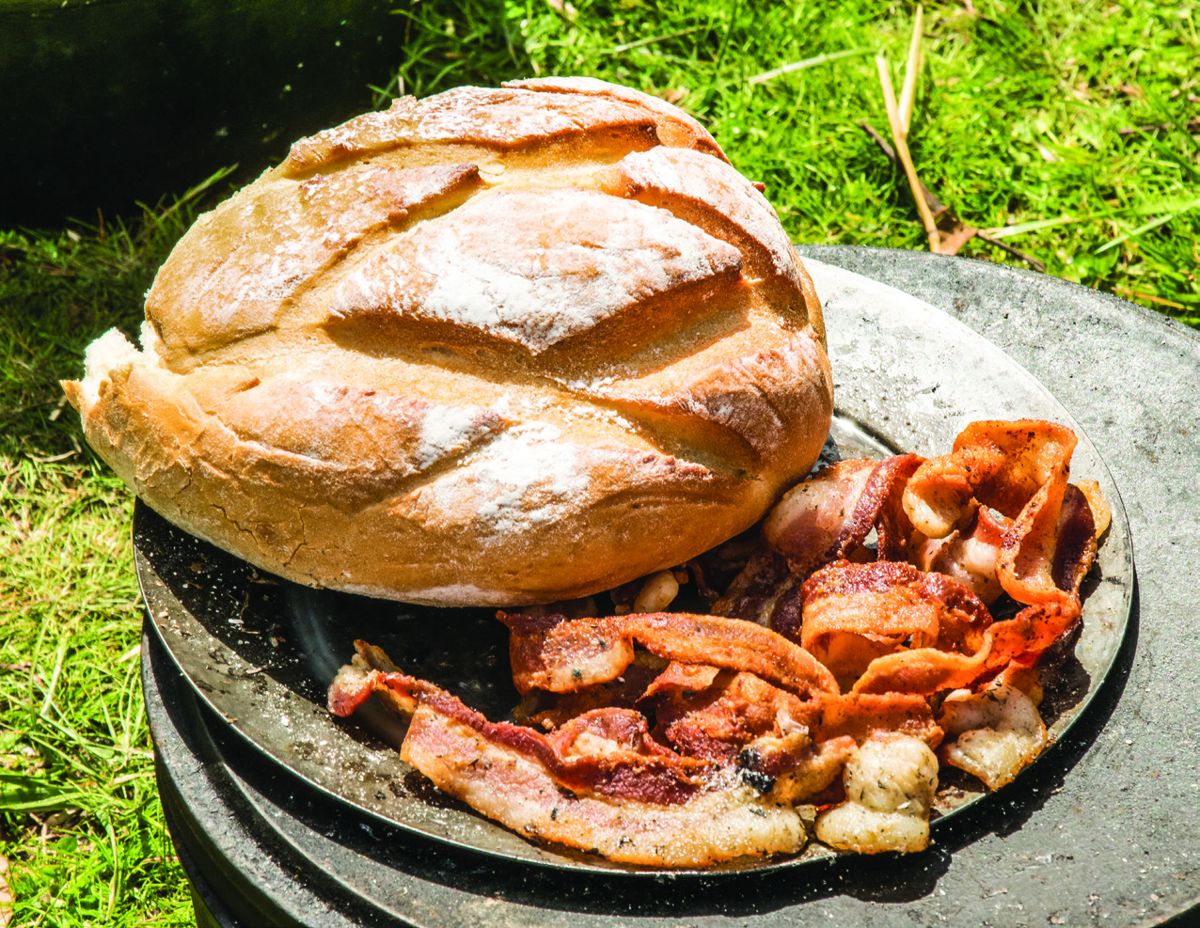
Confederate rations early in the war consisted basically of a pound of meat and a pound of bread or flour daily. “The local citizenry at the beginning of the war, feeling very patriotic and wanting to support their boys going off to fight the war, would come to camp and provide additional things,” said reenactor Robert Campbell with the 3rd Virginia. “Chicken, eggs, ham, and turkeys are mentioned in period accounts that we have.” Camp life during the War of the Rebellion always included music and singing, and often dancing. Musicians Carson Hudson and Arden Clark, performing as Hudson and Clark, offered period entertainment in camp and a special musical program. The Civil War in Seven Songs offered visitors and reenactors a sampling of songs from the Civil War era that ranged from patriotic tunes, including Dixie and Battle Hymn of the Republic to contemporary tunes popular with men from both armies like Home Sweet Home. While Civil War soldiers sat around campfires, they often sang songs. The misconception is that they were nearly always playing and singing rousing patriotic tunes such as Battle Cry of Freedom and Bonnie Blue Flag. “They did sing patriotic songs, but more times than not around the campfire, they were singing songs that were not related to the war at all,” noted Carson Hudson. “Camptown Races was a big tune; O Susannah was a big tune,” said Hudson. “They were related to home and their lives before the war. It made them think of home.”
The weekend event at Historic St. Luke’s also offered a pair of lectures on Civil War topics. Civil War Mourning Practices was presented by Diana Campbell of Tappahannock, Va., in the conference room of the church’s administrative building. “Full mourning was when the woman went head to toe in black with no jewelry. She had to wear a black veil if she went into public,” said Campbell. “No one was allowed to see her face. No one was allowed to see her cry. The length of mourning was determined by your status in society,” Campbell noted. “Upper class women could afford to mourn for two to three years. Lower class women had to work.” Dressed in black from head to toe, but without a veil, Campbell explained the Victorian mindset regarding mourning customs, outlined the stages of mourning, discussed life expectancies of the period, and postmortem photography. “Children and men did not mourn as much as a woman was expected to mourn,” said Campbell. “The woman was supposed to be the primary mourner,” she explained. Freedom’s Fortress, Freedom’s Promises: The Contraband at Fort
Monroe, a lecture by Cassandra Newby-Alexander, a professor at Norfolk State University, was presented in the historic church building. General Benjamin Butler’s decision according to Newby-Alexander’s presentation was to declare enslaved people seeking freedom at Fort Monroe “contraband of war.” This policy encouraged masses of enslaved people to travel to what they called “Freedom’s Fortress” and seek Union protection. “They brought with them only a few household items and bundles of food and clothing. They often traveled at night,” said Professor Newby-Alexander. “They endured hardships that we could never have imagined.” Bob Ruegsegger is an American by birth and a Virginian. His assignments frequently take him to historic sites throughout Virginia, the Mid-Atlantic, and the Southeast. His favorite haunts include sites within Virginia’s Historic Triangle—Jamestown, Yorktown, and Williamsburg. Bob served briefly in the U.S. Navy. He is a retired educator and has been an active newspaper journalist for the last twenty years.