Confederate Necessities are the Mother of Invention
By Shannon Pritchard · Originally published May 2018 · p. 14

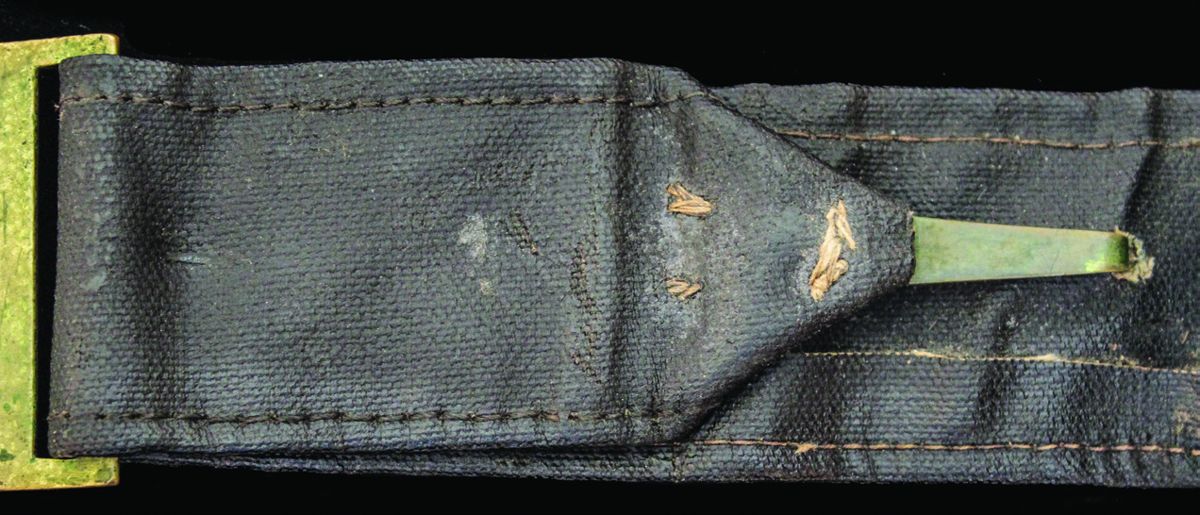
Above: The mismatched keeper carries number 641.
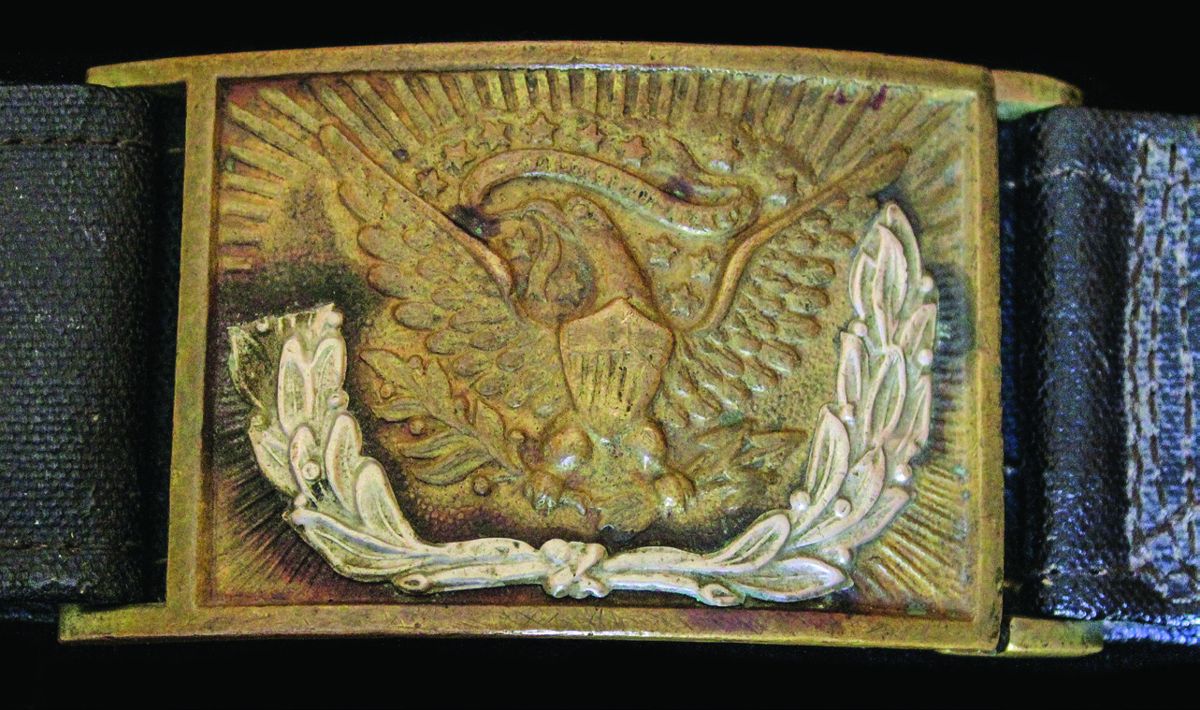
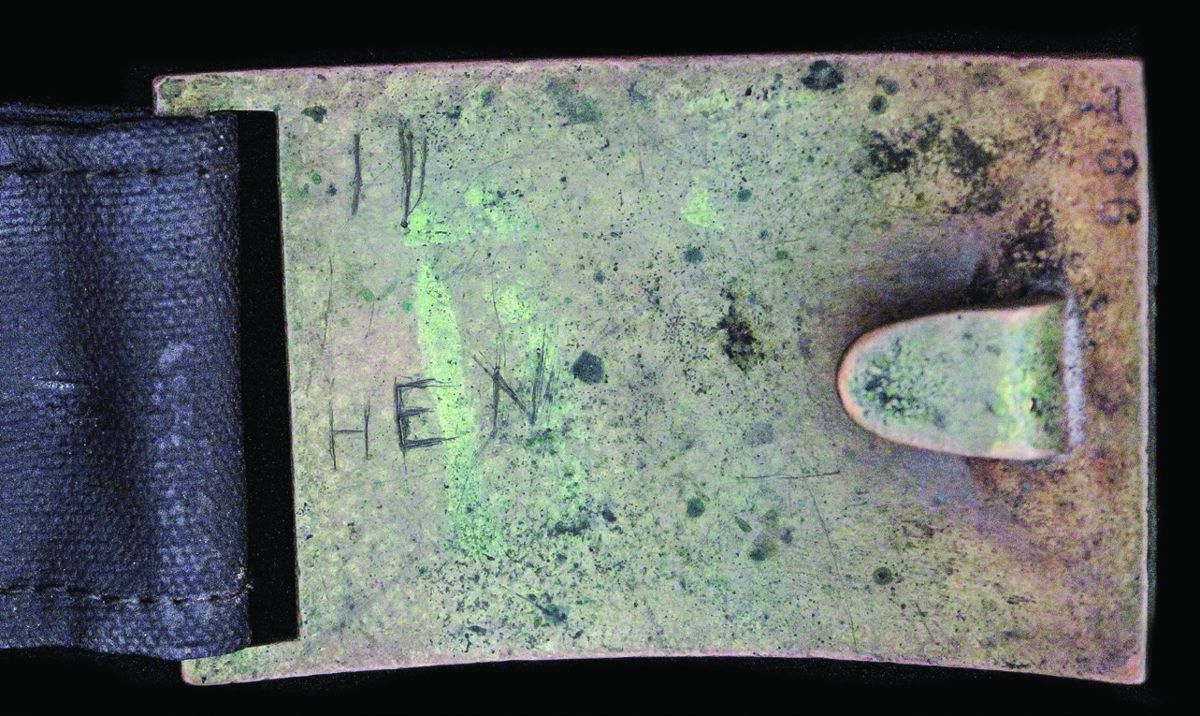
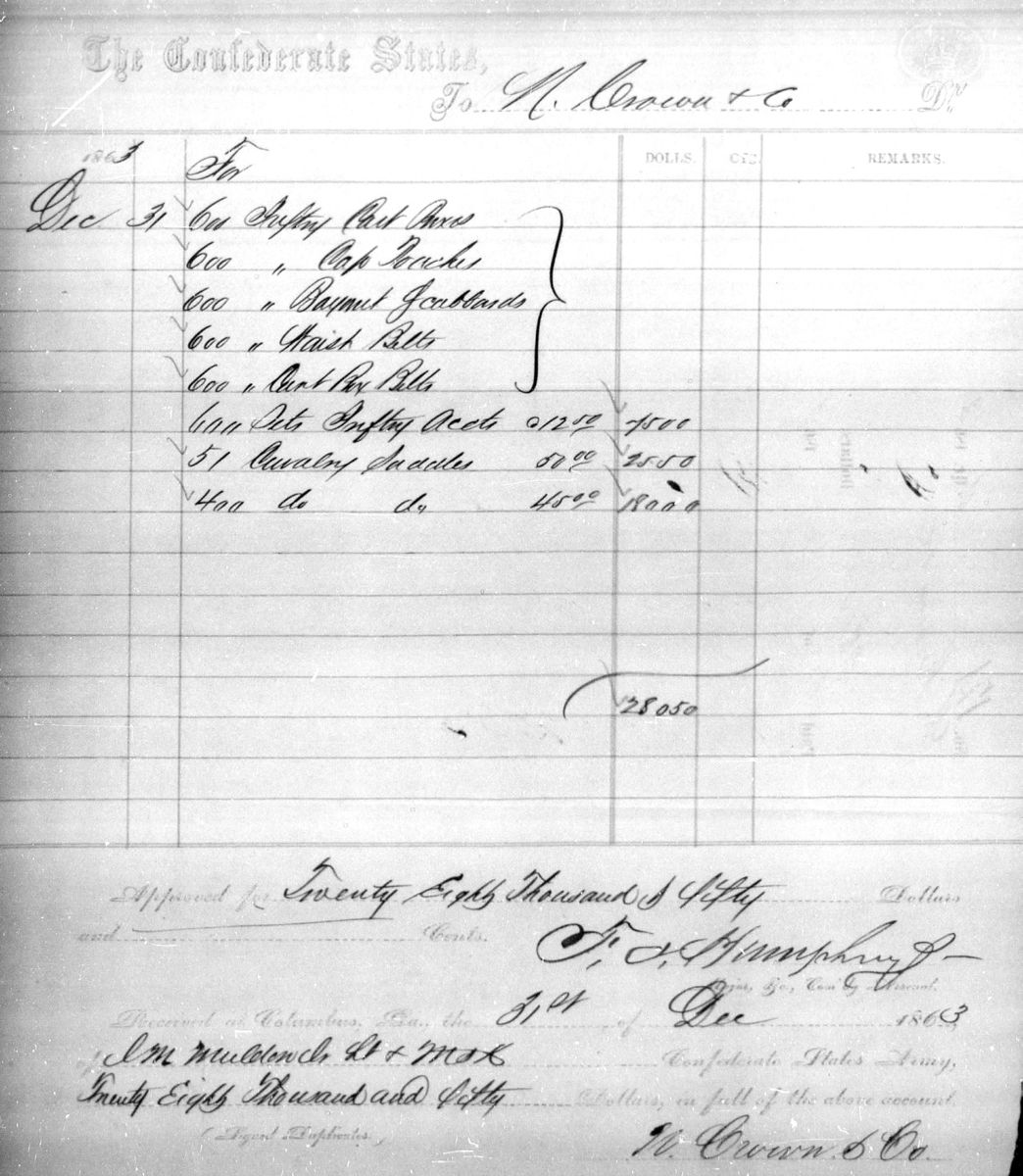
Left: Back of sword belt plate with ll, HEN and number 736 stamped next to the hook. The belt plate shown here is common; it is a Model 1851 U.S. Sword Belt Plate. What is uncommon and truly extraordinary is that it was repurposed by the Confederates and made in to a waist belt using painted canvas. Painted canvas belts and slings are the most desirable from the Confederate era because of two things. First, they demonstrate the dire material shortages faced by the Confederacy and their ingenuity in overcoming those shortages. Secondly, because of their fragile nature, very few painted canvas accoutrements survive. The South was short of everything; but patriotism and necessity bred innovation. Companies such as William Brand & Co. and N. Crown of Columbus, Ga., made belts and slings and even whole cartridge and cap boxes from painted cloth. The Richmond Armory produced a small number of painted canvas pistol belts with sewn on leather rangers (ends). There was also a belt and sling manufactured of painted canvas with leather rangers that is believed to have been made in North Carolina. These can be recognized by their figure eight stitching. All known maker marked examples of painted cloth boxes, belts and slings were made in the deep South; primarily in Columbus, Ga. They were issued in some quantity to infantry serving in the Army of Tennessee. The M1851 belt plate has the letters HEN, and ll cut into its reverse. As can be seen in the images, the silver wreath is missing one of its tips. The belt and keeper have mismatched numbers, which is of course to be expected with a re-purposed belt. The painted canvas is perfect; all stitching is original and tight. Shannon Pritchard has authored numerous articles relating to the authentication, care and conservation of Confederate antiques, including several cover articles. He is the author of the definitive work on Confederate collectibles, the widely acclaimed Collecting the Confederacy, Artifacts and Antiques from the War Between the States, and Confederate Faces in Color. Enlargement of the fourth line “600 Waist Belts.”