
Confederate Cannoneers, Infantry, & Cavalry Can a Clad: The Sinking of the Ironclad USS Eastport
By Miss Maria Anna Bozic and William J. Bozic, Jr. · Originally published May 2018 · pp. 22–24
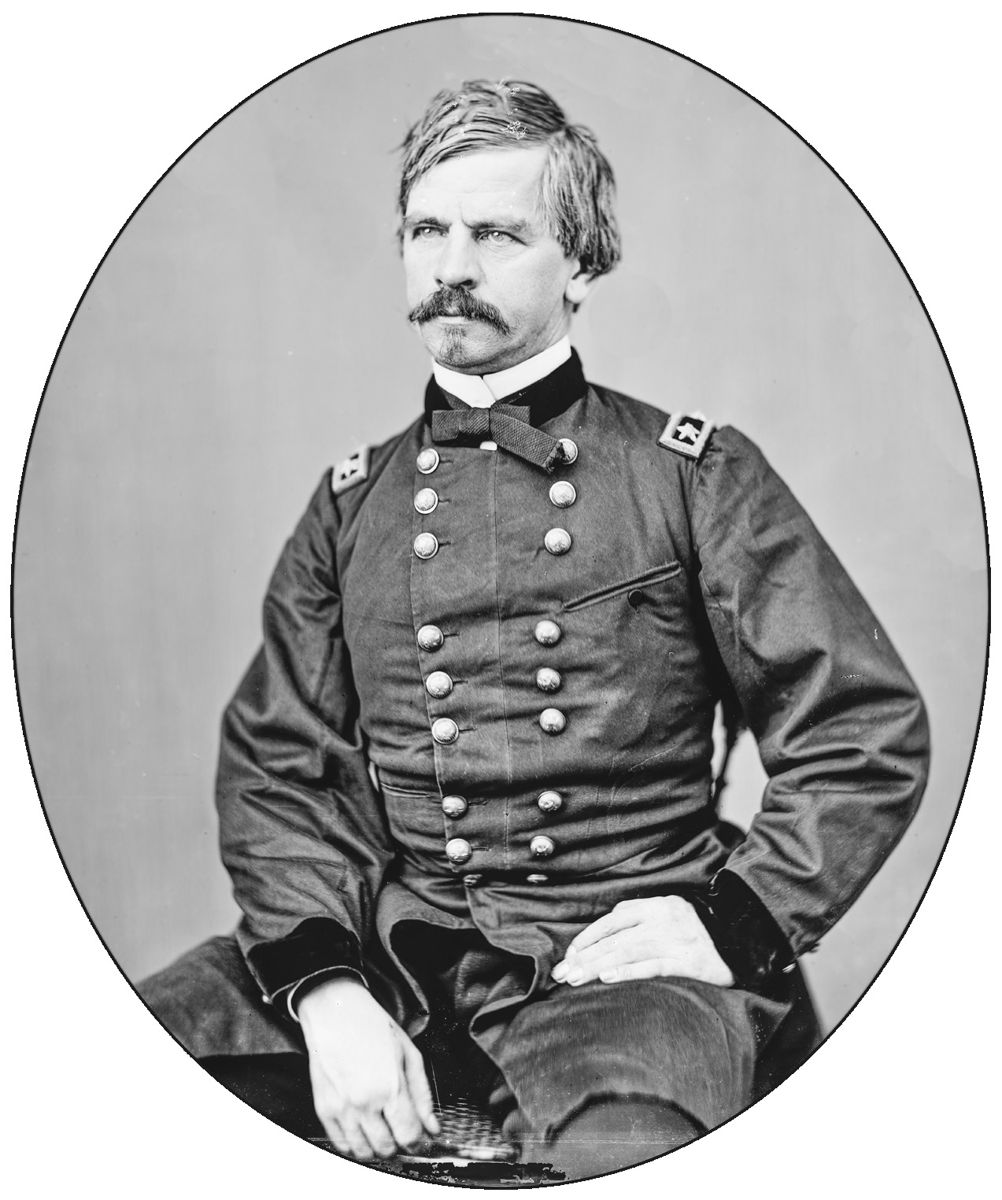
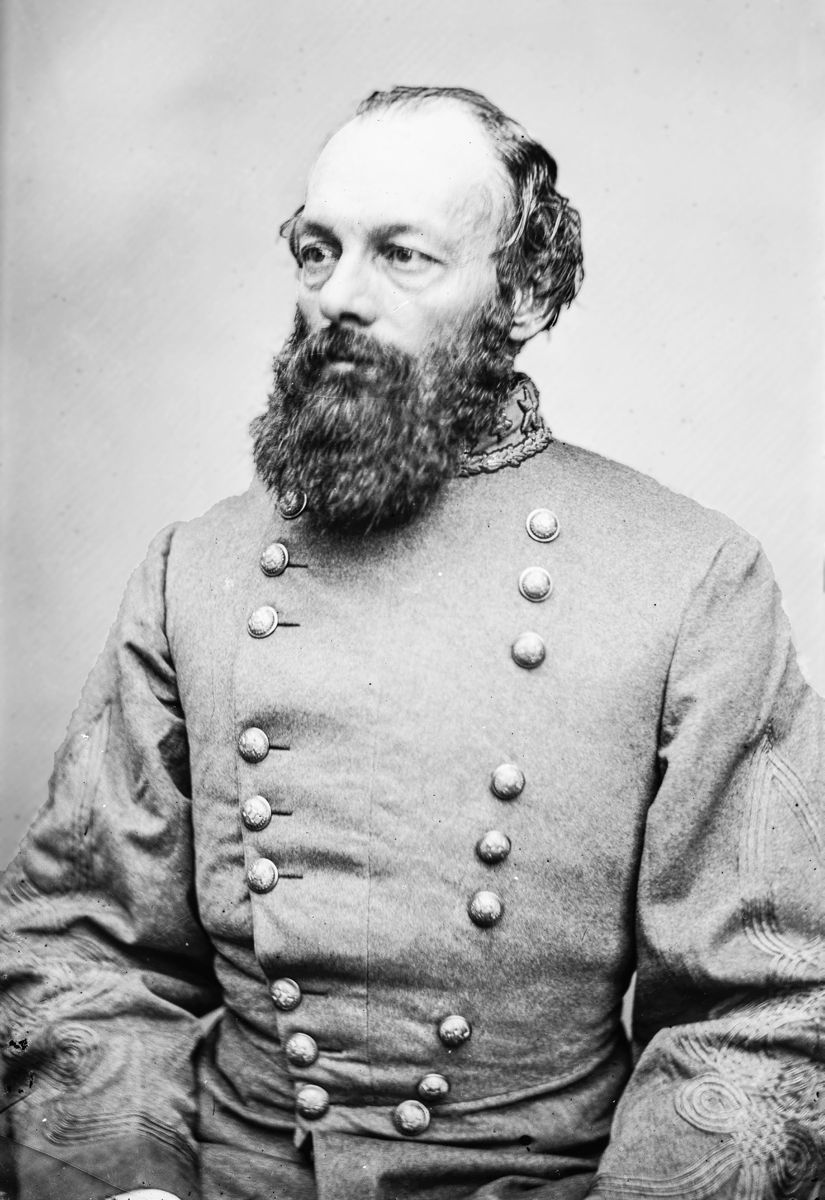
During the spring of 1864, Union Maj. Gen. Nathaniel P. Banks and his counterpart U.S. Navy Rear Admiral David Dixon Porter traveled in tandem northward up Louisiana’s Red River in hopes of capturing the Confederate Trans-Mississippi Department capital of Shreveport, La., expecting the resulting military, political, and economic rewards of such a triumph. To make matters worse for the CSA Trans-Mississippi Dept., U.S. Maj. Gen. Frederick Steele simultaneously moved an invasion force southward through Arkansas toward Shreveport. Confederate leadership, soldiers, and citizens were well aware of the powerful Union resources being brought to bear against them from both directions, which prompted Confederate Lieut. Gen. Edmund Kirby Smith, commanding the Trans-Mississippi Department, to order every available soldier to the front. From far-off corners of the vast Trans-Mississippi, Confederate soldiers rushed to the scene. Lieut. Gen. Smith also ordered levees along the Red River near Shreveport to be breached, so the water level would fall to dangerously low levels and impede the advancing Union flotilla.1 As he approached Shreveport, Banks detached the army from U.S. Navy protection and was routed at the Battle of Mansfield on April 8, 1864. He then retreated after the subsequent Battle of Pleasant Hill on April 9, 1864. The Confederate Congress issued a commendation to field commander Maj. Gen. Richard Taylor and his forces for winning a signal victory against overwhelmingly superior numbers of Yankee invaders. Curiously, Banks continued to press for troops to achieve his objective, yet the retreats were hard for anyone to reasonably acknowledge as anything remotely close to Northern victories and chances for Union success seemed unlikely under Banks.2 Rear Admiral David Dixon Porter, left with the warships and transports at Blair’s Landing, La., was indignant and made a decision to send his ships southward, down the swiftly falling Red River, which by this time was only a few feet in depth, making the danger of running aground all the more likely and escape urgent. Porter and his officers were also apprehensive about being abandoned by the army in extremely hostile territory. Porter probably sensed the U.S. Congress would conduct an inquiry into the blunders and probably wanted to make sure his behavior would stand their scrutiny.3 Confederate cavalry corps commander Brig. Gen. Tom Green’s hard-charging cavalry had fought ceaselessly in what was really one running battle to and from the Federal high point at Mansfield. Taylor ordered Green to stop the Union fleet at Blair’s Landing. Green’s men rode hard for what they thought was a chance to catch the Union ships, bottle them up, and destroy them. On April 12, 1864, the ships the Confederates saw, USS Osage, USS Lexington, and USS Black Hawk, however, were the rear of the fleet which had already
Rear Admiral Thomas O. Selfridge Jr. (NARA Photo) steamed downriver. Green did not know this had happened so he pressed his men into the fight with vigor to subdue and bottleneck what he thought was the lead element of Porter’s flotilla. The brave men, fighting dismounted with their horses held by comrades safely out of range, were Buchel’s 1st Texas Cavalry, Debray’s 26th Texas Cavalry, Likens’ 35th Texas Cavalry, Wood’s’ 36th Texas Cavalry, Bagby’s 7th Texas Cavalry, Major’s Texas Cavalry, Hardeman’s 4th Texas Cavalry, Terrell’s 37th Texas Cavalry and Capt. James A. West’s Grosse
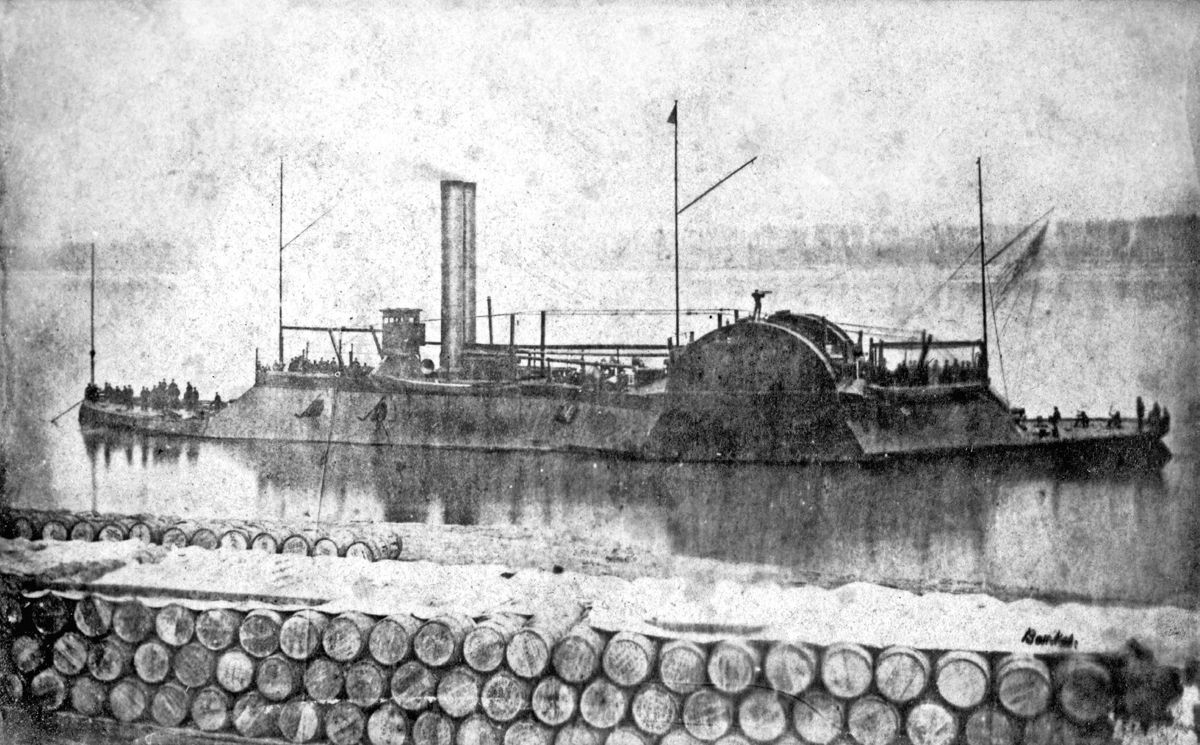
Tete (La.) Horse Artillery. In the fighting, Green was decapitated by a Union cannon shot aimed with a periscope from the river monitor USS Osage, commanded by Lieutenant Commander Thomas Oliver Selfridge Jr. Selfridge, son of Rear Admiral Thomas O. Selfridge, later described actually aiming at a Confederate officer on horseback who was vigorously leading his dismounted men. The shell from the 11-inch Dahlgren gun was off target, but somehow a piece hit Green in the head while the rest flew high and away.4 Lieut. Gen. Edmund Kirby Smith. USS Fort Hindman part of the Mississippi River Fleet.
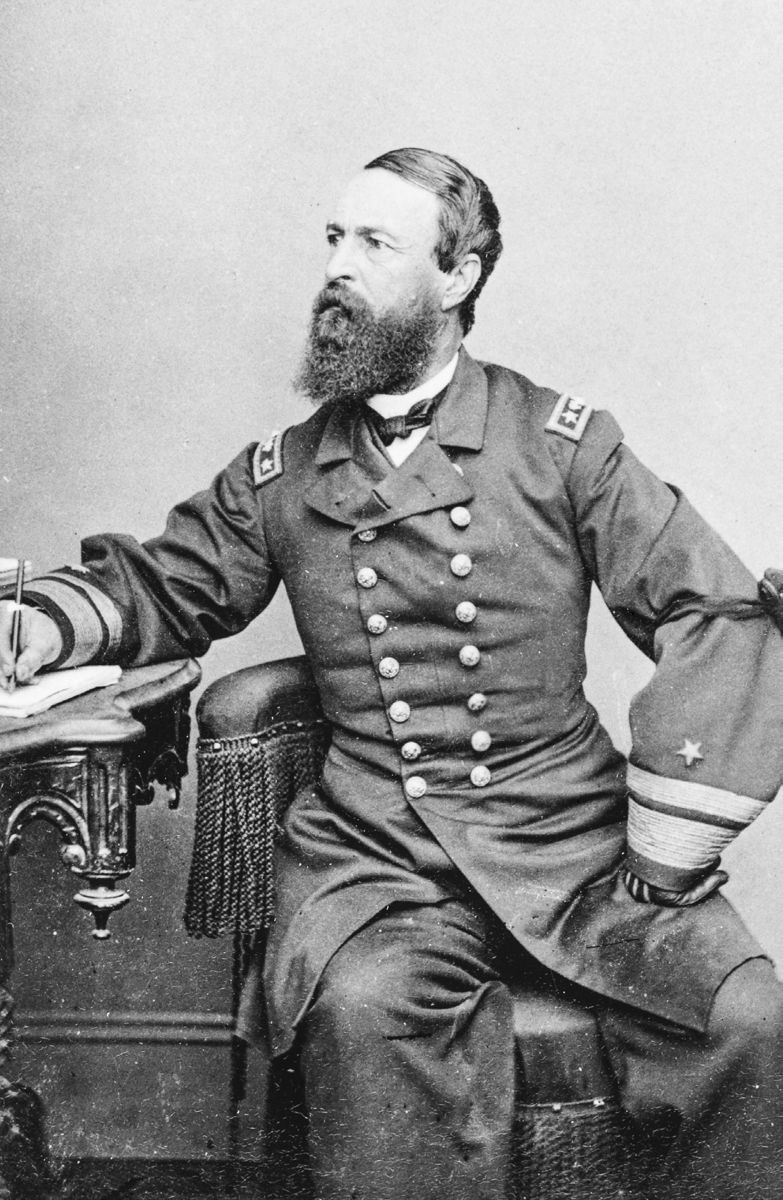
USS Osage, commanded by Lieutenant Commander Thomas Oliver Selfridge Jr., was part of the Mississippi River Fleet.
(Library of Congress) (William Bozic)
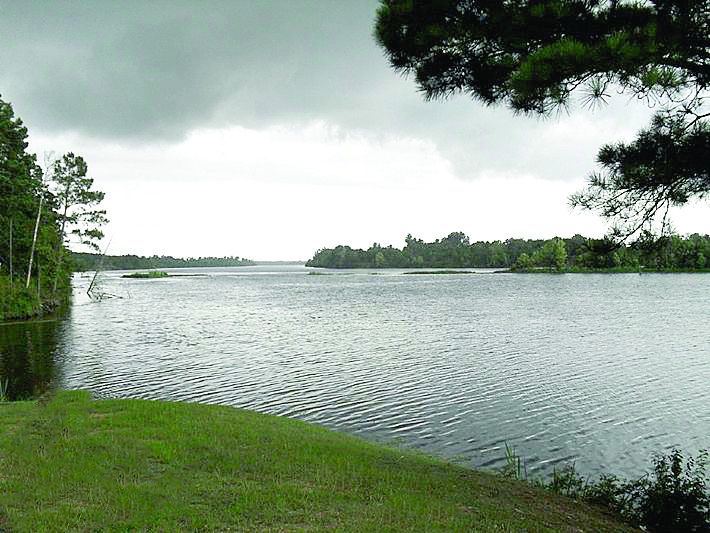
On April 13, 1864, around Campti, Natchitoches Parish, La., other boats ran aground and came under Confederate fire from Brig. Gen. St. John Richardson Liddell’s Louisiana troops on the eastern side of the river. Porter knew his fleet was in dire straits and moved as fast as possible to Grand Ecore, where Northern troops had hastily entrenched; then they quickly departed for Alexandria, La., with Confederate troopers at their heels the whole way.5 On April 16, 1864, the fleet made its way down the Red River from Grand Ecore with the USS Eastport in the vanguard. The USS Eastport, largest ironclad warship of Porter’s fleet, was 280 feet in length, armed with two 12-pounders, four 32-pounders, and two 30-pounders. On April 16, the USS Eastport hit a Confederate torpedo (mine). The ship slowed and slowly filled with water. While pump boats attempted to remove the water, allowing sailors fix the damage, the other ships struggled forward. By April 21, 1864, the USS Eastport was refloated and limped downstream.6 Lieutenant General Kirby Smith issued orders immediately after the Battle of Pleasant Hill for most of his troops to race from Richard Taylor’s command and march to Arkansas to thwart Steele’s oncoming invasion, yet on April 23, 1864, Bank’s much
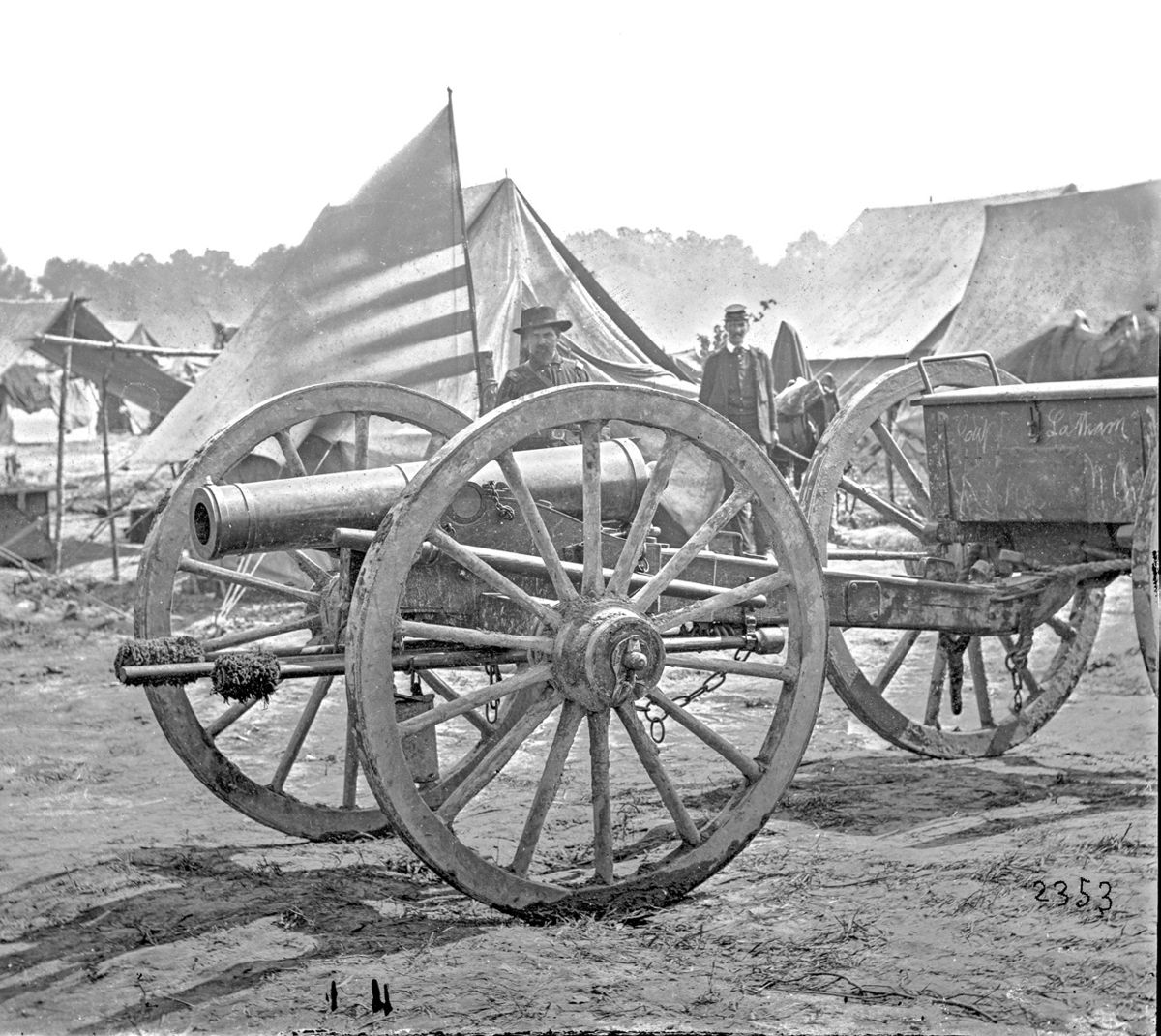
(Library of Congress) larger army still found itself surrounded by what remained of Taylor’s meager force. Brig. Gen. Hamilton P. Bee had been assigned to block Banks’ likely escape route at Monett’s Ferry. Bee’s artillery units fired 533 rounds from positions above the Cane River and held the Union Army in check, but a flanking movement by Federal troops across the Cane River prompted Bee to withdraw his worn, understrength cavalry and artillery, to the consternation of his superior Richard Taylor, resulting in Bee’s dismissal from command.7 Colonel James B. Likens’ 35th Texas Cavalry and the 15th Texas Infantry under Lt. Col. James E. Harrison were dispatched to Montgomery, La. Harrison wrote in a letter to William Ballinger the next day, that the soldiers on April 26, 1864, crept over a wooded hill overlooking Montgomery on the opposite bank. They could clearly see the USS Eastport, sailors, and the looting of a residence. They could also see crewmen taking stuff from the town and loading the boat.8 Colonel Harrison described taking aim with his pistol “at a big portly captain sitting on a big arm chair who fell like a turtle from a log through the hatch” and signaling by his shot to open fire in the surprise attack. Harrison related “Such confusion, I never saw, it was fully 10 min. before they could arrange themselves to fight, but when they did by going above and below us and in front, the shells and missiles came like a hailstorm and the whole earth shook. I made my line fall flat on the ground and lay and shoot deliberately we did them great damage, in killed and wounded, during the engagement. Their best boat, a large ironclad monster in turning to give us a broadside grounded so fast she could not put off and we would not let her get help She blew up shaking the earth and scattering large timbers in some instances for 200 yards on the bank. She burned. Another in going off ran aground and was fired and burned.” (note – this ship was the side wheeler, Champion No. 5)9 In his April 28, 1864, report written aboard the USS Fort Hindman, Lieut. Cmdr. Seth L. Phelps, formerly the commander of the destroyed USS Eastport, wrote that only about 20 men and two officers were aboard Eastport when it came under attack because the rest of the men were ashore “wooding;” which means striping wooden planks from homes to stoke the boiler fires that powered the ship. Phelps reported Acting Ensign S. Pool was killed and there was much confusion. According to Phelps, in obedience to orders from Porter,
the men of the USS Eastport were transferred to the USS Fort Hindman; their grounded ship was loaded with explosives, and then detonated.10 With regard to looting, on March 24, 1864, Porter, in an official letter to the U.S. District Court Judge S.H. Treat at Springfield, Ill., stated the USS Eastport and other ships were entitled to shares of prize money from the sale at auction of 2,129 bales of cotton, 28 barrels of molasses, and 18 bales of wool confiscated by the ship crews during the campaign. Prize money was a perk of service in the U.S. Navy that enraged their army comrades who were ineligible for prize money.11 Meanwhile in mid-April 1864, about 200 sharpshooters under Lieut. Col. John H. Caudle of Alexander’s 34th Texas Cavalry/2nd Texas Partisan Rangers protected the Saint Mary’s Cannoneers Battery/1st Louisiana Field Battery under Capt. Florian Octave Cornay. Captain Cornay and Benton’s Louisiana field batteries, in all 6 guns, were located downstream, near the mouth of the Cane River and at De Loach’s Bluff, near Montgomery, La. The Cannoneers of Saint Mary’s Battery, composed of 12-pounder bronze guns which Cornay and his men used with great effect. One shot hit the boiler of the side-wheeler Champion No. 3 instantly scalding to death 100 and mortally wounding 87 African-Americans taken from the plantations on the Red River. The tinclads USS Fort Hindman, USS Cricket, and USS Juliet barely made their way through the gauntlet. The USS Cricket, with Rear Adm. Porter aboard, was hit 38 times and lost nearly half of its crew as killed or wounded. Porter later wrote in vivid detail about having to take the wheel of the ship amid the chaos of death and destruction. Liddell’s soldiers created a cross-fire from the other side of the river adding to the misery of the U.S. Navy on that fateful day. The next day at De Loach’s Bluff the carnage continued.12
The officers and men of Likens’, Harrison’s, Liddell’s, Caudle’s, and Cornay’s units received praise from Gen. Taylor in his April 27, 1864, report to Gen. Kirby Smith. Confederate losses on April 26, 1864, were only two killed and four wounded in one of the most lopsided victories of the war. Although the Confederate losses were minuscule compared to the damage inflicted on the Federals, one of the two killed was the illustrious Capt. Florian Octave Cornay, who so skillfully led his gun crews against the Union Navy with such devastating effect.13 On June 23, 1865, the steamer Ed F. Dix hit the submerged USS Eastport and sank on top of the wreck. The river has since changed course so the two ships are now under about 30-plus feet of soil in the eastern river bank. As a result of laws to protect nautical historical sites, a team of archaeologists investigated the wrecks for the U.S. Army Corps of Engineers. Their task was only to see if the historic wrecks would be damaged by the Corps planned work on the river, so afterward, the site was refilled. Currently, the ships’ remains are undeveloped on private property, but a scale model of the USS Eastport is on display at the Corps of Engineers Grand Ecore Visitor Center. In Montgomery, there is currently no marker of any kind to denote what happened to the USS Eastport, Champion No. 3, and Champion No. 5 at the hands of Confederate Cavalry, Infantry, and Cannoneers.14 Endnotes: 1. Joiner, Gary D. Through the Howling Wilderness: The 1864 Red River Campaign and Union Failure in the West. Knoxville, Tennessee: University of Tennessee Press, 2006. 1-45. 2. U.S. War Department. The Official Records of the Union and Confederate Armies in the War of the Rebellion. Series I, Volume XXXIV (Part 1) Washington, DC: US Government Printing Office, 1891. 177-8, 181, 186-7. Hereafter cited as “OR.” 3. Joiner, Through the Howling Wilderness. 169.; Porter, David Dixon. Incidents and Anecdotes of the Civil War. New York, New York: Appleton, 1885.; __________. The Naval History of the Civil War. New York, New York: Sherman. 1887. 4. Brent, Joseph L. “Operations of the Artillery of the Army of Western Louisiana, After the Battle of Pleasant Hill” Southern Historical Society
Papers IX No. 6 (June 1881), 257.; Duaine, Laurence Alan ed. The Dead Men Wore Boots: 32nd Texas Volunteer Cavalry, CSA–1862–1865. Revised 2nd Edition. San Antonio, Texas: Las Animas Press, 2011. 51-61.; Gary D. Joiner. “Battle of Blair’s Landing” North and South: The Official Magazine of the Civil War Society. (February, 2007) IX, No. 5, page.; Joiner, Through the Howling Wilderness. 137-8; OR Series 1 Volume XXXIV (Part I) 571 & 610, (Part III) 782.; U.S. War Department. The Official Records of the Union and Confederate Navies in the War of the Rebellion. Volume XXVI Washington, DC: US Government Printing Office, 1914. 49-55, 61-2. Here after cited as “ORN.” 5. Joiner, 139. 6. ORN Vol. XXVI 62-3, 65, 68, 70-2. 7. Brent 257-259.; OR Series 1 XXXIV (Part 1) 580.; Dolph Briscoe Center for American History, University of Texas at Austin Dashiell Papers #2D44, W.T. Mechling sub-collection. 8. OR Series 1 Vol XXXIV (Part 1) 583.; ORN Vol. XXVI 1689.; Ibid., William Ballinger Collection #2A188 April 27, 1864, letter James E. Harrison to William Ballinger. 9. Ibid 10. ORN Vol. XXVI 78-9. 11. Ibid 35. 12. Ibid. 74-77.; U.S. War Department. Navy Casualty Reports, 1776–1941: Deaths Due to Enemy Action. Washington, D.C.: U.S. Government Printing Office, 1962. 26. 13. OR Series 1 Vol. XXXIV (Part 1) 583. 14. Pearson, Charles E. and Birchett, Thomas C. The History and Archaeology of Two Civil War Steamboats: The Ironclad Gunboat USS Eastport and the Steamer Ed F. Dix. Baton Rouge, Louisiana: Coastal Environments, Incorporated, 2001. William J. Bozic, Jr. and Maria Anna Bozic are father and daughter. William earned a BA in History and M.Ed from the University of Florida. William is retired from 31 years of public high school teaching, and is currently finishing a book on the Union occupation of Indianola, Texas, (1863-4) tentatively titled Indianola Incidents. Maria is a graduating senior at Sam Houston State University majoring in History and is an undergraduate teaching assistant for Prof. Brian Domitrovic.