Advertisement

15th Annual Civil War Preservation Ball

Originally published May 2018 · pp. 16–17
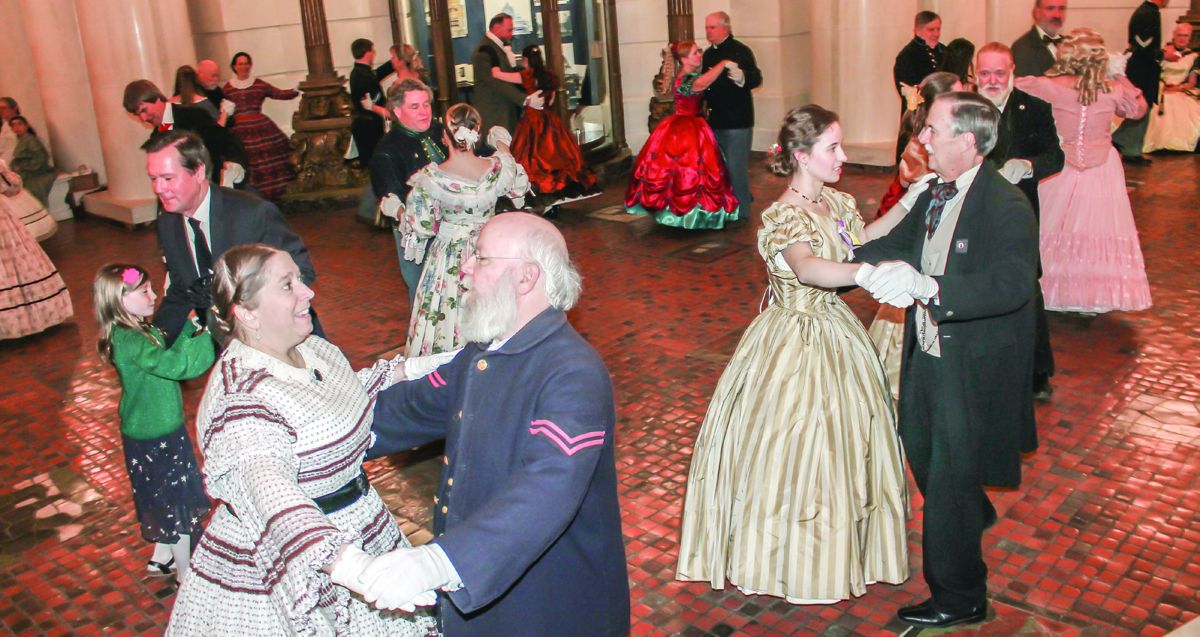

Although the waltz in the closed or “round” position was considered scandalous by some, it was becoming increasingly popular during the Civil War. One waltz at the ball was a Chassez de Amour, or Chase of Love in which the dancers change partners every few minutes at a musical signal from the band.

HARRISBURG, Pa.—The 15th Annual Civil War Preservation Ball was held in the rotunda of the Pennsylvania Capitol Building in Harrisburg on Saturday, March 10. The ball raised money for the Pennsylvania Gettysburg Monuments Project which provides funds for the repair and maintenance of monuments at Gettysburg National Military Park. This year’s ball brought the total raised in fifteen years to over $100,000! Dancers came from Pennsylvania, Delaware, Maryland, New Jersey, New York, Tennessee, and Virginia to “dance for preservation.” This ball is the nation’s most elegant Civil War event. The rotunda of the capitol building is a spectacular setting for an 1860s ball. The architecture and artwork provide a fitting background for the dancers, with ladies in hoop dresses and gentlemen in formal attire or military uniforms. Dance instruction was provided by the Victorian Dance Ensemble (VDE), the performing troupe of the Civil War Dance Foundation. The VDE members demonstrated a dance while the dance master explained the movements. Then the guests were placed in formation and talked through the moves. When the music began, the VDE members served as floor managers and assisted any guests having difficulties. Lawrence Keener-Farley, Rebecca Kesler, and Gary Peyre-Ferry served as dance masters. Prior to the ball, the Civil War Dance Foundation offered three free dance classes at Pennsylvania State University’s Harrisburg Campus to prepare guests for the ball. (All Photos Credit CWDF) Music was provided by the Philadelphia Brigade Band, a seventeen piece brass band under the direction of Richard Cummines. Throughout the evening, the band played authentic mid-nineteenth century music, ranging from slow waltzes to lively reels. Special thanks to the event sponsors for supporting preservation: PNC Bank, Gmerek Government Relations, Inc., Columbia Gas of Pennsylvania, Malady & Wooten LLP, Pennsylvania American Water, Cranmer Associates, Pennsylvania Chamber of Business & Industry, Roaring Spring Water, Costco, and Giant Foods. Next year’s ball will be held on March 30, 2019. Make plans now to attend and join in “dancing for preservation.” For more information on Civil War dancing, visit www.civilwardance.org.
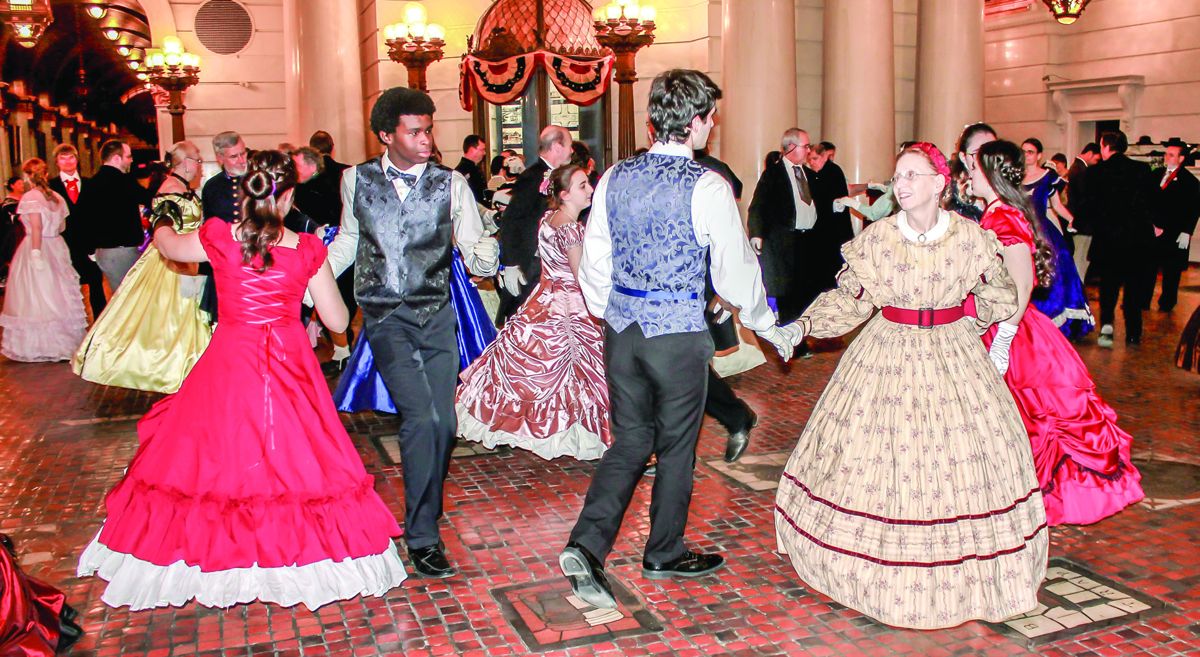
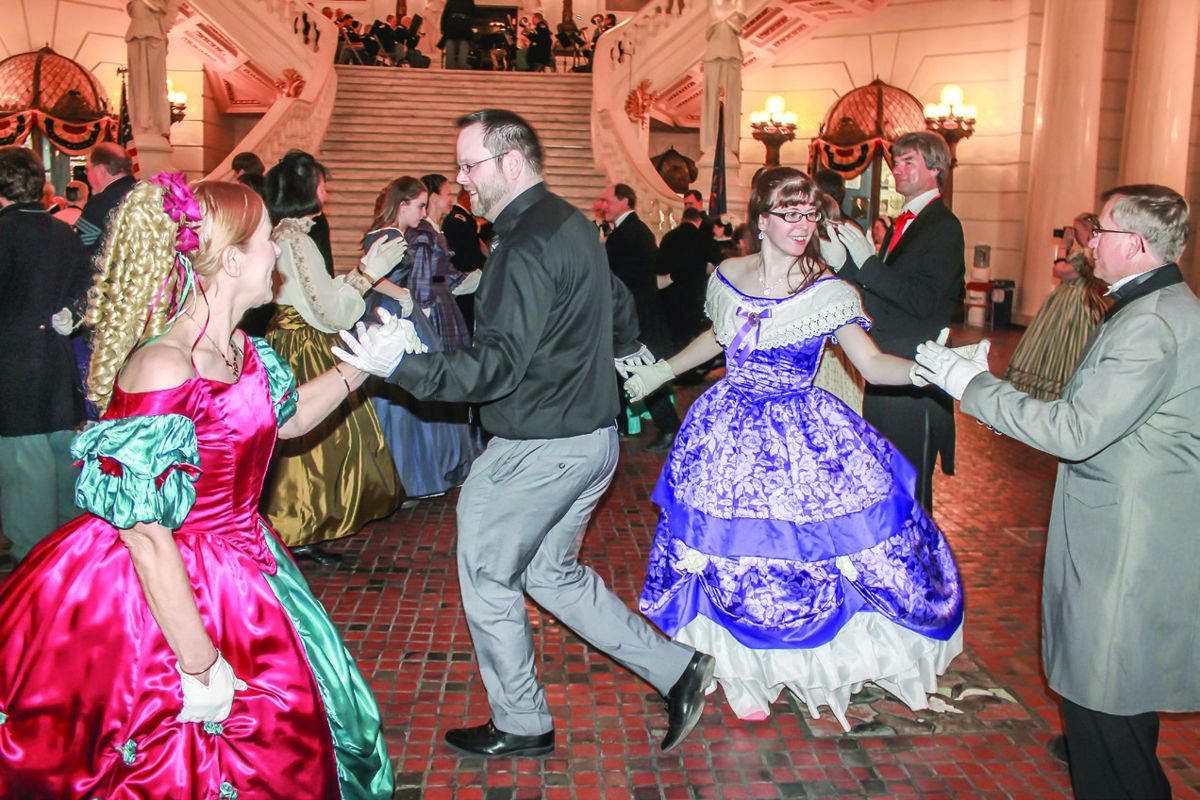
Lancer’s Quadrille Dancers performing the Grand Chain move of the Lancer’s Quadrille, the most common dance seen on dance cards during the Civil War.
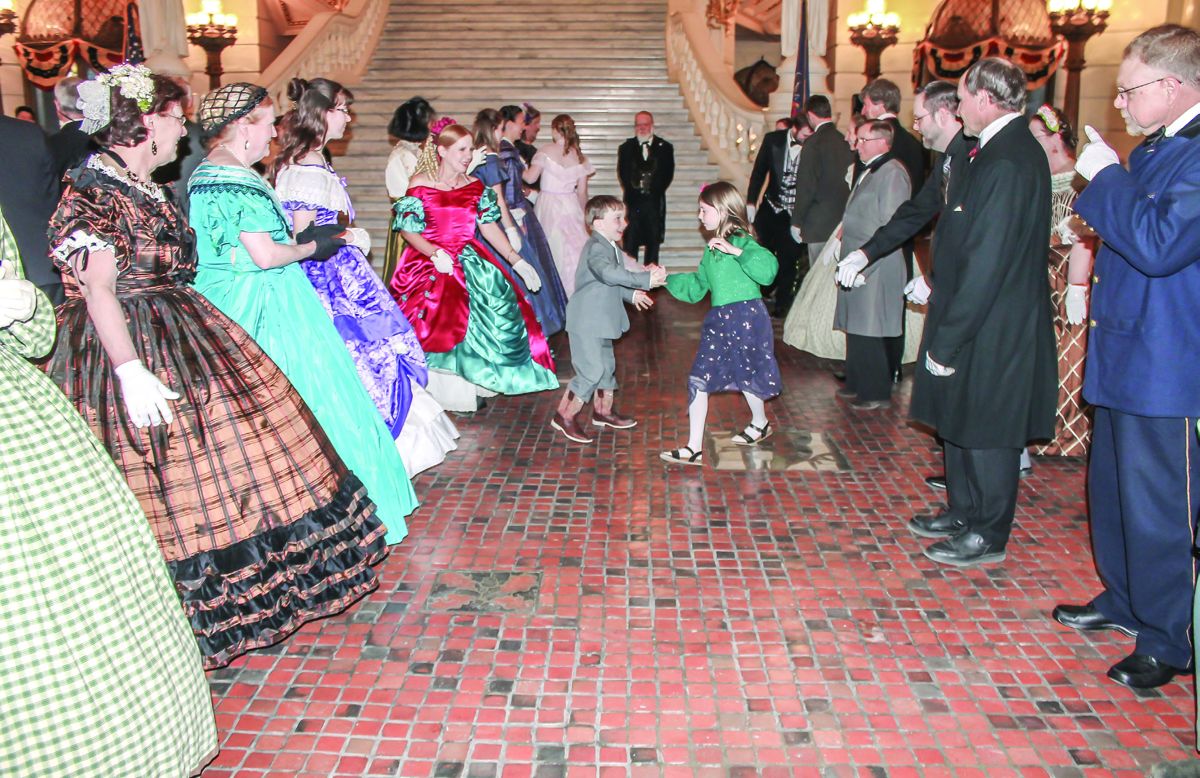
The dance most associated with the Civil War is the Virginia Reel. It originated as an English Country dance called the Sir Roger De Coverley. In America, both North and South, it was often the last rousing dance at a ball.
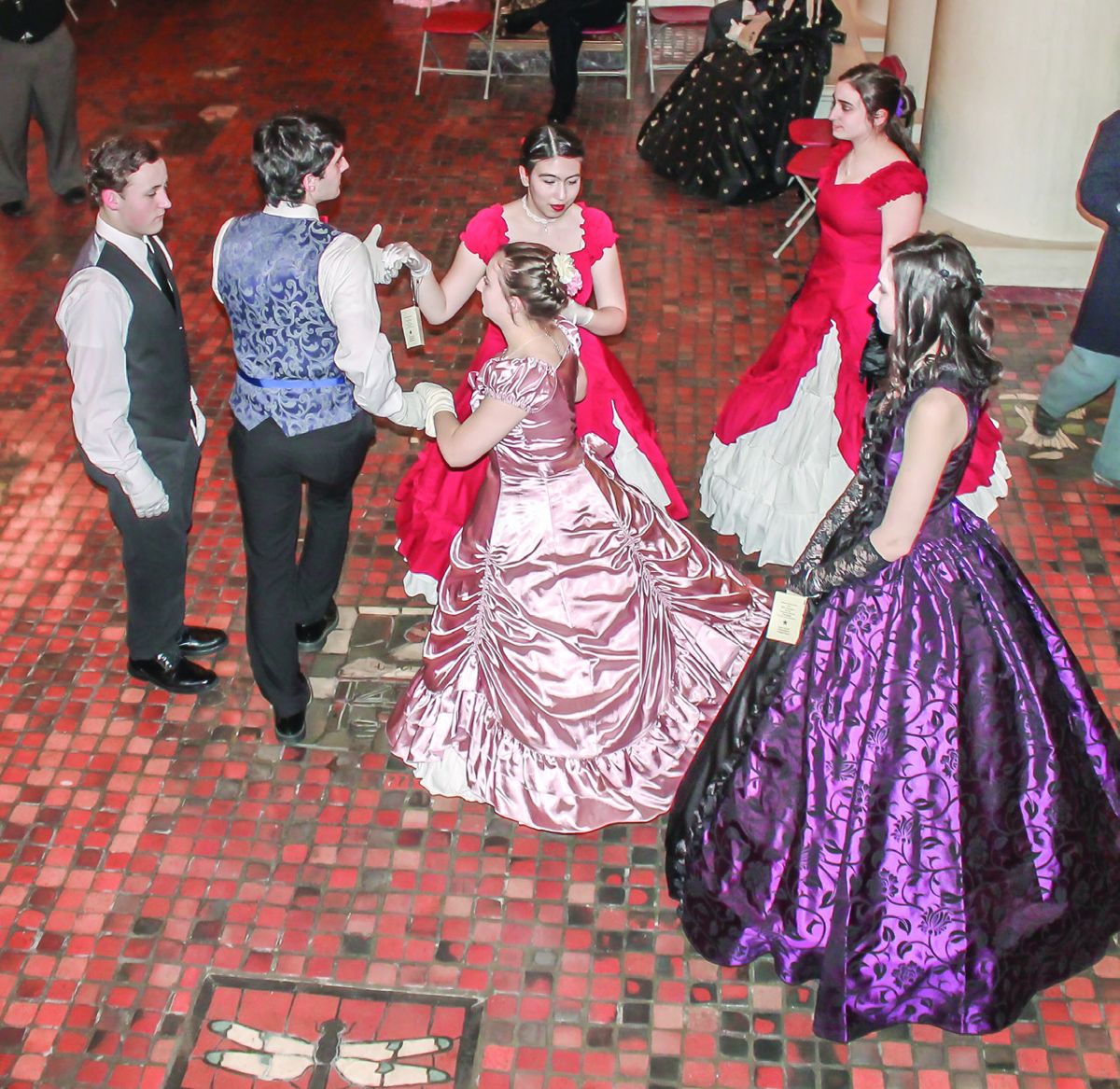
Swedish Dance Ladies often outnumbered gentlemen at balls so dances were devised that had each gentleman partnered with two ladies. Here a group of homeschool students from New Jersey perform the Swedish Dance.
Dancers at the ball ranged in age from six to ninety-one. The adults were delighted to see young people involved and helped them move through the formations.

Subscribe to Civil War News ·Order back issues