
The Civil War Letters of James Andrew James
By Bruce S. Allardice and Wayne L. Wolf · Originally published March 2018 · pp. 8–9
During the Civil War Private James A. James wrote numerous letters home to his family, describing life in the Confederate Army of Tennessee. A collection of these has recently come to light. James Andrew James (1839– 1903) was the son of John “Jack” and Rachel Kelly James, farmers in Anderson County, S.C. On April 1, 1863, he enlisted in Thomas B. Ferguson’s Battery, SC Artillery, formed during April 1862 at Charleston. In May 1863, the unit was sent to Mississippi to aid in the relief of the Vicksburg garrison. Attached to General States Rights Gist’s Brigade, the battery joined the Army of Tennessee in late 1863 and served with that army the remainder of the war. Captain Ferguson was wounded in 1863 and leadership passed to Capt. Henry Davis Calhoun (1838–66), nephew of Vice President John C. Calhoun. The battery eventually came under Rene Beauregard (1843–1910), son of the famous general. The unit was largely captured Dec. 16, 1864, at the battle of Nashville. Despite protestations that he’d never desert the army, J.A. James is listed as having deserted in May 1864. After the war he and his wife Emeline Phillips farmed in Monroe County, Ark. The transcripts below have been lightly edited for spelling and clarity, but not for grammar. The first letter is datelined Columbia. It appears James has been left behind in South Carolina due to his boil. He gives advice to his family on how to dispose of his belongings, and suggests that any locals seeking to join the army could join his unit. Columbia, S.C. August the 13 [1863] Dear Father and Mother and Brothers and Sisters. I seat myself to drop you a few lines that I hope many find you all well as I am the same more than I have got a very bad boil on me at this time. I received your letter and ‘was glad to hear from you one time more. I have not got that box yet. I go to the depot every day and saw that it don’t come and I want to know if you have started if [sic it] or not and if you have not I want to know whether you are or not. If you have started some you had Better not start any more for if it don’t come perhaps the next one would be the same war. I want you to tell Jane and the children all handy for me and John and family and Mom, Griffin, James and John Macklorland is a getting along and when you heard you wanted to know how I was satisfied in camps. I reckon I am as well satisfied as any man can be in camps. You wanted to know how long we would stay here. I can’t tell you how long we will stay yet. But we will not stay long I reckon. I want to know if you have sold my fiddle yet or not and if you have not sell it and return the money over to Emeline [his wife] and tell Emeline that I will send her a present in my next letter and I want to know if Tomey [brother Thomas Elias James (1845–99] is gone up to my house yet or not and if he is not I want you to send him up in a few days and take care of my things and you may have the fodder and shacks in pay for him a staying. If John wants to go to the war to come to this company for it is a good company and if he does want to come tell him to write and I will get it arranged for him and if you no [sic] of anyone else about there that has to go tell them to write to me and I will fix it up with Capt. Calhoun. So close write soon and oblige your son, J.A. James From the dateline “Atlanta” in the next letter it appears Private
Greg Ton Buying and Selling the Finest Confederate, Obsolete and Southern States Currency
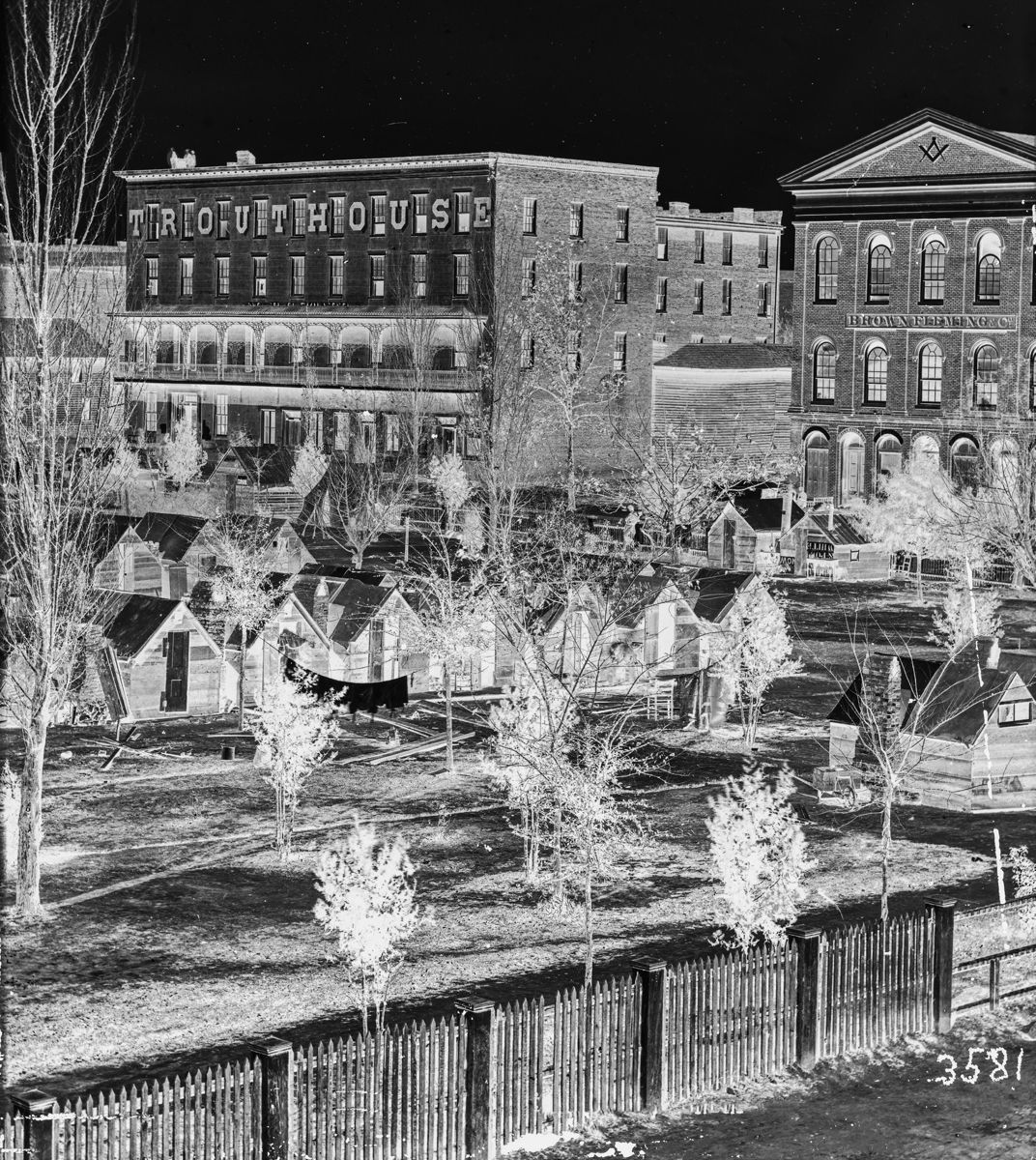
James is again is away from his unit, which five days later fought in the Battle of Missionary Ridge. Atlanta Ga Nov 20th, [1863] Dear Father I have read your kind letter today & was happy to hear from you although they have been some time since on the road they were tacked so they went to the front to Lookout Mountain Tenn. & the old company, they was a man came down from them to day & brought them to me. I am quite well at present. I have not heard from John [James’ brother John K. James (1834–1912), a captain in the Hampton Legion, who evidently visited his brother while on leave] since he left. John Chapman is at home, he left with him & says he is coming back & the Captain says for John to come back & it will go a heap lighter with him than if he is sent for if he comes home tell him [should] come back at once. [Private John F. Chapman is listed as AWOL from the unit Oct. 16 to Dec. 1, 1863] I want you to (post) your letters to Atlanta Ga in care of Capt. H D Calhoun’s Light Artillery that is enough I have often heard tell of the devil but yesterday evening I saw him plain in the shape of a man. There was two men that stole some money at the Trout house a hotel & they caught them & tarred & feathered one of them & sheared one side of their heads and marched through the city with a fife & drum. The one that was tarred looked like a frizzly chicken only _ the other one had a large Board on his back with The Trout House Thieves marked on it. __ like The devil before day. I want to know if you have seen Henry Barkley yet to know if he is going to come or anybody else. If you have write & let me know if there is anybody & you will write maybe I can come home & get them if they will come to the company. Tell Jane and her children howdy for me & respects to enquiring friends. Be sure & write soon, nothing more but remain your Loving son J. A. James Write To J. A. James Capt H D Calhouns Light Artillery Atlanta Ga. The next letter is written on Christmas eve. It appears Calhoun’s battery awaits transportation to the front at Dalton. Dec the 24 Christmas eve Atlanta, GA [1863] Dear father and Mother I seat myself to write you a few lines to let you know that I am Well at this Time a hoping that these few lines may come safe to hand and find you all quite well I have not got anything of importance to write you more than to let you know that we are on the eve of starting to the front we are at the Depot at this time a waiting for them to get the cars ready for to take us off we have been here since yesterday morning this is about all the News that I have got to write you at this time you wanted to know if my capt would take any more recruits or not he will take all that he can get there is one man here that says that he would take his place if the swap can be made. I will send you my [tin] type in this letter for a christmas present as I am to for [too poor] to send anything else that is worth anything. I will write to you again when we get to our journey end and I Don’t want you to write any more to me until you hear from me so I still remain your son as ever J A James The next letter, from Dalton, anticipates Sherman’s Atlanta Campaign. The Union army indeed advanced two weeks later and took Dalton. Camp near Dalton, Ga. This the 27th day of April, 1864 My dear loving Father & Mother, It is through the kind mercy of God that I am blessed with the opportunity of writing you a short letter which will inform you that I am well & hearty hoping these few lines will soon reach your kind and lovely hands & find you all in the same enjoyment of the same like blessing of health. I can say to you Dear Father & Mother I rec’d your kind and welcome letter this evening & I was truly thankful to hear from you all one time more. I can say to you it has been a long time since I have heard from you. Before this time I think it has been about three months. I never heard a word from you your letter stated that you thought hard of me for not writing & I don’t think you ought to for I have wrote several letters myself & never got no answer. You said that you had hard times back there in old Carolina. I also can say to you that there is not all the place that hard times has reached for if we don’t see hard times here I don’t know what you will call hard times. You wanted me to write all the news that I knowed or have heard of. I can say to you Dear Father and Mother I have but little news to write. I can say to you we are looking for a big fight here soon. All the baggage is sent off to the rear and all furloughs is stopped and I don’t know when they will start the furloughs again. I can say to you I want to come home very bad but I am out of heart of getting home soon. I will close. Nothing more your son till death. J.A. James John & Rachel James The last letter, from the army’s camp at Dalton, suggests that his unit was almost starving, although it was stationed near a railroad supply line. This runs contrary to the common belief that General Joe Johnston had largely solved the army’s supply problems. He notes the ever-present rats that seemed to infest many wartime camps, and expresses the common soldier’s wish for peace to come. Camp near Dalton GA. April the 28, 1864 Dear sister this morning affords me the pleasure of writing you a few lines which will inform you that I am well & hearty hoping these few lines will safely reach your kind hand & find you in the same enjoyment of health. I have nothing of interest to write more than hard times & worse a coming though they are everywhere I reckoned we have but little to eat here we have nothing but bread to eat for a few days past and but very little it does no good one third of a Pound a day & some days we get none.
You wrote to me something about Tom & his wife & would be glad to know who Tom & his wife was I don’t know which Tom it is that summer shoat Tom that stayed about thar. Jane I want you to write to me if that Tom can lie in the bed without pissing on the Bed or if they have quit pinning rags to him of night. … I think Peace’ will be made if that don’t end the war. I don’t think it will stop soon. Goodbye nothing more write soon J A James to Frances James [his sister, 1836–1918] A few lines to Martha James [his sister, 1843–1933] Dear sister I take this opportunity of writing you a few lines to let you know that I am well and hope these few lines will find you well I have nothing strange to write. You said you was a going to marry I would like for you to wait till I could come home though you might have to wait a long time though I would be glad that you could wait if you can’t wait and will marry. I want you to send me a lock of his hair to put in a gourd to put water to for the rats to drink of & to kill them. The rats is very bad here and that is a plan that I have picked on to get rid of them. Bruce S. Allardice is Professor of History at South Suburban College in Illinois. He is a past president of the Civil War Round Table of Chicago. Wayne L. Wolf is past president of the Lincoln-Davis Civil War Roundtable.