This And That
Perspectives on Manassas
By Gould Hagler · Originally published March 2018 · pp. 20–21
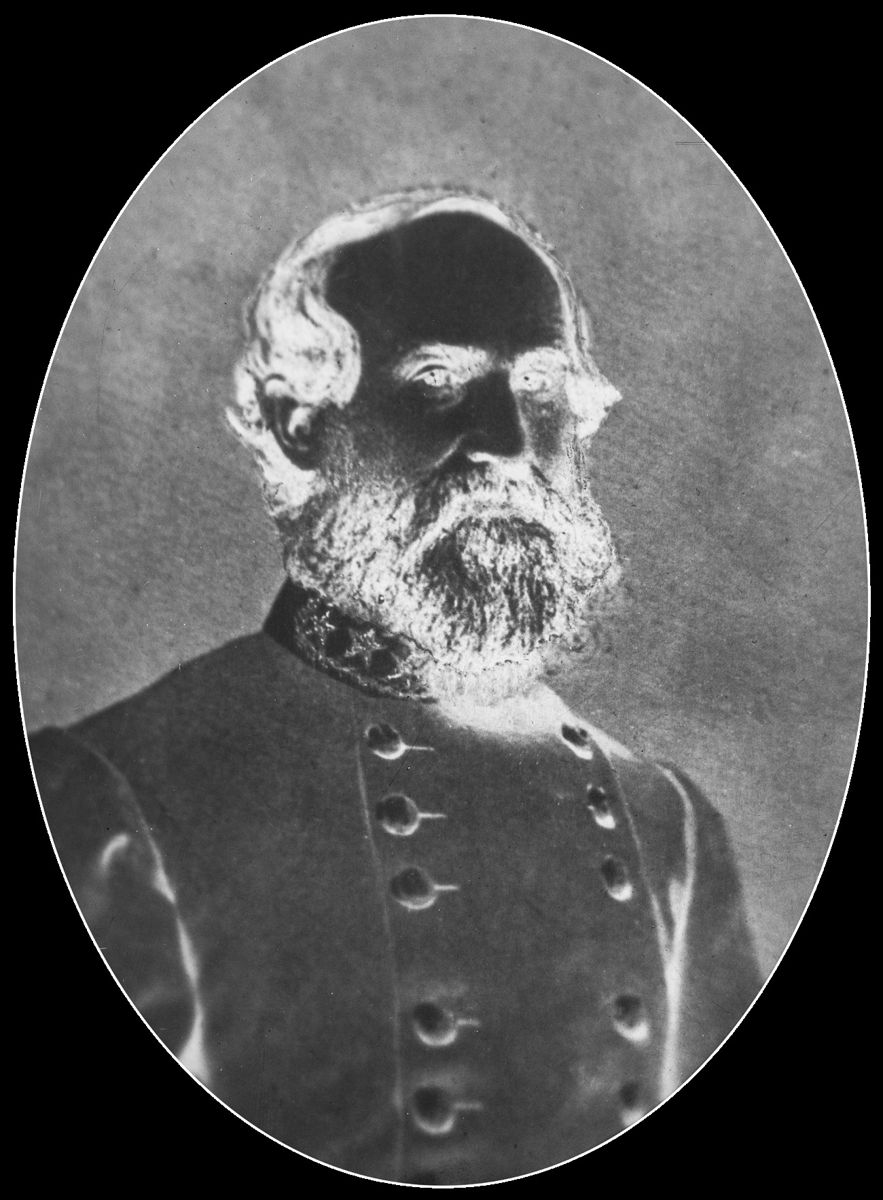
Last month we examined the First Battle of Bull Run from the point of view of five Federal officers who commanded brigades in the first major battle of the Civil War. In this article we will review the writings of four Confederate officers and learn what they have to tell us about the battle they named Manassas. The Confederates won the day and remained on the field. They were not tested in a large-scale retreat, as were the Federals, who suffered a dramatic breakdown of discipline in their panicky flight. Still, the Confederate officers’ memoirs make it plain that the Southern army was far from mature as an instrument of war. The men were neither toughened for long marches nor hardened to the demands of battle, and their officers were not yet efficient at moving and fighting the men. Our first witness is E. Porter Alexander, Beauregard’s engineer and signal officer. Assigned to this position in the first days of July, he recounts in his memoirs that “my first duty was to organize & instruct a signal corps & my second to study the topography of our probable field of action.” His account paints a clear picture of the terrain, the position of the armies and the distances between key points. “The creek would average perhaps 30 feet in width & with alternate deep & shallow places. Infantry could find places to cross in almost any locality & there were several farm fords & roads along the line.” He provides a map showing these features, plus the railroads, other battlefield landmarks, and the tributary creeks. The map also shows his main signal station behind the right end of the Confederate line from which he observed early in the day, “the reflection of the sun from a brass cannon” and “the glitter of bayonets all along the road,” as Federal troops beyond the creek moved in force toward the left of the Confederate line. Alexander also discusses some of the principles of military science illustrated by the battle fought on this terrain—concentration of “all your force against fractions of the enemy’s,” the use of interior lines of communication, and unity of command. Concerning this last principle, he writes: “ the fault on both sides lay I think in each not having one commander in chief over both its armies, with authority & power to handle both as one without waiting to explain to, or convince, any body. Both of us learned better than that before the war was over.” There were other lessons to be learned also. As to our ‘line of battle’ along Bull Run, it was never put to the test of an attack in front, but judged by experience acquired later it was not particularly a good one, & we did little or nothing to strengthen it. Later in the war we would have straightened & shortened it, & had more & better roads behind it parallel to its direction, & we would have had rifle pits at important points & a few empandements for guns. We turn next to the account penned by Joseph E. Johnston, who transferred his army from the Shenandoah Valley to join Beauregard’s on the Manassas battlefield. At noon on July 18, eleven hours after he was notified that Beauregard was under attack, Johnston started his troops on the 60-mile trek to Manassas. “The discouragement of that day’s march to one accustomed, like myself, to the steady gait of regular soldiers, is indescribable,” he writes. The new and inadequately trained troops’ “frequent and unreasonable delays caused so slow a rate of marching as to make me despair of joining General Beauregard in time to aid him.” Johnston was able to arrange for some of his troops to board trains for part of the trip and, he tells us, he joined Beauregard at noon on the 20th, accompanied by just 40% of his force. At that point the Confederates’ plan was to cross Bull Run on the lower fords and attack toward Centreville on the Federal left. The plan was quickly altered, as Johnston tells us: “At nine o’clock, Captain Alexander…reported that large bodies of Federal troops could be seen from one of his signal-stations, crossing the valley of Bull Run, about two miles above our extreme left.” Recognizing immediately the need to transfer men to face the attack on the left, Johnston issued the necessary orders, then “set out at a rapid gallop, accompanied by General Beauregard, to give such aid as we could to our troops engaged four miles off.” The two generals arrived as the brigades on the left were beginning to break. Stragglers were put back into the fight as Thomas Jackson and his brigade were beginning to earn their immortal sobriquet on Henry Hill. The immediate crisis was passed, but for much of the day the Confederate effort was aimed at moving troops from the right to the left of the line—and hoping for the rest of Johnston’s men to arrive from the Valley. Jubal Early’s brigade was among the troops hurrying to the threatened left. Early writes that between noon and 1 pm he received the order to move. He took three of his four regiments, plus one borrowed from Longstreet, and was moving by 1 pm. Towards 3 o’clock P.M. we reached the field of battle,” Early writes, “and began to perceive the scenes usual in rear of an army engaged in action. On entering the road leading from the Lewis house towards Manassas, we met quite a stream of stragglers going to the rear, and were informed by them that everything was over with us…. Some of the men said that their regiments had been entirely cut to pieces, and there was no use for them to remain any longer. It was to the encouraging remarks of this stream of recreants that my command was exposed as it moved on, but not a man fell out of ranks. Early encountered General Johnston at this critical time. His memoirs describe the status of the battle as he and Johnston conferred. “Affairs now wore a very gloomy aspect, and from all indications in the rear the day appeared to be going against us.” While Early and Johnston were talking “quite a squad of men approached us going to the rear.” Directed by Johnston to have his men drive the shirkers back to the battle with bayonets, Early gave the order to one of his regimental commanders. He quickly changed his mind. “I directed Colonel Kemper to move on and not delay battling with such cowards.” A “very gloomy aspect” indeed. For the climax of the battle and the Federal retreat we remain with Early. “I immediately ordered my command forward and it advanced to the crest of the hill…. On reaching the crest we came in view of the Warrenton Pike and the plains beyond, and now saw the enemy’s troops in full retreat across and beyond the pike.” James Longstreet’s brigade remained on the Confederate right and did not take part in the fierce fighting on the left. Late in the day he received a message from Johnston revoking authority to cross the run at Blackburn’s Ford, which had been granted earlier. The message said that, the Federals were pressing severely on our left, and to the limit of its tension, that [Federal] reinforcements were in sight, approaching from their right, which might prove too heavy for our brave men, and force us back, for which emergency our brigades should be held ready to cover retreat. Even at this late hour, with the Federals racing north, there was still uncertainty in some quarters. When Longstreet crossed to the north bank of the creek to join the pursuit (the sixth time his brigade crossed, he tells us), he was preparing to unleash artillery on the fleeing Northerners. As the guns were about to open, there came a message that the enemy, instead of being in precipitate retreat, was marching around to attack the Confederate right. With this report came orders, or reports of orders, for the brigades to return to their positions behind the run. Longstreet describes the scene:
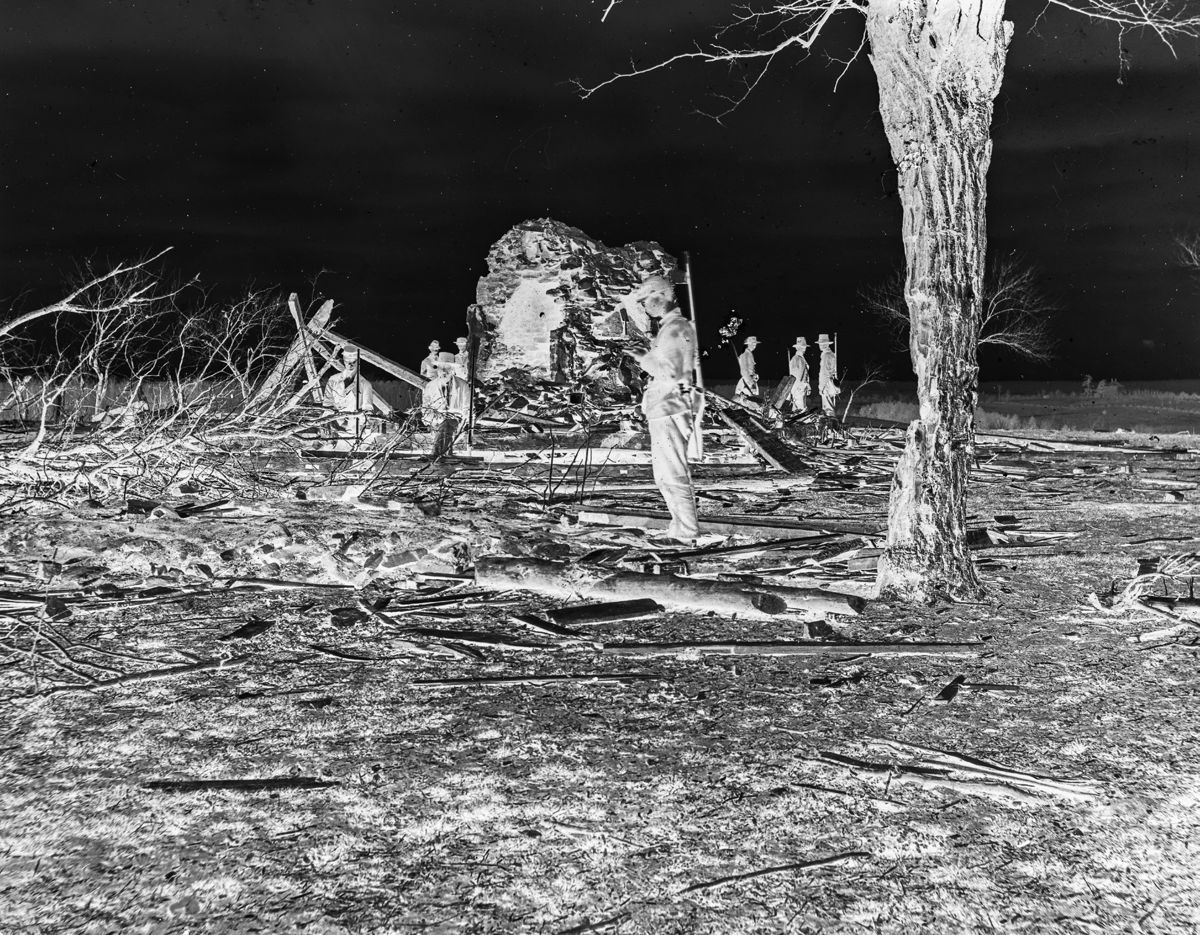
“Through the abandoned camps of the Federals we found their pots and kettles over the fire, with food cooking; quarters of beef hanging on the trees, and wagons by the roadside loaded, some with bread and general provisions, others with ammunition.” A Federal attack? Nonsense, Longstreet said. “I denounced the report as absurd, claimed to know a retreat, such as was before me, and ordered that the batteries open fire.” But an officer senior to Longstreet “asked that the batteries should not open. As the ranking officer present, this settled the question.” Early’s memoirs conjure a vivid image of the aftermath of the Federal retreat as he observed it on July 22. “The country in the rear of the enemy’s line of battle of the day before, and along his routes of retreat was strewn with knapsacks, haversacks, canteens, blankets, overcoats, india rubber cloths, muskets, equipments [sic], and all the debris of a routed army.” Alexander’s account includes two interesting anecdotes. The first pertains to a fact about the battle we all learned as schoolchildren. Some denizens of Washington City came in their carriages to view the battle. One man, a congressman, was captured in the chaotic flight by a sergeant-major and taken to a Colonel Cash, who was infuriated by this man who considered the deadly battle to be a spectator sport. Alexander quotes the hotheaded colonel: “You infernal s. of a b.! You came to see the fun did you? God damn your dirty soul I’ll show you.” Cash maneuvered his horse to get around the sergeant-major so he could shoot the terrified congressman. “God damn him! Came out to see the fun! Came to see us whipped & killed! God damn him!” Alexander saved the man from the irate colonel. He was made a prisoner and was soon exchanged. Surely this man never again thought it would be fun to watch a battle as sport. After the carnage at Manassas, no one did. The second anecdote is a sad one. The home of Judith Carter Henry, made famous by the battle, stood in the center of the maelstrom, and in this house Mrs. Henry died. Alexander describes the post-battle scene. “The body of poor Mrs. Henry, very old & bed ridden, lay in her bed struck by one cannon ball & about three musket balls. The house was riddled from every direction.” This civilian spectator was, unlike the congressman, not on the battlefield by choice, and, unlike the congressman, she could not be rescued by Captain Alexander. Sources: • Jubal A. Early, Lieutenant General Jubal A. Early, Confederate States of America, Kindle Edition 2012, originally published in 1912. • Gary W. Gallagher, Ed., Fighting for the Confederacy: The Personal Recollections of Edward Porter Alexander, Chapel Hill, University of North Carolina Press, 1989. • Joseph E. Johnston, Narrative of Military Operations During the Civil War, New York, Da Capo Press, 1959, reprint of original published in 1874. • James Longstreet, From Manassas to Appomattox, Kindle Edition 2012, original published in 1896.
Gould Hagler is a retired lobbyist living in Dunwoody, Ga. He is a past president of the Civil War Round Table of Atlanta. He is the author of Georgia’s Confederate Monuments: In Honor of a Fallen Nation, published by Mercer University Press in 2014. He speaks frequently on this topic and others related to different aspects of the Civil War and has been a regular contributor to CWN since 2016.