
Through The Lens
Scaring Lincoln
By Stephanie Hagiwara · Originally published June 2018 · pp. 8–9
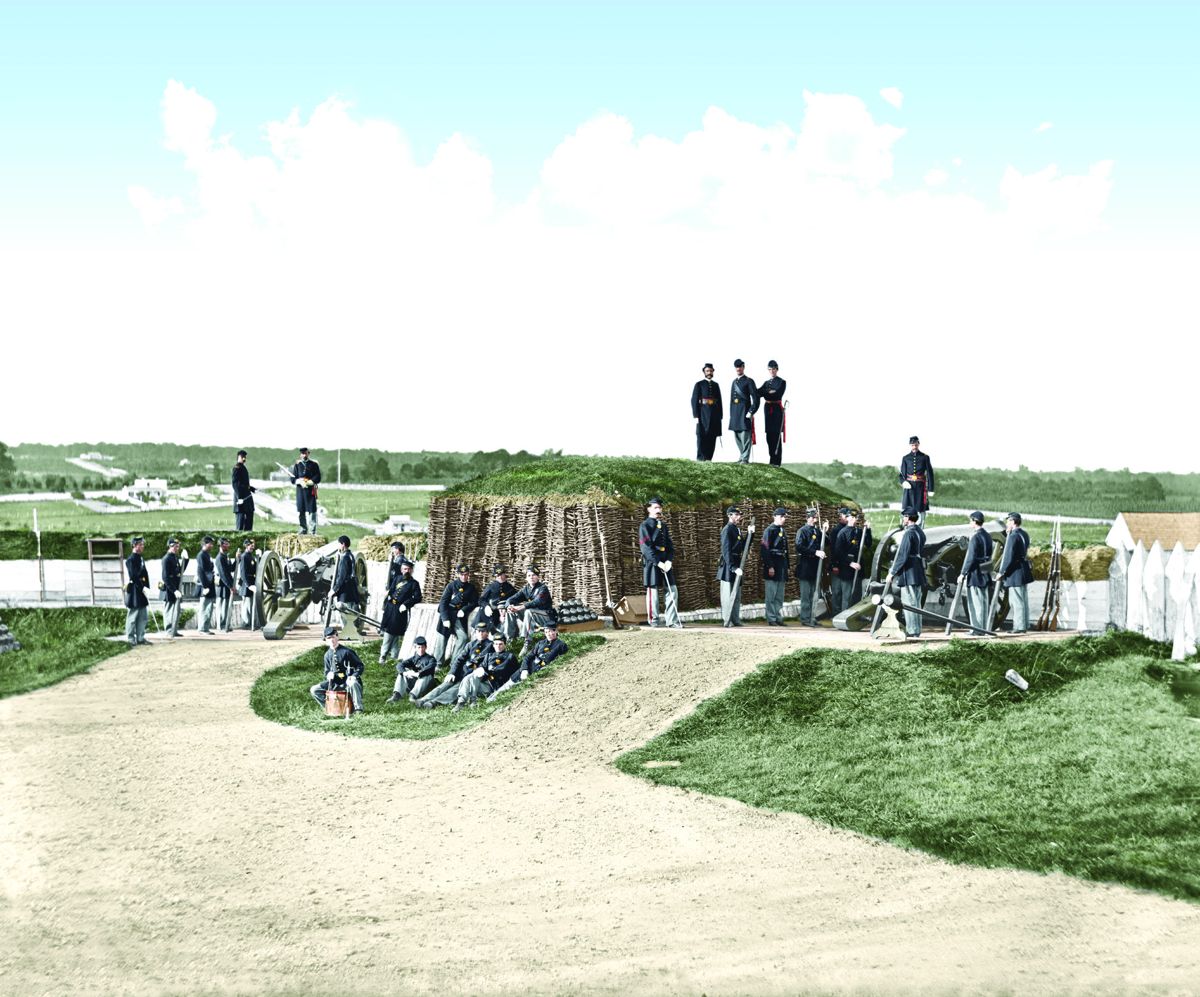
“We have five times as many generals here as we want, but are greatly in need of privates. Anyone volunteering in that capacity will be thankfully received.” – U.S. Gen. Henry Halleck On June 13, 1864, Confederate Gen. Jubal Early left the Shenandoah Valley, Va., for Washington D.C., as ordered by Gen. Robert Lee. His plan was to compel U.S. Gen. Ulysses Grant to send troops away from Petersburg, Va. To move swiftly, Early ordered minimum baggage. Before they crossed the Potomac River on July 5, his troops were issued new shoes to protect their feet on the stony Maryland roads. In the Capital, residents were planning their getaways from the muggy heat. Francis Preston Blair, longtime advisor to Presidents, was looking forward to his holiday with his son, Postmaster General Montgomery “Monty” Blair. Hearing reports of Early’s march, his daughter Lizzie implored her mother, Eliza, to at least remove the valuables from their home at Silver Spring, Md., ten miles from Washington. Eliza refused, as “she would not have the house pulled to pieces.” Fresh from stopping U.S. Gen. David Hunter burning his way through the Shenandoah Valley,
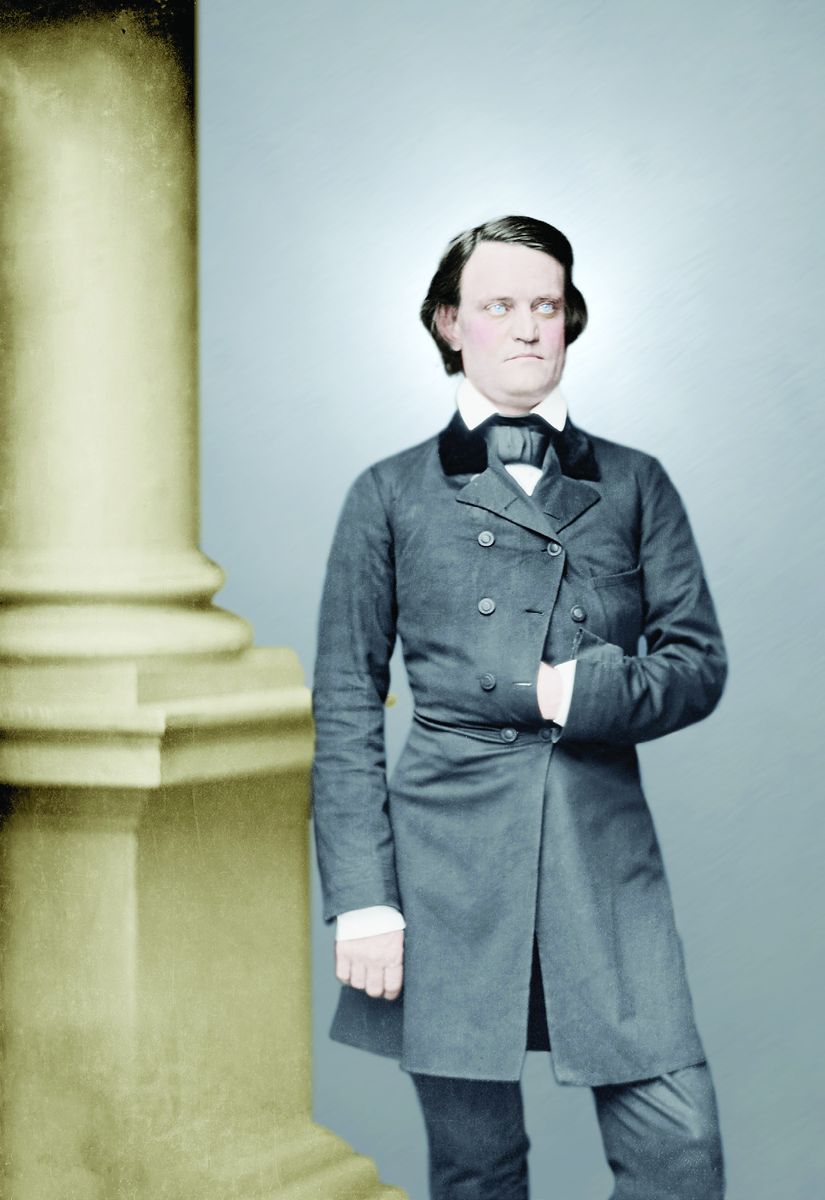
Early and his troops were looking for payback. Early took time to cut telegraph wires and hold Hagerstown and Fredrick, Md., hostage for a combined $220,000 ransom. U.S. Gen. Lew Wallace scrambled to gather troops to hold off Early’s approach at Monocracy Junction, Md. On July 9, Wallace’s 7,000 troops lost the Battle of Monocracy to Early’s 15,000 but succeeded in delaying Early. The Confederates, having marched on dusty roads and fought during one of the worst heat waves on record, needed a break. Early let his troops loose to destroy stores, mills, houses, railway tracks, and bridges. At Blair Senior’s home, Gen. John Breckinridge arrived to find men wearing assorted captured finery and dancing with “great frolic” on the lawn. The former U.S. Vice-President and Senator insisted they stop their destruction, return their booty, and had Early provide a guard to protect the property. When Early asked why he would “fret about one house when we have lost so much by this proceeding,” Breckinridge responded that during a difficult period in his life, the old gentleman had taken him in, providing a “place of refuge & of rest.” He didn’t feel the same about Monty’s nearby home. Breckinridge regaled his fellow officers with tales of Washington while draining Monty’s wine cellar. Monty’s ransacked mansion was left in smoldering ruins. From the start of the War, Lincoln had been adamant that sufficient troops be assigned to protect Washington. As the ring of 68 forts and batteries with over 900 cannon and mortars were erected, able bodied troops had been siphoned off, leaving less than 10,000, mostly walking wounded, as a garrison. Early’s approach threw the city in a tizzy. Refugees with their worldly goods poured in as residents fled. Southern sympathizers walked around with knowing smirks on their faces. The assortment of high ranking generals already in town jumbled the Federal command structure. Gen. Montgomery Meigs took command of an “Emergency Division” comprised of Federal employees.
His wife, Louise, was forced to flee despite believing, “… If the Yankees couldn’t take Richmond, why would the Confederates be able to take Washington?” On July 11, Early’s troops were making their way towards Washington when firing could be heard from Ft. Stevens. Riding forward, Early spotted “works which were feebly manned.” While waiting for his infantry, Early asked a local farmer about Washington’s defenses. “Nothing but earthworks, was the general’s remembrances of the man’s reply, and not a large force, the farmer had added. Maybe 20,000 men in them. Early realized that earthworks ‘in the then state of the science of the war’ and defended by even 20,000 men presented a formidable obstacle.” On the other hand, Lee’s ploy worked. Grant, after consulting Lincoln, sent 15,000 men from VI Corps and XIX Corps. As Washington waited, Lincoln was seen calmly riding around town in an open carriage. He greeted the arriving troops at the wharf while gnawing on hard tack.
“Crowds of Washingtonians made their way by streetcars, carriages, horseback, and on foot out along the Seventh Street road” to see the VI Corps with U.S. Gen. Horatio Wright at their head make their way toward Ft. Stevens. At this point Early had to decide if it was worth gambling a quarter of the Confederate army on this venture. Furthermore, if he punched through, would he be able to keep his command intact through the city’s distractions? As he pondered, a cloud of dust approached from behind the defense line and a column of veterans in weathered blue tunics appeared. Still, having come this far, Early was not leaving without a demonstration outside the gates of the enemy’s capital. Now that battle-hardened veterans had arrived, Lincoln longed for his men to capture the enemy’s force delivered to the Capital’s back door. On July 12, the Federals planned to attack at 5 p.m.; Lincoln, with his wife Mary and other official visitors in tow, arrived at 4 p.m. To his regret, Wright, “thoughtlessly invited him to see the fight in which we were about to engage, without for a moment supposing he would accept. … He took his position at my side on the parapet, and all my entreaties failed to move him, though in addition to the stray shots which were constantly passing over, the spot was a favorite mark for the sharpshooters. When the surgeon … was shot, and after I had cleared the parapet of every one else, he still maintained his ground, till I told him I should have to remove him forcibly.” “I lost my nerve,” future Supreme Court Justice, Oliver Wendell Holmes, aide to Wright used to say, “and yelled at the President, ‘Get down, you fool!’ The President turned to me quietly, and said with a twinkle in his eye, ‘Colonel Holmes, I am glad to see you know how to talk to a civilian.’” Lincoln left the parapet but “would persist in standing up from time to time, thus exposing nearly one-half his tall form to the bullets.” The Confederates would beat off three “feeling out” advances by the Federals. At dusk the firing stopped, and the Confederates began withdrawing. Although coming within five miles of the White House and the only instance of a sitting U.S. President having come under enemy fire, Early’s accomplishment has been treated as a minor skirmish. When mentioned, Early’s final comment during a light-hearted exchange with his aide, Major Kyd Douglas, guaranteed it being including in history. After ordering the retreat Early had jested, “Major,” to the departing Douglas, “we haven’t taken Washington, but we’ve scared Abe Lincoln like hell!” “Yes, General,” Douglas responded in kind, “but this afternoon when that Yankee line moved out against us, I think some other people were scared blue as hell’s brimstone!” Smiling, Breckinridge broke in, “How about that General?” “That’s true,” Early replied, “but it won’t appear in history.” Sources: Hicks, Frederick C. Hicks, “Lincoln, Wright, and Holmes at Fort Stevens”, Journal of the Illinois State Historical Society (1908-1984), Vol. 39, No. 3 (Sep. 1946), pp. 323-332 • Cooling, Benjamin Franklin, Jubal Early’s Raid on Washington • Goodwin, Doris Kearns, Team of Rivals • Foote, Shelby, The Civil War, Red River to Appomattox • Roberts, Cokie, Capital Dames
Stephanie Hagiwara is the editor for Civil War in Color.com and Civil War in 3D.com. She also writes a weekly column for History in Full Color.com that covers stories of photographs of historical interest from the 1850’s to the present. Her articles can be found on Facebook, Tumblr and Pinterest.