
Black Powder, White Smoke
Research Press Journal, Revolver Myths & a Whitworth Story
By Joe Bilby · Originally published June 2018 · p. 4
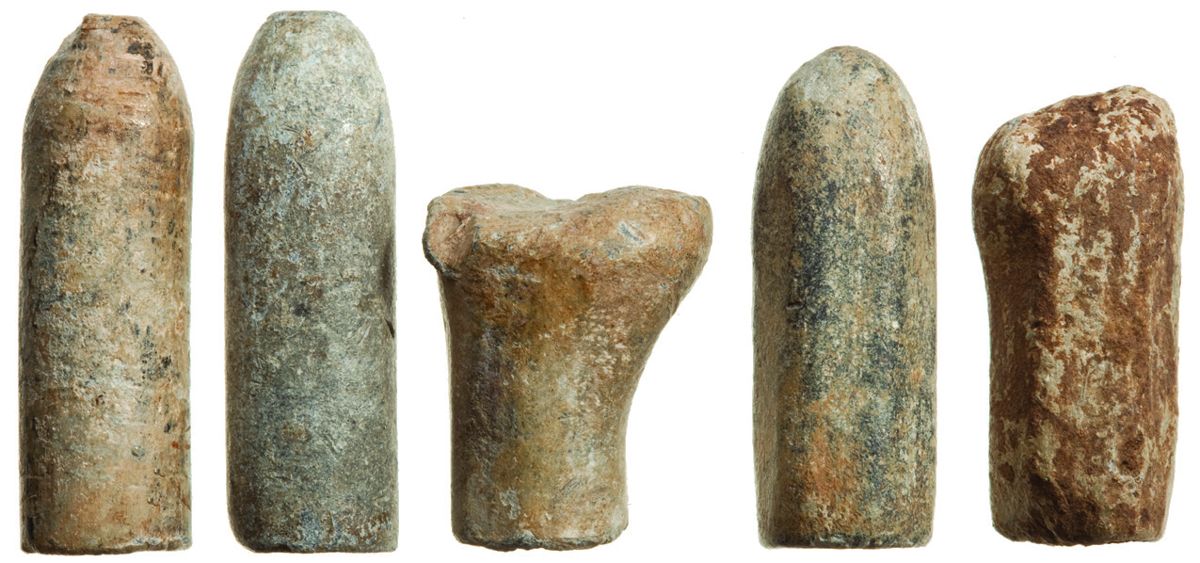
I would like to take a moment to recommend a rather unique publication, the Research Press Journal. The Journal, published in Britain, and accessible in digitized form online, features articles by well-known and respected authors on historical British arms of interest to a broad audience of shooters, collectors, and historians. Since British firearms have a long history in America, particularly in the Revolutionary and Civil Wars, the Journal is well worth a serious look. The spring 2018 issue includes a story on the United States International Muzzle Loading Team (USIMLT) 2018 rifle championship matches held at the Ben Avery Range in Phoenix, Arizona, in March 2018. The article, complete with photographs, details the matches, the firearms used, and shooting techniques. Other articles in the spring Journal include stories on 19th century bullet alloys, an interesting reprint of an 1880 era essay on early firearms development, Enfield sales to the state of Georgia, details on the P53 pattern Enfield accessories, and the mid19th century British volunteer system. Once registered with the Journal, one can access a plethora of archived articles including subjects like the manufacture of percussion caps, nineteenth century rifle tests, handloading, paper patching bullets, creating exact replica Civil War era ammunition, and the history of the Creedmoor International Matches. The Journal is a great research asset to all aspects of muzzle loading rifle interests. You can download individual issues, as well as register as a subscriber at the website: http://www.researchpress. co.uk/index.php/publishing/ category/5-journal
More Revolver Myth Debunking I received some more interesting information on the spare cylinder revolver myth from reader Michael Platt. Mr. Platt advised me that, “about ten years ago,” he had mounted “a campaign to question writers who perpetuated the myth without proof.” In a letter to the Wild West History Association Journal, Mr. Platt, an assiduous scholar himself, noted that an although an article in the publication had mentioned that “a leather box might be attached [to the belt] to carry an extra cylinder,” there was no real provenance for that claim. Platt pointed out that the origin of the belief might have occurred when Samuel Colt produced his original Paterson, New Jersey, made revolvers; he indeed advertised they were available with spare cylinders and noted there is a verified historical reference to two travelers on the Santa Fe Trail carrying Paterson-made Colt handguns and rifles equipped with extra cylinders. The brief period of Colt production at Paterson, which ended in 1842, and the consequent fact that few of these guns were manufactured, mitigates against extra cylinder use being common practice in the percussion revolver era, however. Platt also mentioned that when Colt returned to the revolver business he no longer offered extra cylinders with his revolvers; instructions that came with the guns specifically stated that, “the cylinder is not to be taken out when loaded;” and there are no Civil War ordnance reports that reveal orders for extra cylinders. Since his point was the use of spare cylinders on the frontier, Platt quoted Bat Masterson, who recalled reloading a “cap and ball six shooter” as a difficult task. According to Masterson, “Some were pretty quick at it, but naturally it was slow work at the best. It was partly on this account that many of us carried two guns… . In those earlier days the two guns were a necessity.” Mr. Platt’s research corroborates my own, which revealed Civil War guerillas and cavalrymen carrying more than one handgun, and should put an end to the idea that carrying extra loaded cylinders (save for the small U.S. Navy landing party exception) was not a common practice for either civilians or soldiers in the era of the cap and ball revolver. Another six-gun myth that, although it might not be widespread, may have influenced some folks’ ideas on Civil War era guns, was provided by an incident on the popular television show Pawn Stars. A man brought in a .36 caliber revolver, and the “expert” consulted by the show measured the bore and found that it was around .380 diameter rather than the .360, he expected; so he explained that the gun must have been shot a lot and wore down the rifling. Sure. Think about that one for a bit. Of course, revolvers were not shot that much and soft lead bullets did not wear out rifling. Ah, “reality shows.”
Overall view of a Second Quality Military Match Rifle No. B 547 with telescopic sight mounted on the left side. (Courtesy The Atlanta History Center Collection)

Whitworth Sniping Knowing my multiple interests in firearms history, Civil War history, and New Jersey history, a friend of mine sent me a link to a Civil War letter offered at an auction. The author was Captain John Willian Jr. of the 6th New Jersey Infantry’s Company C. Willian was serving as assistant inspector general on Jerseyman Brigadier General Gershom Mott’s staff at Third Division headquarters of the Second Army Corps’ during September 1864. At the time the division was deployed outside Petersburg along the Jerusalem Plank Road. In his letter Willian mentioned that headquarters was “about 500 yards in rear of the front line [we] are very unpleasantly reminded that the enemy’s sharpshooters are around with Whitworth Rifle’s [sic] which they say will carry a bullet almost any distance. One bullet came along this afternoon and struck right in the centre of my tent floor and glanced up and a half mile further…a person is never safe about here…” Indeed, Captain Willian, one never is. Joseph G. Bilby received his BA and MA degrees in history from Seton Hall University and served as a lieutenant in the 1st Infantry Division in 1966–1967. He is Assistant Curator of the New Jersey National Guard and Militia Museum, a freelance writer and historical consultant and author or editor of 21 books and over 400 articles on N.J. and military history and firearms, and as publications editor for the N.J. Civil War 150 Committee edited the award winning New Jersey Goes to War. His latest book, New Jersey: A Military History, was published by Westholme Publishing in 2017. He has received an award for contributions to Monmouth County (N.J.) history and an Award of Merit from the N.J. Historical Commission for contributions to the state’s military history. He can be contacted by email at [email protected]