This And That
Not Ready to Quit
By Gould Hagler · Originally published June 2018 · pp. 20–21
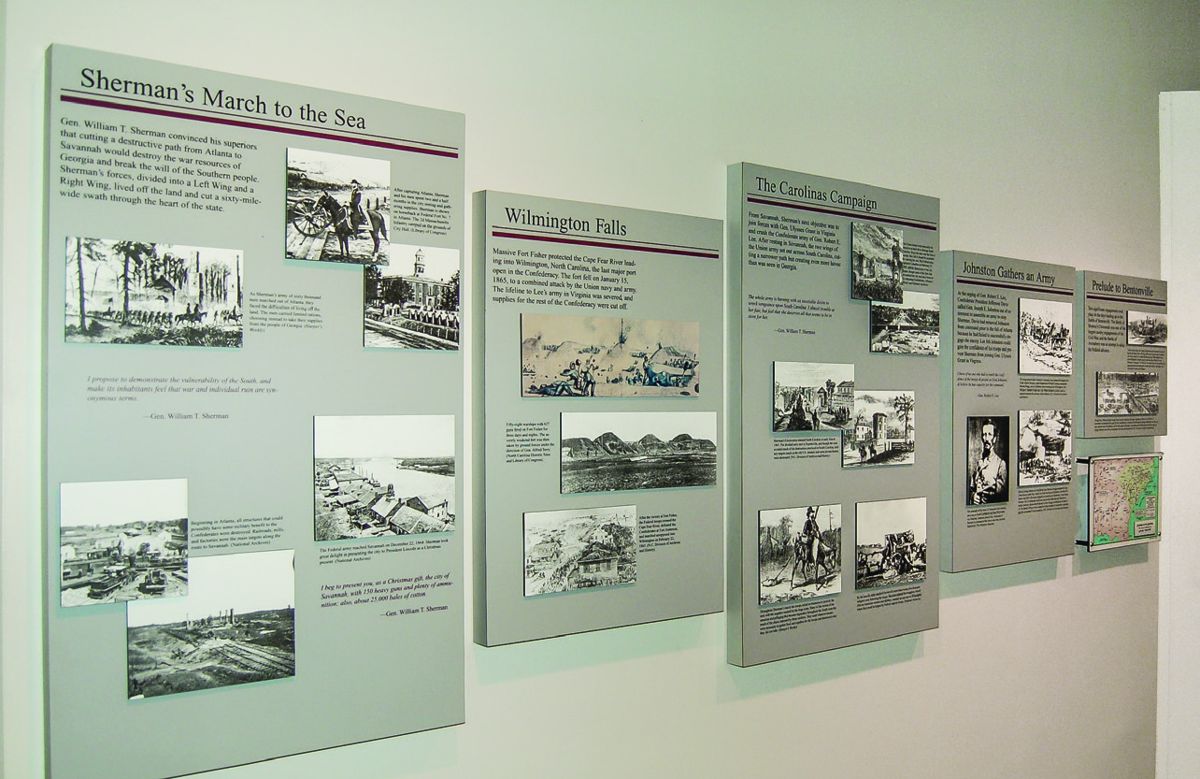
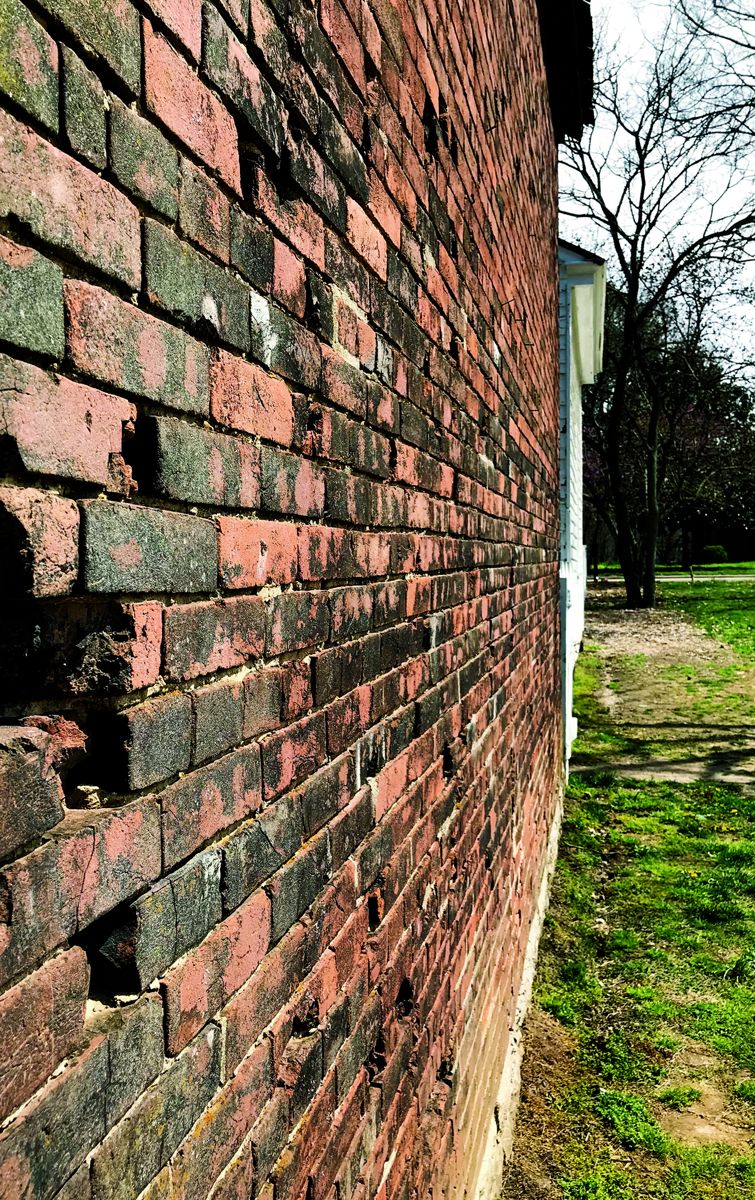
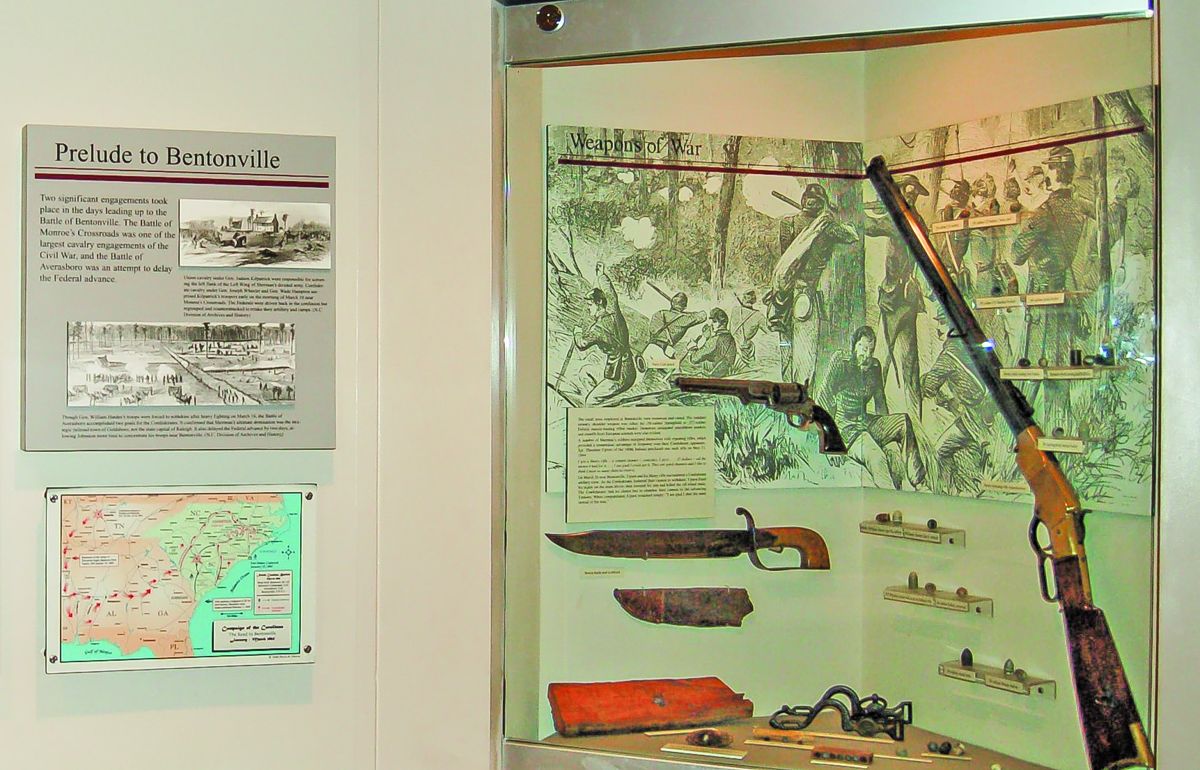
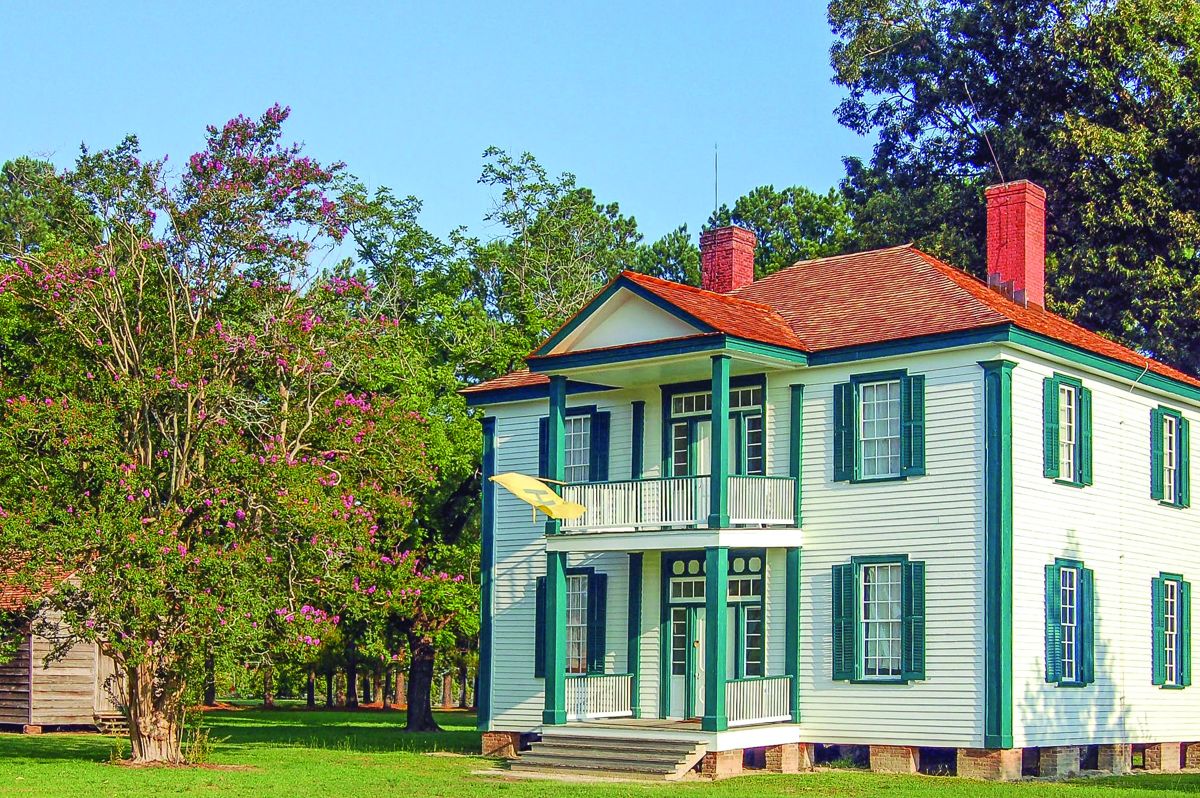
I had heard some cannonading over about Slocum’s head of column, and supposed it to indicate about the same measure of opposition by Hardee’s troops and Hampton’s cavalry before experienced; but during the day a messenger overtook me, and notified me that near Bentonsville General Slocum had run up against Johnston’s whole army. Memoirs of Gen. W.T. Sherman In Virginia, Lee’s army was besieged at Petersburg and Richmond. Hood’s Army of Tennessee was all but destroyed. The fall of Fort Fisher had closed the port of Wilmington, the Confederacy’s last link to the outside world. The Shenandoah was laid waste. The rails were worn out, as were the men, the horses, and the mules. Sherman had cut his way through Georgia and South Carolina and had moved into North Carolina. Yet, even then, the Southern army fought on. On March 19, 1865, at Bentonville, N.C., Gen. Joseph Johnston with his cobbled-together force (grandly named the Army of the South) attempted to thwart Sherman’s advance by attacking the Federal left wing, commanded by Gen. Henry Slocum, while it was separated from Gen. O.O. Howard’s right wing marching toward Goldsboro. The attack was initially successful, but Slocum’s men held on until Howard’s reinforcements gave the Federals an insuperable numerical advantage, 60,000 to 20,000. They attacked the Confederates on the 21st. Johnston was hard pressed but managed to keep open his escape route over Mill Creek. The largest battle fought in North Carolina ended that night as the Confederates withdrew. The battlefield today is a serene place, with lightly-travelled country roads and great expanses of farmland and forest, a place that feels far more remote than it actually is, just a dozen miles or so from the intersection of two major interstate highways. The battlefield is preserved by the state of North Carolina at the Bentonville Battlefield State Historic Site. The Harper House, which is used as the visitors’ center, was acquired by the state in 1957 along with 50 surrounding acres. The state purchased more land in following years and in 1965 opened the site to the public. In addition to its own property, the state manages some small parcels that are privately owned but protected by conservation easements. Another small bit of land is owned by the Civil War Trust. According to site manager Donny Taylor, the 2,200 acres under management contain a significant portion of the first day’s battlefield. The site also includes some important parts of the second and third days’ fighting, but there is more work to be done. There are plans to enlarge the park’s property to encompass more of the 6000 acres on which the battle was fought. Much of the site’s land is rented to farmers, according to Taylor. “This produces income, and also gives us more eyes on the battlefield to help protect it from people who come on the property and do things they shouldn’t be doing.” In addition to adding more acreage, Taylor said that funds are being raised to build a new visitors’ center. The site has a staff of five full time and four part time employees. Fifty thousand visitors are attracted annually to tour the battlefield and attend various programs conducted by the site’s staff and the Friends of Bentonville Battlefield. One upcoming program on the 2018 agenda is entitled “The Summer Before Secession,” a living history program featuring local militia men mustering for drill and speeches by politicians on the heated issues of the day. In July visitors will be able to touch and feel various 19th-century items and see their use demonstrated by interpreters. Also scheduled are other living history exhibitions and a September symposium entitled “Two Weeks of Fury,” at which noted historians will discuss the action in this part of the country during the war’s final days. Guided battlefield tours for the public are held on the first
Saturday of each month from April to September. Private tours can also be arranged. The guided tours take visitors to parts of the battlefield not open to those visiting on their own. The modest fees are used to preserve and maintain the battlefield property. The site also conducts staff rides for military groups, providing an opportunity for today’s American’s soldiers to learn from the experiences of their forebears. The site does an excellent job interpreting the battle for all visitors, those taking the guided tours and others as well. At the clearly marked stops along the driving tour the interpretative signs are well-written and designed with excellent maps and other graphics. The ten stops on the audio tour (narrated by Mark Bradley, author of The Battle of Bentonville: Last Stand in the Carolinas) are especially well done. At the Harper House, used as a hospital during and after the battle, the narration covers everything from the architecture and the history of the family to the kinds of wounds inflicted by weapons of the era and the methods used to treat them. The visitor also learns that the large Harper family lived upstairs while the surgeons went about their grisly work below and wounded and dying men lay about the yard. At another stop, the narration tells about the North Carolina Junior Reserves, a battalion of 1,200 teenage boys conscripted for guard duty but pressed into front line service when the need arose. Visitors also learn how an attack by the Federal division under Gen. Joseph Mower on the 21st came within a few hundred yards of the vital bridge over Mill Creek before being stopped by the charge led by Confederate Gen. William Hardee, a charge that took the life of Hardee’s 16-year-old son Willie. Several monuments stand in a section of the battlefield containing a mass grave of unknown Confederate dead. A preserved stretch of the Federals’ field works is guarded by an artillery piece. A brochure (available online at http://www.nchistoricsites. org/bentonvi/Bentonville.pdf) provides a superb description of the battle and the campaign that led up to it. The brochure contains good maps and information about Federal and Confederate officers and men. The Friends of Bentonville Battlefield has a separate website http://www.fobb. net/Home.aspx#) which provides additional information on the battle and the organization’s various programs and activities. More modern technology is employed to interpret this battle fought 150 years ago: you can see the animated fiber optic map on YouTube and install a Bentonville app on your smart phone. Many people who flock to Gettysburg and Antietam have probably never heard of Bentonville, a place where 80,000 Americans fought. Historians and buffs know something about the battle, but, I would wager, relatively little. Bentonville may be the biggest Civil War battle most people have never heard of. The site is easy to reach from
I-95 or from I-40. The visitors’ center is open Tuesday through Saturday, but everything else is accessible anytime. Stop by. You will be glad you did. For those peculiar people not fascinated by the Civil War, the site is planning to add some features on local wildlife and other things of general interest. “I don’t understand such people,” Donny Taylor said, “but I know there are some.” Gould Hagler is a retired lobbyist living in Dunwoody, Ga. He is a past president of the Civil War Round Table of Atlanta and the author Georgia’s Confederate Monuments: In Honor of a Fallen
Nation, published by Mercer University Press in 2014. Hagler speaks frequently on this topic and others related to different aspects of the Civil War and has been a regular contributor to CWN since 2016. He can be reached at gould. [email protected].