Family Sword Identified – A Froelich Sword
By John Sexton · Originally published June 2018 · p. 26
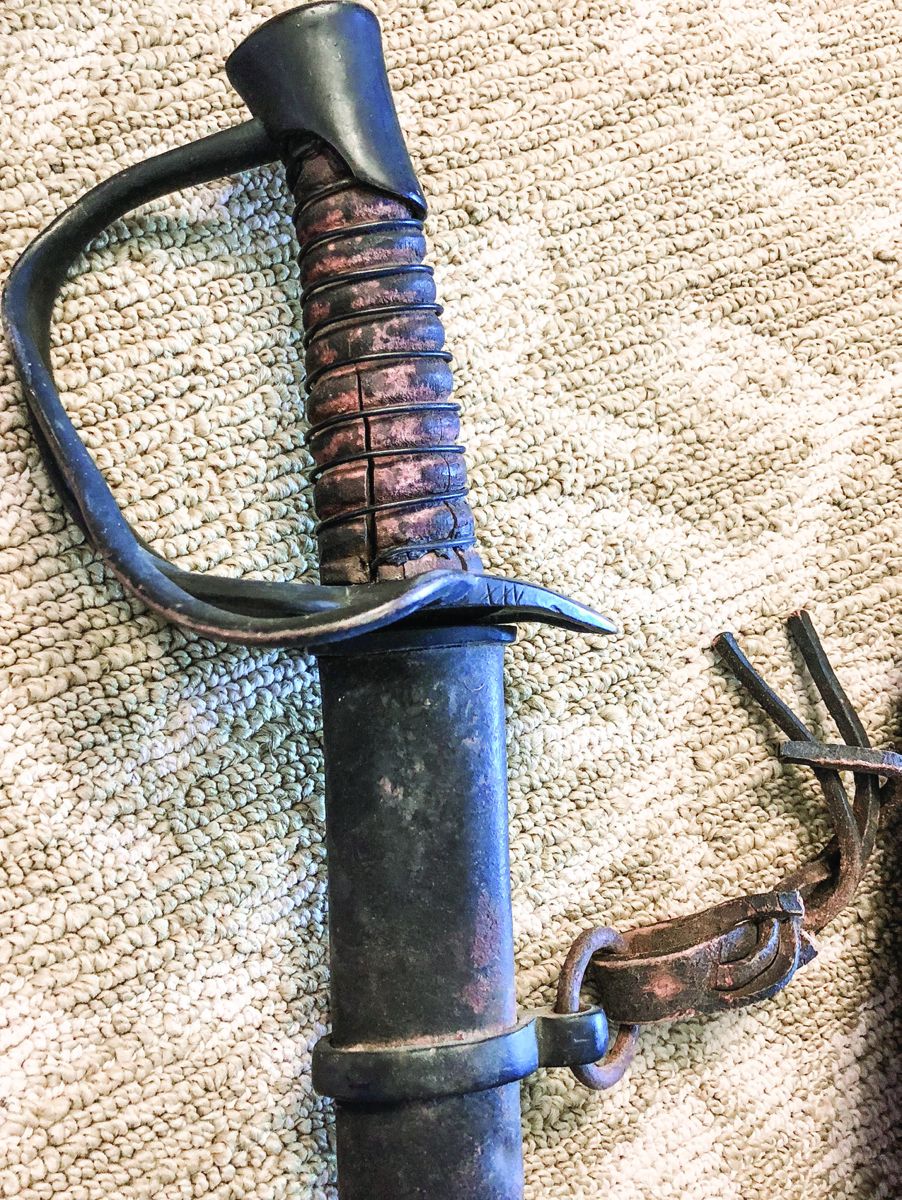
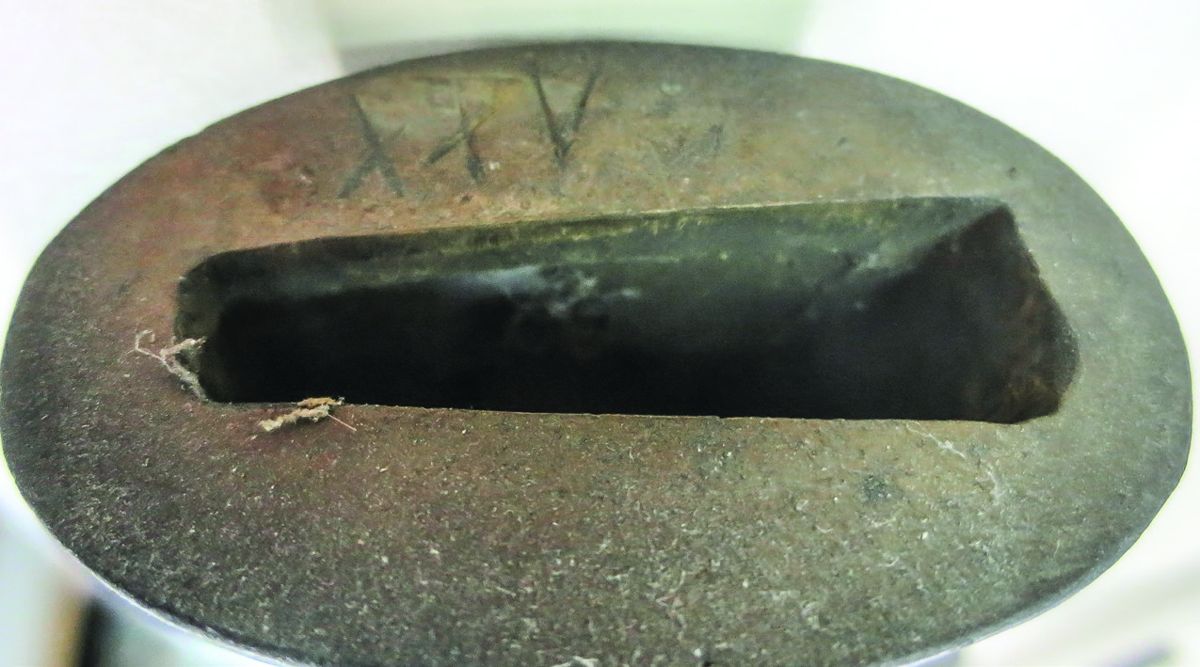
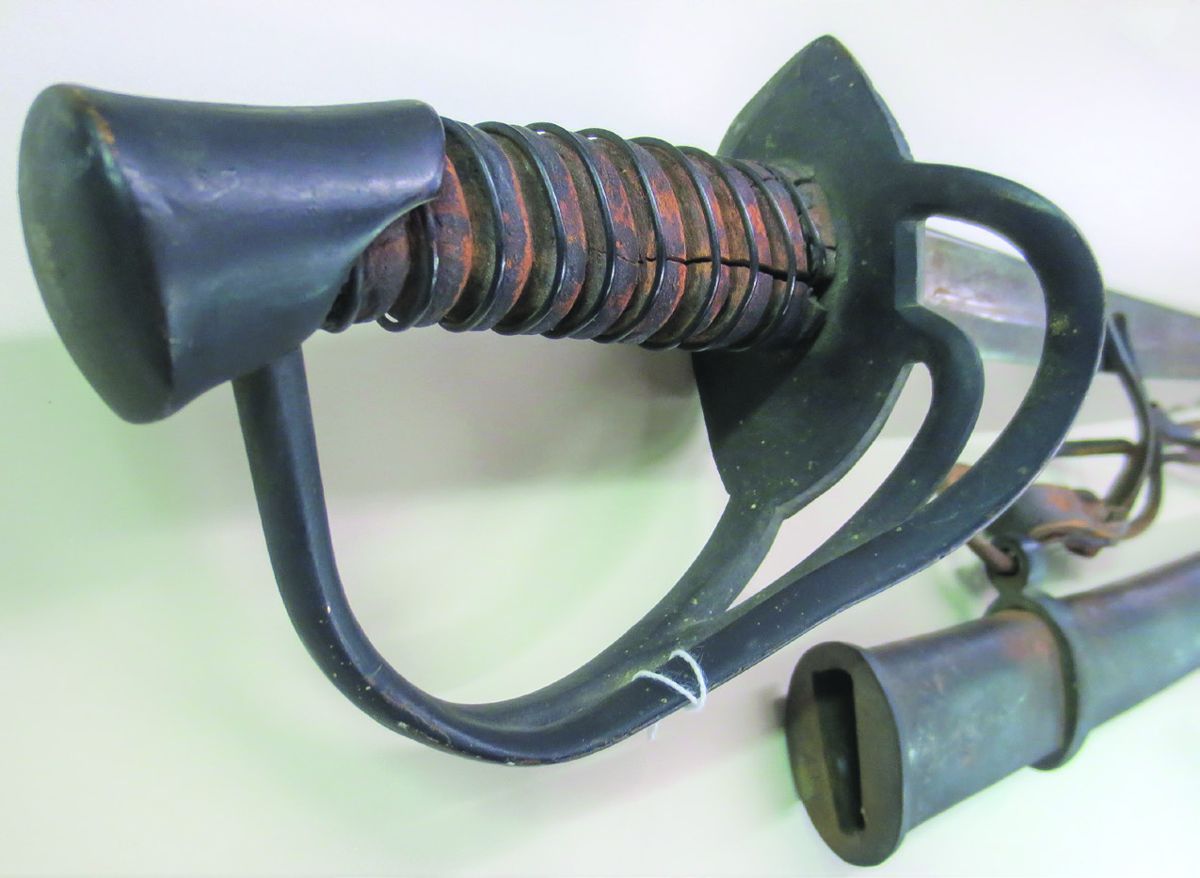
Question: I have in my family a sword and rifle that belonged to my husband’s great-grandfather and came directly from the family homestead of Phillip H. Keck, Morgantown, W.V. The sword, according to the family, was left during a Confederate cavalry raid. The gun, powder bag, and flask were owned by his father’s uncle. Can you give me an idea of their value? D. Keck Answer: Your inherited relics have what we call in the antique world “attic condition.” Attic condition means the items have not been cleaned in a very long time, have lots of patina, and a character that many collectors love. There is a genre of collectors who only buy objects in “as found” or “attic” condition. Your rifle is a typical American long rifle converted from flintlock to percussion with no maker’s mark and of average quality. I noted the name “J.A. CLOVER” stamped in the brass wear-plate at butt, who you said is unknown, but possibly a family member. The leather hunter’s bag still contains a zinc powder flask which I am sure accompanied this rifle on late 19th century hunting trips around the homestead. The rifle and bag are common to market and similar unmarked rifles can be found priced for a few hundred dollars. The hunter’s bag with broken strap and the zinc flask have market value of about $50-75. The WWII-era bayonet I am told is Swiss and has market value with rusted blade and partial scabbard of about $40-60. The valuable item in this grouping is the sword, a classic example of a Confederate enlisted cavalry sabre made by Louis Froelich of Kenansville, N.C. His sabers are very distinctive with the pointed lozenge-shaped guard and the flat Germanic pommel. This sword also exhibits Roman numeral assembly marks, matching “XXV” on both hilt edge and scabbard throat. The sword, though thick with patina (non-collector’s might just say it’s very rusted), which as noted is very desirable. As most objects that have turned up in the antique trade over the years have been cleaned, this sword would clean up quite nicely, since the blade where it was protected by scabbard is smooth and gray with areas of original luster. The grip lacks most of its original leather covering, but still retains the original thick wire wrap. Several inches of the scabbard are missing but the blade where it protrudes still has a good point with heavier patina than the remainder of the blade. It is interesting how the family preserved this sword by taking two original sword straps and cutting them with long tassels where this was displayed, possibly hanging inside a barn or cabin wall. This sword has an interesting story of most likely being a relic of the April 28, 1863, Morgantown, W.V., raid carried out by Confederate cavalry under Generals William “Grumble” Jones and John Imboden. This was the largest military action to fall upon Unionist areas of Virginia which were soon to become the 35th state of the Union, July 4, 1863, as West Virginia. This sword would have an auction estimate of $2,000-3,000, in my opinion, and could bring considerably more, but it could just as easily bring less as the condition to some eyes is “it’s just a rusted sword,” and to others it is a desirable “attic relic.”
homestead, Morgantown, W.V.
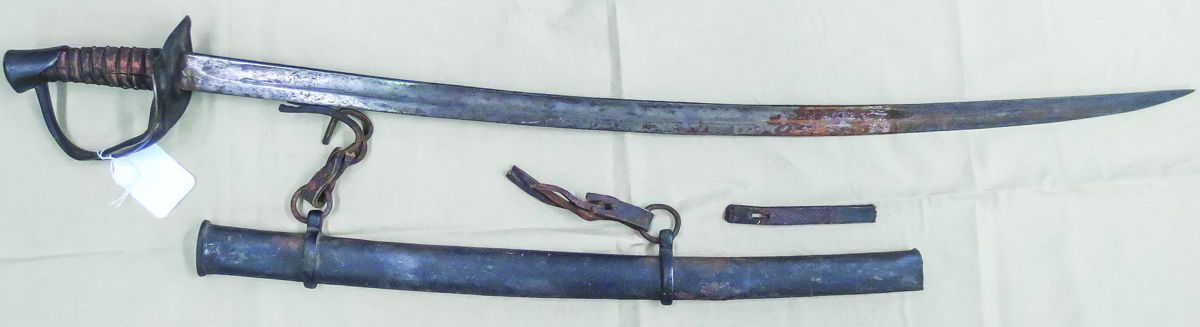
Collection from the family homestead of Phillip H. Keck.
John is an certified appraiser with International Society of Appraisers specializing in Civil War memorabilia. He authenticates and evaluates other rare and valuable historic items as well. His website is www.civilwardealer.com. He is coauthor of the book Confederate Bowie Knives (2012) by Jack Melton, Josh Phillips and John Sexton, that was published by Mowbray Publishing Inc. Send “Ask The Appraiser” questions and photographs to [email protected].