Exploring Civil War History: The Sunken Road Walking Trail at Fredericksburg
By Bob Ruegsegger · Originally published June 2018 · pp. 28–29
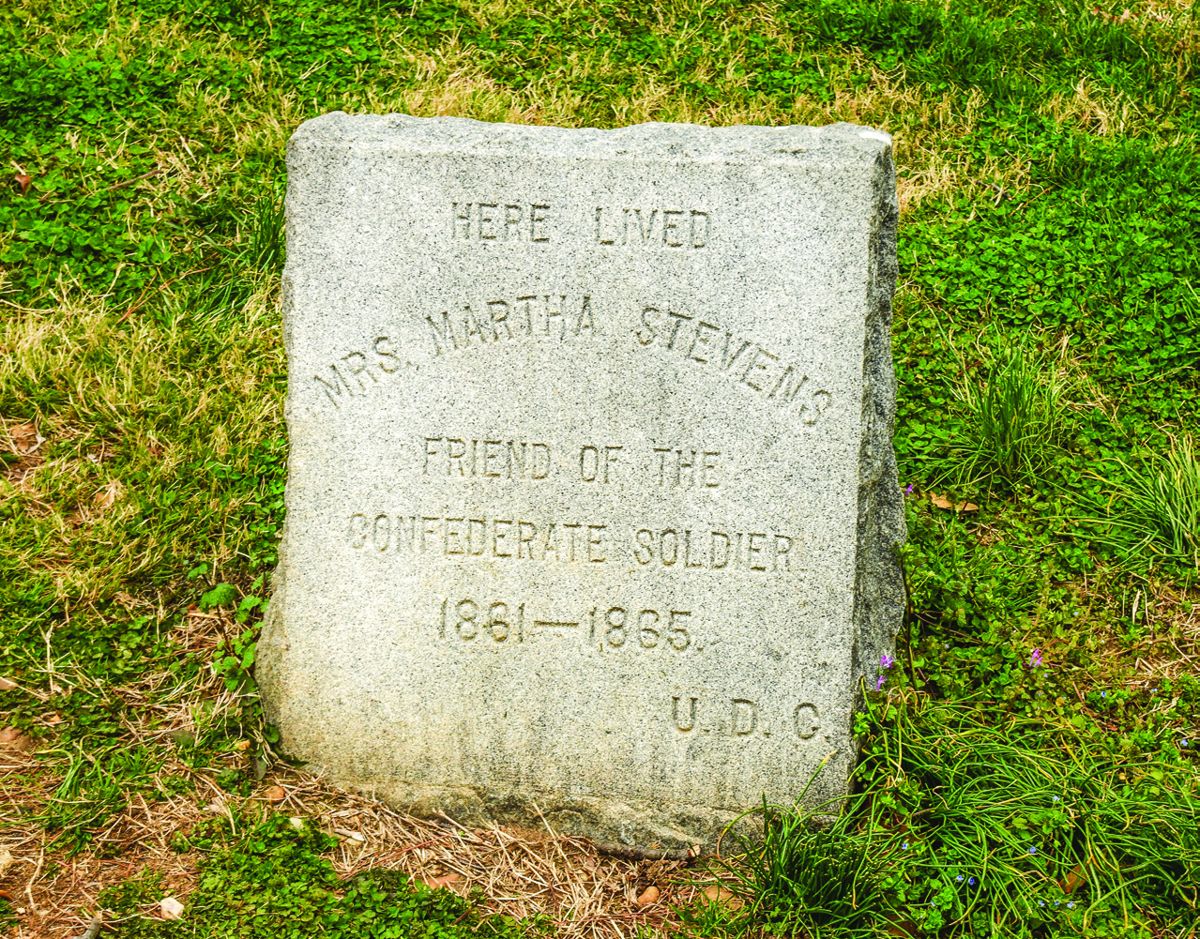
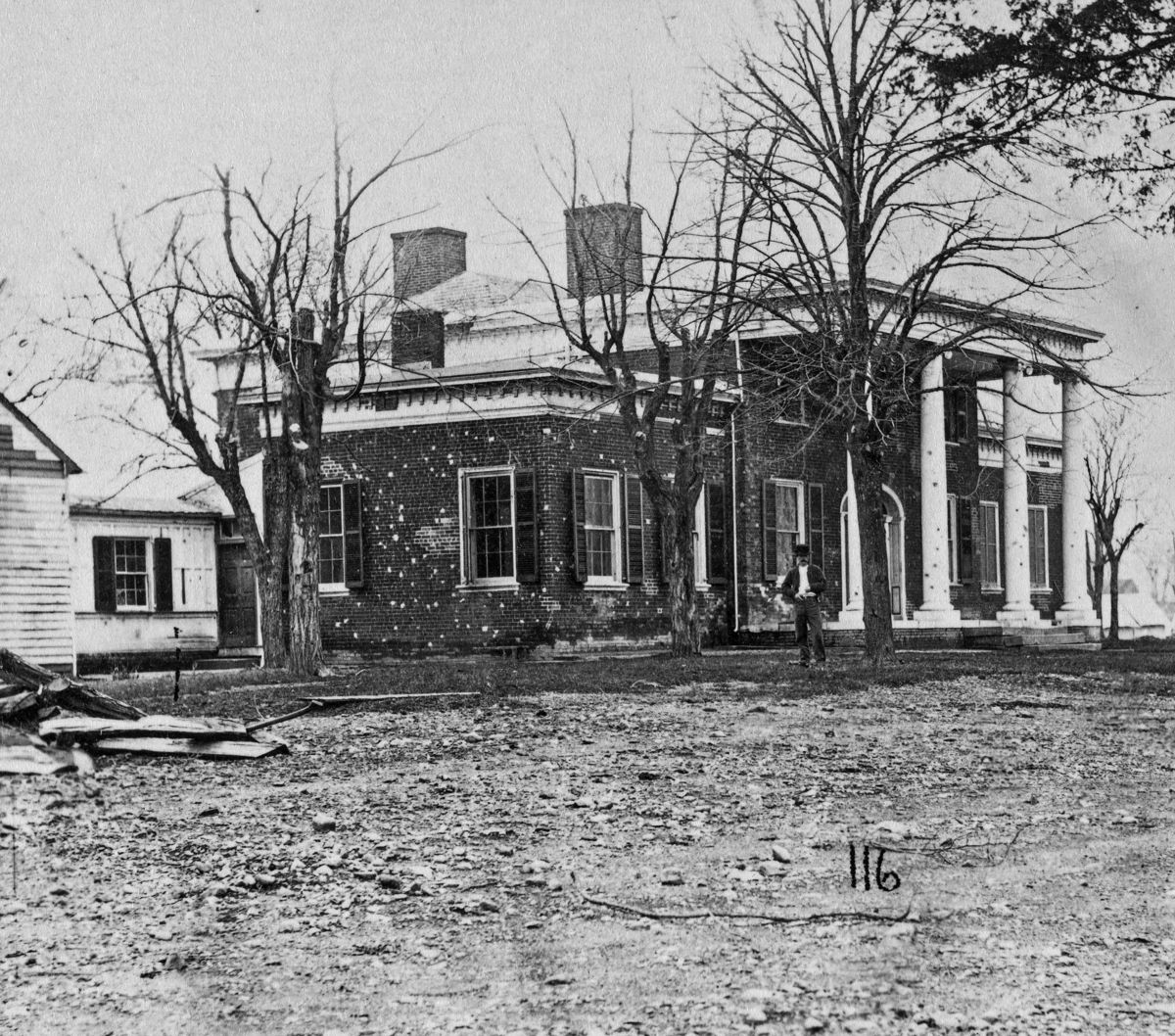
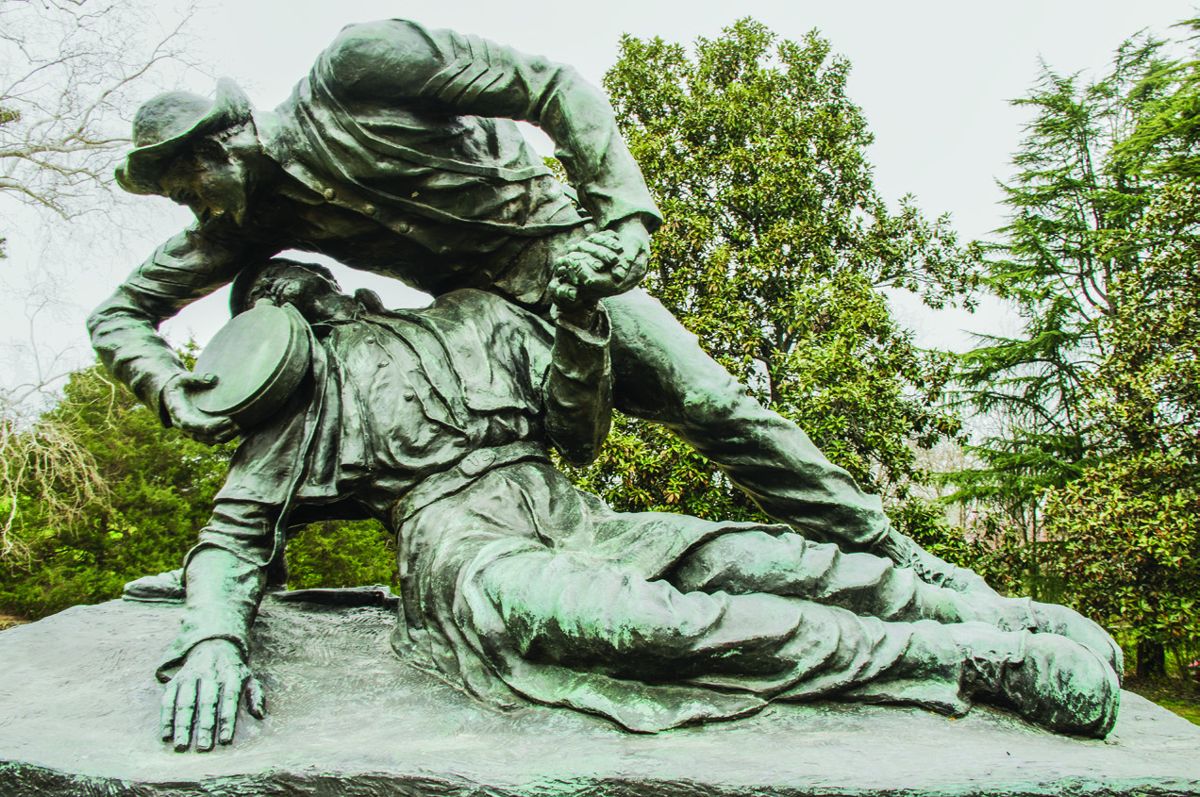
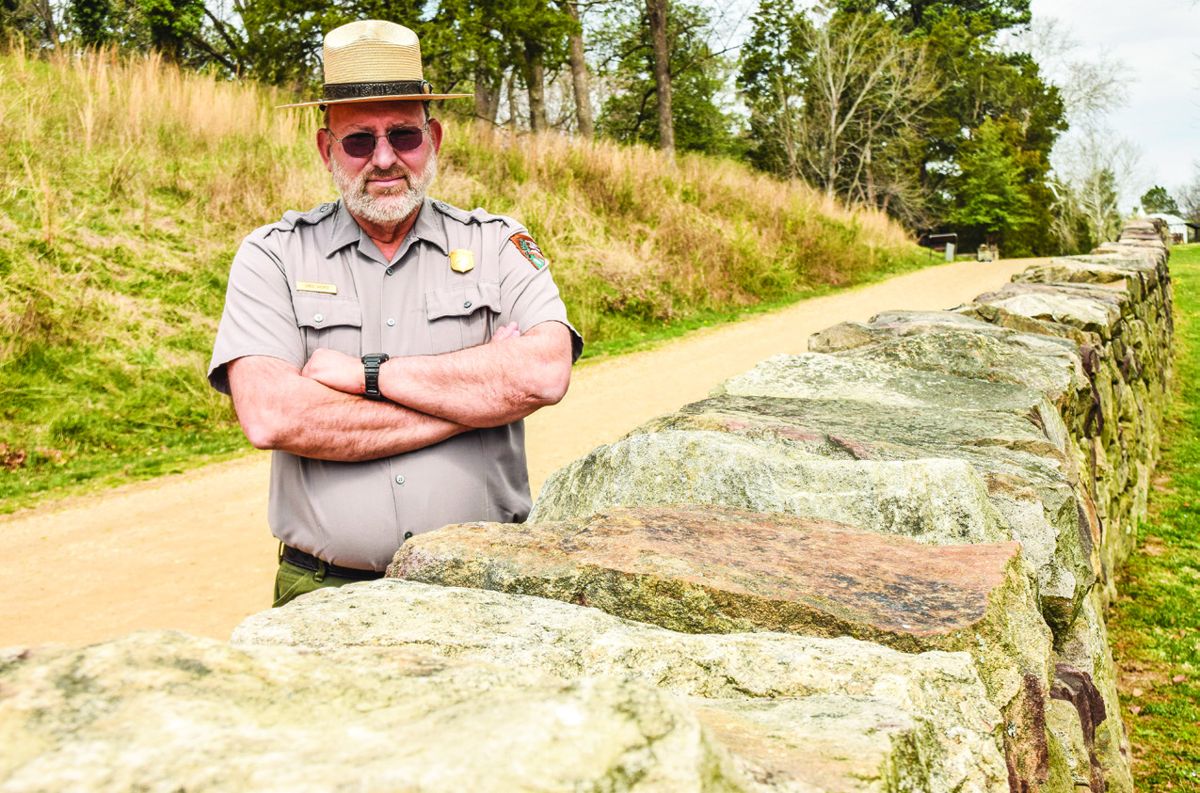
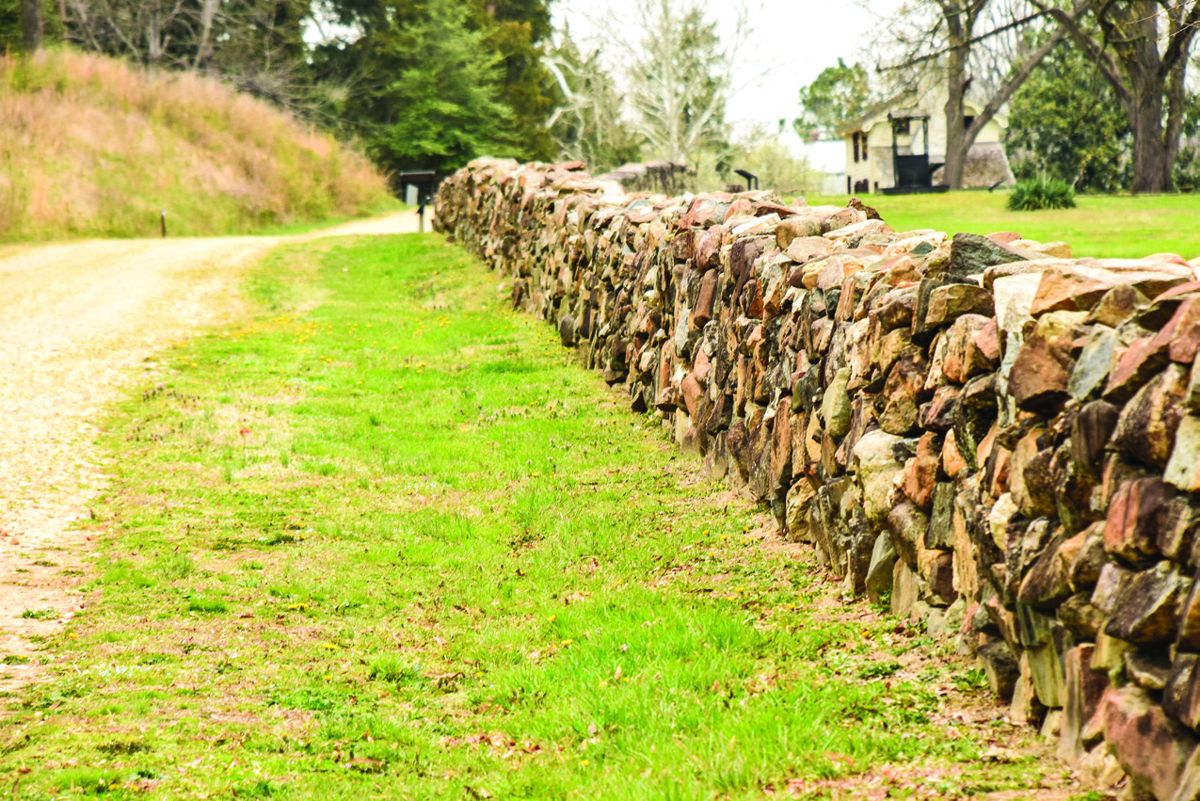
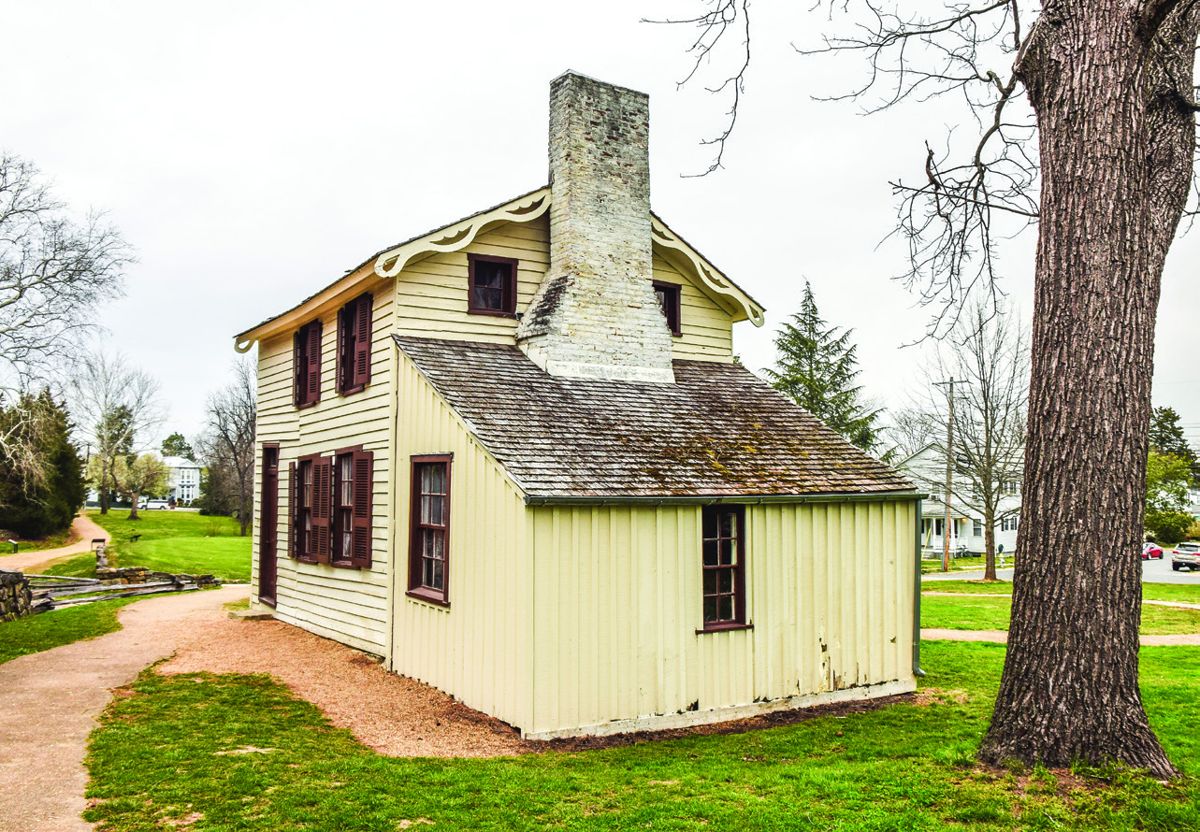
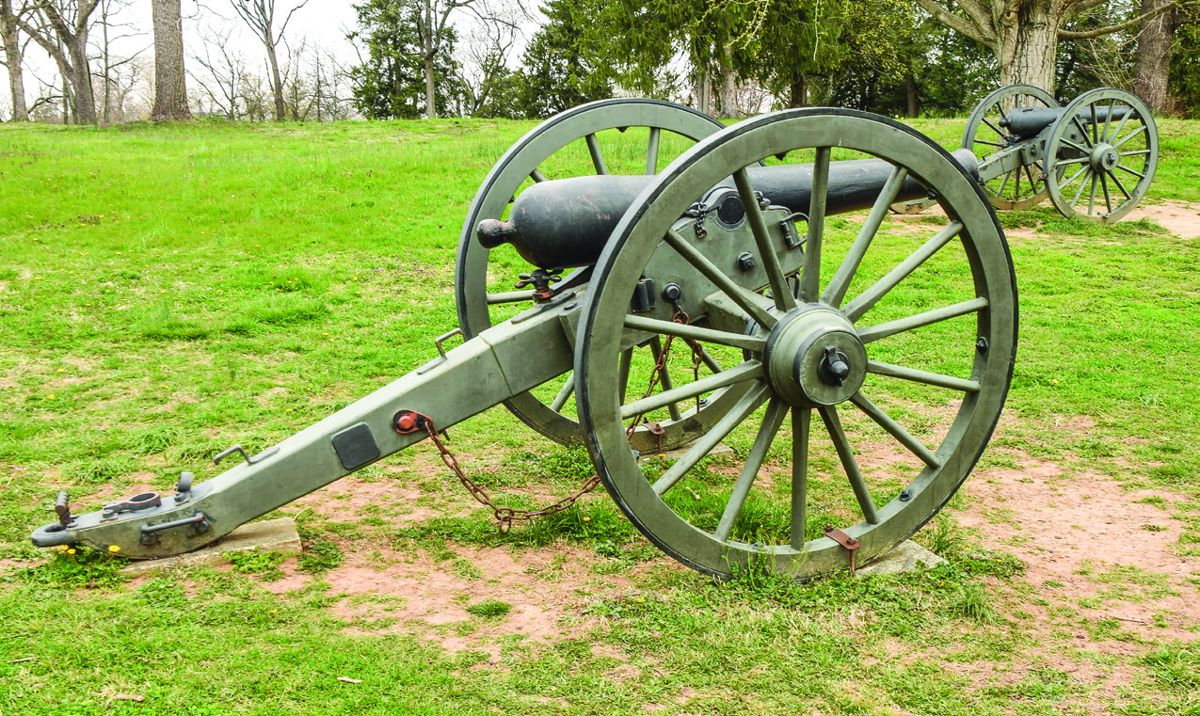
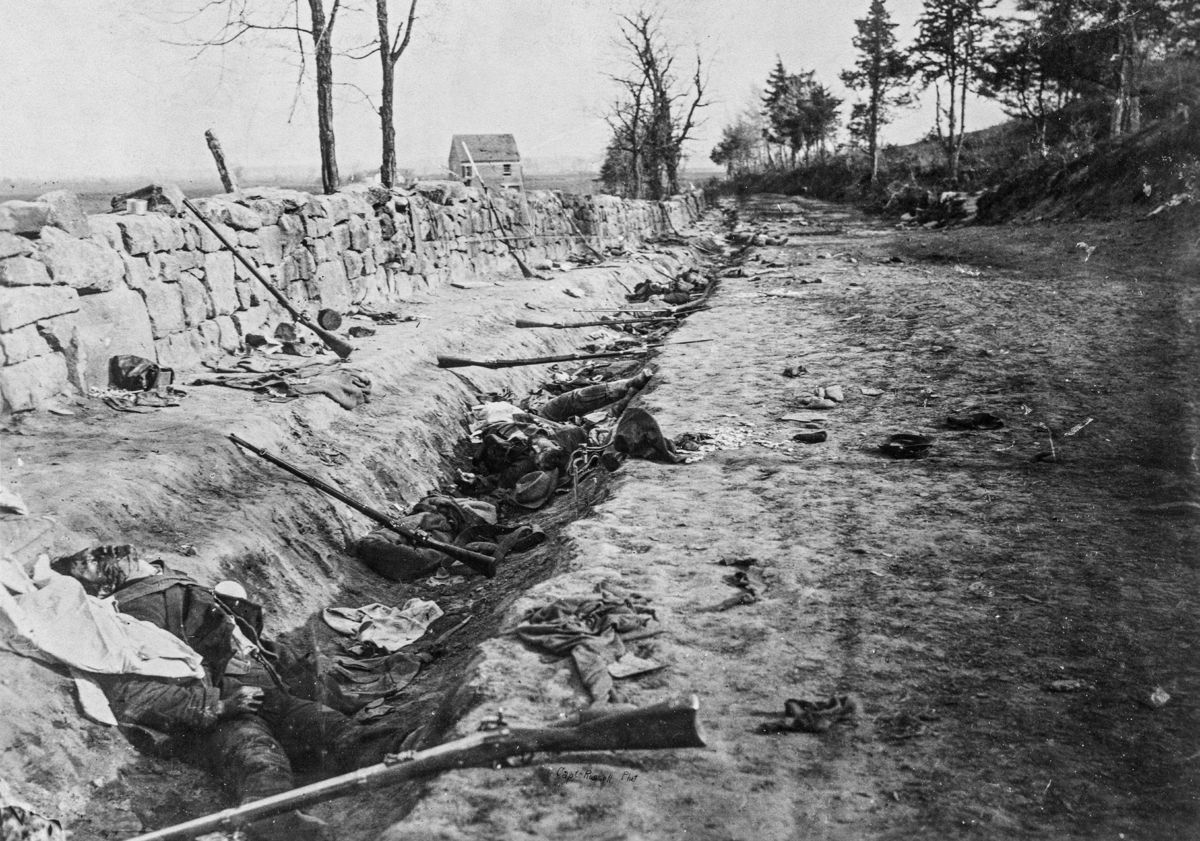
During the Battle of Fredericksburg, the Confederate line of battle stretched for miles along the west side of the Rappahannock River. More than 172,000 troops were engaged. For those who have an hour to invest in learning a bit about Fredericksburg’s Civil War history, the time (30 to 40 minutes) it takes to explore the Sunken Road Walking Trail is well-spent. Visitors who add the 22-minute film in the Visitors Center leave with a general understanding of the conflict that took place here. Nowhere on the battlefield was the fighting more intense and deadly than along the 500 yards of stone wall fronting the Sunken Road before Marye’s Heights. Greatly outnumbered, Confederate infantry and artillery, protected by their solid defenses, stopped the Union army as wave after wave of Union soldiers pushed across a half-mile of open field. The Union casualties were horrendous. “The engagement here was a very lopsided. It was the most lopsided Union defeat of the war,” noted Greg Mertz, supervisory historian at Fredericksburg and Spotsylvania Military Park. “There were some 8,000 Union casualties, killed and wounded, compared to only 1,000 Confederates on this end of the battlefield.”[These figures do not match the entire battle’s “official” figures of 1,284 KIA, 9,600 WIA and 1,769 MIA for the Union; they refer only to the engagement at the Stone Wall, Ed.] For eight hours on Dec. 13, 1862, the stone wall and the field before it were ground zero as a series of Union attacks were launched against the Confederate defenses. “There are three segments of stone wall out there now.” said Mertz. “A block long section of the original wall that existed at the time of the battle remains.” The portion of the original wall probably survived because it was a retaining wall that kept a dirt bank from collapsing onto the road. The sections of original wall that disappeared after the war were freestanding. They were likely used as materials for rebuilding damaged structures. Two missing sections have been reconstructed. One section was restored during the Depression as a WPA project. That restored section was not recreated as it was originally built because the workers lacked skill at building period correct stone walls. More recently, another wall section was restored to its original appearance without the use of any mortar. “It’s very authentic looking to the way it would have been at the time,” noted Mertz. The Sunken Road Walking Trail begins at the Visitor Center parking lot, passes through a gap in the stone wall, and follows the Sunken Road where Confederate infantry fired on Union troops advancing across an open field. The Sunken Road was a small portion of Telegraph Road that ran from Alexandria to Richmond. It was the most important north-south road through the Fredericksburg area in the mid-1800’s. “It got a lot of traffic that wore down the road so it had an eroded or sunken apperance as it passed through this area,” said Mertz. One site featured on the walking trail is the home site of Edward and Martha Stephens whose home was caught in the “vortex of Union attacks” against the Sunken Road. Confederate sharpshooters fired from the windows and roof of the Stephens home. A Federal artillery shell passed through the house before it exploded and killed General Thomas R.R. Cobb who commanded a Georgia brigade defending the wall. Unlike most local citizens, Martha Stephens—according to legend—remained in her home throughout the battle. She made numerous dangerous trips to her well for water and tore her petticoats in strips to bind the injuries of wounded Confederate soldiers. Martha Stephens survived the battle and the war. She died in 1888 and is buried in the Stephens Family Cemetery near where her home once stood. The United Daughters of the Confederacy erected a monument to Mrs. Stephens at her house site. The house survived both the battle and the war, but was destroyed by fire in 1913. “Martha Stephens was a very colorful figure,” noted Mertz. “In the aftermath of the war, she was one of the earliest tour guides. She would tell anyone passing through about what happened here,” he said. “Her home was also quite a bit damaged. She kept the damaged pieces of wood from her home with bullet holes and bullets and sold them as souvenirs to tourists.” Across the Sunken Road from the Stephens House site, a modest stone monument honoring General Thomas Cobb marks the place where the Georgian commander was mortally wounded by a shell that passed through the Stephens House. “There were probably about 2,000 men under General Cobb’s command,” said Mertz. The Innis House also stands on its original site as a silent eyewitness to the ferocious conflict on the Confederate defense line. It was pierced by bullets and shell fragments and defaced with soldiers’ graffiti. A brief examination of the Innis House exterior reveals that most clapboards on the outside have been replaced or repaired. A few boards with minor damage bear evidence of bullet holes. Looking through windows into (Library of Congress) the interior, there is considerable evidence of battle damage inside. “While they had to repair the outside of the house to make it weatherproof and livable, the economy was so bad they simply covered over the interior damage with wallpaper,” said Mertz. “When the building was acquired by the Park Service and the wallpaper was removed, the amount of damage came as a surprise to the park staff.” The Ebert House and Store location is marked by signage that tells about the small store owned by Prussian immigrants, Henry and Sophia Ebert. It catered to travelers entering and leaving Fredericksburg via the Telegraph Road. The Eberts, and their descendants, operated the store for almost 100 years. Prior to the battle, Confederate officers ordered the Eberts to vacate their home and store. They stayed with Sophia Ebert’s brother a few miles west of Fredericksburg. When the Eberts returned a few days later, they found dead bodies scattered about their property and their home damaged by the eight hours of brutal warfare. At the north end of the Sunken Road, just past the stone wall, is a bronze monument memorializing the “sublime compassion” of The Angel of Marye’s Heights for his fallen enemies. On the day after the battle, Sgt. Richard Rowland Kirkland, 2nd South Carolina Volunteers, heard the cries for water and the suffering of the wounded Union soldiers out on the open field. Kirkland requested permission from General Joseph Kershaw to bring water to his wounded foes. “Kershaw left an account of Sgt. Kirkland approaching him telling him that he couldn’t stand the cries,” said Mertz, “and that he wanted to go out and give them some help.” General Kershaw cautioned that the enemy would start shooting at him as soon as he left the protection of the wall. Sgt. Kirkland insisted that he wanted to try anyway. Kershaw gave permission but refused to authorize a flag of truce on his mission of mercy. “Kirkland got some canteens and spent about an hour and a half going back and forth across the field giving aid to soldiers,” said Mertz. When the Union soldiers recognized Sgt. Kirkland’s purpose, they stopped firing and cheered him. Other Confederates joined Kirkland in his efforts to bring aid to the suffering Union soldiers. Confederate and Union soldiers admired Sgt. Kirkland’s courage and compassion and lauded him as The Angel of Marye’s Heights. The Sunken Road Walking Trail ends at the Kirkland Monument. Visitors have the option of returning to the Visitors Center via the Sunken Road or taking the paved looped trail that leads back to Marye’s Heights and the Fredericksburg National Cemetery overlooking the Sunken Road. From Marye’s Heights, the Confederate Washington Artillery’s nine guns pounded the advancing Union ranks unmercifully. They shattered repeated Union assaults until they ran low on ammunition and were relieved by Colonel Alexander’s reserve artillery. Fredericksburg National Cemetery, located on Marye’s Heights, was established by Congress after the war as a final resting place for Union soldiers who died on local battlefields. In the late 19th century, veterans dedicated two major monuments in the cemetery. Over 15,000 men are buried here including 300 veterans of later wars. The identities of fewer than 3,000 are known. The Sunken Road Trail offers visitors an opportunity to explore, if only briefly, the tragedy of the Civil War in Fredericksburg. It tells the dramatic sagas of well-positioned Confederate defenders, colossal Union casualties, and displaced local citizens.
Bob Ruegsegger is an American by birth and a Virginian. His assignments frequently take him to historic sites throughout Virginia, the Mid-Atlantic, and the Southeast. His favorite haunts include sites within Virginia’s Historic Triangle—Jamestown, Yorktown, and Williamsburg. Bob served briefly in the U.S. Navy. He is a retired educator and has been an active newspaper journalist for the last twenty years.