Briscoe Ranson Slouch Hat Conservation
By Jessica Hack · Originally published June 2018 · p. 30
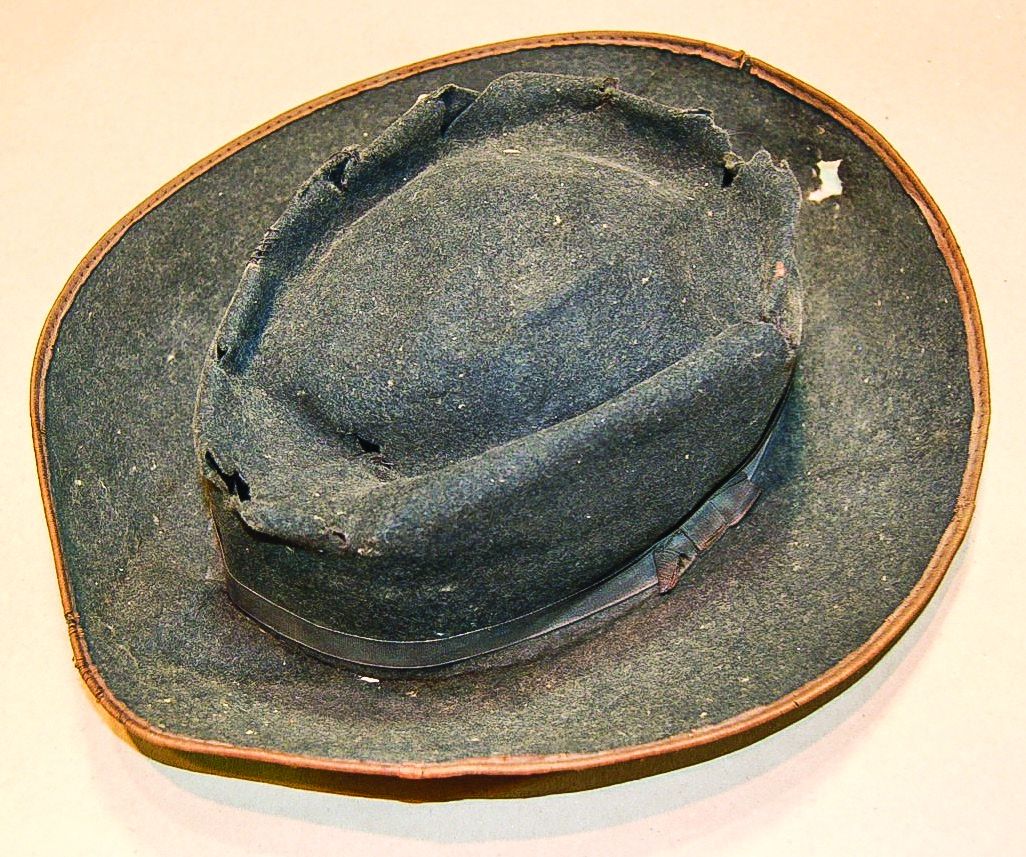
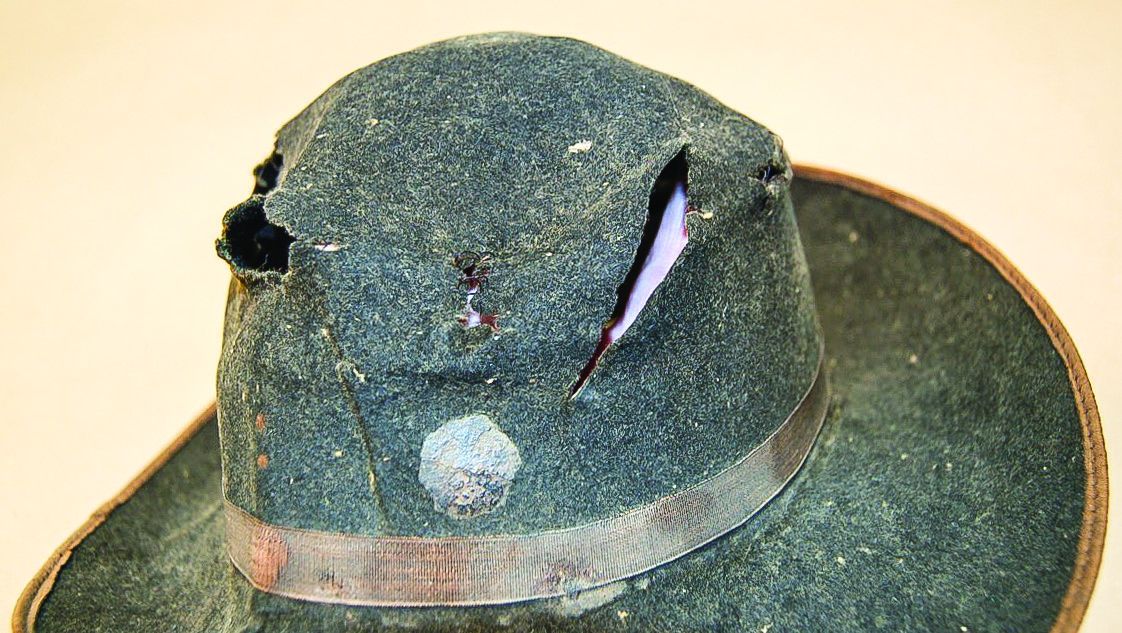
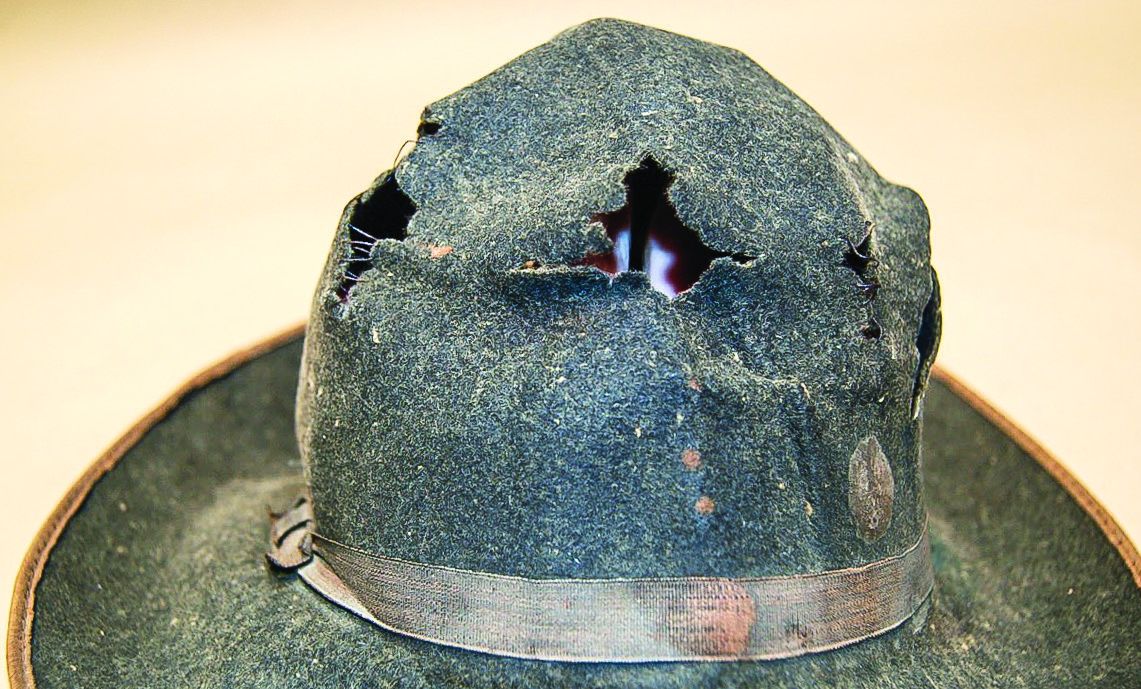
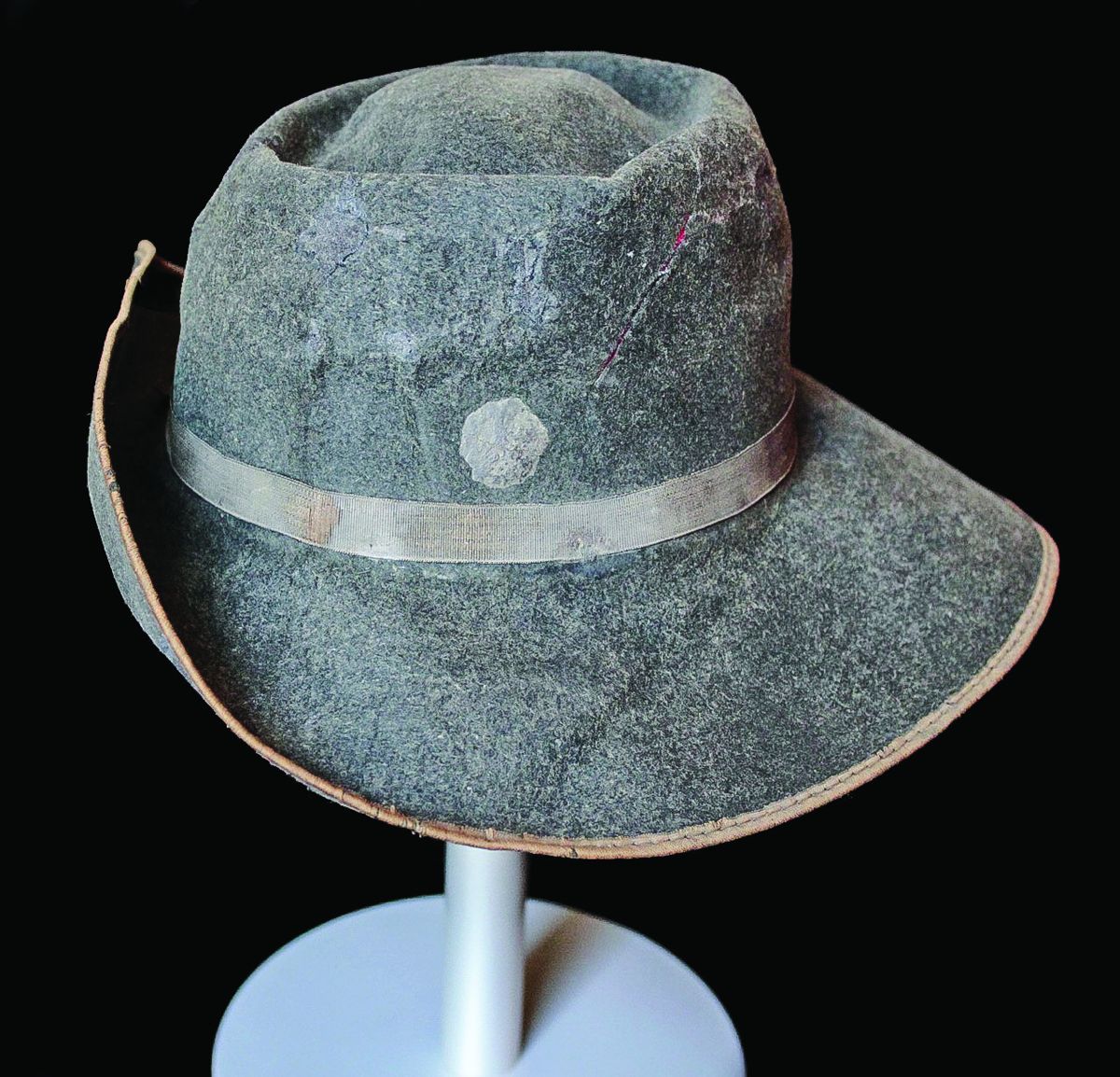
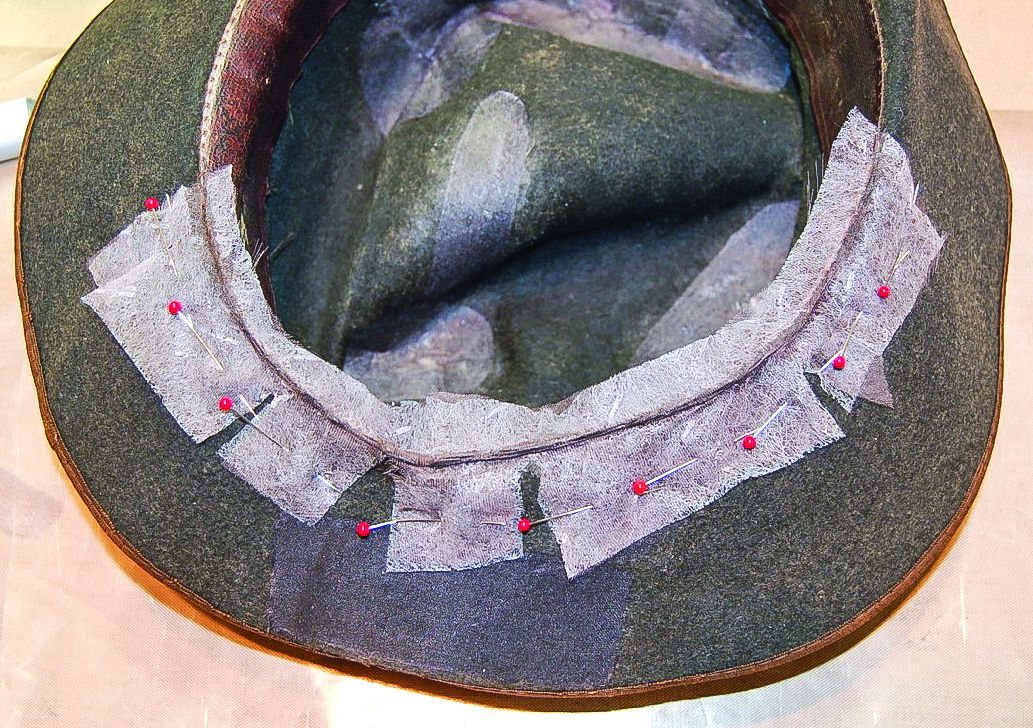
Recently I had the opportunity to conserve a well-known and documented Confederate slouch hat belonging to Briscoe B. Ranson, of Company B 12th Va. Cavalry. He was also a member of Mosby’s Rangers. The hat is most notable for a long two inch saber slash made when Ranson was wounded June 9, 1863, at the Battle of Brandy Station. The hat was displayed as part of a Civil War memorabilia collection in a small museum in Sharpsburg, Md., created by Mildred Remsburg. It later passed through the collections of several notable Civil War artifacts collectors. The current restoration of the hat was undertaken at the behest of Old South Military Antiques of Ashland, Va. The project was of particular interest to me because of the hat’s condition, and the challenge in restoring three dimensional objects. The hat is made of grey/brown colored wool felt. There is a small machine stitched tan binding attached to the brim’s outer edge. The hat has a 1.5 inch wide leather sweatband. There is a cream and indigo blue cotton printed lining with a wide dark brown coated cotton strip stitched down the center. The hat has a grosgrain hat band with a bow tie at the right side where the brim meets the crown of the hat. The hat was received in fair to poor condition. It was extremely dusty and dirty. There were several large holes in the crown along the area where the crown rolls into the indentation where the head fits into the hat. There were two areas, measuring about one half the circumference, where the brim connects to the crown. Upon receipt, these areas were roughly stitched to hold them to the hat. The felt was so fragile that, as I worked, the two adjacent torn areas became one. Throughout the treatment process, crepeline patches were added to the underside of the crown. The first step in conservation was to clean the hat and lining. The lining, which was not stitched into the hat, was removed and tested for color fastness. It was then surface cleaned with distilled water applied on cotton swabs. The hat was hand vacuum cleaned with a low suction HEPA filtered cleaner. It was then surface cleaned with distilled water applied on cotton swabs. Next, treatment materials were prepared. Wool flannel material was dyed for use as inset patches to fill areas of loss and support the crown of the hat in its proper shape. Crepeline silk material was selected for use in making underlay patches to support the inset patches filling holes in the crown and brim. The crepeline patches were fused in place with polyvinyl acetate dry web adhesive and further secured with Jade 403, an acid free PVA adhesive. Stabilizing the join of the brim and the crown proved to be the most challenging part of the treatment process. This was in part because the position of the sweatband so close to the crown’s edge left little material to attach a join to. A large crepeline patch was cut and fitted to the torn area along the brim. It was carefully fused to the edge of the sweatband inside the hat, and then fused to the underside of the brim. Unfortunately it pulled away in some areas during treatment. This necessitated fitting a second crepeline patch, secured with Jade 403, to the brim’s edge. The Jade 403 held the patch better than the dry web adhesive. The patch was wrapped over the first crepeline brim patch, and fused in place with dry web adhesive. Wool patches were inset into the missing areas of the brim at the crown, and fused to the crepeline underlay material. Red silk material was selected to underlay and highlight the sword slit in the crown. It was backed with a small piece of wool flannel, then inset and fused to the crown’s underside. The lining was repositioned and pinned into the crown. The raw edge of the lining’s perimeter was tucked under the sweat band. The lining was then tacked in place with a long running stitch using thin cotton thread. This project is a perfect example of having to adapt treatment methods to the specific situation in a unique and custom designed manner. I had to re-do several steps as treatment progressed, finding ever better ways to accomplish the goal. Jessica Hack founded her company, Jessica Hack Textile Restoration in 1979. A 1972 graduate of Newcomb College of Tulane University, with post graduate studies in dye chemistry (Louisiana State University) and Textile Conservation (University of London, London, England), Ms. Hack was awarded Professional Associate status with AIC (The American Institute of Conservation) in 1995.