Inspection, ARMS!
Bilharz Carbine
By Tim Prince · Originally published June 2018 · pp. 18–19
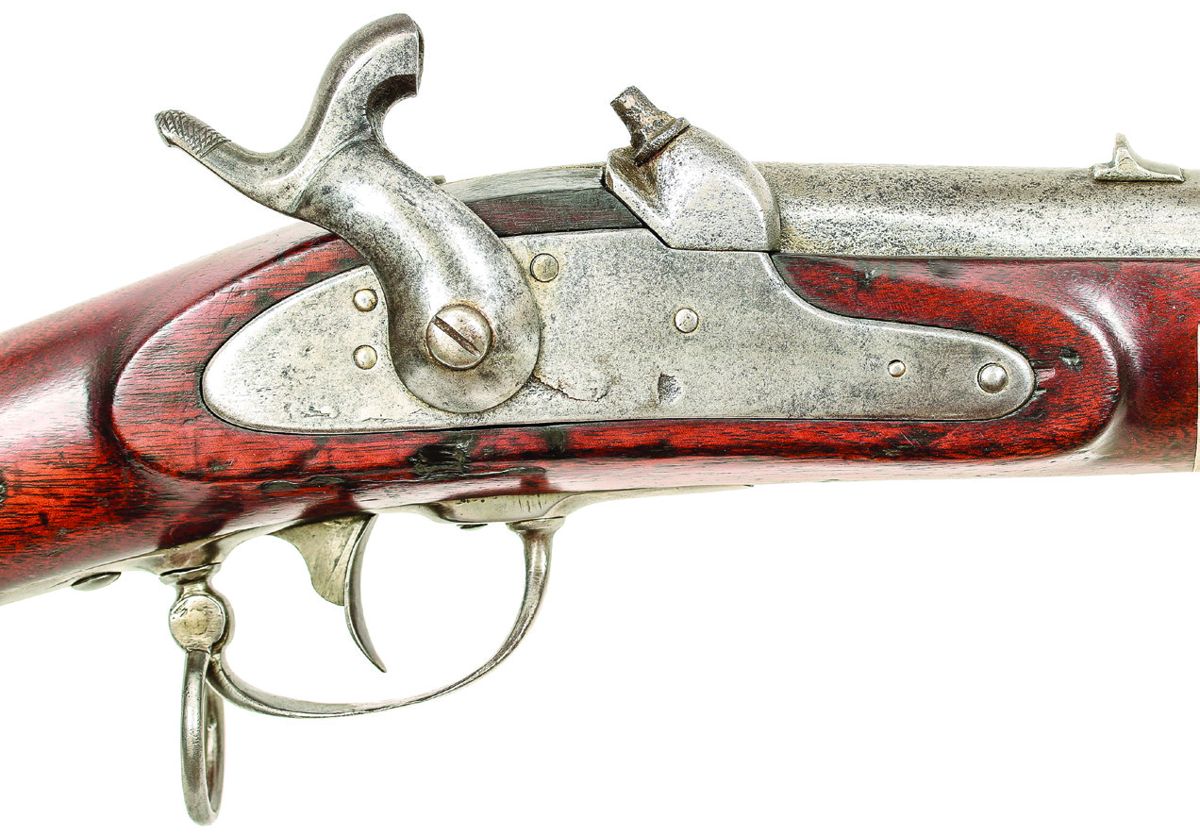
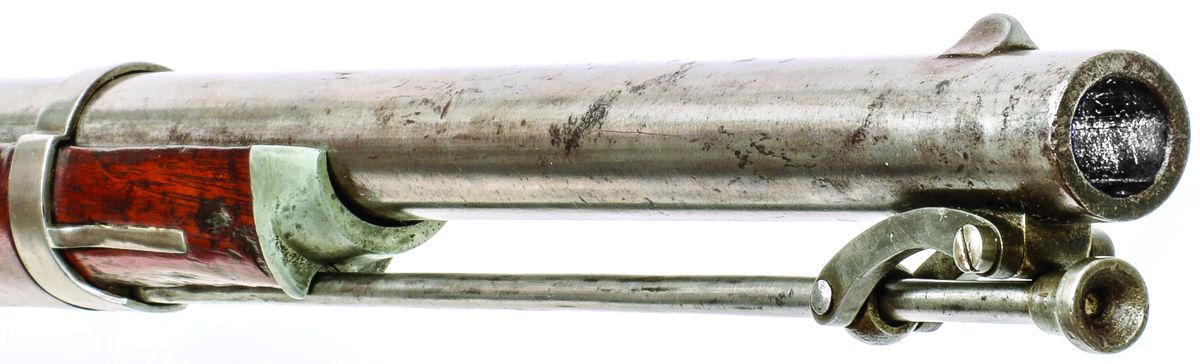
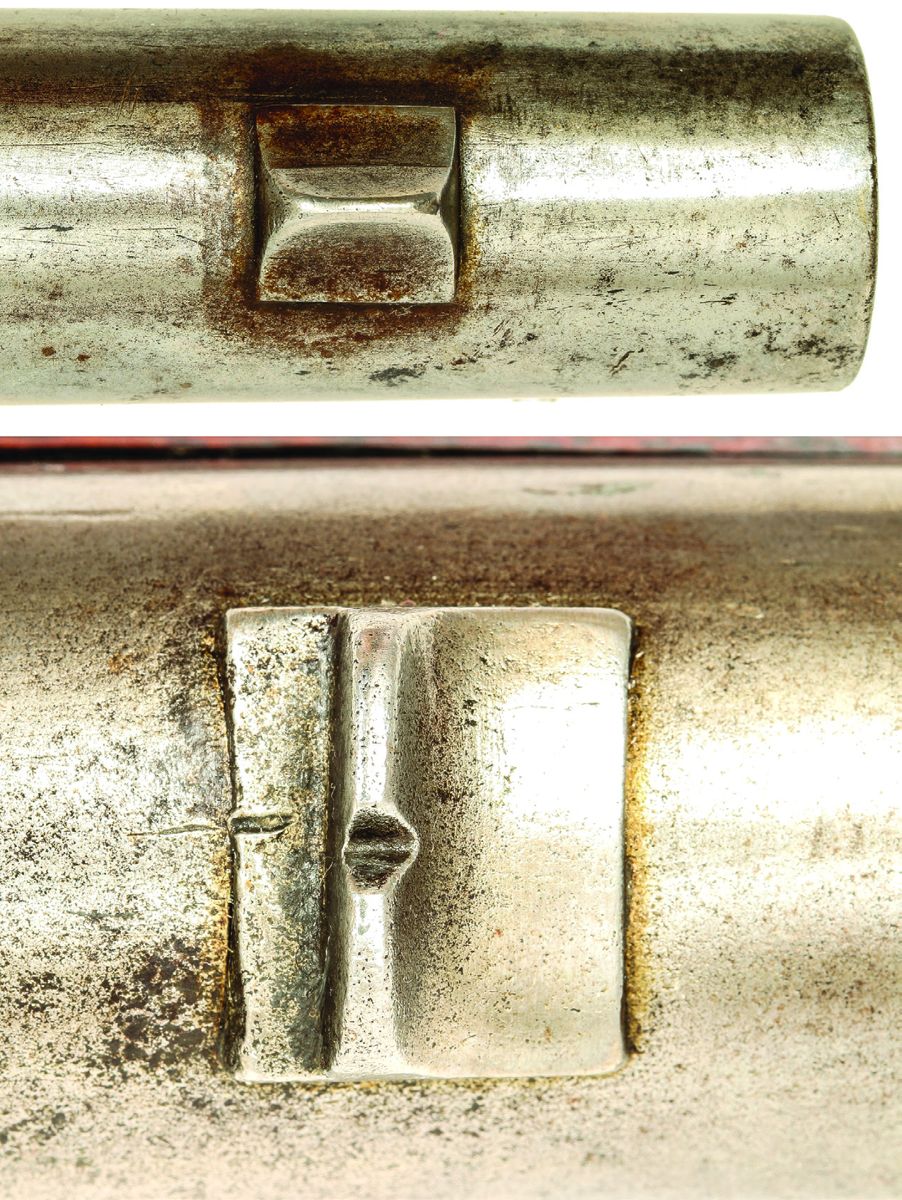
The American Civil War found the newly formed Confederate States of America sadly lacking in the industrial might necessary to prosecute a war. With the bulk of the manufacturing capacity of the pre-war United States located in the North, the South was essentially required to create an arms production industry from scratch. Numerous small firms were established throughout the South in an attempt to manufacture various types of small arms; some meeting with limited success and some failing miserably. One firm that was an initial success but was forced out of business due to the exigencies of war, was Bilharz, Hall & Company of Pittsylvania Court House (known today as Chatham), Va. The arms making business was established by an immigrant from the German state of Baden named Claudius Bilharz, who became a naturalized American citizen in 1859. The firm also included the partners George W. Hall and Colonel L.D. Bennett. Bilharz appeared to be the primary businessman with manufacturing experience in the partnership and was listed in various directories of the period as a “harness maker,” “distiller,” and “mechanic.” The company grew to be at least fairly successful initially, as by mid1863 they employed some 36 workmen in their facility. The first deliveries made to the Confederate Ordnance Department by Bilharz, Hall & Company were in the late summer or early fall of 1862; on September 16 of that year they were paid $4,500 for “100 Breech-loading carbines.” Subsequent research has determined that these were the unique “Rising Breech” carbines that continue to fascinate and confound Confederate arms researchers, as they are truly strange weapons. Their manufacturing origin was initially difficult to ascertain since they are not marked with any maker’s name. Upon completion of this first contract, Bilharz, Hall & Company apparently received a new contract to manufacture a percussion muzzleloading carbine based upon the U.S. M1855 Rifled Carbine. For many years these unmarked, Confederate copies of the U.S. M1855 Rifled Carbine had been attributed to the Georgia firm of D.C. Hodgkins & Sons. In fact, these carbines are still found under that heading in Flayderman’s Guide to Antique American Firearms, with the caveat that more recent scholarship has determined the real manufacturer of these carbines was in fact Bilharz, Hall & Company. It has been postulated that the majority of the U.S. M1855 Rifled Carbines were issued for service with six companies each of the 1st and 2nd US Cavalry during 1855–56; these guns were subsequently turned in circa 1858 when newer weapons like the Sharps carbines were issued. The returned carbines were stored in the San Antonio Arsenal. As a result, these guns fell into Confederate hands when the arsenal was taken over by Texas state troops in February 1861. Why this particular pattern of musketoon was chosen as the basis for the Bilharz, Hall & Company guns is not known, but the design of their muzzleloading carbine generally conforms to the overall appearance of its pre-war U.S. counterpart, with some minor changes. The U.S. M1855 Rifled Carbine was a single shot muzzle loading percussion carbine with a 22-inch-long barrel secured by a single barrel band and screw through the breech plug tang. The musketoon had a .54 caliber bore rifled with three grooves. The gun had a swivel style ramrod secured by a pair of arms to a stud under the muzzle, and a small, threeleaf rear sight, similar to that used on the British Pattern 1856 cavalry carbine. The gun was iron mounted with the exception of a brass nose cap. Instead of the conventional carbine sling bar and ring on the stock opposite the lock, a sling ring was secured to the rear of the triggerguard bow. The Bilharz manufactured variant retained the iron-mounted design with a swivel ramrod, but dispensed with the adjustable rear sight, opting for a simple fixed one instead. The Bilharz gun was also bored to .58 caliber, making it compatible with the .577 and .58 caliber ammunition used by most of the Confederate infantry. The Bilharz carbines initially utilized a brass nose cap like their U.S. counterparts, but after about 350 were manufactured, the brass piece was replaced with a pewter nose cap that remained in use through the end of the manufacturing period. The initial sample of the Bilharz, Hall & Company muzzleloading carbine was submitted for examination and review at the Richmond Armory in early March 1863. Major William Downer, in command of the armory at Richmond at that time, wrote a detailed report about the Bilharz sample musketoon on March 4, 1863. In general, he found the overall workmanship of the gun to be “rough.” He specifically noted a number of what would appear to be minor flaws, such as the angle of the buttplate, the sharpness of wood corners, etc., as well as some major flaws such as a tumbler made of iron and the use of common wood screws to secure the buttplate and some furniture to the gun’s stock. He found fault in the design of the captive ramrod (and suggested some improvements) and complained that the stock had no “tip” (forend cap). His biggest complaints, however, were that “The barrel is not finished smoothly, either inside or out. The inside should be improved in boring…” and in reference to the iron tumbler noted that it “… is not casehardened, rendering the lock very rough, and liable to get out of order very soon.” Interestingly, after castigating the gun on many points, he concluded by saying: “The general finish of the arm is rough, but with the exception of the tumbler, I see nothing to prevent the usefulness of it in the field. If the improvements and alteration mentioned are made, I should think that forty-five dollars would be a reasonable price for the arm.” This comment is interesting on a number of levels. On the surface it indicates that Downer considered a rough gun better than no gun. More importantly, it underscores the inflation already hitting the Confederacy in the spring of 1863. Only a few months earlier, Bilharz had delivered 100 breechloading carbines at $45 each, and six months later he was able to ask the same price for a much simpler to produce muzzleloading carbine. The inflation was no doubt due to the lack of the necessary raw materials, especially iron and steel, much of which had to be imported from Great Britain. The inability to find an adequate supply of these materials appears to be the primary reason that the carbines were delivered in limited quantities. Although no copy of a contract or official order for the guns is known, it is generally believed that the Confederate War Department agreed to purchase 1,000 carbines from Bilharz and, based upon the “serial numbers” of extant examples; it is believed that between 700 and 800 were finally completed. Despite Major Downer’s commentary about the general “roughness” of the guns, he also agreed to purchase gunstocks from the company for the Richmond muzzleloading carbine and the Richmond Sharps carbine. A May 1863 letter indicates that Bilharz was billing the War Department for “650 short stocks” and “1095 long stocks” at $1 each. I would think that the “short stocks” were for Sharps pattern carbines and the “long stocks” for conventional musketoons. Bilharz was apparently extremely active between March and May of 1863, as in addition to the 1,745 stocks, he also delivered 191 muzzle loading carbines on May 22, 1863. However, production soon slowed due to a lack of raw materials.
Overall view of Bilharz, Hall & Company M1855 pattern carbine with barrel numbered 428 and alphanumeric numbering D10. (All photos by Tim Prince)
By September Bilharz was trying to buy various types of raw iron and steel bar stock from the Ordnance Department as well as percussion cones (nipples) and emery cloth. Additional requests were made the following month as well, suggesting it was getting harder and harder to obtain the necessary materials. Although some requests were finally fulfilled, the company received about 400 of the requested percussion cones over the ensuing months; many requests for materials were not granted, or were supplied in much smaller quantities than needed. The shortage of raw materials must have led the Ordnance Department to believe that Bilharz would not complete his contract, which was apparently due to expire in early December
- Like vultures circling a dying animal, the Ordnance Department started looking to “buy” (more likely appropriate) the Bilharz machinery and hire away their workmen when the venture collapsed. To that end, the Ordnance Department even hired a machinist to appraise Bilharz’s equipment in November 1863. Somehow, Bilharz either received a contract extension or some leniency from Richmond, and in March 1864 the firm was still requisitioning raw materials from the Ordnance Department and apparently still delivering carbines to Richmond. The Ordnance Department did, however, manage to hire away several of Bilharz’s best workmen and put them to work at the Richmond Armory, which no doubt had a negative impact on the speed and
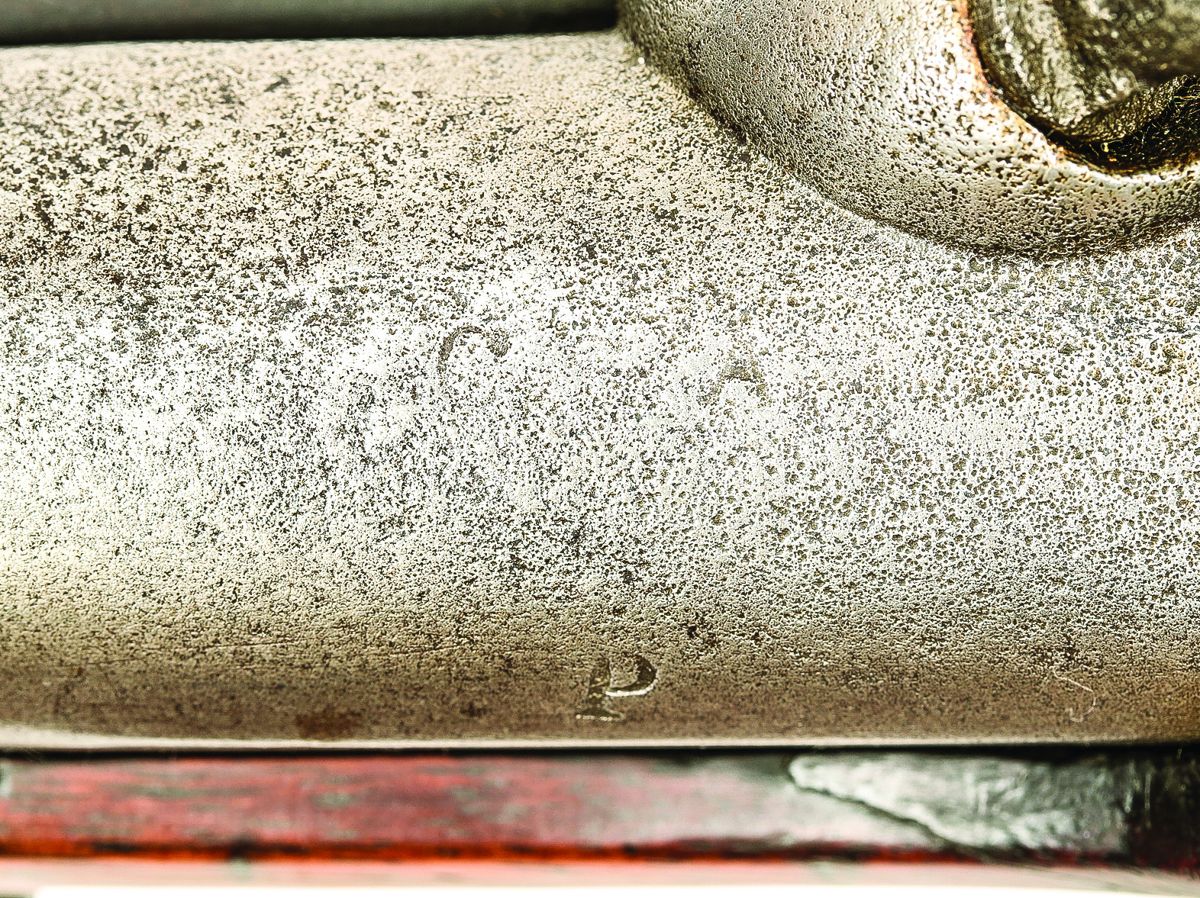
quality of the later guns that he would deliver. Based upon the documented delivery of 191 carbines in May 1863, the receipt of some 400 percussion cones over the next several months, and the fact that the highest known example has a barrel numbered 704, the general belief is that about 750 of the guns were produced, give or take. The guns are not technically serial numbered but do have a number on the rear of the barrels, and often the same number is found under the breech plug as well. The guns themselves show a variety of cryptic marks, usually involving an alphanumeric assembly number to match parts, various “cryptic letter” inspection marks like those found on some Confederate produced revolvers, and a “P” proof like the one found on Keen, Walker & Company “Tilting Breech” carbines. As the barrels were purchased at a rate of “$10 for rough barrels” according to Downer’s original assessment of the carbine, it is possible that the P proof found on the barrels, which is so similar to that found on the Keen, Walker & Company carbine, may indicate both barrels came from the same source; possibly Keen, Walker & Company. Since Keen, Walker & Co. was located only about 20 miles south in Danville, Va., they may have been a logical supplier for “rough barrels.” It is also possible that all the barrels from both companies were proved (inspected) at the arsenal in Danville. Other than the “cryptic letter” inspection marks and the mating marks, the only other mark typically encountered on the guns are the letters CSA, individually stamped at the breech of the barrel. There are no maker marks on the guns, which is one of the reasons that it took scholars so long to determine the true origin of these Confederate carbines. Although production is assumed to be 750 +/- based upon the known “serial numbers,” as those numbers only appear on the barrel it may not be an indication of anything more than how many barrels were made. If the alphanumeric mating system is more of a batch numbering system, assuming that approximately 100 guns were made with each letter combination, than known examples would suggest that 400 to 500 is a more accurate number, as the highest mating letter I am aware of is “D.” Assuming the first 100 had no letter and then A, B, C and D each had 100 guns, the maximum delivery would be about 500 guns. This would coincide more closely with the known examples noted in the monumental work Confederate Carbines & Musketoons by John Murphy and Howard Madaus, as they only note nine known examples: two with barrel “serial numbers” under 350 with brass nose caps (“1st Type”) and the rest with “serial numbers” above 350 with pewter nose caps (“2nd Type”). Whether it was a lack of raw materials, the loss of his most skilled workmen to Richmond or both, it appears that the Bilharz firm stopped making and delivering arms sometime in the last half of 1864. Tim Prince is a full-time dealer in fine & collectible military arms from the Colonial Period through WWII. He operates College Hill Arsenal, a web-based antique arms retail site. A long time collector & researcher, Tim has been a contributing author to two major book projects about Civil War era arms including The English Connection and a new book on southern retailer marked and Confederate used shotguns. Tim is also a featured Arms & Militaria appraiser on the PBS Series Antiques Roadshow.