The Baton Rouge Civil War Symposium
By Stephen Davis · Originally published July 2018 · p. 21
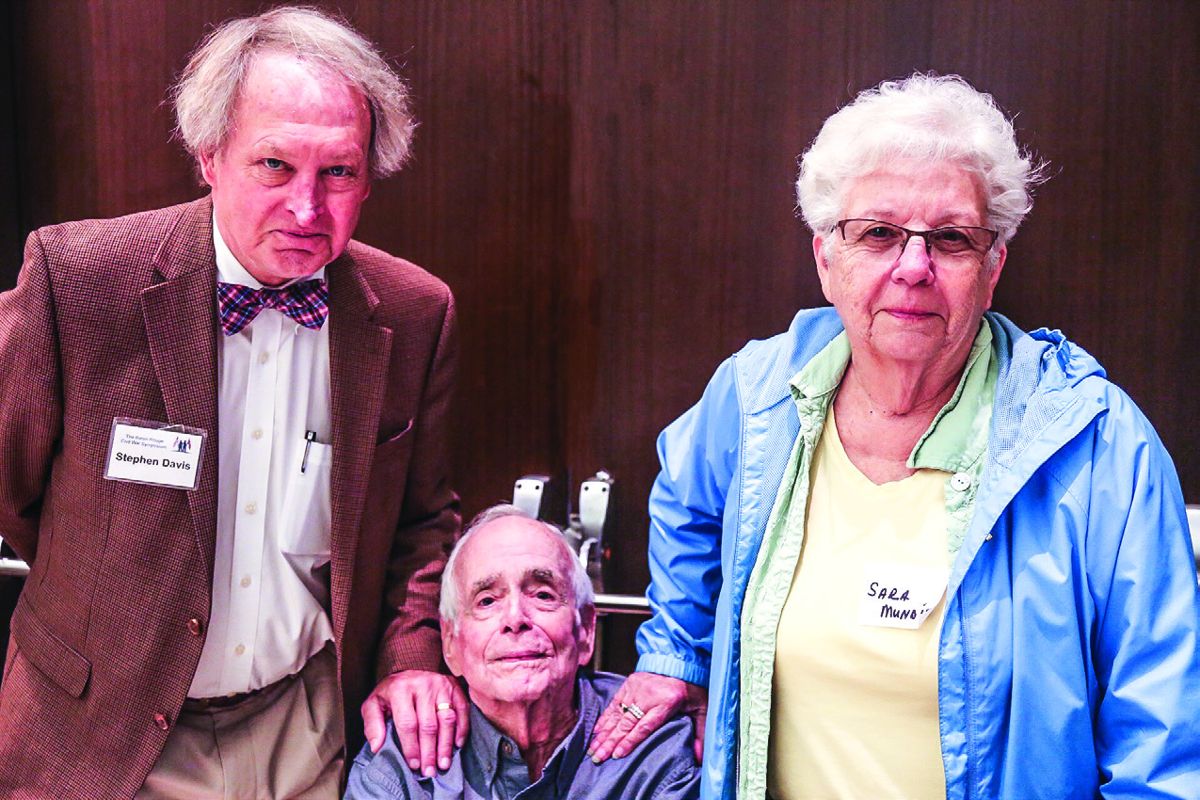
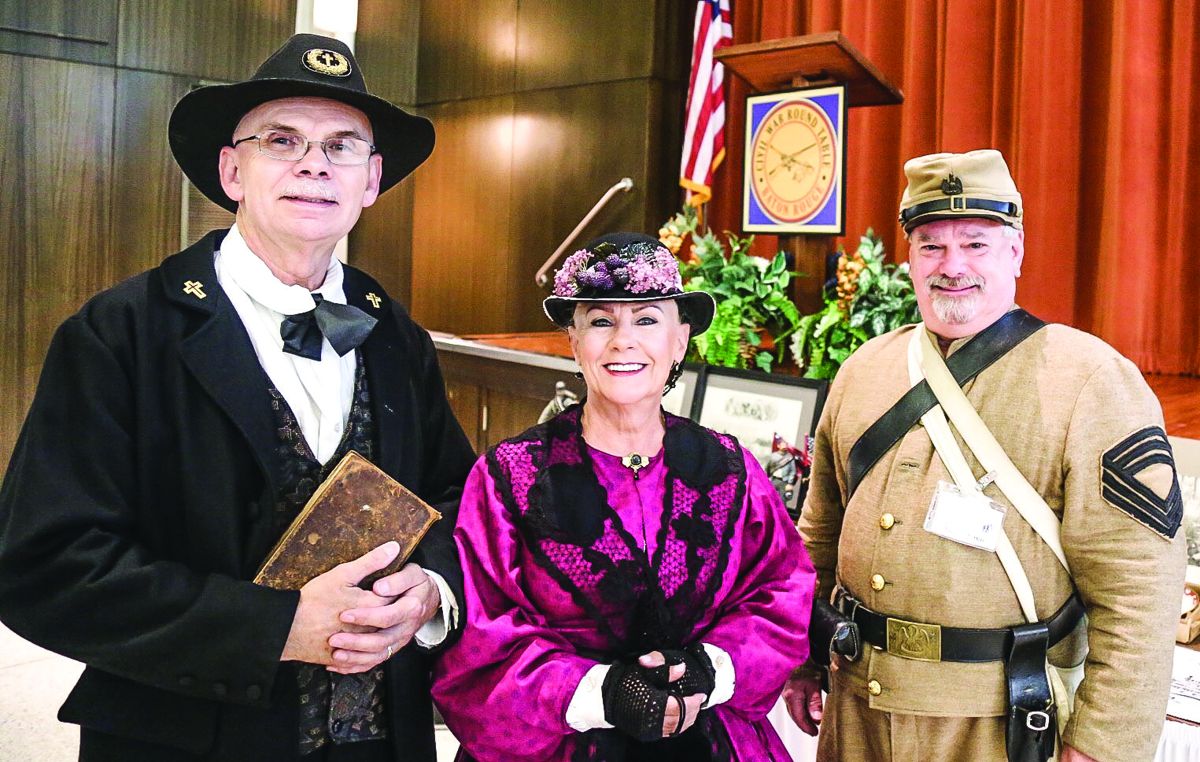
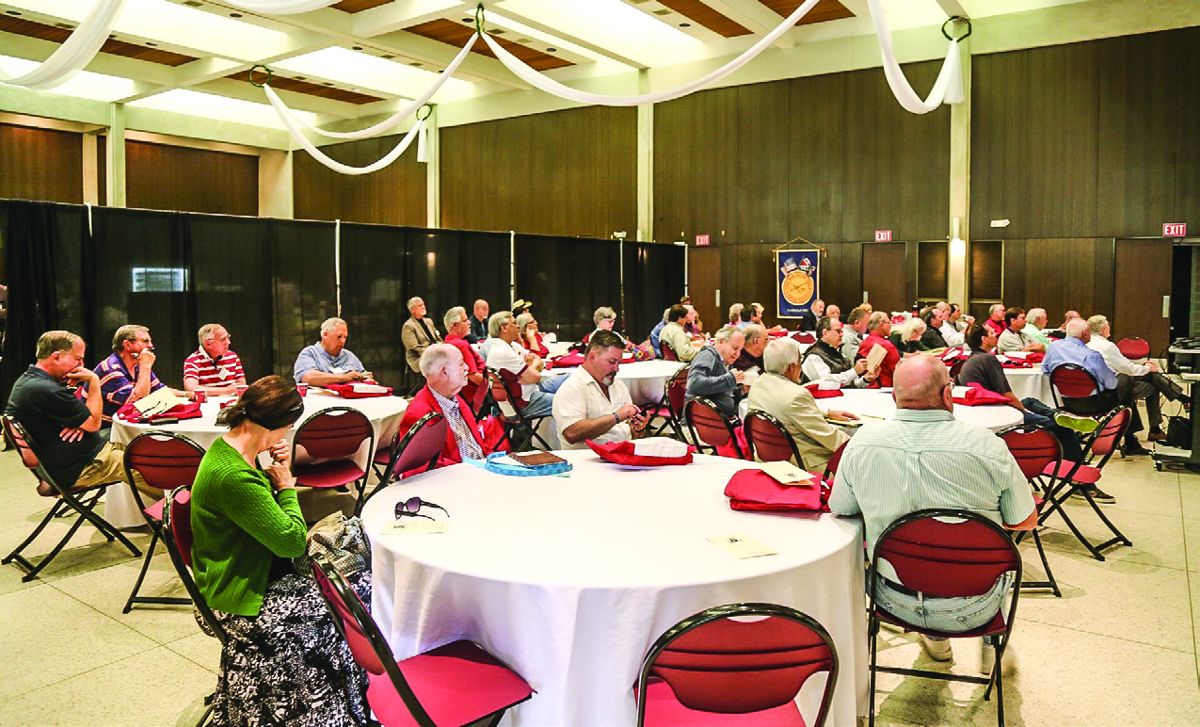
Some in the Civil War community these days bemoan a alleged decline of interest in our pastime. To which we say, humbug. Latest evidence for me was the recent, very successful Second Annual Baton Rouge Civil War Symposium, held in the Louisiana capital April 27–29. The conference theme was imaginatively entitled, “Sex, Lies and Tintypes.” The conference organizers, the Baton Rouge Civil War Round Table, wanted to get away from battles and leaders to explore other themes. More than sixty buffs, some from neighboring Texas and Arkansas, spent Saturday the 28th listening to four speakers. During breaks they milled next door among eight vendor displays: Civil War weapons, ammunition, prints, even antique glassware. Jim and Sarah Mundie showed off an extensive array of books that drew lots of purchasers. Several folks in period dress perambulated, engaging attendees in conversation. Counting vendors, speakers, BRCWRT members and guests, close to a hundred people were drawn to the Symposium. Among the historical lecturers, Dr. Bill Gurley (University of
Arkansas for Medical Sciences) discussed Civil War medicine by focusing on the clinical casebook kept by Dr. Henry M. Dye of Texas. The document, in microfilm, is at Professor Gurley’s university library in Little Rock. His fascinating slides included Dye’s hand-drawn sketches of wounded patients. Dr. Terry Jones, professor emeritus of history at the University of Louisiana at Monroe, is author of Lee’s Tigers: The Louisiana Infantry in the Army of Northern Virginia (LSU Press, 1987). It has recently been expanded by the author and reprinted by LSU. Terry regaled us with stories of the rowdy, often drunken misbehavior of the legendary Tigers. One slide showed Pvt. Edwin Jemison of the 2nd Louisiana. Young Jemison enlisted in April 1861 at the age of 16. He was killed at Malvern Hill a year later. I’ve been staring at Jemison’s haunting photograph since I first saw it in The American Heritage Picture History of the Civil War, back in 1960. Prof. Sam Hyde, who teaches at Southeastern Louisiana University in Hammond, spoke on “The Steamy Side of War: Brothels, Sexual Violence, and the Implications of Civil War Criminal Behavior.” Among the latter were rapes of women by soldiers. “I found hundreds of cases easily, without scratching the surface,” he declared. Among Federal troops, blacks were punished much more severely for rape; when the victim was a white woman, they were usually hanged. Rapes were committed by Confederate soldiers, as well, but more sparingly. Dr. Hyde was able to discuss several of these violent acts in considerable detail. As my part of the program, I spoke on women and children during the war. The former served a number of roles: mothers and wives managing the homesteads behind the lines; hospital and factory workers; propagandists publishing poetry. I mentioned that Gen. John Bell Hood, a bachelor till after the war, married Anna Marie Hennen in 1868. He had with her eleven children before their deaths in 1879. Keeping with the “Sex” part of the Conference title, given the nature of Hood’s incapacitated arm and amputated leg due to war wounds, I asked the audience the couple’s likely most practicable position of lovemaking. No one spoke out, so I answered, “Let’s just say that Anna Marie was an accomplished equestrienne.” They howled.
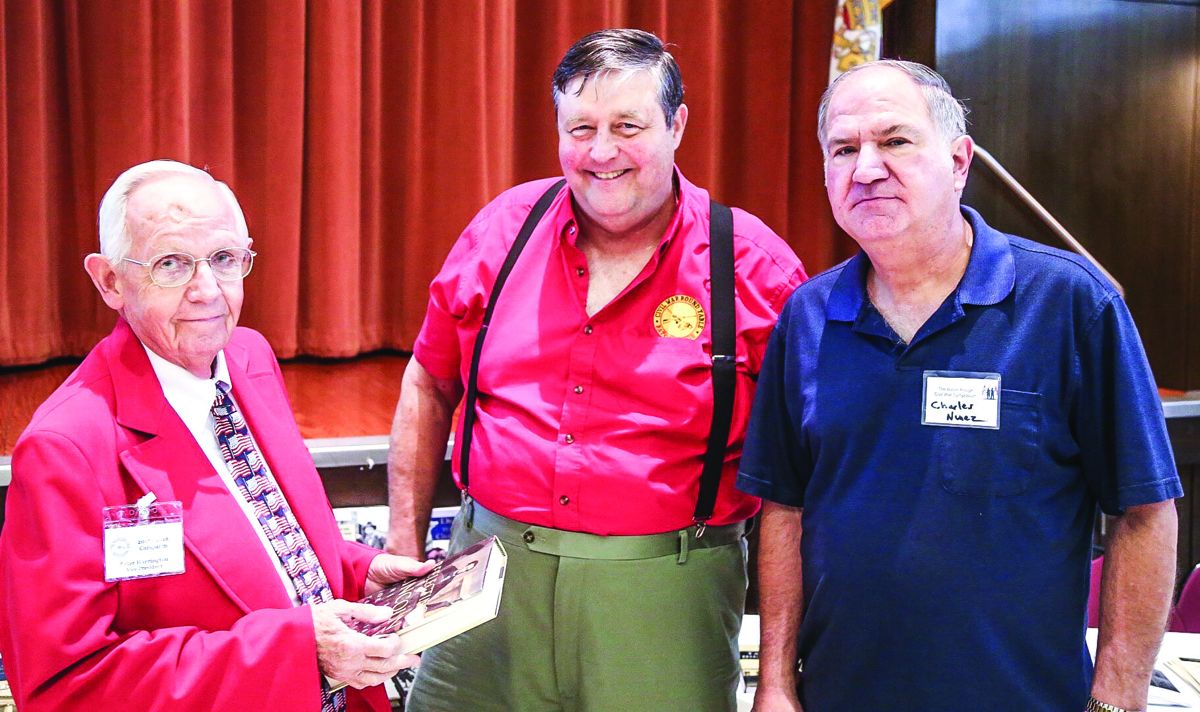
As a bonus, on Sunday the group was treated to a tour of Port Hudson State Park, some thirty miles north of Baton Rouge. The visitor center (museum, movie) and weapons firing were almost overshadowed by a Sawyer cannon in the park. The Baton Rouge Round Table was established in 1963, and prides itself as one of the oldest Round Tables in the country. It counts T. Harry Williams and Walker Percy as among its first members. The organization is to be commended for sponsoring and putting together this most enjoyable Symposium. I’m heartened that John Potts tells me planning is already underway for next year’s Third Annual—way to gaux, y’all! For a sextagenarian, Steve gets around. Recently he has addressed the Scottsdale (Ariz.) Civil War Round Table and the Brunswick CWRT of Wilmington, N.C., the largest and second-largest Round Tables in the country. This fall he’ll be off to Houston, speaking on the Atlanta Campaign.