This And That
Perspectives on Second Bull Run
By Gould Hagler · Originally published July 2018 · pp. 16–18
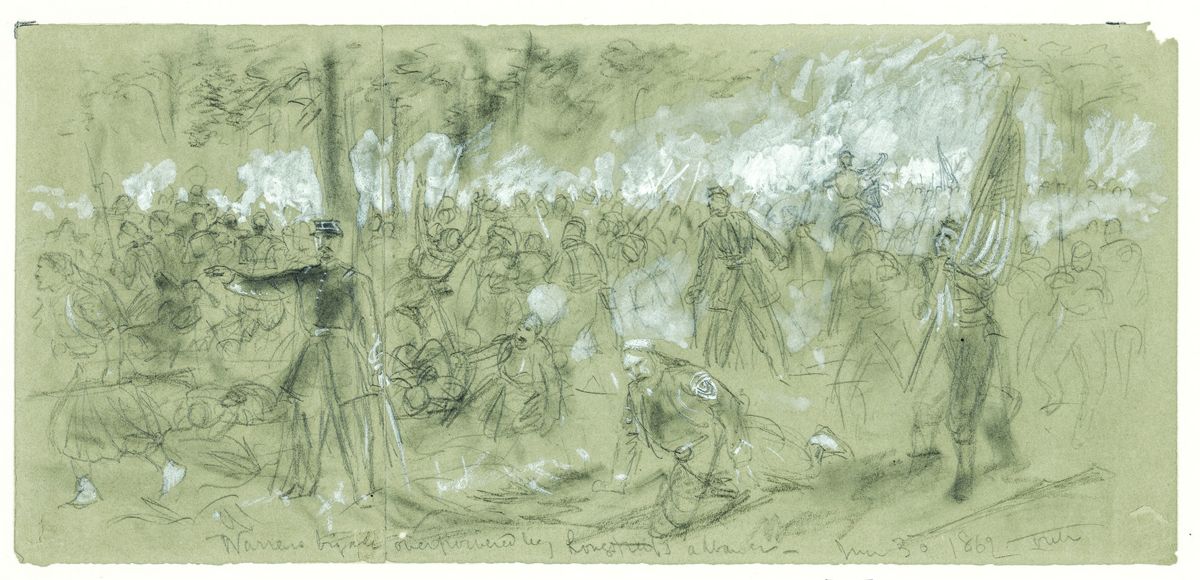
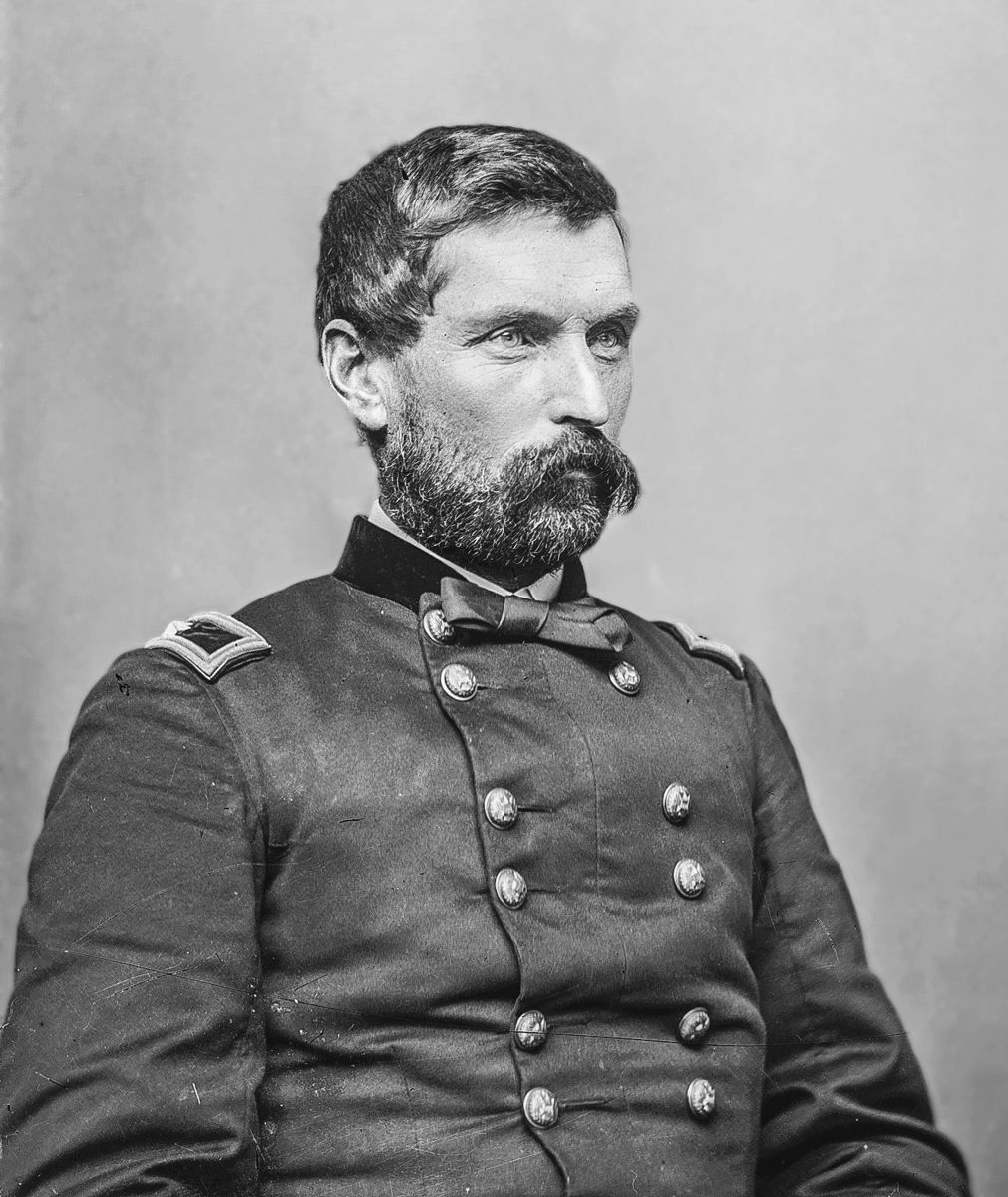
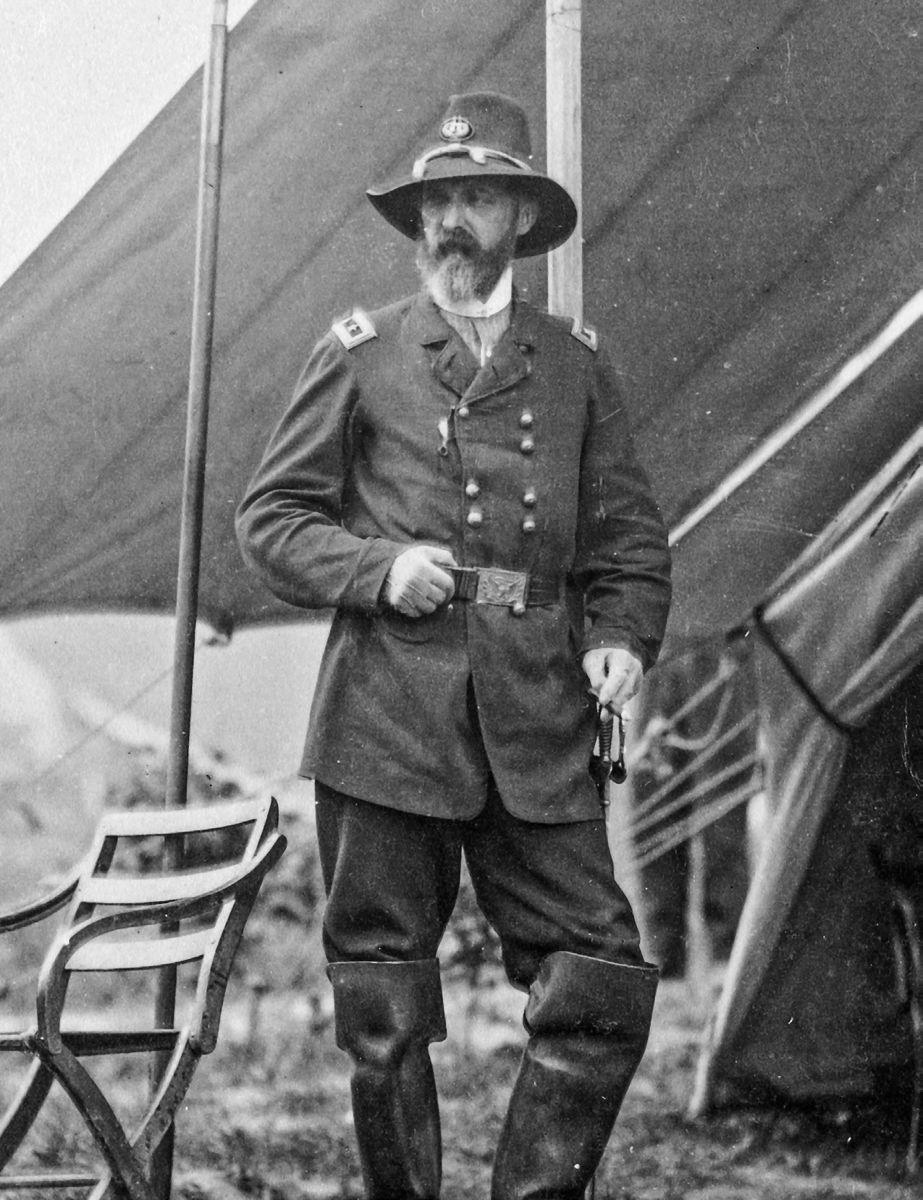
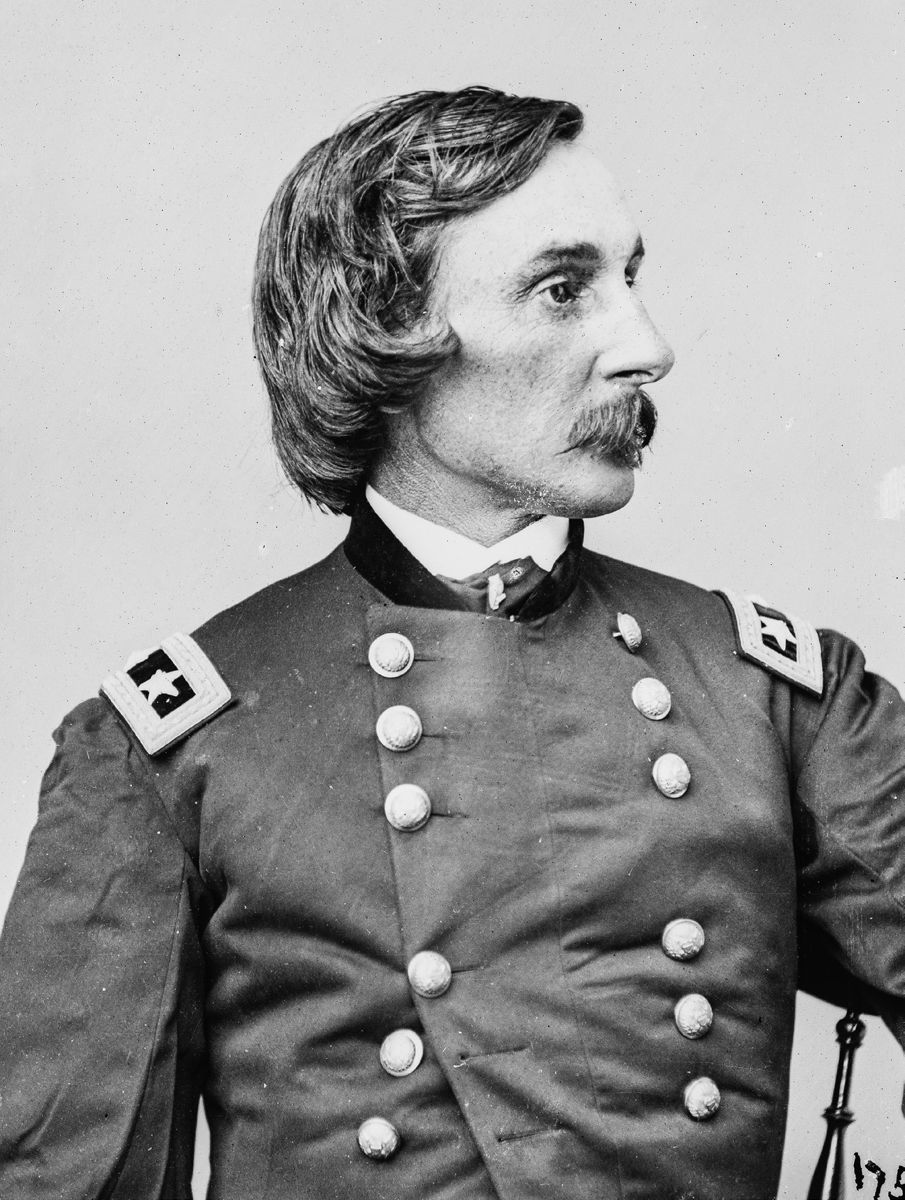
I presume the enemy will not let us be quiet here. They have a large force in front of us, and are evidently determined to break through Pope and drive us out of Virginia, when they will follow into Maryland and perhaps Pennsylvania. I am sorry to say, from the manner in which matters have been mismanaged, that their chances of success are quite good. – Brig. Gen. George Meade to his wife, Aug. 24, 1862 The Second Battle of Bull Run and the campaign leading up to it are well known episodes of the Civil War. Under John Pope— fresh from the west “where we have always seen the backs of our enemies,” as the general boasted—the Army of Virginia was to crush Lee’s army with overwhelming numbers and take Richmond from the north. Lee, however, drew the Federals away from Richmond by moving Jackson around the Union right flank. Jackson stunned the enemy by capturing the huge supply base at Manassas Junction. He destroyed what his men could not eat or carry, then hunkered down in a railroad cut northwest of the 1861 battlefield. There he sat, waiting as the Federals moved to attack him; waiting as Longstreet’s divisions marched to reinforce him. In this column we will view the battle of Aug. 30, 1862, through the eyes of three officers who led brigades under the unfortunate John Pope—George Gordon Meade, Gouverneur Kemble Warren, and John Gibbon.* The battlefield can be understood as being shaped like the numeral “7” rotated counterclockwise 90 degrees. On the horizontal line facing south was Stonewall Jackson’s wing of Lee’s Army of Northern Virginia. James Longstreet’s wing was stretched along the vertical line, facing east. Pope’s Federals assaulted Jackson’s position as if Longstreet’s vertical line were not there. Pope refused to believe repeated messages from V Corps commander Fitz John Porter indicating that Longstreet was present and ready to fight. Pope, insisting that the Confederates were retreating, issued preemptory orders to attack. Longstreet waited until the right moment as Porter’s men wore themselves out against Jackson’s fortified position. He then swept in from the west. Warren’s brigade was part of the V Corps and waited in reserve while the bulk of the corps was ordered to begin the assault on Jackson at 11:30. From his position Warren noticed that Brig. Gen. John Reynolds’ regiments had withdrawn from their position on Porter’s left. On his own initiative Warren moved his brigade and an artillery battery to protect this flank. In his report he writes: “I knew the enemy was in the woods and on the high ridge…all around toward our right…. I immediately assumed the responsibility of occupying the place Reynolds’ division had vacated, and made all the show of force I could.” This movement placed Warren’s men into the jaws of the trap sprung by Longstreet at 4 p.m. Warren recounts that the attack suddenly struck one of his two regiments, the 10th New York, which was “compelled to fall back, scarcely arriving at the position held by the Fifth New York before the enemy, and in such a manner as to almost completely prevent the Fifth from firing on them…. The enemy in force opened fire from the woods on the rear and left flank of the Fifth with most fearful effect.” Warren frantically attempted to turn his line to face the new threat, but most of his men could not hear their officers’ commands above the din of battle. Three officers were killed and six wounded. “Both color-bearers were shot down,” Warren writes, “and all but four of the sergeants were killed or wounded.” The Fifth lost 298 killed and wounded; the Tenth lost 133. In a gloomy letter to his brother penned after the battle Warren writes: “I have only 200 men left fit for duty in the Fifth New York and five officers. Several of the wounded are trying to be, but are unable. I have about 200 recruits, half armed and equipped. We are getting well worn out, and I expect the next will finish us all.” At this point in the battle we now turn to George Meade, whose brigade formed part of the Pennsylvania Reserves, the division commanded by Reynolds. On a hill made famous in the previous year’s battle, Meade’s men were engaged at a crucial time on Aug. 30. After fighting on a nearby ridge and maintaining its position “under quite a galling fire from the enemy’s artillery,” Meade’s unit “was ordered to march back to the Henry House plateau. At this point the brigade, in conjunction with the division, was deployed in line of battle and charged down the slope of the Henry House ridge…, taking a position in this road, which was firmly maintained under heavy infantry fire until it was relieved…. It is due to the Pennsylvania Reserves to say that this charge and the maintenance of this position was made at a most critical period of the day. The enemy had repulsed the attack made by us on our right flank and had himself assumed the offensive on our left flank. His infantry…was advancing to the Henry House ridge, which, if he had succeeded in gaining, might have materially altered the fortune of the day. It was the good fortune of the Reserves to be brought into action at this moment, and by their gallant bearing and firm advance to compel the enemy to retire to the shelter of the woods, where he was held in check until the close of the action.” The battle was a serious defeat for the Army of Virginia, but according to Meade, the stand made by the Reserves limited the scope of the defeat and averted an even greater loss. John Gibbon commanded a brigade in the First Division of McDowell’s III Corps. In his memoirs Gibbon writes of the action on the 30th. “[O]ur division under Hatch was posted on [Porter’s] right, my brigade in the rear supporting. We moved to the front, formed line of battle and entered the woods…and soon (Library of Congress) the roar of battle commenced…. Bullets came thick from the front, and very soon shells were bursting among us, coming from the left. Still, we moved forward, unable to see far through the thick underbrush…. Men were falling thick and fast and neither enemy nor friends, except those immediately about me, were to be seen. The fire slacked and rumor came that our troops had been repulsed and were falling back.” Gibbon withdrew his men from the woods, “threw a line of pickets to the rear and marched in line of battle to the hill behind us near the Dogan House…. Soon from the very point of woods we had left, [Confederate] troops came out in line of battle.” By this time Gibbon was threatened not only by Jackson’s men, but by Longstreet’s as well. “The battle recommenced, not only in our front, but away off to our left to the south of the pike where we could see the masses of the enemy moving forward.” Lined up across the Warrenton Pike near Henry House Hill, Gibbon fought a rear guard action as the army retreated toward Washington. As the Union forces began to withdraw, Gibbon ran into Gen. Phil Kearny, who “in a short bitter tone” said to Gibbon, “I suppose you appreciate the condition of affairs? It’s another Bull Run, sir, it’s another Bull Run!” In two letters written before his death soon after the battle, Kearny says “The army ran like sheep” and “On the 30th nine-tenths of the troops disgracefully fled.” In letters and postwar writings, Meade, Warren, and Gibbon all offer opinions about the management of the Union forces and their defeat at Second Bull Run. Even before the battle Meade had written to Mrs. Meade complaining of mismanagement and predicting doom. A minor success early in the campaign he attributed “not to Mr. Pope’s genius, but to an unlooked-for interposition of Providence in the shape of rain which has so swollen the Rappahannock that it is not fordable in the usual places; so that [the Confederates] cannot cross.” On the day after the battle Meade told his wife that the defeat was “no more than might have been known by any one who looked upon things in their proper light.” On Sept. 3 he informed her that “McClellan’s star is again in the ascendant, and Pope’s has faded away.” He also referred to the necessity of defending Washington and anticipated Lee’s invasion of Maryland, “all from the willful blindness of our rulers.” In the letter to his brother, Warren writes this lament: “Oh, that our strength and power could be brought to bear on the enemy, instead of being wasted in useless and ceaseless marches! Several times, we could have whipped the enemy, had all our army available been brought into action at once; but we never engaged with more than one fourth of it at a time, and we were repulsed in detail, or carried our point with immense loss.” Warren makes it plain where the blame lay: “A more utterly unfit man than Pope was never seen. Every dispatch he sent to the [War] Department was…a gross lie.” Gibbon’s memoirs contain some pointed criticisms both of Pope and the higher ups in Washington City. Based on a conversation he had with Meade a few days before the battle, Gibbon concluded that chief of staff Halleck was micromanaging the campaign from Washington and that “Pope was lacking in that sort of independence of character which not only prompts but enables an army commander to do on the spot that which he knows the exigencies require, independent of orders received from superiors at a distance and ignorant of the situation.” Gibbon concludes: “Again had faulty strategy defeated us and again the folly of attempting to command armies in the field from a distance had been demonstrated.” In his memoirs Gibbon also states that “A retreat is always a much more severe test of discipline than any other movement…. Green troops will advance in much better order although confident of going into danger, than they will retreat, which is supposed to be an escape from danger.” Such troops, Gibbon continues, are “liable at any moment to take counsel of their fears and yield to the thousand and one rumors sure to be set afloat in such a force.”
(Library of Congress)
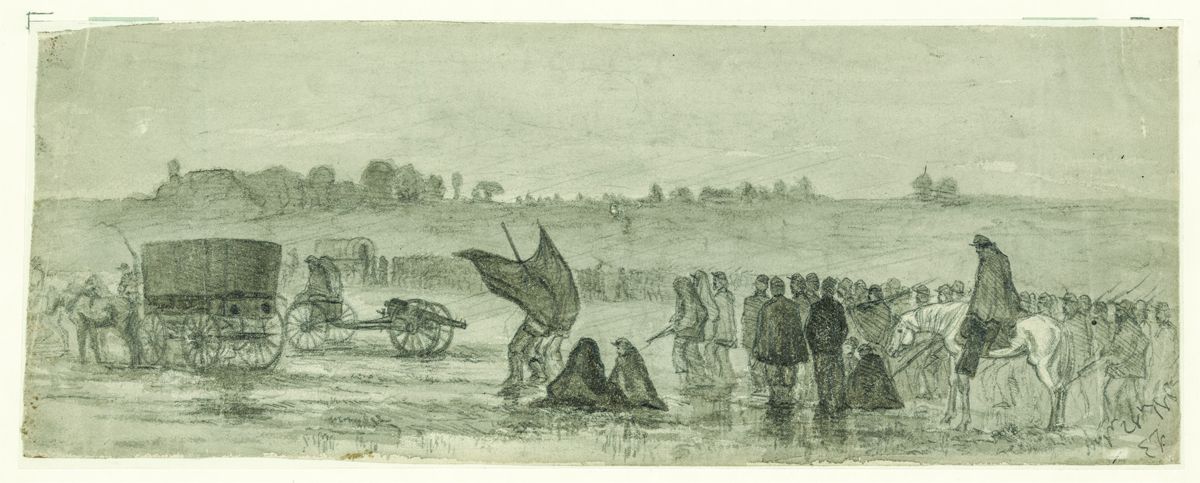
The immediate aftermath of First Bull Run certainly demonstrates this principle. But what of the Federal retreat after Second Bull Run? As commander of the rear guard, Gibbon got a very good view of the retreat. “On reaching the Stone Bridge over Bull Run, I began to realize the truth of what Kearny had said that was a ‘second Bull Run.’ Overturned wagons were lying alongside the road…. Crossing the bridge we formed on the other side, the road being blocked up with a mingled mass of stragglers, wagons, artillery, ambulances, and wounded….” Was Kearny right? Was it another Bull Run? In some ways the second was a replay of the first. However, as Gibbon and his brigade trekked along, the chaotic scene improved. “[W]e pursued our march,” he writes, “slowly following the moving mass in front of us, until having passed Cub Run, some sort of organization began to appear and it became evident that the whole army had not gone to pieces.” Another Bull Run? The Army of the Potomac followed Lee into Maryland and on Sept. 17 faced the Army of Northern Virginia at Antietam Creek, fought toe to toe with the Lee’s troops from 5:30 a.m. until 5:30 p.m., and forced them to abandon the field and retreat into Virginia.
Could the Federal army have done that in July 1861? Perhaps Second Bull Run was not exactly a second Bull Run. Next month we will see what some Confederate officers have to say about their battle, Second Manassas. *Meade led the First Brigade of the Pennsylvania Reserves (commanded by John Reynolds), attached to McDowell’s III Corps of the Army of Virginia. Warren’s was the Third Brigade in the Second Division (Sykes), V Corps, commanded by Fitz John Porter, Army of the Potomac, attached to Pope’s Army of Virginia. Gibbon commanded the Fourth Brigade of the First Division (King, then Hatch, then Doubleday), McDowell’s III Corps, Army of Virginia. Sources: Official Records, Ser. I, Vol. XII, Pt. II, Reports of J. Gibbon, G.G. Meade, G.K. Warren, • General John Gibbon, At Gettysburg and Elsewhere: Personal Recollections, Big Byte Boks, 2016, originally published in 1928 • David M. Jordan, Happiness is not my Companion: The Life of General G.K. Warren, Indiana University Press, 2001 • Capt. George Meade, The Life and Letters of George Gordon Meade, Major-General United States Army, Big Byte Books, 2014, originally published in 1913 • Emerson Gifford Taylor, Gouverneur Kemble Warren: The Life and Letters of an American Soldier, 1830– 1882, Houghton Mifflin Co., 1932
Gould Hagler is a retired lobbyist living in Dunwoody, Ga. He is a past president of the Civil War Round Table of Atlanta and the author Georgia’s Confederate Monuments: In Honor of a Fallen Nation, published by Mercer University Press in 2014.
Hagler speaks frequently on this topic and others related to different aspects of the Civil War and has been a regular contributor to CWN since 2016. He can be reached at gould.hagler@gmail. com.