
Critic's Corner
George R. Stewart’s Pickett’s Charge and General Richard Brooke Garnett
By Stephen Davis · Originally published July 2018 · pp. 34–35
You might remember Dolly Parton’s quip that she was country before Elvis was king, and Little Richard was a queen. Well, George R. Stewart’s Pickett’s Charge: A Microhistory of the Final Attack at Gettysburg, July 3, 1863 (1959) was a microhistory before that mode of military scholarship and publication became prevalent. Before, say, Harry Pfanz broke the battle of Gettysburg into three thick books, essentially one for each day of the battle (published in 1987, 1993, and 2001—1,580 pages total). Or before David
Powell broke the Chickamauga campaign into three books (1,778 pages). Actually, there weren’t that many book-length histories of Gettysburg before Stewart detailed Pickett’s Charge. In my downstairs library* are Jesse Bowman Young, The Battle of Gettysburg (1913), Earl Schenck Miers and Richard A. Brown, Gettysburg (1948) and Edward J. Stackpole, They Met at Gettysburg (1956). Helen D. Longstreet, wife of the general, published Lee and Longstreet at High Tide: Gettysburg in the Light of the Official Records in 1905. Aside from these volumes, articles and essays on the battle by various writers are innumerable. Countless veterans, Federal and Confederate alike, recalled the engagement in their postbellum reminiscences. It’s thus not too much to say that one of Stewart’s achievements was to have drawn from all of these works and fashioned a definitive chronicle of the fifteen hours on July 3, from 3 a.m. to 6 p.m. Pickett’s Charge is both authoritative and colorful. Nevins, Robertson and Wiley *I call it the General Clement Anselm Evans Memorial Research Collection—ask my wife.
termed it a “detailed, documented narrative” in Civil War Books. Richard Barksdale Harwell’s In Tall Cotton praises it as “excellent history written with the artistry of a brilliant and successful novelist.” More than a description of events from the sources, Stewart’s narrative at times steps back to ask some basic questions. “We have but one question to ask,” he writes at the start, “Why did Lee order Pickett’s Charge?” Lee’s confidence in his soldiers, an overestimate of the damage done to the enemy on July 1 and 2, lack of practical options (retreat? stand still? maneuver to the south, as Longstreet argued?), and Lee’s own aggressive nature all figured in, as did the commanding general’s hope for a massive assault that might shatter Meade’s army and send it packing down to Baltimore. Thus Stewart lays out the situation in his opening pages. Reading them some years ago, I had a rather fixed perspective. In the same year that Stewart’s “micro-history’” appeared, Ezra J. Warner’s Generals in Gray was also published. One of the stories I carried from it was how Confederate Brig. Gen. Richard B. Garnett, brigade commander in Pickett’s Division, was killed on July 3 in the famous charge at Gettysburg. Afterward, before burying the Rebel dead in front of the stone wall near the angle, Federals evidently pilfered the bodies, looking for loot. Some Yankees must have stolen his effects. As Warner explained, “it is supposed that his sidearms and insignia of rank were removed by a Federal soldier, and that as a result, his body was interred in a burial trench with the unidentified Confederate dead.” In 1915, R.H. Irvine, one of Garnett’s couriers, wrote in Confederate Veteran (vol. 23, p. 391) how after the war he encountered a Union veteran who claimed to have been the rifleman who brought the general down that day. to his surprise, he came upon the “As soon as the Confederates sword and scabbard of General retreated from the ground,” Irvine Garnett. Inscribed “R. B. Garnett, wrote, “he went to the body and U.S.A.,” the blade was a Model ripped from the General’s collar 1840 mounted artillery officer’s his insignia of rank and took sword, manufactured by the his sword.” Many years after Ames Company of Springfield, the war, in Baltimore, former Mass., and was probably given Confederate general George H. to Garnett upon his graduation Steuart was browsing through a from West Point in 1841. Steuart second-hand shop when, much snapped it up, and two years
Stewart’s Pickett’s Charge. after his death in 1903, a relative forwarded the sword to Garnett’s niece, living in Richmond. Today, as a matter of note, the general’s sword and scabbard are in the possession of the American Civil War Museum in Richmond, which also holds Garnett’s field glass and a brass and leather telescope which, museum records indicate, was taken from the general’s body by a “Lieutenant Johnson.” But what of the body itself? Stripped of any sign of rank, Garnett was in all likelihood buried in the mass graves dug for the Rebel dead by Union soldiers in the days after the battle. Following the war, the Hollywood Memorial Association of Richmond petitioned the state legislature for funds to bring the remains of the Lee’s soldiers, moldering in the Gettysburg fields, home for reburial. The work of exhumation and transport was performed during 1872–1873, with a total of 2,935 soldiers’ remains brought to Hollywood Cemetery by October 1873. A special area of the cemetery was designated as “Gettysburg Hill,” and it was here that the dead of Pickett’s charge were reinterred. Warner speculated that this was where Garnett ended up. “It is entirely possible that the General’s remains now rest in ‘Gettysburg Hill,’” he wrote in Generals in Gray (p. 374
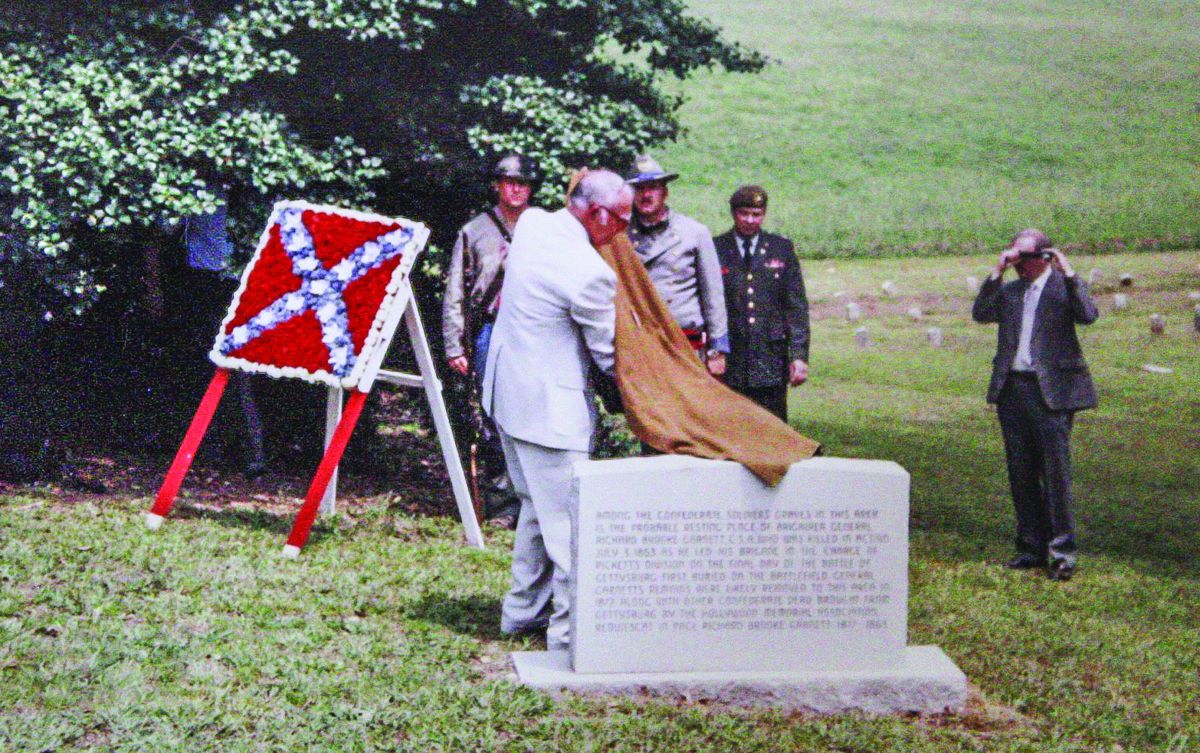
AMONG THE CONFEDERATE SOLDIERS’ GRAVES
IN THIS AREA IS THE PROBABLE RESTING PLACE OF BRIGADIER GENERAL RICHARD BROOKE GARNETT C.S.A., WHO WAS KILLED IN ACTION JULY 3, 1863, AS HE LED HIS BRIGADE IN THE CHARGE OF PICKETT’S DIVISION ON THE FINAL DAY OF THE BATTLE OF GETTYSBURG. FIRST BURIED ON THE BATTLEFIELD, GENERAL GARNETT’S REMAINS WERE LIKELY REMOVED TO THIS AREA IN 1872 ALONG WITH OTHER CONFEDERATE DEAD BROUGHT FROM GETTYSBURG BY THE HOLLYWOOD MEMORIAL ASSOCIATION. REQUIESCAT IN PACE RICHARD BROOKE GARNETT 1817–1863
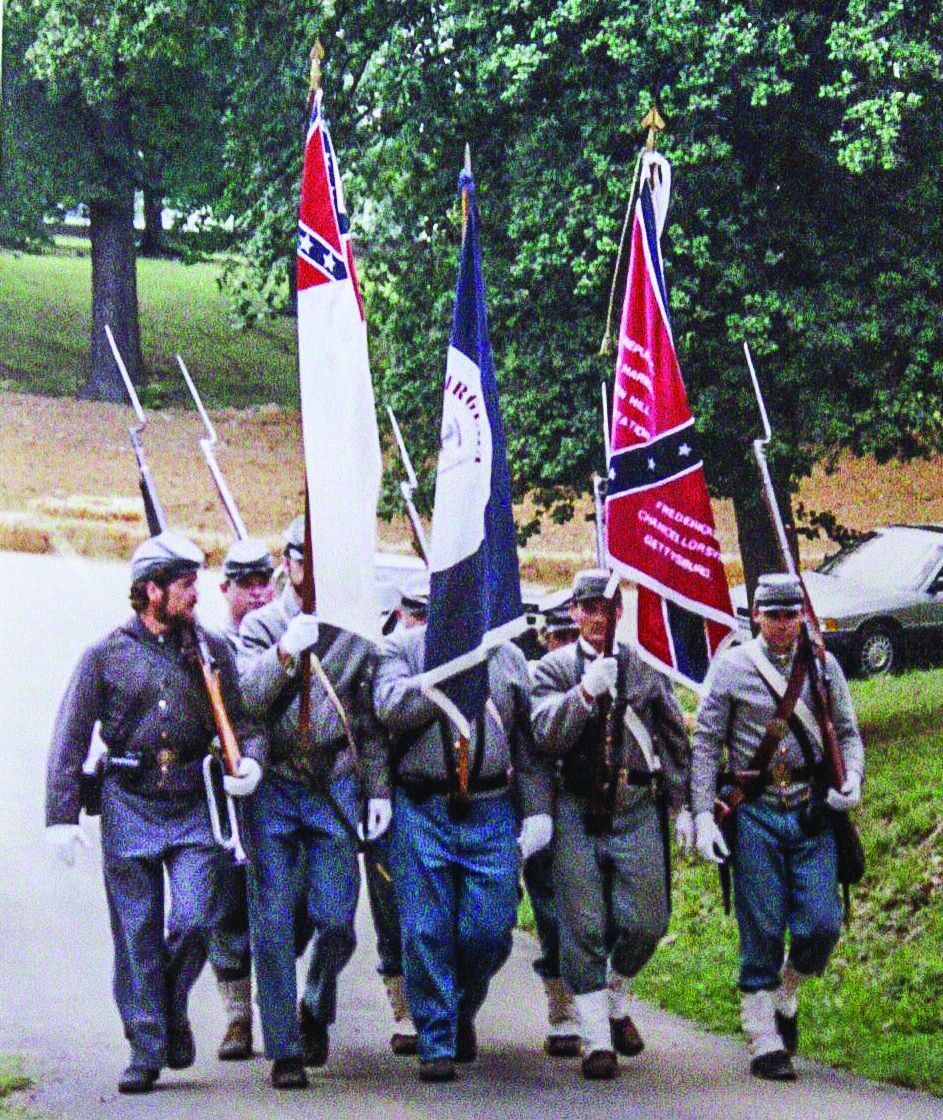
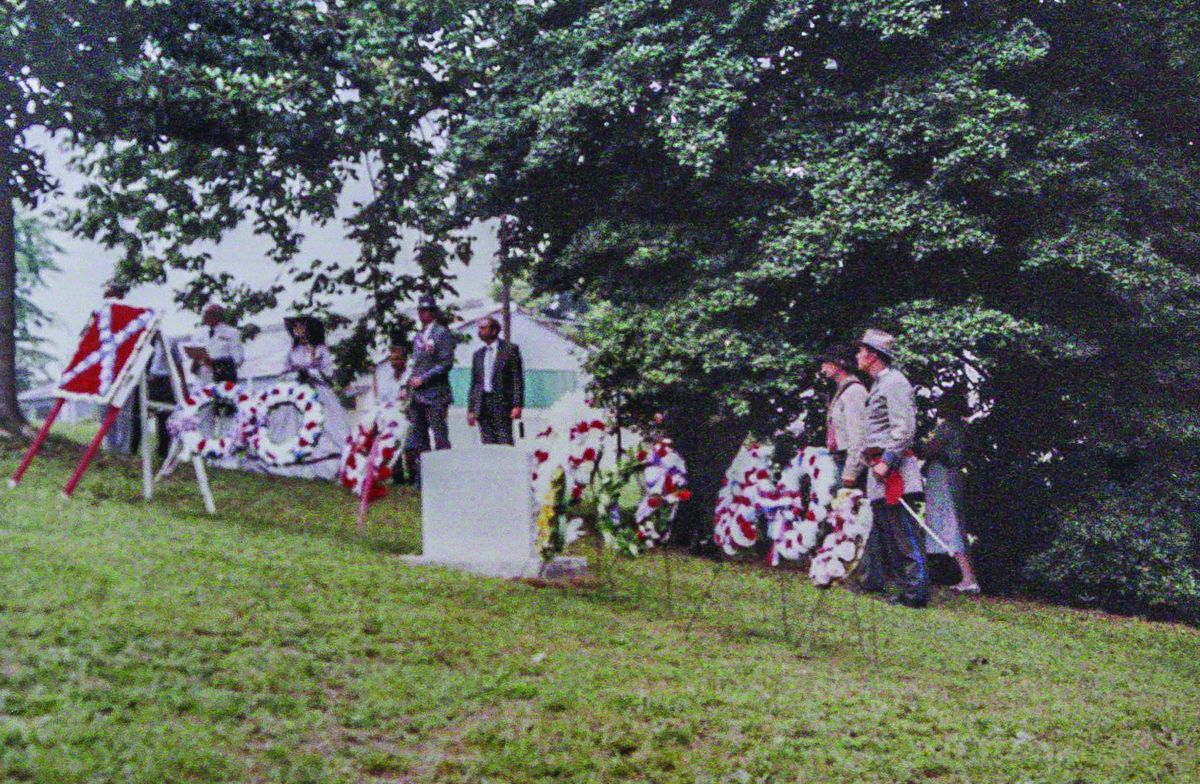
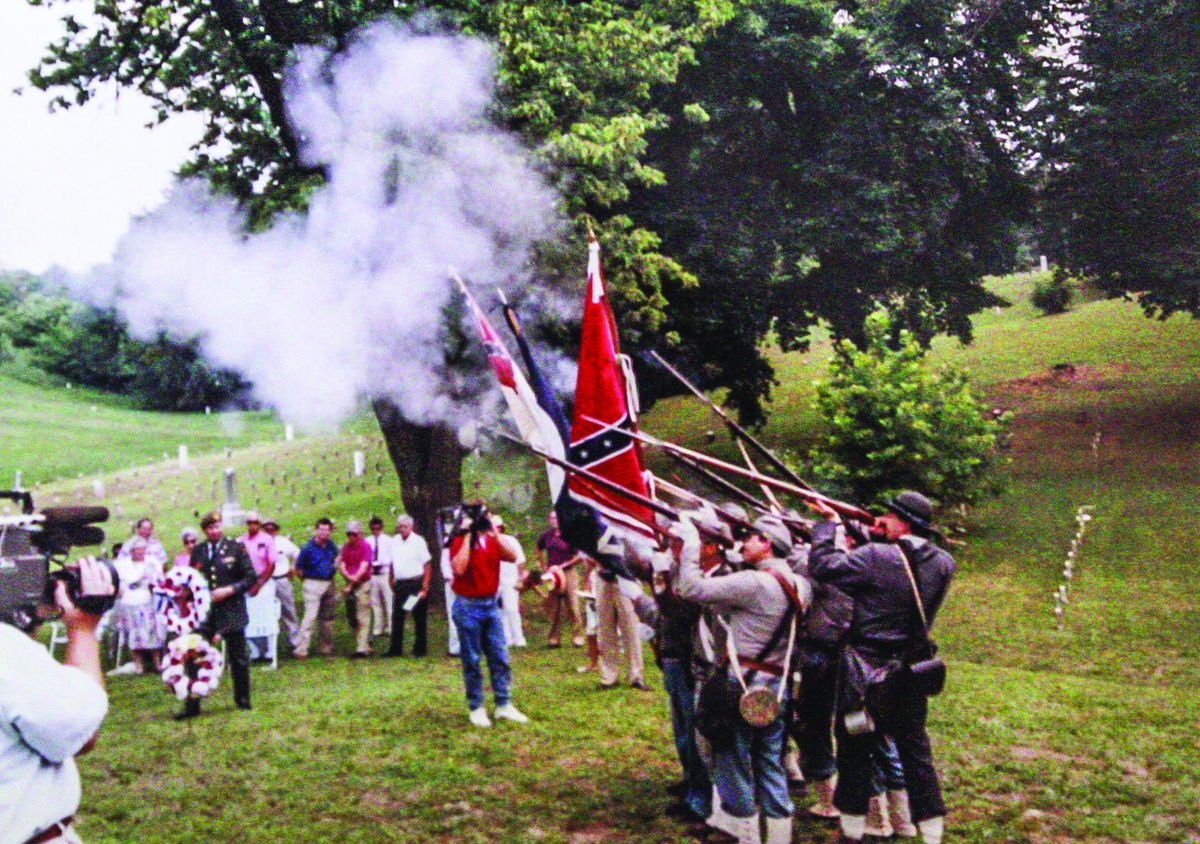
n.158). Mary Mitchell, author of Hollywood Cemetery: The History of a Southern Shrine (1985) concluded that General Garnett’s bones came in the first consignment of remains in June 1872: “the body of General Richard Brooke Garnett was probably among the unidentified remains brought to Richmond in this shipment.” Years ago I wrote Ms. Mitchell; “I feel certain,” she answered me, “that Garnett is in Hollywood.” But no one had raised a marker there to his memory. Well, all of that got me thinking. In 1990 I was writing a newsletter, Grave Matters, focused on Civil War soldiers’ graves. I had several hundred subscribers, so in one issue I sent out a call for donations for a cenotaphic stone for General Garnett, to be placed at Gettysburg Hill. Word spread, and the idea caught on. By early 1991 I had received over $4,000 from more than 150 individuals. Civil War round tables from as far away as Los Angeles sent in checks. I remember when my astonished wife called me at the office after she had opened an envelope with $1,000 in it. We set July 3, 1991, as date for our memorial dedication. In the meantime I composed an inscription, and arranged for a stone to be cut in north Georgia and transported by train to Richmond. I even visited Hollywood that spring to fix an appropriate site where the cemetery staff would place our monument. I met with Garnett descendants (learning from them the pronunciation of Gar’-nit, not Gar-net’) and the local Sons of Confederate Veterans, putting together a formal program of dedication. (For our invocation I chose a passage from Ecclesiastes, “Let us now praise famous men.”) I invited all our contributors and all readers of Grave Matters to join us, sending out special invitations. I was astonished on the appointed day—like July 3, 1863, it was hot enough to scorch a feather—that we had a huge crowd in the cemetery, gathered around the draped stone. Descendants, wellwishers, uniformed Confederate reenactors were all present. (Yes, the gentleman from Los Angles who had sent in that big check was there, too.) During the program that afternoon I gave the address, “Why We Honor General Garnett.” My Richmond comrades arranged for local TV cameras to be on hand for all of this, culminating with the unveiling of the stone. If you go to Hollywood Cemetery today, you’ll see our cenotaph in the northwest grounds, near the Confederate Soldiers’ Section. I’m still proud of the chiseled inscription transcribed in the text box at the bottom of the page. So ends our story. I can proudly say that after all these years, at least figuratively, we helped bury a Confederate general killed in Pickett’s Charge. Note: what a compliment! Robert K. Krick, in his essay for Gary W. Gallagher, ed., The Third Day at Gettysburg and Beyond (1994), recognized our work, citing my article on General Garnett in Grave Matters: “Davis’s fine summary of information on Garnett’s death and disappearance served as part of the preparation for the Hollywood memorial marker, which Davis spearheaded.” Thanks, Bob!
Stephen Davis of Cumming, Ga., is Book Review Editor for Civil War News. He is currently writing a study of how the Atlanta Intelligencer, the city’s leading daily newspaper, covered the war, 1861–1865. His co-author is Bill Hendrick, veteran journalist of forty years, writing for the Atlanta Journal-Constitution, Associated Press and many other publications. Their book will be published by the University of Tennessee Press.