
Harvard Senior’s Death at Antietam: ‘Known But to be Loved’
By John Banks · Originally published January 2018 · p. 21
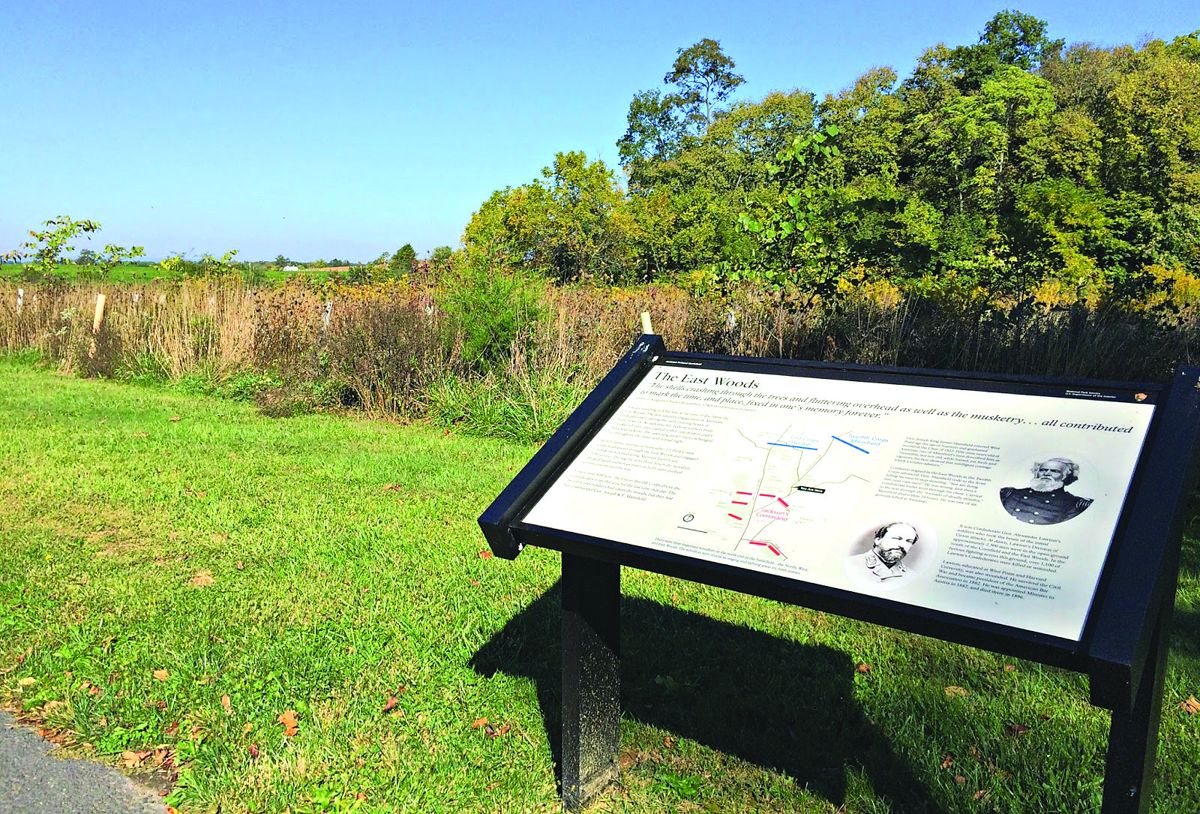
On the morning of the bloodiest day of the Civil War, in a battle in which more than 130 soldiers in his 13th Massachusetts would become casualties, Samuel Shelton Gould was woefully unprepared to fight. It wasn’t his fault. A new recruit – he had joined the regiment just days earlier straight from Harvard, where he was a member of the senior class – Gould wasn’t even supplied a musket. Assigned as a stretcher-bearer, he picked up a weapon from another soldier in his regiment who fell wounded in the awful chaos during the Battle of Antietam on Sept. 17, 1862. His war that morning was brief. Shot through the chest, Gould apparently lingered a short time before he died. “Samuel S. Gould stood within five feet of me when he was mortally wounded,” Warren H. Freeman of Gould’s Company A wrote to his father. “He had been in the company but four or five days. He was fresh from Harvard College, and I got quite well acquainted with him; he was a wide-awake, noble fellow, about as tall as I am. “He has relatives in West Cambridge. We had forty-one men in our company, twenty-one of whom were killed or wounded.
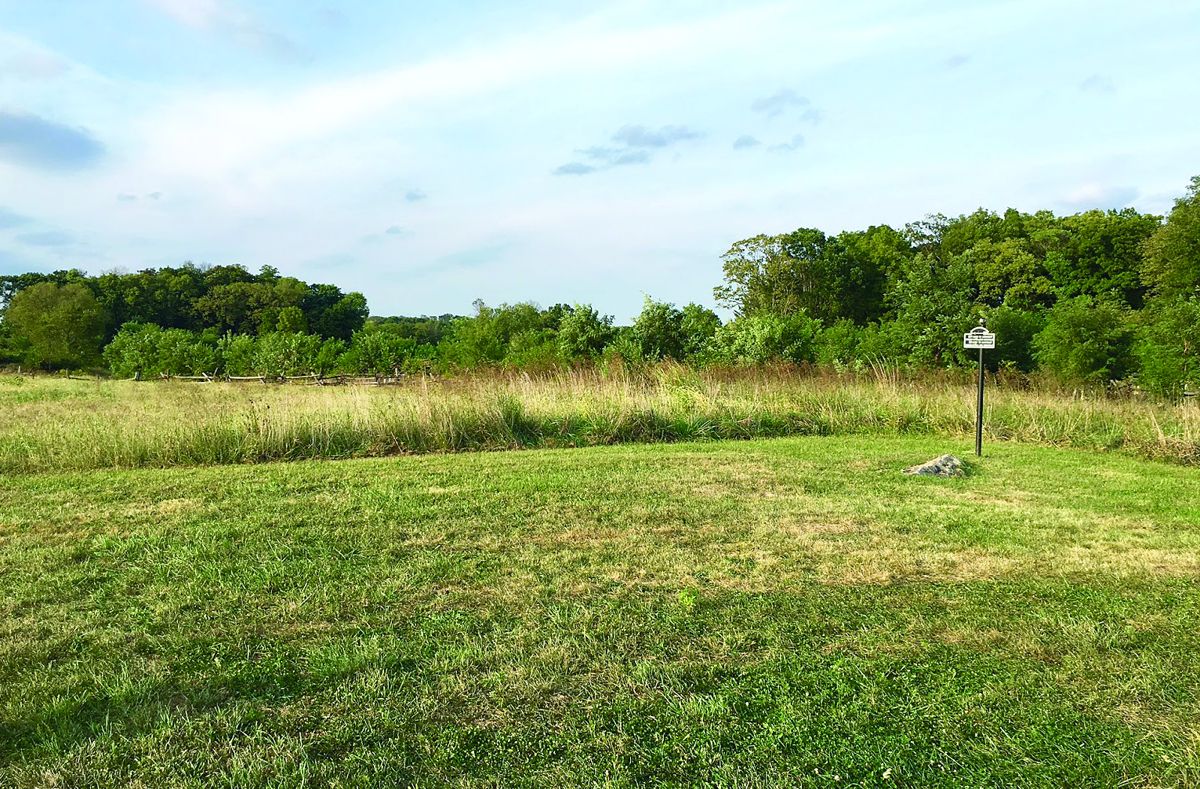
My rifle was so hot that I could hardly touch the barrel with my hand, but it worked well; that was the reason I was able to fire so many rounds. Some of the boys only fired thirty times; their rifles got foul, and it took a long time to load. After I had fired forty rounds I went to Gould and got some of his cartridges; he was living, but not able to speak; he died before the battle was over.” Only 19, Gould had already led a remarkable life before he was shot near the East Woods, once an unremarkable woodlot but now etched into Civil War history. Well-educated, he came from a prominent Boston-area family. His father, Samuel Sr., was once the headmaster at the Winthrop School in Boston, and young Samuel attended prep school at Roxbury Latin School, founded in 1645. Its distinguished rollcall of alumni included a founder of Yale, a Revolutionary War general, the founder of Harvard’s Medical School and a clergyman credited with the stirring, revolutionary phrase “no taxation without representation.” Gould was only 15 when he enrolled at Harvard in 1858, but he remained there only a year before he sought a new adventure. Eager to prove himself, he became a common sailor – his parents stunningly gave their approval – and sailed aboard the Peabody, a ship involved in trade with Australia. Becoming dissatisfied with that experience, he finagled a position aboard the Commonwealth, a vessel destined for Peru. Although he was given more opportunity to learn the intricacies of being a sailor aboard the Commonwealth, the experience was unpleasant at best and repugnant at its worst. “…he found the work harder and the fare worse,” an 1866 Harvard biography of Gould noted. A Peru voyage was particularly noteworthy for its violent end. When the Commonwealth arrived in Callao, the South American country’s chief seaport, the headstrong Gould discovered its eventual destination was the Chincha Islands, a dismal cluster of small islands off Peru’s southwest coast. The mission: hauling a load of guano – excrement of bats and birds used in the production of fertilizer and gunpowder. The islands, Gould’s biography noted, were “a place to which sailors will never go if it can be avoided, as the work is of the most repulsive kind.” Highly perturbed, Gould met with the Commonwealth’s captain, seeking a discharge. The captain refused, forcing the young sailor to seek out the American consul in Callao. Eventually, the disagreement was settled with fisticuffs. The captain and his second mate pummeled the teenager, who wisely decided that night to leave the ship “at all hazards.” In Callao, Gould was offered a position on the Rival, a Bostonbased ship that sailed to Ireland, making an extremely rough passage around Cape Horn. The 45-day voyage was unpleasant, and the work for Gould was “incessant and severe,” but at least he got along with his commanding officers. After a stay in Cork, Ireland, Gould sailed to New Orleans and finally to Boston, narrowly escaping death when the Rival was battered in a terrible storm off North Carolina. Somehow while he sailed the globe for two years, Gould found time to hit the books. “He carried with him from Boston several Latin and Greek text-books, and other books for reading and study, intending to use them in his spare hours, so as to re-enter College on his return with as little delay as possible,” the Harvard biography noted.
When he got home, Gould indeed re-enrolled at Harvard, studying diligently. When the Union army’s fortunes took a turn for the worse in late spring 1862, he joined a company of Harvard men in the 4th Massachusetts Battalion, but their services were declined. By the summer of 1862, Gould could wait no longer. He enlisted in the 13th Massachusetts on Aug. 14, 1862, but not before speaking at a series of war meetings in Cambridge and Boston at which he strongly urged his fellow students to support the Union cause.
“He addressed himself particularly to the more respectable young men,” the Boston Gazette reported 11 days after Gould’s death, “who were holding back from enlistment, he feared, on the ground of not wanting to mingle with the common classes, saying, that if such were their motives, ‘they were not fit to have their names borne on that immortal roll of honor, the list of killed and wounded.’”
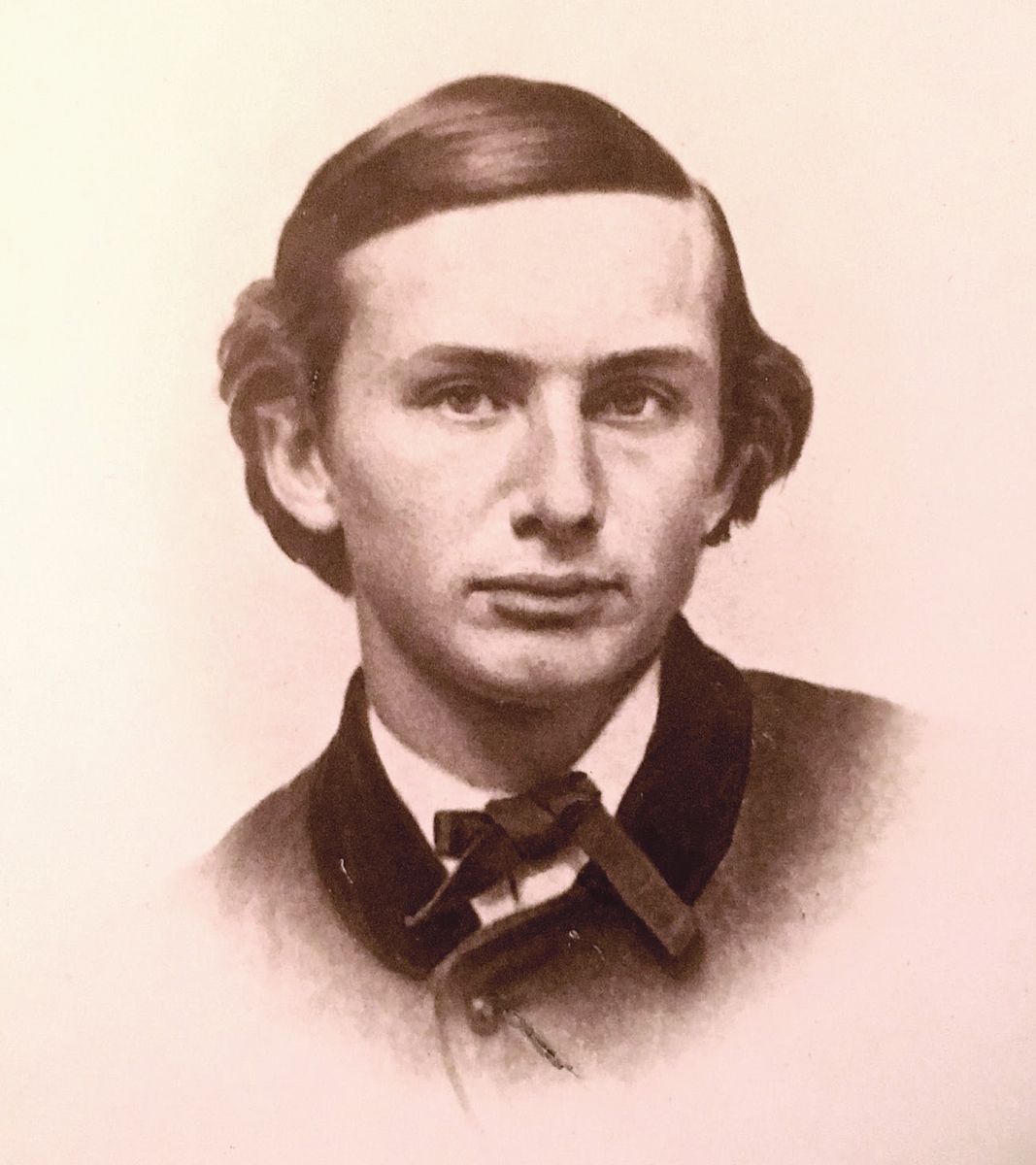
“… the force of his example and fire of his words” at the war meetings, his Harvard biography noted, “were inspiring.”
Days after Antietam, Gould’s remains were returned to Cambridge, Mass., where a service was held in his father’s house. The president of Harvard excused the entire senior class on the day of his funeral, and all those classmates “walked in mournful procession behind his remains.” Gould was buried in Mount Auburn Cemetery, near Harvard’s campus.
A little more than a week after Gould’s death, the senior class left no doubt how it felt about its classmate, adopting four resolutions. One of them read:
“…although he had been but a year among us, yet during his short stay we had learned to love and honor him; for he was known but to be loved. Noble and generous-hearted, he shrank from everything that was selfish; and the instances are not few which remain of his disinterested generosity and quiet benevolence – that his life, though short, was yet long enough to afford us a pattern of virtue, of patriotism, of duty, and of high resolve.”
John Banks, who lives in Avon, Conn., is the author of two Civil War books, Hidden History of Connecticut Union Soldiers and Connecticut Yankees at Antietam, both by The History Press. A longtime editor in sports at The Dallas Morning News, he now works for ESPN in Connecticut. Banks is secretary-treasurer of The Center for Civil War Photography. This article first appeared on Banks’ Civil War blog (http://john-banks.blogspot.com).