
Through The Lens
Fighting Was Our Business
By Stephanie Hagiwara · Originally published January 2018 · p. 8
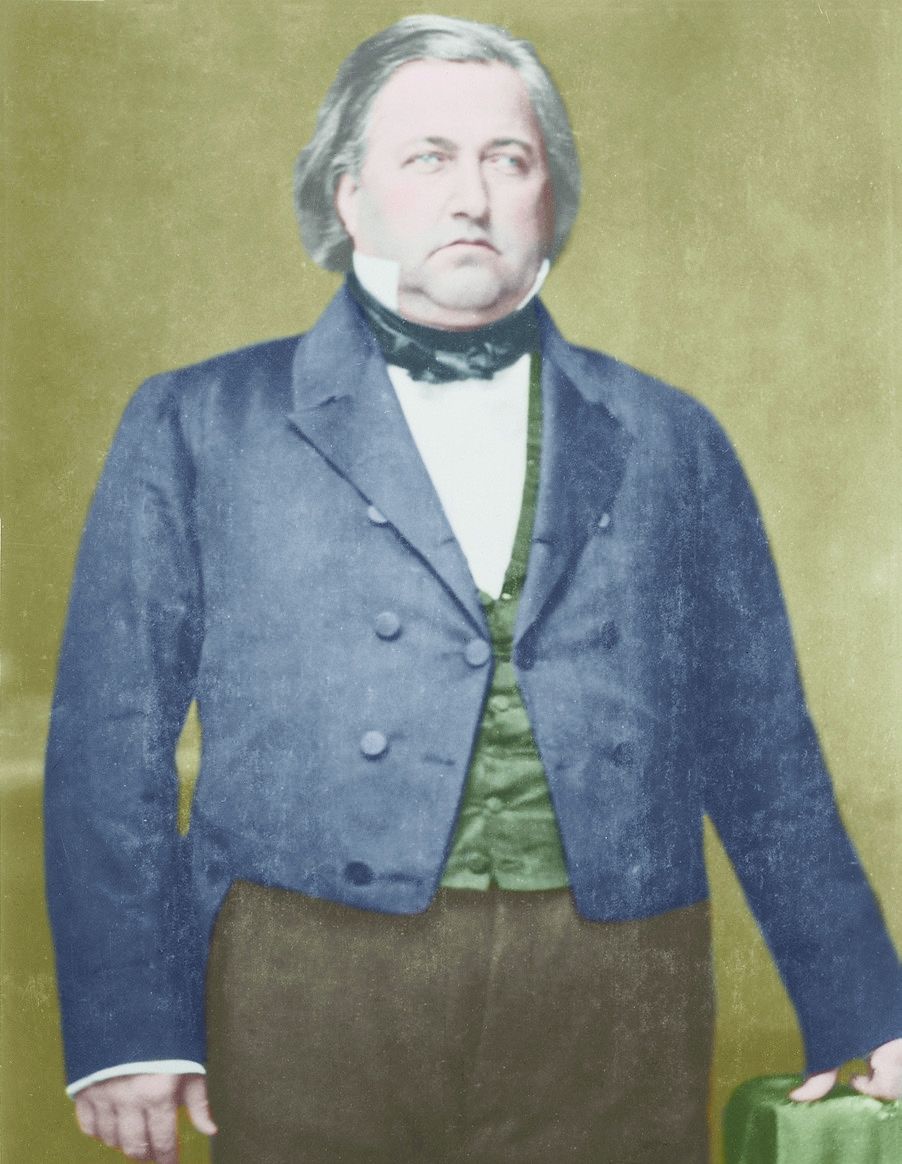
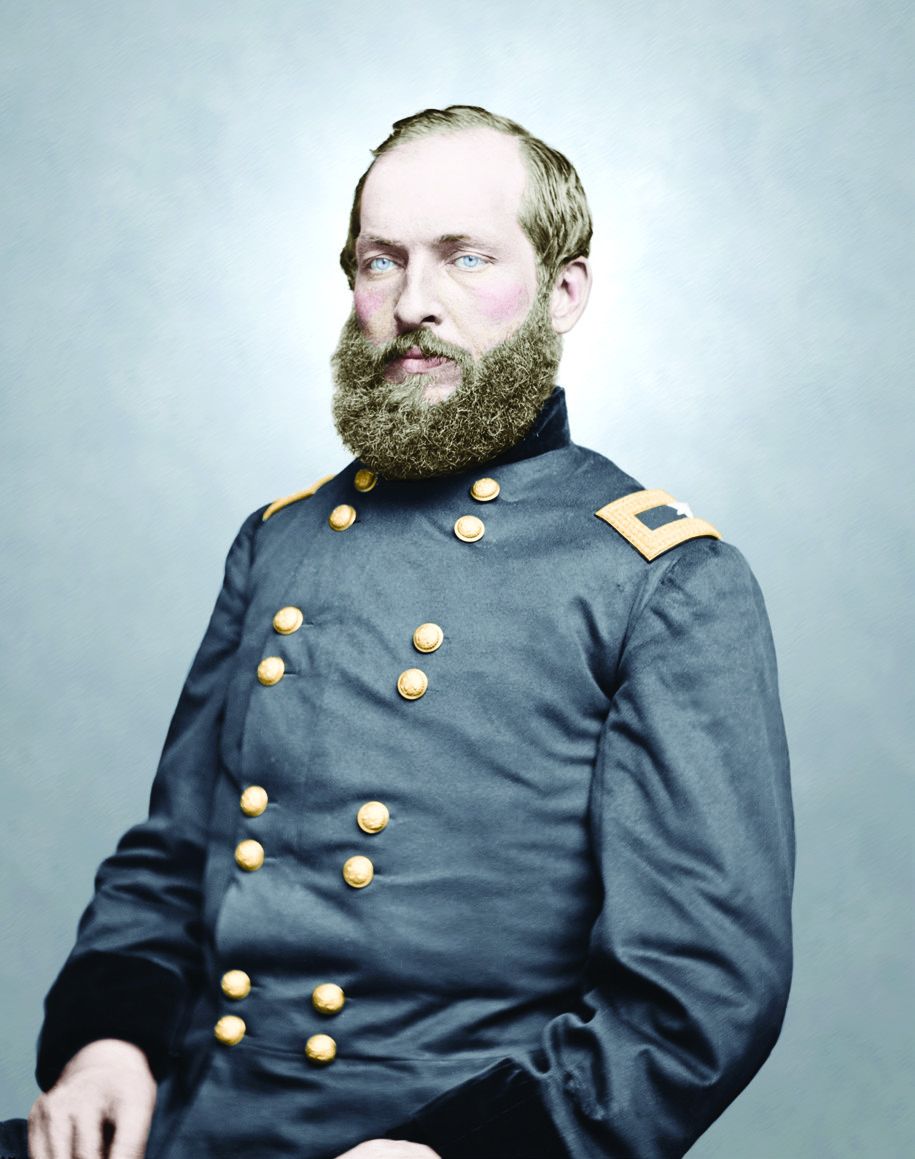
“I think to lose Kentucky is nearly the same as to lose the whole game” – Abraham Lincoln At the start of the Civil War, Kentucky declared its neutrality. By September 1861, both C.S. Gen. Leonidas Polk and U.S. Gen. Ulysses Grant had entered Kentucky. On the eastern side of the state, it was C.S. Gen. Humphrey Marshall vs. future U.S. President James Garfield. Marshall came from one of Kentucky’s first families, served in both the Black Hawk and Mexican-American Wars and as a congressman and ambassador to China. He advocated for Kentucky’s neutrality but as combatants had entered the state, Marshall believed it was time to choose sides. Due to the death of his father, Garfield grew up in extreme poverty. At sixteen, ignoring his mother’s wish that he further his education, Garfield followed his dream of a career at sea by taking a job on the Erie and Ohio Canal. A near death experience by drowning convinced him that, “… He [God] had saved me for my mother and for something greater and better than canaling.” After returning home, he paid for his first year of higher education by working as a janitor. By 1861, through his study, strategic and oratory skills, Professor Garfield rose to become President of Western Reserve Eclectic Institute (now Hiram College) and Ohio state senator. In December 1861, U.S. Gen. Don Carlos Buell decided he had to chase the Confederates out of eastern Kentucky. Buell tasked newly arrived Col. Garfield to come up with a strategy. Garfield turned to his strength – doing his homework. He studied maps of the steep mountains and deep valleys of the 6,000 square mile territory he was to defend. Excanal worker Garfield decided his solution would be to keep his men near the rivers and use the waters to float supplies from Ohio. As ordered, the following morning Garfield presented his plan. Buell not only approved of it, he added three additional regiments and a cavalry unit to Garfield’s command. At this point, 300-pound, sixfoot-tall Marshall was more politician that military officer. Unable to establish a supply line from Virginia over the Appalachians, he expected his 2,000 men to live off a landscape that had difficult sustaining locals. Between the weather and hunger, his men succumbed to illness. According to an aide, Marshall’s heart was as “tender as a woman’s.” He would give up his tent for the sick and sleep under a wagon. More troublesome, he had four cannon but many of his men were armed only with shotguns or squirrel rifles. Garfield intended to split up his men and surround Marshall with his 1,500 men. “It was a very rash and imprudent affair on my part,” he later admitted. “If I had been an officer of more experience, I probably should not have made the attack. As it was, having gone into the army with the notion that fighting was our business I didn’t know any better.” Garfield’s friend, Gen. Jacob Cox, loaned his cavalry for a few days. With the cavalry leading the way, Garfield sent his force down the road to make a “show of noise and activity” with Marshall’s picket. An hour later he would repeat the show on a different road. Convinced he was facing a larger force, Marshall abandoned his camp near Paintsville, Ky. Garfield pursued his quarry. The first search was a 26-mile round trip before they caught the scent. Despite cold, sleety rain Garfield ordered his men into the Big Sandy Valley. As Marshall’s officers spent the evening voting to return to Virginia to resupply, the Federals spent the night a mile away, in a wet, fireless camp and “slept on their arms.” On Jan. 10, 1862 Marshall positioned his men behind two parallel (Abbott’s and Middle) creeks and a forested hill that commanded the road. Garfield positioned some men along a ridge, others on top of a peak. The rest of his troops were ordered into battalion drill “for the sake of bravado and audacity.” This activity convinced Marshall that Garfield had at least 5,000 men. When the time came to spring his trap, Garfield couldn’t spot the hidden Confederates. About 1 p.m. he ordered a cavalry squad to gallop around the hill “in full view of the enemy. The ruse worked well, and the sudden fire of several thousand muskets revealed the coveted secret.” The battle began with four hundred men advancing up the hill. The Confederates met the Federals with fire but 29 out of 30 of Marshall’s shells were duds. A second flanking force, “every man to a tree,” pulled themselves up the hill. The two sides got closer and could hear each other curse as they fought. Both sides would charge and withdraw; but trees and low-flying birds got the brunt of the action. “The whole hill was enshrouded in such a column of smoke as rolls from the mouth of a volcano. Thousands of fireflashes leaped like lightning from the cloud. Every minute the fight grew hotter. I was just ordering my whole reserves into line and was going to lead them up the hill myself when I saw” Lt. Col. Lionel Sheldon’s 700 men arrive from Paintsville. “I shouted to our boys to look. They saw, and such a shout of joy now greeted my ears. The reinforcement, on double quick returned the wild shout and the fighters on the hills heard, saw and returned an answering shout,” said Garfield. It was about 4:30 pm when Garfield sent his reserves up to the hill to capture the Confederate guns. Marshall ordered a retreat because he didn’t want a twilight fight. Garfield’s men settled down for the evening, expecting to resume the battle in the morning. Around midnight, the Federals could see the light of the Confederate’s abandoned wagons and camp equipment burning as they made their way back into Virginia. Both sides claimed victory. Marshall argued that he held his position throughout the Battle of Middle Creek and only left to resupply. On the other hand, Garfield may not have won the Battle but did achieved the Federal objective of driving the Confederates permanently out of the area. Marshall would later resign from the army and take a seat in the Confederate Congress. Starved for good news, Garfield was lauded in the Northern press. He was swiftly promoted to brigadier general and within ten months elected to U.S. Congress. Garfield was torn between remaining in the field and taking his place in Congress. Aside from his desire to see the war won, his recent promotion to Maj. Gen. paid a salary significantly more than a sitting Congressman. While in Washington to report on the Battle of Chickamauga, Tenn., Garfield discussed the issue with Lincoln who asked him to go to Congress. “…the President told me he dared not risk a single vote in the House and he needed men in Congress who were practically acquainted with the wants of the army. I did not feel it right to consult my own preference in such a case.” With his gift of gab, Garfield found he could fight and win in Congress. Garfield served seventeen years in Congress before being elected United States president. Sources:
Gen. Humphrey Marshall, C.S.A. Colorization © 2017 civilwarincolor.com courtesy civilwarincolor.com/cwn
(National Archives)
Gen. James Garfield, 42nd Ohio Volunteer Infantry; Colorization © 2013 civilwarincolor. com courtesy civilwarincolor.com/cwn
• Peskin, Allan. Garfield • Ridpath, John Clark. The Life and Work of James A. Garfield: Twentieth President of the United States • Preston, John David. The Civil War in the Big Sandy Valley of Kentucky • Millard, Candance. Destiny of the Republic
Stephanie Hagiwara is the editor for Civil War in Color.com and Civil War in 3D.com. She also writes a weekly column for History in Full Color.com that covers stories of photographs of historical interest from the 1850’s to the present. Her articles can be found on Facebook, Tumblr, and Pinterest.