
Through The Lens
To Catch a Snake
By Stephanie Hagiwara · Originally published February 2018 · pp. 10–11
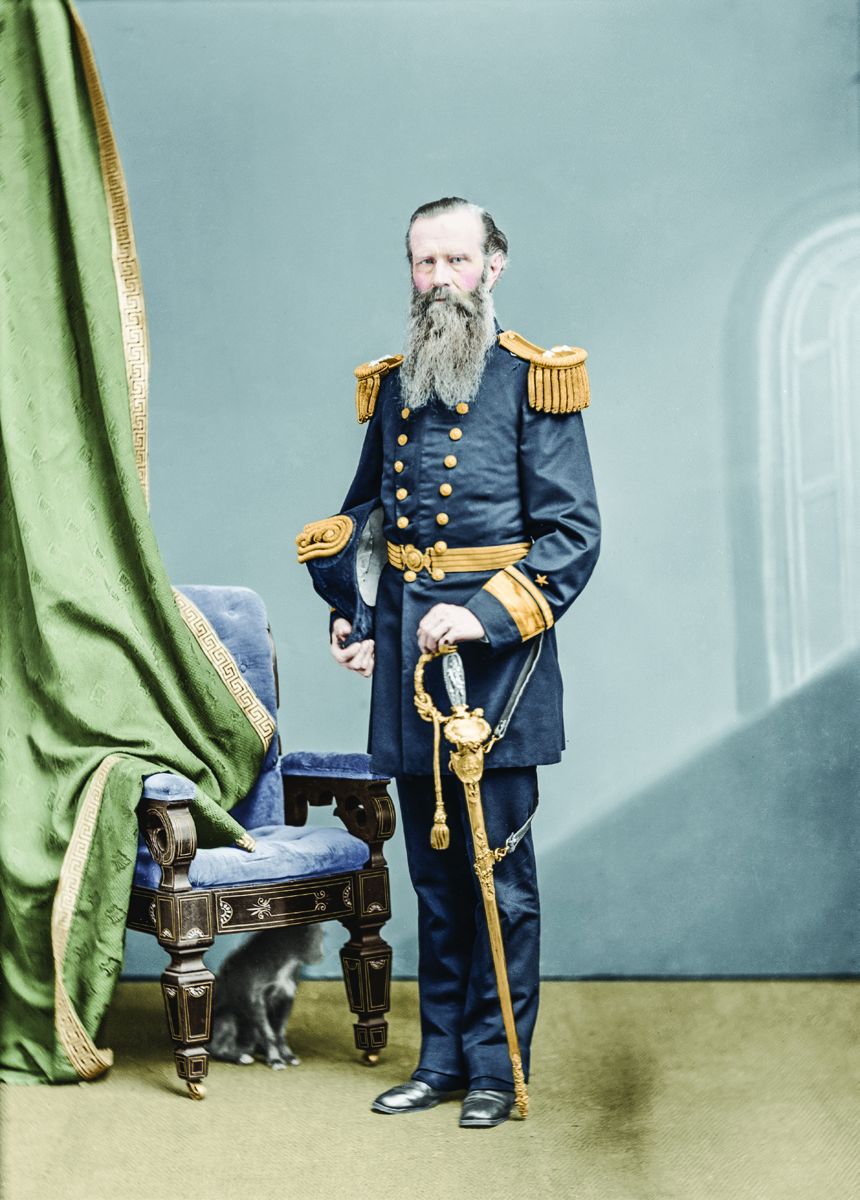
“That was a torpedo, sir! It has blown a hole in her hull under the boilers, and the water is within three inches of her fires.” – USS Montauk Chief Engineer Blockade runners kept Savannah, Ga., located 12 miles from the coast, supplied from the outside world through the maze of waterways leading to town. On July 1, 1862, while searching for a blockade runner that had slipped through Ossabaw Sound into the Ogeechee River, the Federal navy discovered Ft. McAllister guarding a route to Savannah. The earthen fort was built on high ground at a bend, protecting both an upriver railroad bridge and the river’s entrance with aid of canon and strategically placed river obstacles. Escaped slaves brought word that the CSS Nashville had run the blockade and now was prepping to make the run out. The notorious Nashville, a brig-rigged, side-wheel passenger steamer, had been captured by the South while delivering the U.S. Mail at Charleston, S.C. She was the first ship to fly the Confederate flag in English waters along with the first to board and burn an American merchant ship. Between her steam power and her guns, the Nashville was too deadly to survive. On July 29, 1862, Union gunboats set out to get past McAllister and burn both the railroad bridge and the Nashville. The gunboats began firing at the fort as they rounded the bend in the river. C.S. Capt. Alfred Hartridge reported: [The enemy projectiles] would strike the earth & make cavities that were large enough to bury a horse, fall into the water & throw up a column [of water] 100 feet high, bursting in the air they would scatter fragments of iron & flint in every direction. It was a grand sight to look at one of their vessels see a puff of smoke, a few
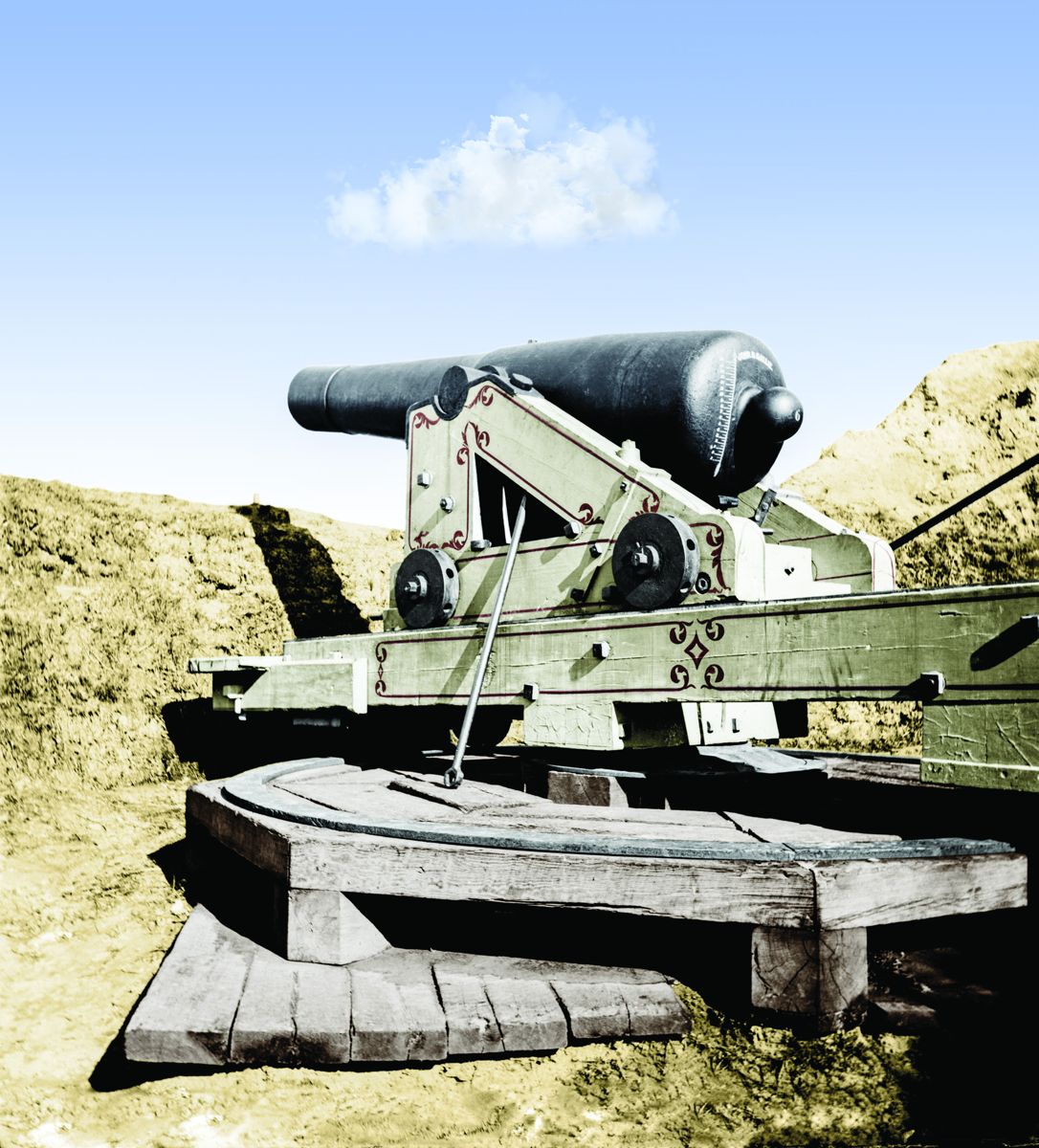
The monitor USS Montauk beached for repairs. Artist Julian Oliver Davidson. From page 54 of the 1887 book Battles and Leaders of the Civil War, being for the most part contributions by Union and Confederate officers, based upon the Century War Series, volume 4. This file has been provided by the British Library from its digital collections moments after hear the report & then hear the whizzing shell as it approached you, see it strike the earth or burst in mid-air with a report like a cannon. Despite the accuracy of the fire, the two-hour bombardment damaged trees, not the earthwork fort. Due to McAllister’s importance to Savannah, the request for more powerful cannon was granted. When delivered, an 8-inch Columbiad was declared the “pet gun” and given a decorative paint job on its carriage. On Jan. 19, 1863, monitor USS Montauk arrived at Port Royal, S.C., with Cmdr. John Worden at her helm. Worden had shot to fame as the commander of the USS Monitor. Wounded at the Battle of Hampton Roads, Va., Worden would make design suggestions for future ironclads, including moving the pilothouse, where he was temporarily blinded, from the bow to the top of the turret. The third monitor ironclad, the Montauk boasted an XI and XVinch Dahlgren cannon mounted in its turret. The XV-inch was the largest used at the time. Fresh from the shipyard, the Montauk needed testing to determine how she would withstand direct fire from a land battery. Sending the Montauk to McAllister was an obvious solution. On Jan. 27, 1863, the Montauk, led a squadron of gunboats upriver toward McAllister. Taking a position 150 yards below the torpedo armed obstructions, at 7:30 am, the Federals began to fire. It took about six minutes for the Montauk to fire, turn the gun ports away from the fort, reload, and move the turret back into firing position. McAllister focused on timing their return fire to hit the ironclad’s gun ports. At 11:30 am, Worden, realizing he was running low on ammunition headed back downstream.
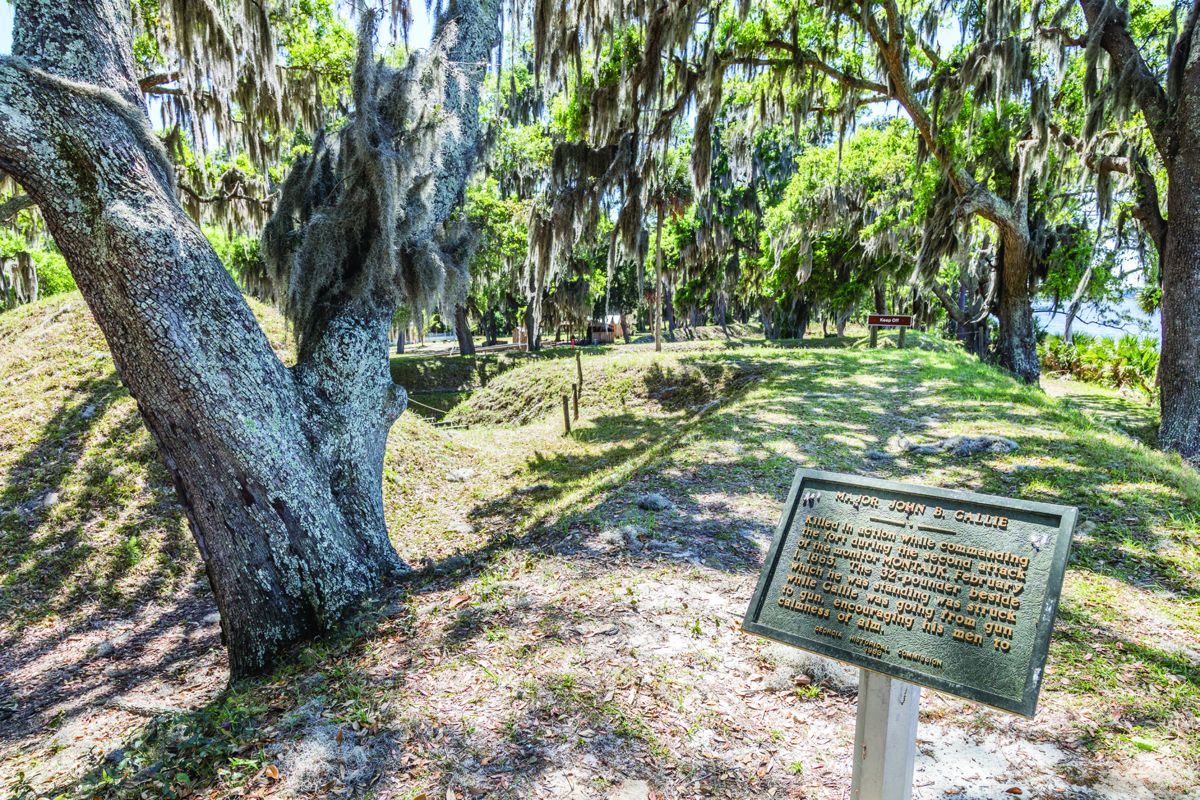
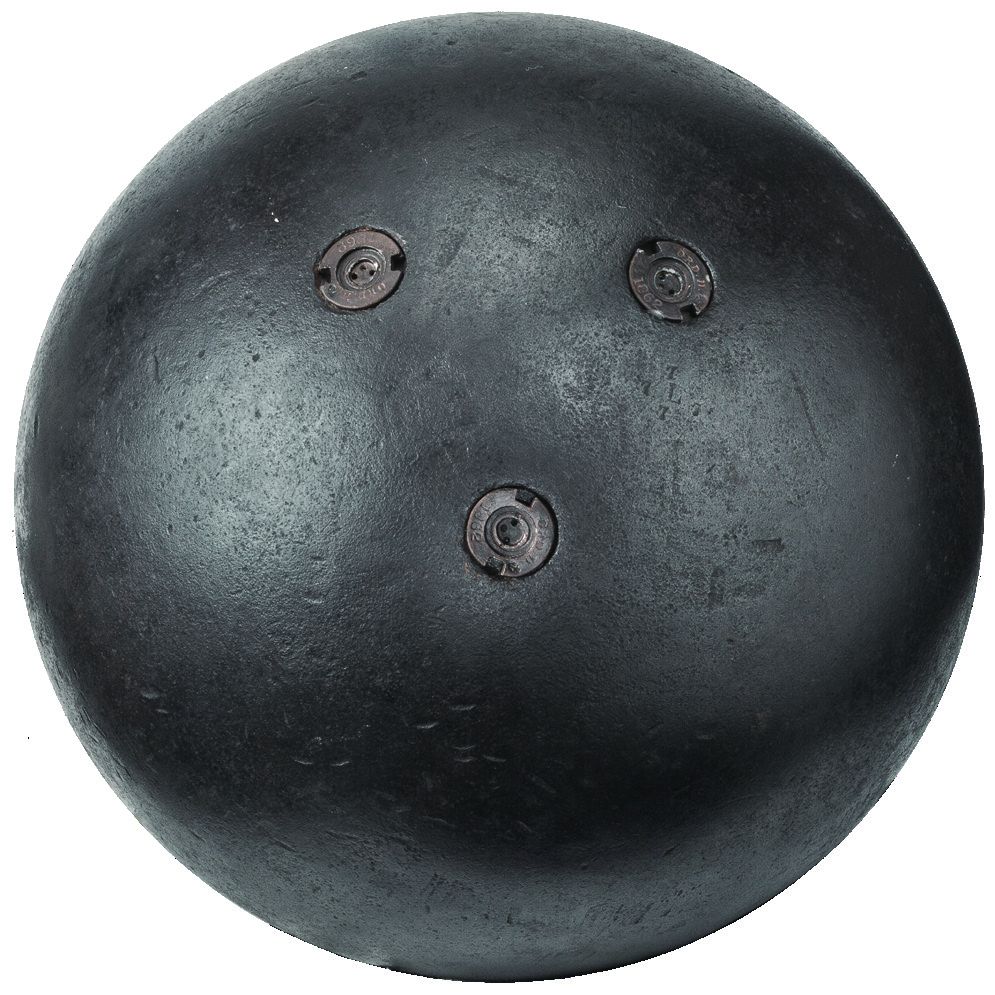
The Montauk had received 13 hits with minor injury. McAllister had withstood 378 rounds fired from the five gunboats. The XVinch had fired 26 shells. Overnight, 150 slaves toiled to repair the damage and strengthen the fort. A few workers escaped with information to the Federals. Four days later, on Feb. 1, the Montauk, with the gunboats, was back. At 7:45 am the Federals began the bombardment. As it was Sunday, the residents of Savanah could hear the noise and feel the vibrations of the fight while in church. Their prayers did not protect McAllister’s commanding officer, Major John B. Gallie. During the fight Gallie moved from gun crew to gun crew, encouraging his men. At one point a shell targeting the 8-inch Columbiad knocked the crew and Gallie off their feet. Gallie suffered a hole in his nose and lost his glasses under a pile of sand. Instead of attending to his injuries, Gallie stayed with his men. About 8 am a shell from the ironclad’s XVinch hit a 32-pdr.cannon exploding it into pieces. Gallie “was
com/cwn.
struck by a shell on the back of the head which tore the whole back off down to the neck leaving only the face. It was indeed a sad affair and it cast a gloom over the entire garrison for he was much beloved by all,” wrote C.S. 1st Lt. Dixon. To honor their fallen commander, “John B. Gallie” was added to the “6” above the “pet gun’s” cascabel.
civilwarincolor.com/cwn.
The ebbing tide forced the Montauk downstream as the fight continued to rage. Finally, with only 15 inches beneath her, Worden called off the attack. The Montauk received 61 shots during the fight. On February 2, McAllister added a 10-inch Columbiad and nine river torpedoes to her defense. The Nashville, unable to make (Jack Melton) (Jack Melton)
the run out to sea, was converted into a privateer and renamed the Rattlesnake. On Feb. 13, the Rattlesnake anchored above McAllister. Her cargo included 700 bales of cotton, 75 pounds of resin, and 40 boxes of tobacco. Her coal bunkers were topped off, supplied by train at the railroad bridge. She was ready for her run. The limiting factor was the blockade boats anchored in the Sound. Each night the Rattlesnake would make her way down river, wait for an opening, and return upstream at dawn. On Feb. 27, while returning upriver, the Rattlesnake missed a turn, ramming into the riverbank opposite McAllister. Her captain scrambled to free her and a tugboat was sent to help. The next morning, at 7:22 am, the Montauk began firing her XV-inch at the Rattlesnake while Fort McAllister shot at the gunboats. Soon, glimpses of the Rattlesnake crumbling in the flames could be seen amidst the smoke and morning fog. After 30 minutes, as the gunboats moved downstream, explosions from the Rattlesnake could be heard. According to a Montauk crewman, as the debris floated by, it “seemed to show a determination that, if we would not allow the Nashville to run the blockade as a whole, she was going to run the blockade in pieces.” To the frustration of McAllister, the Montauk seemed to glide downstream over a torpedo unscathed. Inside a double explosion was heard, as if the “starboard boiler had given way”. Instead the “port boiler was burst underneath … the water cascading” inside the ship. It was quickly determined to be more than a leak. The torpedo had buckled several hull plates inward. Worden had the ship beached out of sight of McAllister on a nearby riverbank. The men rushed to “put wooden and iron shoes and braces between the bottom of the boiler and [the] bottom of [the] vessel, and made joints of sheet gum, pine wedges, etc.” Repaired, the ironclad was pumped out, refloated at high tide, run down river, and came to anchor in the Sound by 5 am. The Navy was quite pleased with themselves. The snake may have been dead, but Ft. McAllister would continue to be a thorn in the Union side for nearly two more years. Sources: Durham, Roger S., Guardian of Savannah: Fort McAllister Georgia in the Civil War and Beyond Stephanie Hagiwara is the editor for Civil War in Color.com and Civil War in 3D.com. She also writes a weekly column for History in Full Color.com that covers stories of photographs of historical interest from the 1850’s to the present. Her articles can be found on Facebook, Tumblr and Pinterest.