The Slaughter Pen Farm Reenactment in Fredericksburg
By Joseph Bordonaro · Originally published February 2018 · pp. 28–31
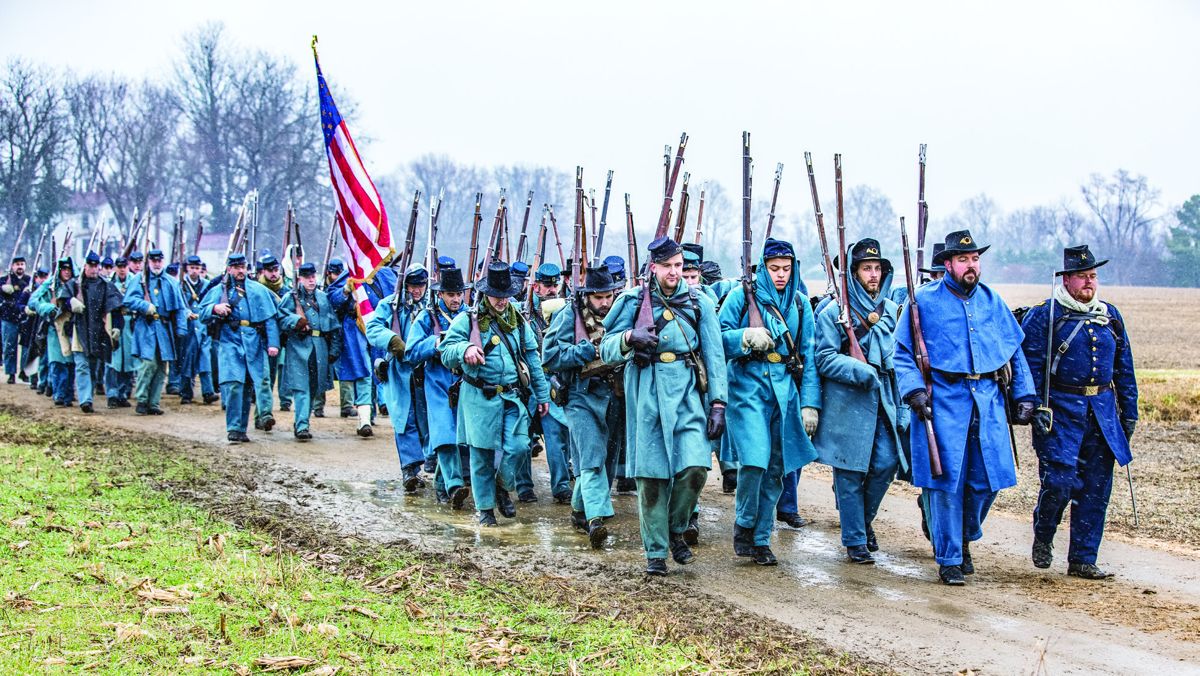
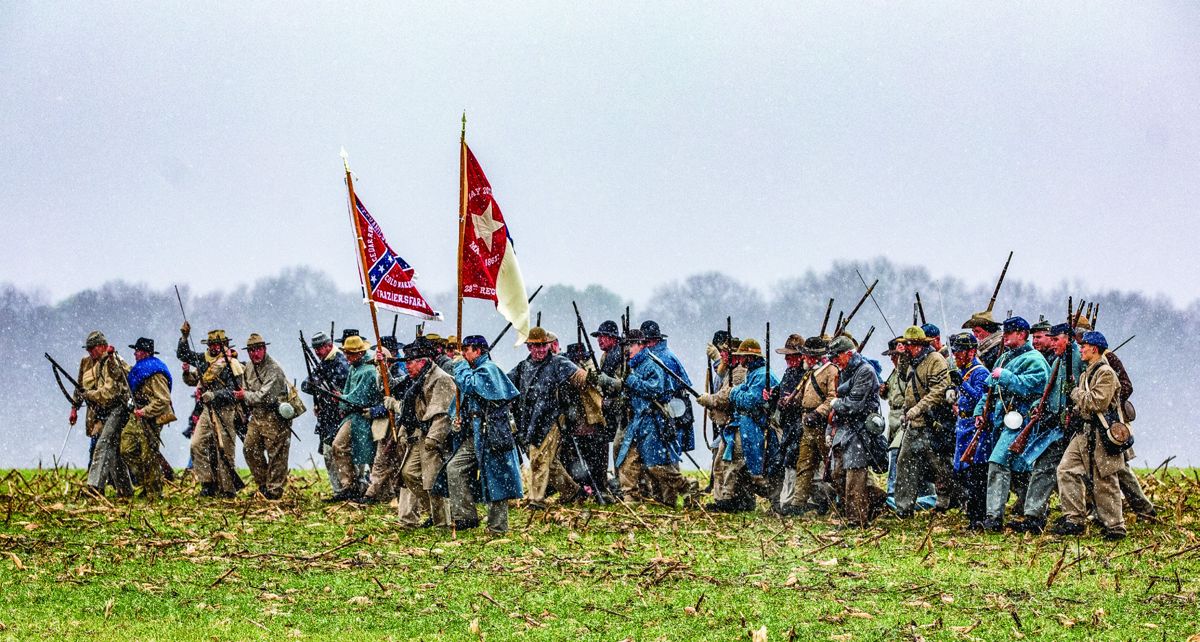
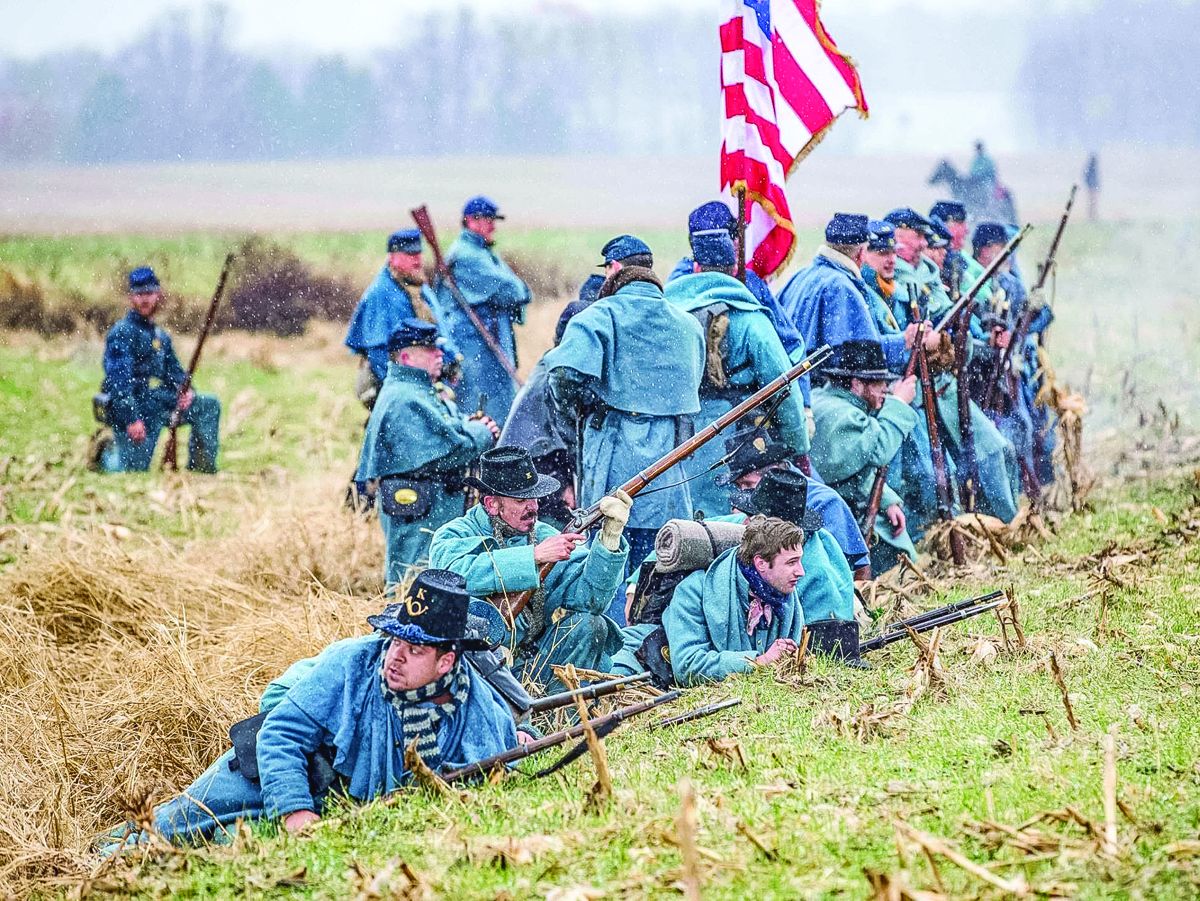
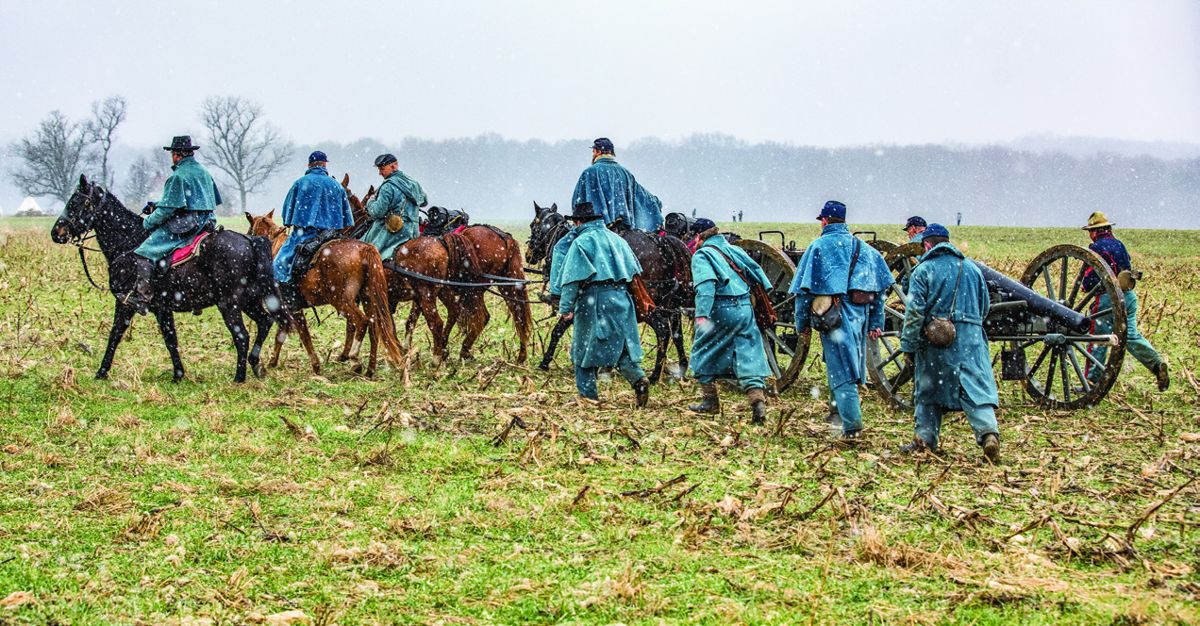
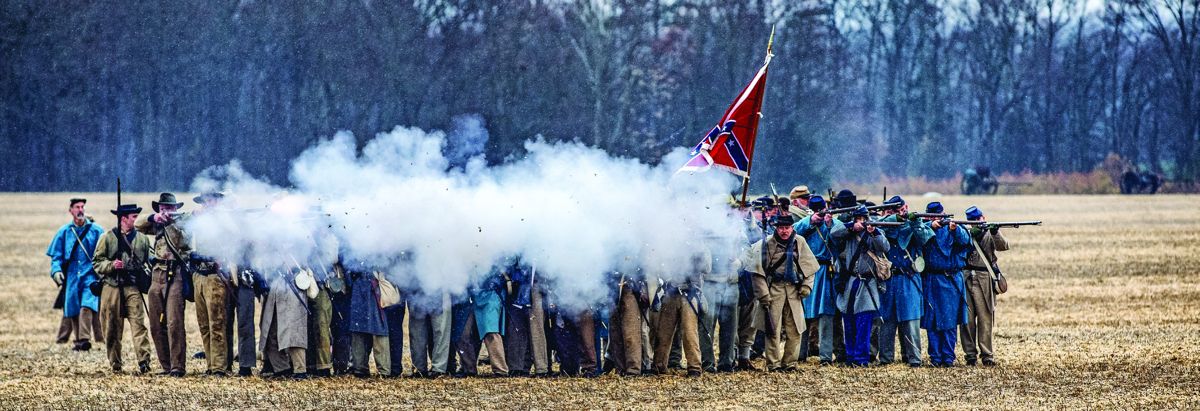
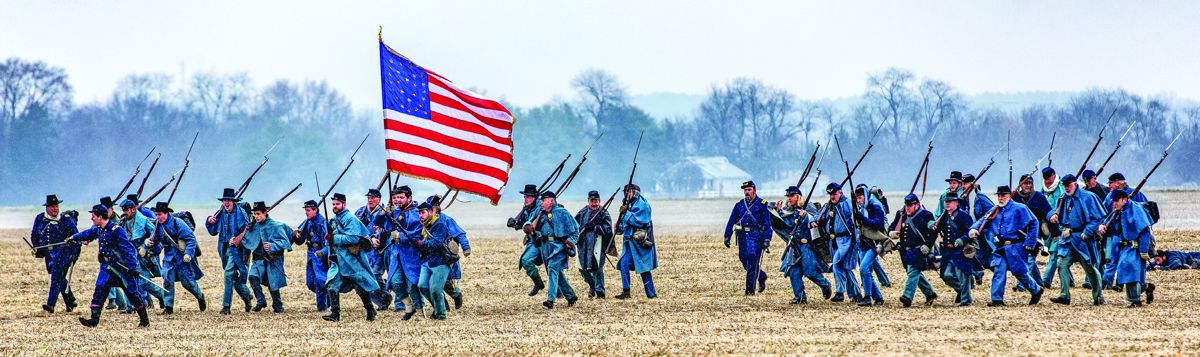
The Slaughter Pen. The name is a stark reminder of what took place on this 208-acre, level piece of land a short distance south of Fredericksburg, Va. With little or no cover, attacking Federal infantry suffered heavy casualties as they attacked the Prospect Hill area. Unlike the futile assaults against the infamous “Stone Wall” at the base of Marye’s Heights, adjacent to the town, that were actually designed to be a diversionary attack by Gen. Ambrose Burnside; the attacks across the farm that is now known as the “Slaughter Pen Farm,” actually broke through famed Southern commander Stonewall Jackson’s lines. Not supported sufficiently by enough of the nearly 60,000 men in Maj. Gen. William B. Franklin’s Left Grand Division, the effort was repelled by Southern counterattacks. A recent reenactment at the Slaughter Pen was a group effort of many reenactment organizations, working towards the common goal—helping the Civil War Trust pay for preserving this portion of the heavily developed Fredericksburg battlefield. Sponsored by the Southern Division Living History Association, and co-sponsored by the Independent Volunteer Rifles, the event also featured participation from members of the United States Volunteers, the National Regiment, the Liberty Rifles, the Carolina Legion, the Army of Northern Virginia, and independent reenactors. The event took place over the original ground on one of the few remaining preserved tracts of land in Fredericksburg. An airport is on one side of the property and an industrial park borders the other side. While the battle is largely remembered as a humiliating defeat for the Federal Army, we were portraying action where the Federals achieved limited success. Our battalion was portraying the 16th Maine Infantry, a unit that was not yet tested in battle. They marched into the fight with 450 officers and men, and would suffer almost 230 casualties in the assault. The Federal army suffered around 13,000 casualties and the Confederates would suffer almost 5,000. Participating in this reenactment was meaningful to the reenactors who were there. Many of them mentioned being on (Buddy Secor)
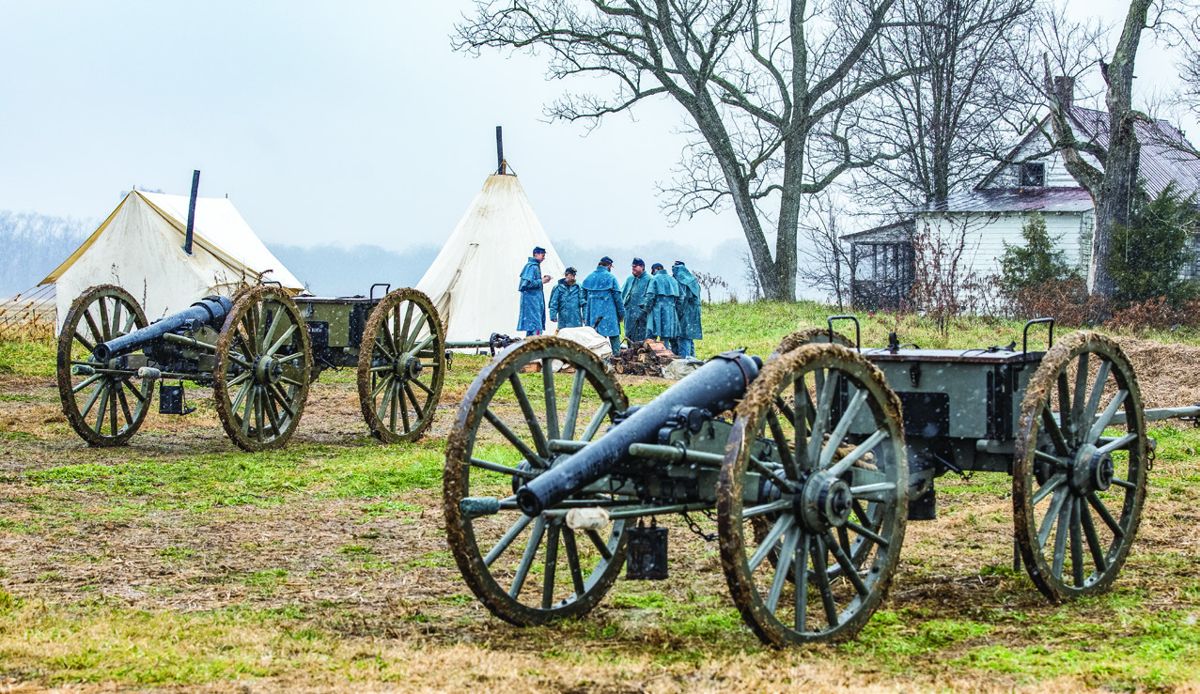
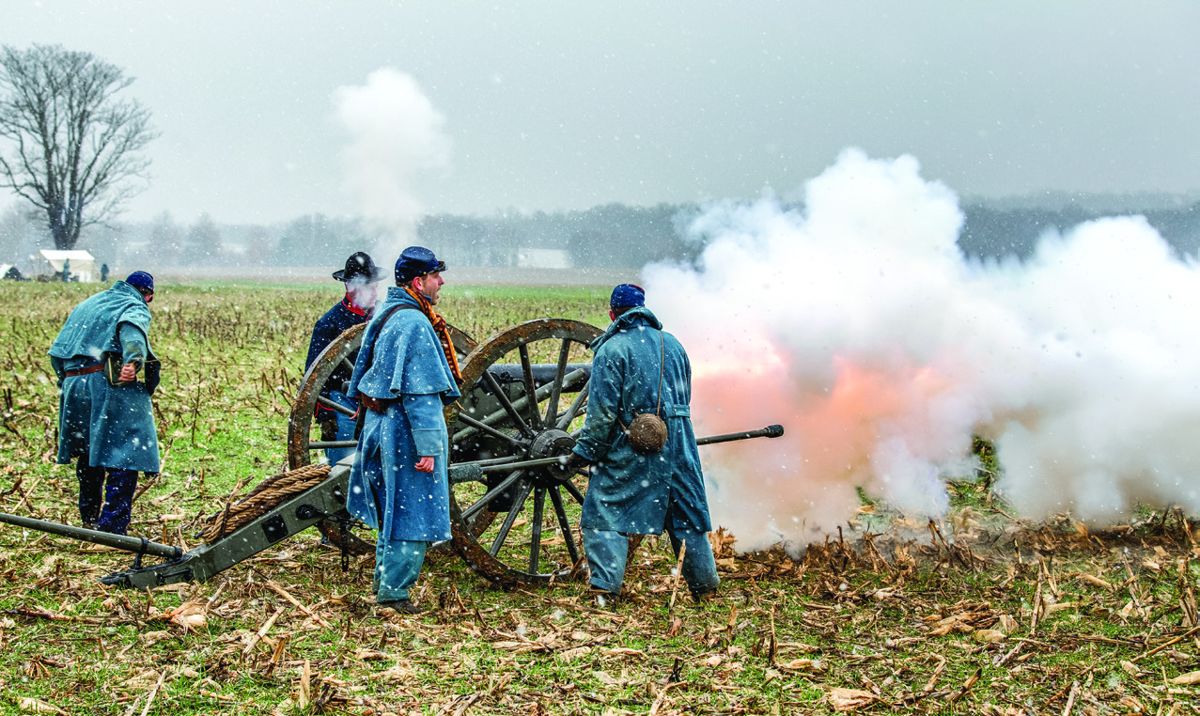
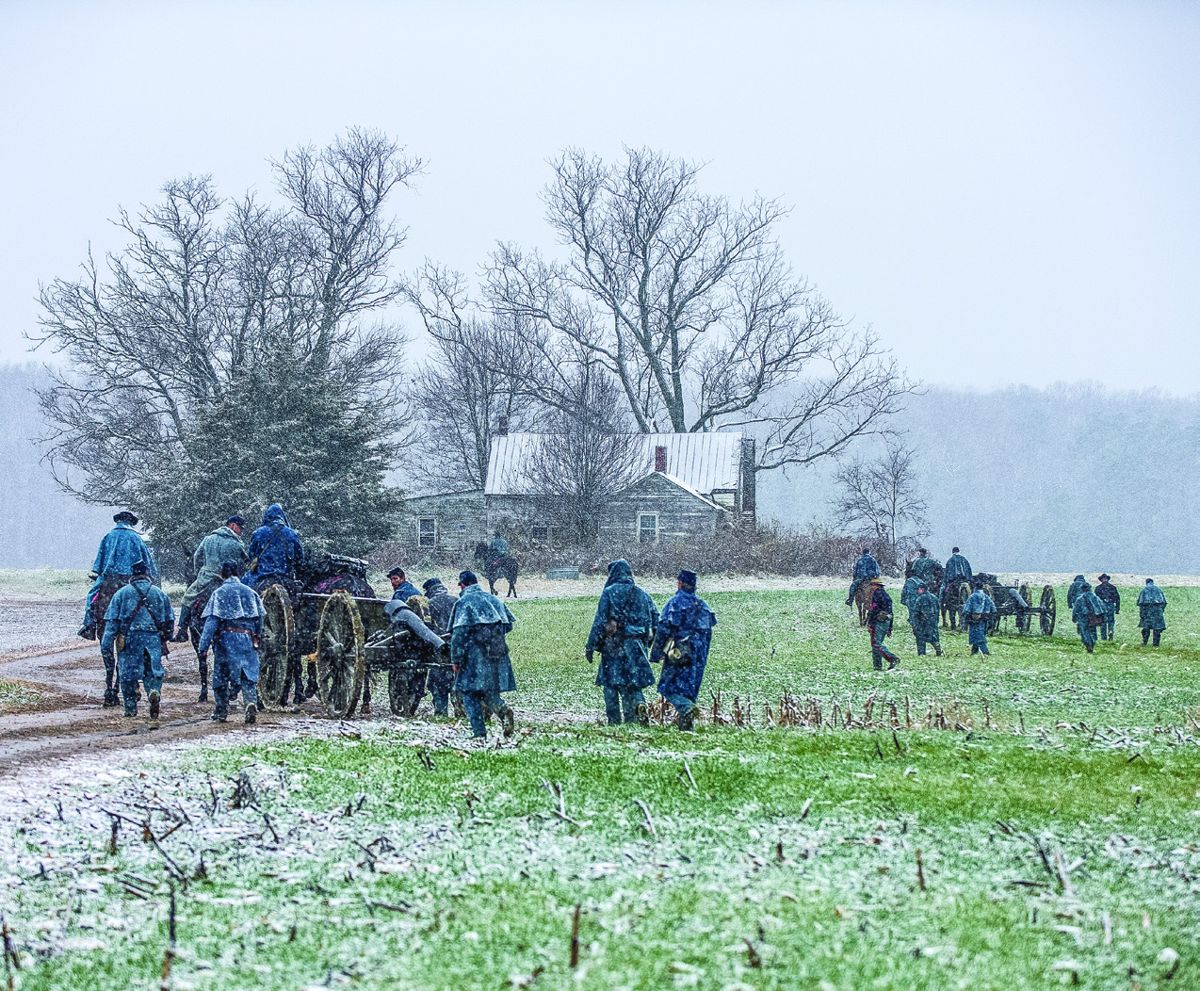
original ground as a highlight of the event. Helping to preserve this battlefield was a powerful motivation for many. The following comments are from a few who were there: I had the opportunity to participate in a Living History reenactment in Fredericksburg, of a battle that took place 155 years ago. (Jeremy Brandt) I believe that one of the most important lessons…of the event was how miserable life could be during the war. This was really a great opportunity to get a glimpse into a particularly awful campaign to live through. While the weather on Dec. 13, 1862, was considerably better than what we experienced, the weeks leading up to the battle had numerous moments just like what we experienced: freezing cold, unrelenting snowfall, frozen ground, etc. While such experiences can be miserable, they can also show the power of the human spirit, and give insight into the power of friendships between comrades as they help each other to just survive. (Kyle Windahl) I think most important to me was the opportunity to highlight actions that popular history has overlooked. The area in which we were active produced more casualties than any other part of the battle. (Colin Zimmerman) As the accompanying photos show, the participants did a good job portraying the infantry and artillery crews who fought there. Each participant donated 25 dollars, all of which went to the Civil War Trust’s repayment of loans taken out to preserve this battlefield land. According to event organizer, Mike Scheibe, a total of $3,791 was donated to the CWT. Much remains to be done; however, as approximately 40% of $12,000,000 CWT paid for the property has yet to be raised. Still, every little bit helps, and you can help by visiting www.civilwar. org and making a donation. Joe Bordonaro is a USAF veteran (1973-1977) Glassboro State College graduate (1980), Catholic school teacher (St. Joseph’s Pro-Cathedral, 1983-1988) and retired public school teacher (Mullica Township School, 1988-2009) He has been involved with Civil War reenacting/living history since 1999. Joe began submitting articles to the Civil War News in 2005 and has been covering events for the CWN on a regular basis since 2016. He has also recently begun to write book reviews for the CWN. Joe lives in Mount Laurel, N.J., and has been married to his wife Karen for 29 years. He is currently in training for next year’s 155th
Anniversary Commemoration of the Union Army’s Sixth Corps March to Gettysburg, which will involve a march in Civil War uniform, including brogans, from Edward’s Ferry, Maryland, to Little Round Top in Gettysburg National Battlefield. If you wish to contact Joe, you may send an email to [email protected]