
This And That
Perspectives on Bull Run
By Gould Hagler · Originally published February 2018 · pp. 20–21
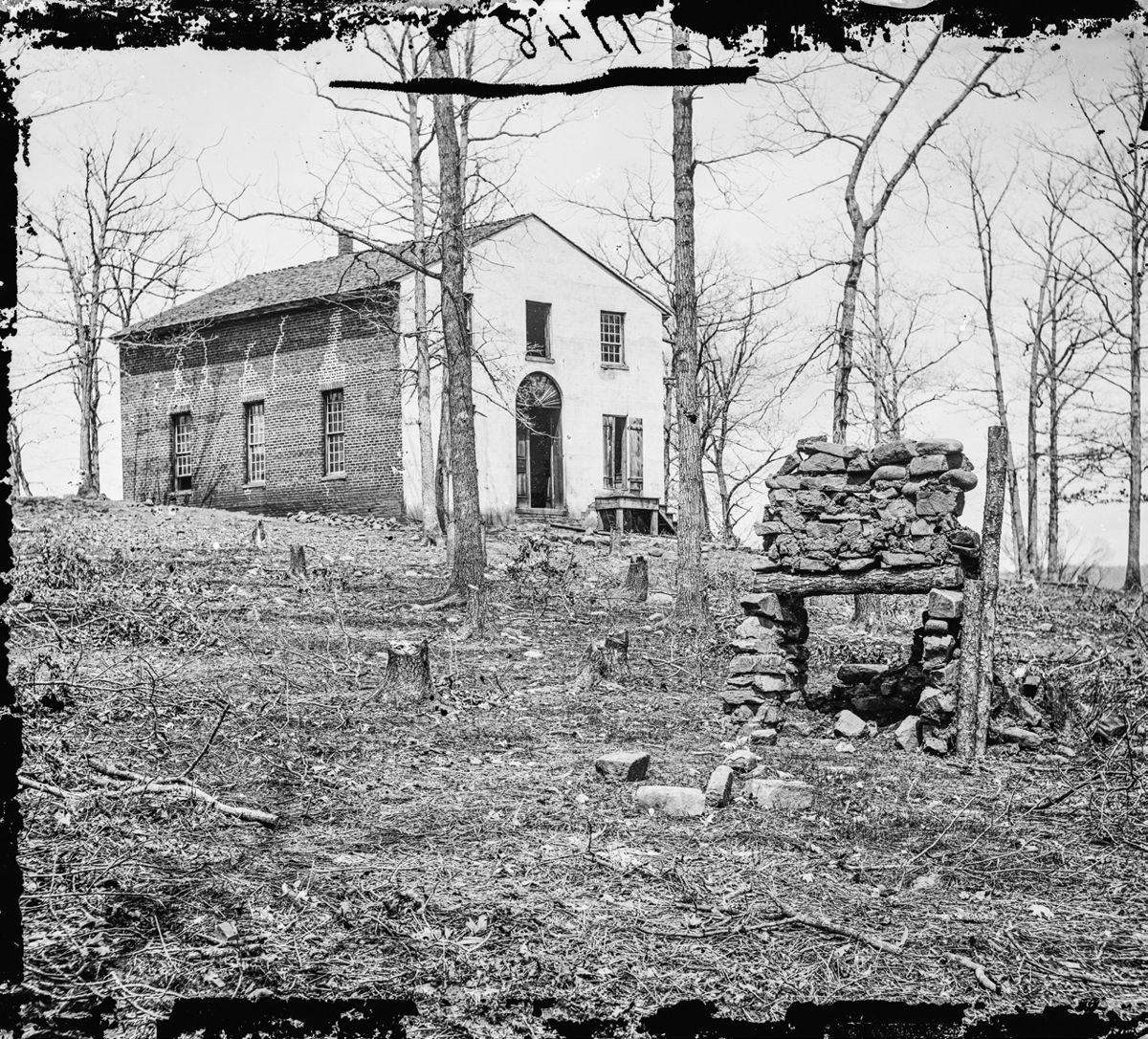
Every reader of Civil War News knows about the July 21, 1861, battle on the banks of Bull Run, thirty miles or so from Washington City, the first large-scale battle of the war. The Federal Army attacked the Confederates and achieved initial success. Southern forces rallied and were reinforced with troops moved east from the Shenandoah Valley. When the Federal attack was finally repulsed late in the day, Northern troops withdrew. The withdrawal degenerated into a chaotic and panicky flight all the way back to Washington. In this article we will examine the memoirs and reports of some Union officers and see what they have to tell us about Bull Run.
(Library of Congress)
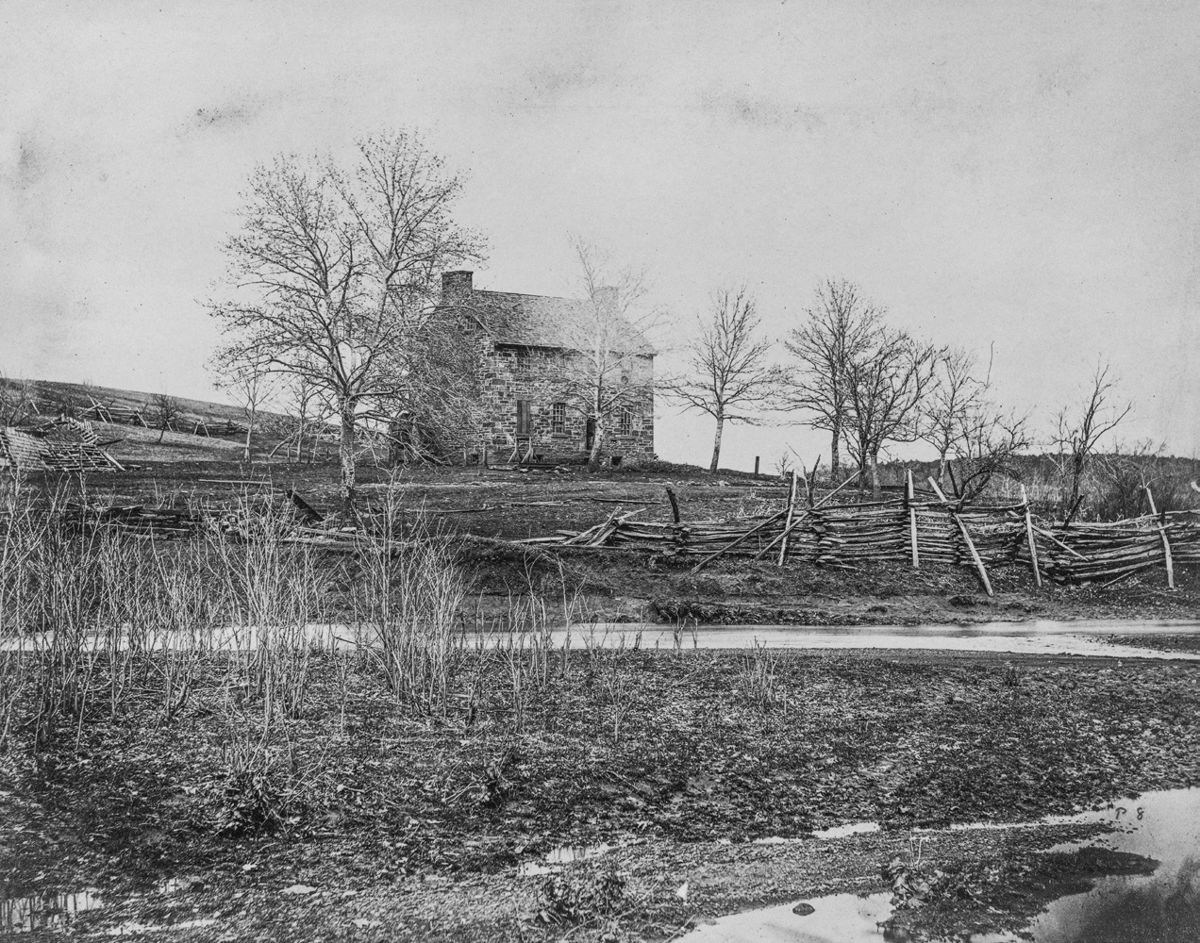
William T. Sherman, Erasmus D. Keyes, Orlando B. Willcox, and Oliver Otis Howard all commanded Union brigades at Bull Run. Another brigade commander, Ambrose E. Burnside, left no memoirs but we can review his after-action report for some insights. The Battle of Bull Run was fought with green troops led by officers who had not yet mastered their craft. Our eye-witnesses testify to this less-than-professional beginning in their descriptions of the march from Washington and their attack on the Confederates. The march demonstrated little save the general laxity of discipline; for with all my personal efforts I could not prevent the men from straggling for water, blackberries, or any thing else on the way they fancied, Sherman wrote of his brigade’s journey toward the battlefield on July 15. Howard paints a picture of confusion on the day of the battle; confusion caused at least in part by the inadequatelytrained men. His brigade got a 3 am start but the entire division became tangled with two other divisions on the crowded roads. “The three divisions became badly intermixed in the dim light, and could not be moved in the cross directions like three blocks of regulars.” Later in the day, at a critical time in the battle, Howard was called up from his reserve position. He describes the men’s condition: We began the march [in double time], but the heat and fatigue of long waiting had already done its work. Many fell out of ranks; blankets, haversacks, and even canteens were dropped, so that those who persevered kept nothing but arms and ammunition; the pace was diminished, but that did not long avail to remedy the exhaustion. Overcome by their efforts, more and more left the column and lined the roadside. When we crossed the ford, at least one half my men were absent. The officers, of course, should bear the blame. It wasn’t the private’s job to select routes and manage traffic. Howard and his men were led – not once but twice – by guides who took them the long way around, causing the delay and contributing to the exhaustion Howard describes. A captain of engineers was assigned “to lead [the brigade] straight to the battlefield; but…not knowing the cross route, guided us by Sudley Ford, six miles around instead of three across.” In one case, the road to be taken to the battle did not exist. Willcox explains that the three Federal divisions were to cross Bull Run at three points, but “It was found that there was no road between Sudley’s & Stone Bridge & consequently Heintzelman’s division had to follow after Hunter’s to Sudley’s Church.” The war had begun in a hurry. The indications of the lack of preparedness were present, but not readily apparent, before the test of battle. Keyes writes: “When I assumed command early in July, 1861, there was not a man under my orders whom I had ever seen before.” Keyes claims that he taught well and these strangers were fast learners; perhaps other officers and other troops were less efficient. “I noticed no want of confidence in our commander, and but for the rawness of a large majority of the volunteers a victory might have been anticipated.” Notwithstanding the blackberry picking, traffic jams, and sore feet, U.S. forces crossed Bull Run and clashed with the
Union Maj. Gen. Oliver O. Howard.
Union Gen. Erasmus D. Keyes.
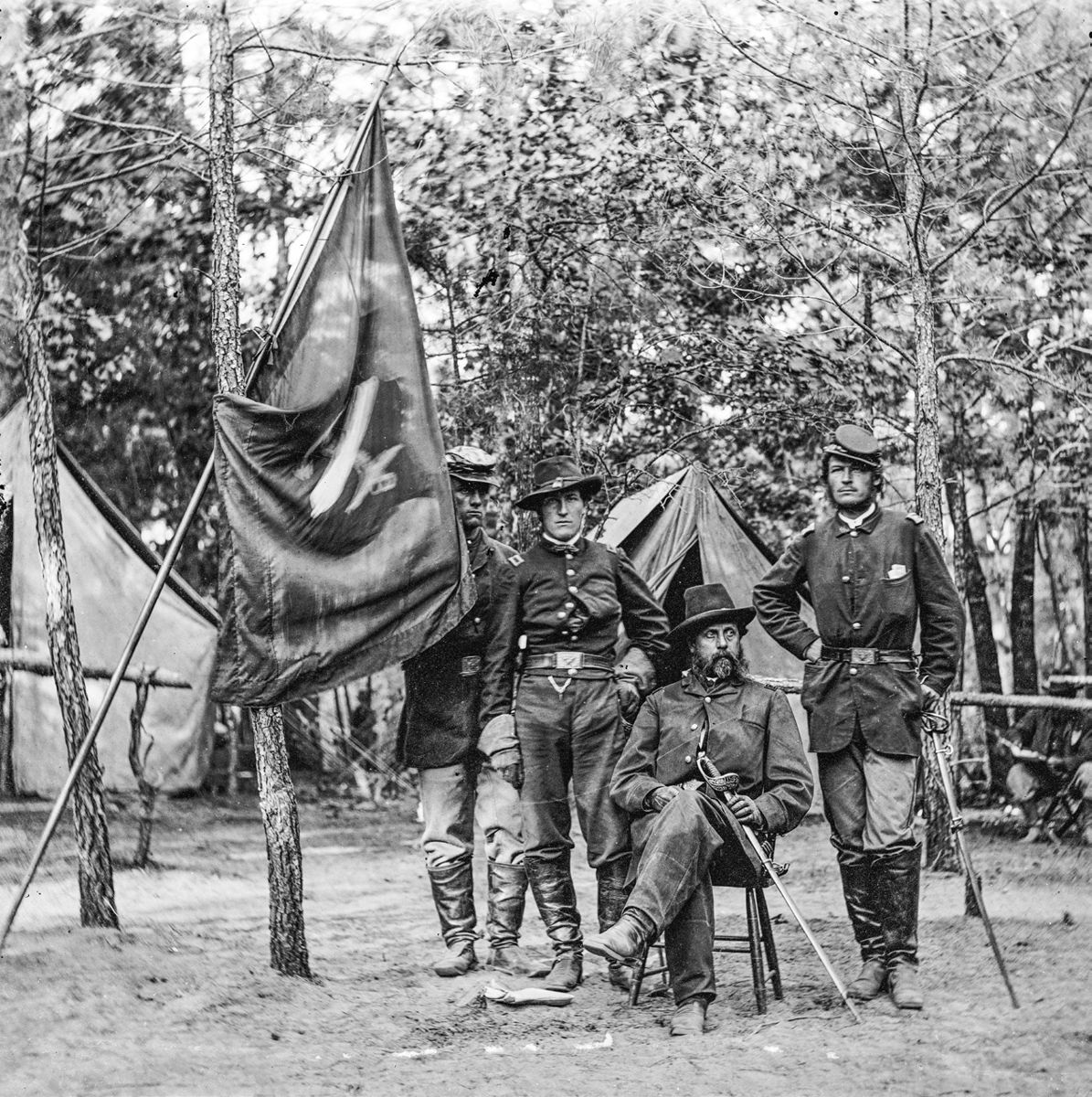
Confederates. Even before the main fight on July 21, officers and men had learned quickly that this war was real. Sherman writes that the prelude to Bull Run, the clash at Blackburn Ford on July 18, was the first time in my life I saw cannonballs strike men and crash through trees and saplings above and around us, and realized the always sickening confusion as one approaches a fight from the rear. On the 21st, Howard brought his brigade into the fray late in the afternoon – at least the half that did not drop out along the way. He describes the grim scene viewed by his men as they moved forward. There were men with broken arms; faces with bandages stained with blood; bodies pierced; many were walking or limping; meantime shells were shrieking and breaking in the heated air. I was sorry, indeed, that those left of my men had to pass that ordeal. Howard arrived at the climax
of the battle, as the reinforced Confederates began to prevail. The Federals collapsed and panicked. Sherman’s account is matter-of-fact. “There was no positive order to retreat, although for an hour it had been going on by the operation of the men themselves.” When the positive order was given by his division commander, Sherman tells us that the “retreat was by night, and disorderly in the extreme.” The writings of other Federal commanders paint a more vivid image. Burnside reports that “the whole column was thrown into confusion, and could not be rallied again for a distance of two or three miles.” As the Federals retreated across Cub Run they were “furiously pelted with a shower of grape.” Keyes’ description is worth quoting at length. The Rebel cavalry came thundering upon the retreating mass from the opposite side. Then a scene of confusion ensued which beggars description. Cavalry horses without riders, artillery horses disengaged from guns with traces flying, wrecked baggage-wagons and pieces of artillery drawn by six horses without drivers, flying at their utmost speed and whacking against the other vehicles, soldiers scattered everywhere, running, some without arms or caps. I saw men throw down their muskets with a gesture as violent as they would throw off a venomous reptile. The rush produced a noise like a hurricane at sea. Grim depression followed the panic. With the Federals back in Washington, protected by the Potomac, Sherman describes the weather and the mood: “A slow, mizzling rain had set in, and probably a more gloomy day never presented itself.” Keyes tells us about Sherman himself: “Sherman came into my
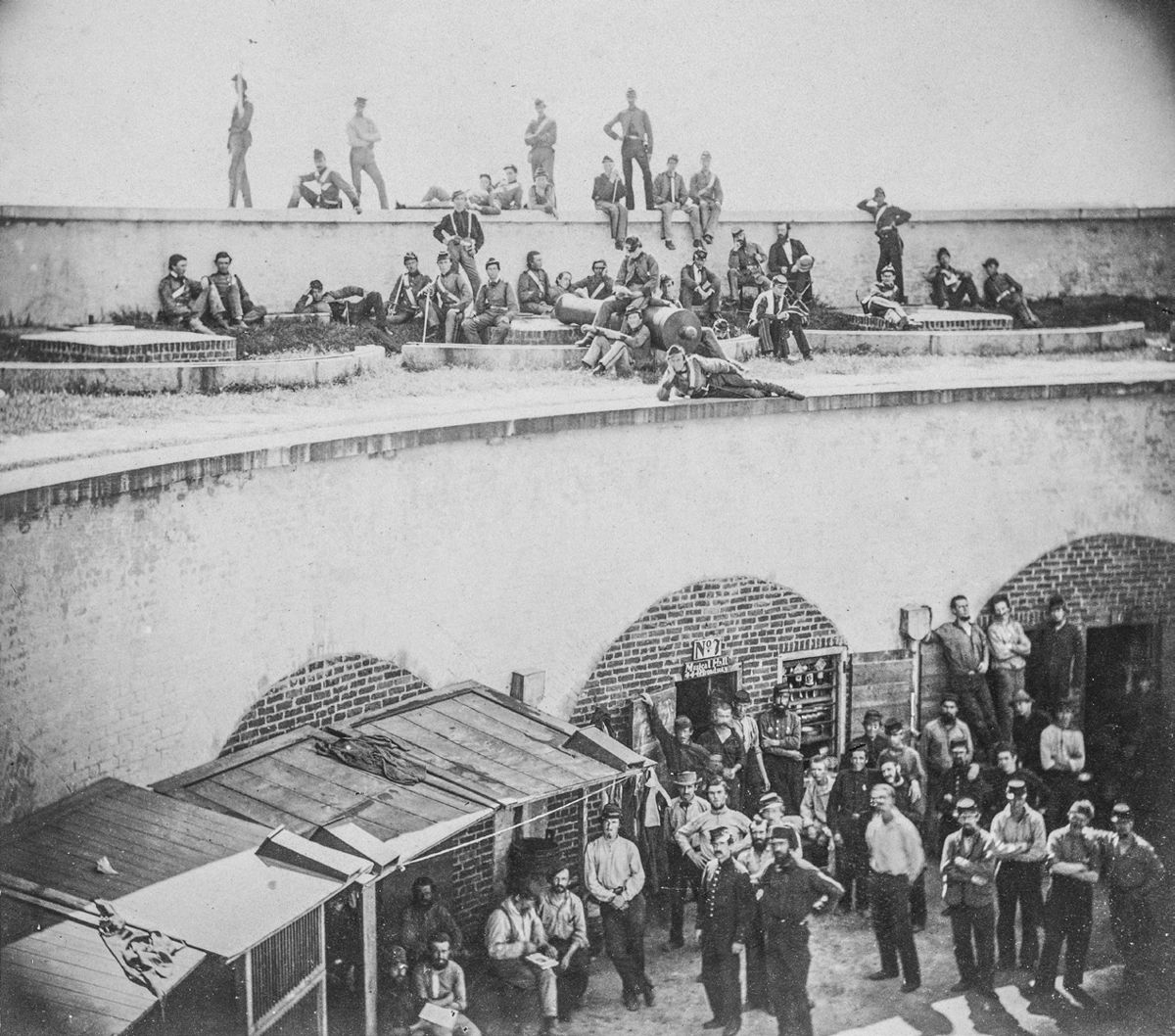
Petersburg, Va. (Library of Congress)
tent. His countenance was that of a disappointed man. After resting in silence for twenty minutes, he arose and departed.” Willcox saw the aftermath from a different perspective. He was wounded, taken prisoner, and treated in a temporary Confederate hospital on the battlefield. We will conclude with his graphic description. The piazzas were strewn with amputated limbs for several days; dead bodies were lying under the trees in the yard…the stench of sloughing wounds in the house and from dead horses & men on the battlefield was loathsome; the worms got in many of the wounds & whole quarts were removed at a time from living sufferers – they crawled on the floor & fed their dreadful ways into sound parts of the body with death in their train. Next month we will see what Southern officers had to say about this battle, a battle which was just the beginning of a sanguinary war which was to last nearly four more years, years with countless horrifying scenes such as the one described by Willcox. Sources: • O.O. Howard, Autobiography of Oliver Otis Howard, Major General United States Army, The Baker & Taylor Company, 1907, Kindle Edition 2011 • Erasmus Keyes, Fifty Years’ Observation of Men and Events, Civil and Military, Charles Scribner’s Sons, 1885, Kindle Edition, 2014 • Robert Garth Scott, Ed., Forgotten Valor: The Memoirs, Journals, & Civil War Letters of Orlando B. Willcox, Kent State University Press, 1999 • William Tecumseh Sherman, Memoirs of General W.T. Sherman, Literary Classics of the United States, New York, 1984 • United States War Department, Official Records of the War of the Rebellion, Series I, Volume II, pp. 395-399, Report of Col. A.E. Burnside Gould Hagler is a retired lobbyist living in Dunwoody, Ga. He is a past president of the Civil War Round Table of Atlanta. He is the author of Georgia’s Confederate Monuments: In Honor of a Fallen Nation, published by Mercer University Press in 2014. He speaks frequently on this topic and others related to different aspects of the Civil War and has been a regular contributor to Civil War News since 2016. He can be reached at gould.hagler@ gmail.com.