Gary Casteel Opens Sculpture Gallery in Gettysburg
By Leon Reed · Originally published February 2018 · p. 16
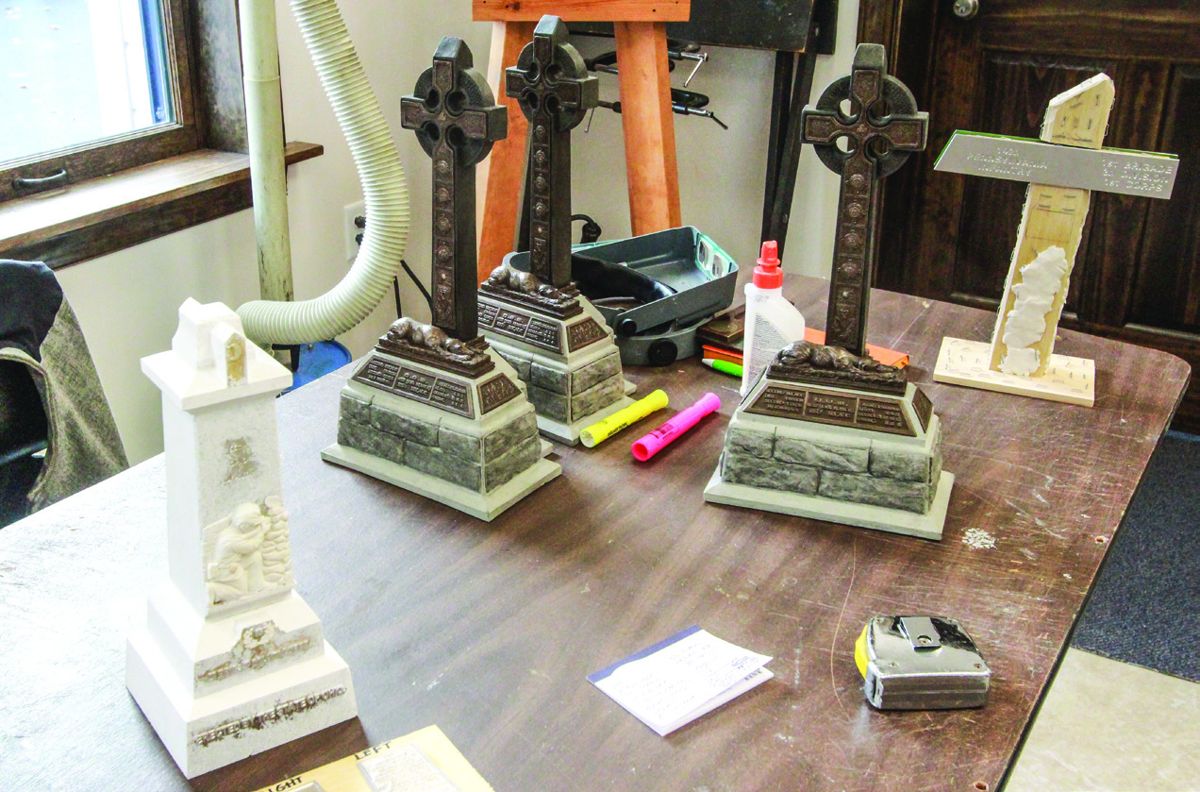
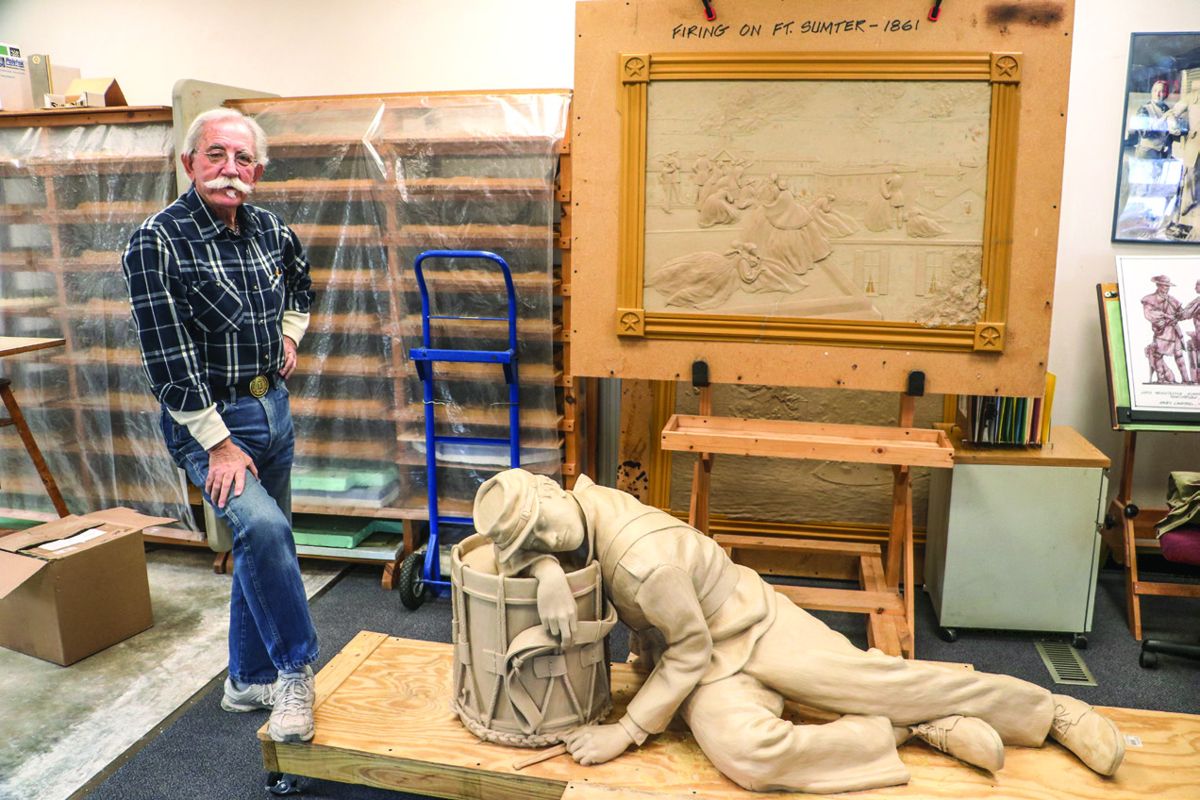
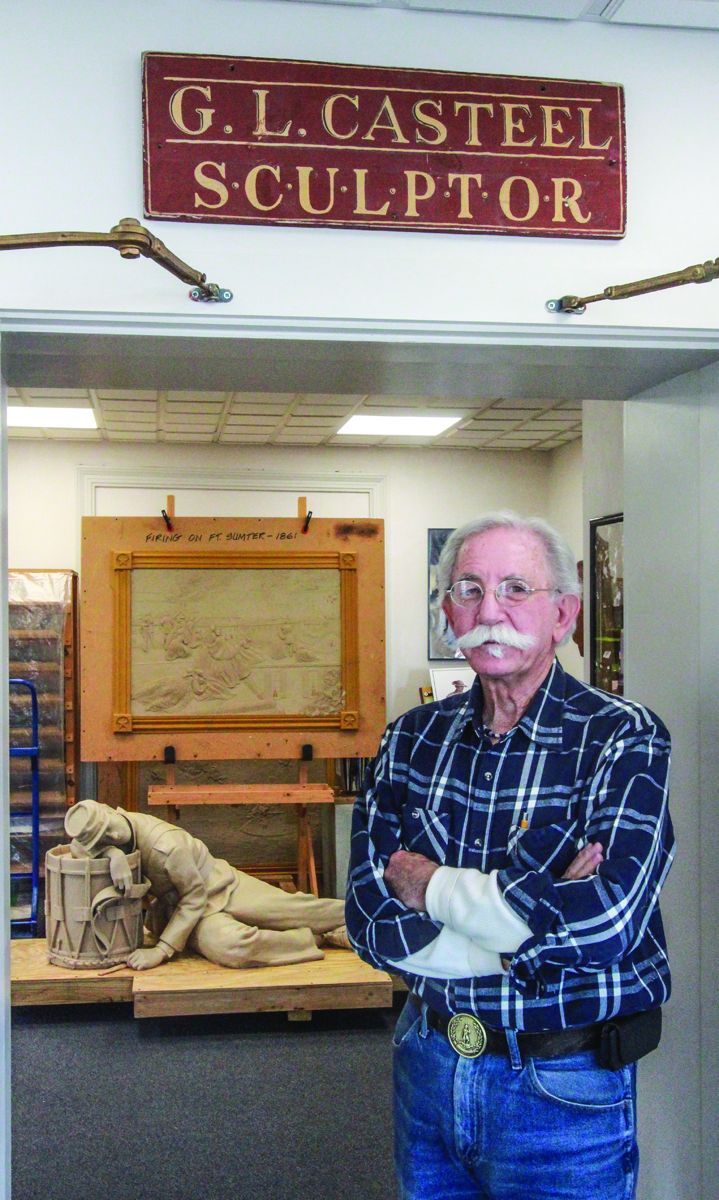
The commercial area along Gettysburg’s Baltimore St. near the national cemetery entrance will soon be graced with the opening of the National Civil War Memorial gallery. The new gallery is owned and operated by nationally-known sculptor Gary Casteel. It will be opening shortly after the New Year utilizing newly renovated space in the building once occupied by the Hall of Presidents wax museum. The gallery represents two new departures for Casteel. It marks his return to operating a public gallery in Gettysburg after a gap of 20 years, during which he lived in Virginia for a while and worked out of a private—and larger—work space in his home. It also marks the revival of his long-term project to prepare highly accurate miniatures of Gettysburg monuments. He undertook this project in the 1990s and had examples in several Gettysburg storefronts. Reproductions he did in that phase of his work included subjects such as the 1st Minnesota, the 1st Vermont Brigade, and the Alabama, and North Carolina monuments. The original generation of miniatures was made out of resin but the new ones are made from more realistic cast stone resin and bonded bronze. Recently completed miniatures in his new series include the 55th Ohio, Irish Brigade, and 96th Pennsylvania. Others on the docket include the 142nd Pennsylvania’s “rugged cross” monument and the Armistead monument from inside the Angle. The new ones vary in size but are about a foot tall, somewhat larger than his former series. “The key is the print size,” said Casteel; “if you can’t read the inscription on the monument, it’s too small.” Casteel admits that he was doing fine with large works (including private commissions and a variety of public projects including two World War I monuments for the Army War College; a Confederate POW monument in Point Lookout, Md., and a U.S. Colored Troops monument in Lexington Park, Md.). He said his purpose in returning to the replicas project and the pleasures of operating a public gallery were largely a desire to promote “continuing education about the Civil War.” The monuments are a particular interest to him: “I want to draw attention to the importance of these monuments. They are essential historic records.” He also hopes to encourage people to develop an interest in this historic period and to try to find out more information about their Civil War ancestors. The main room of the gallery is still a work in progress; “we still have a lot to do; I figure we’ll open shortly after the holidays,” said Casteel. Currently it contains examples of some of his miniatures and a generous sampling of the component parts of the National Civil War Memorial, which Casteel has been developing for the past decade. Major pieces, in their clay mold status, include one of the principal sculptures for the work, “The Drums of War are Asleep,” several panels showing major events, and round plates showing civilians and military leaders who played a major part in the war. Gary hopes the gallery also will provide visibility and help raise funds for the National Civil War Memorial project. Casteel’s best known original work at Gettysburg is the James Longstreet statue located in Pitzer’s Grove. He also did the Culp brothers memorial on Steinwehr Ave. and the Musicians Memorial in Unity Park. His handiwork is also shown in a variety of repair and restoration projects that he has done on other Gettysburg monuments over the years.