Bullet Ridded Battle of Franklin Structure Restoration Celebrated
By Gregory L. Wade · Originally published February 2018 · p. 24

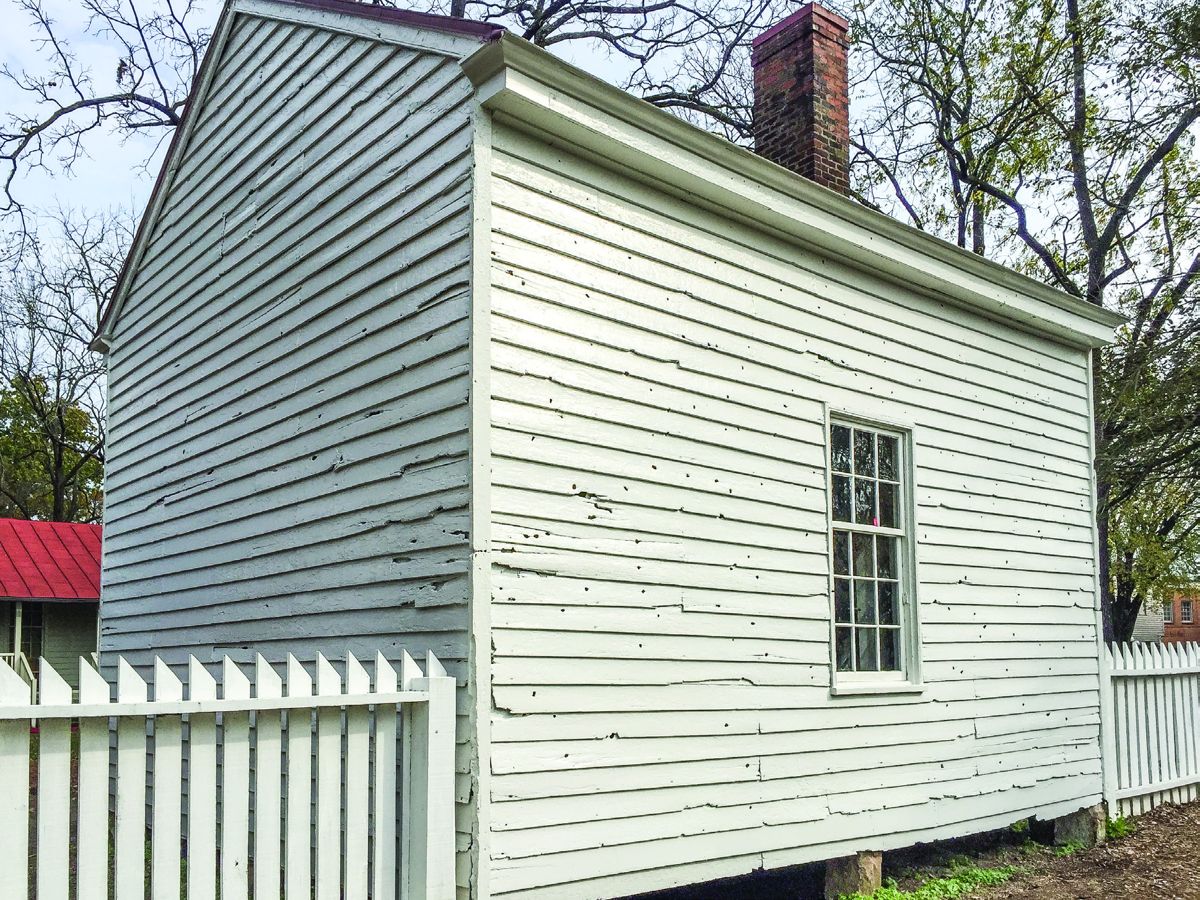
FRANKLIN, Tenn.—A small frame building central to the fighting at the Battle of Franklin has been preserved after a fundraising effort by the Battle of Franklin Trust (BOFT). The structure, built in 1840 and once used as an office at the Carter farm, was riddled by bullets during the Nov. 30, 1864, Battle of Franklin. It is considered one of the most damaged surviving Civil War buildings in existence, according to Joanna Stephens, curator for the BOFT. The main Carter family home, a few yards to the north, where the Carter family, slaves, and some locals found refuge in the cellar during the battle, is considered by many to be “ground zero” of the worst fighting. Patrick McIntyre, Executive Director of the Tennessee Historical Commission, led a celebration of the restoration just two days before the 153rd anniversary of the battle. The State of Tennessee purchased the grounds and buildings in 1951 for $20,000, thus saving the ground from development. BOFT’s Eric Jacobson noted, “we wanted to raise the money for this project, rather than asking the state since they are helping us in other ways, and we did.” The work was funded entirely by private donations totaling $170,000. At one time the frame building had been moved and actually rested against the
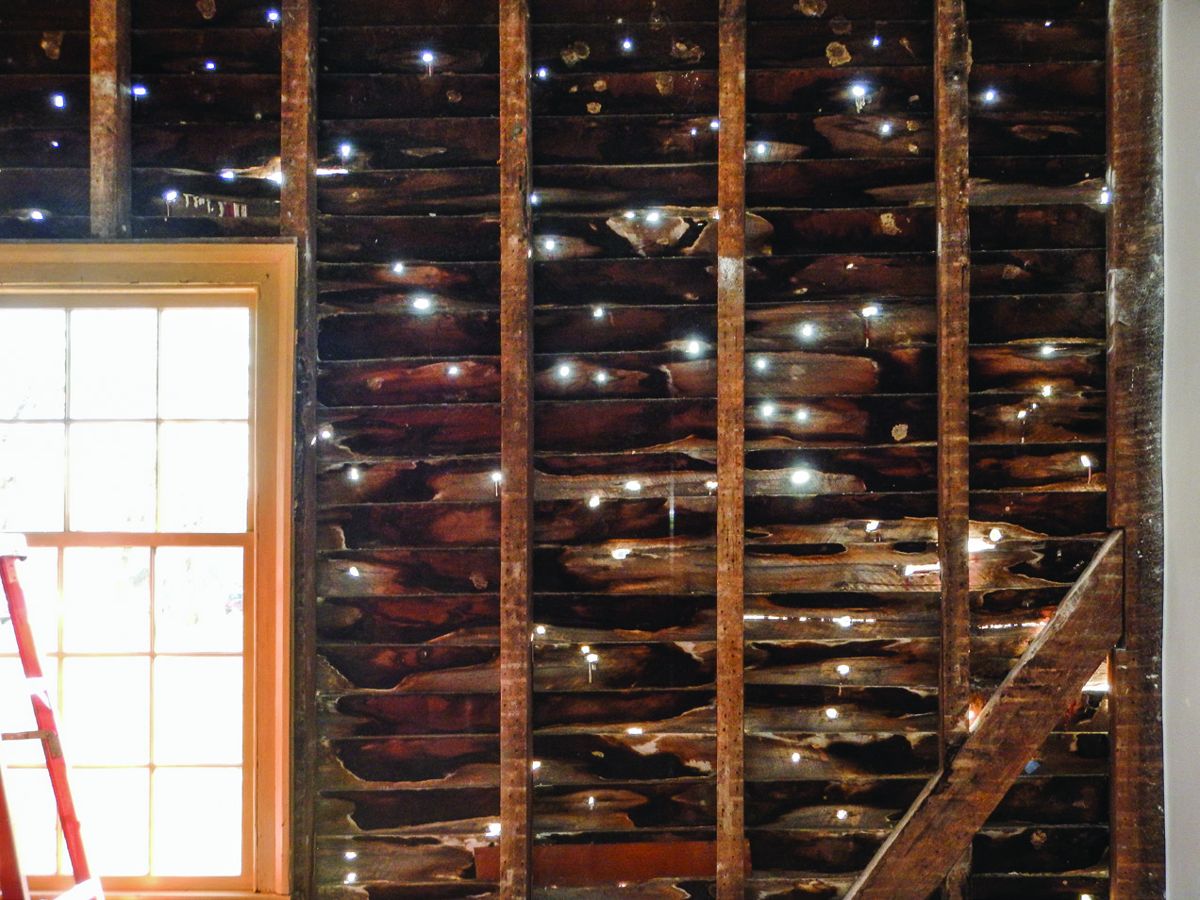
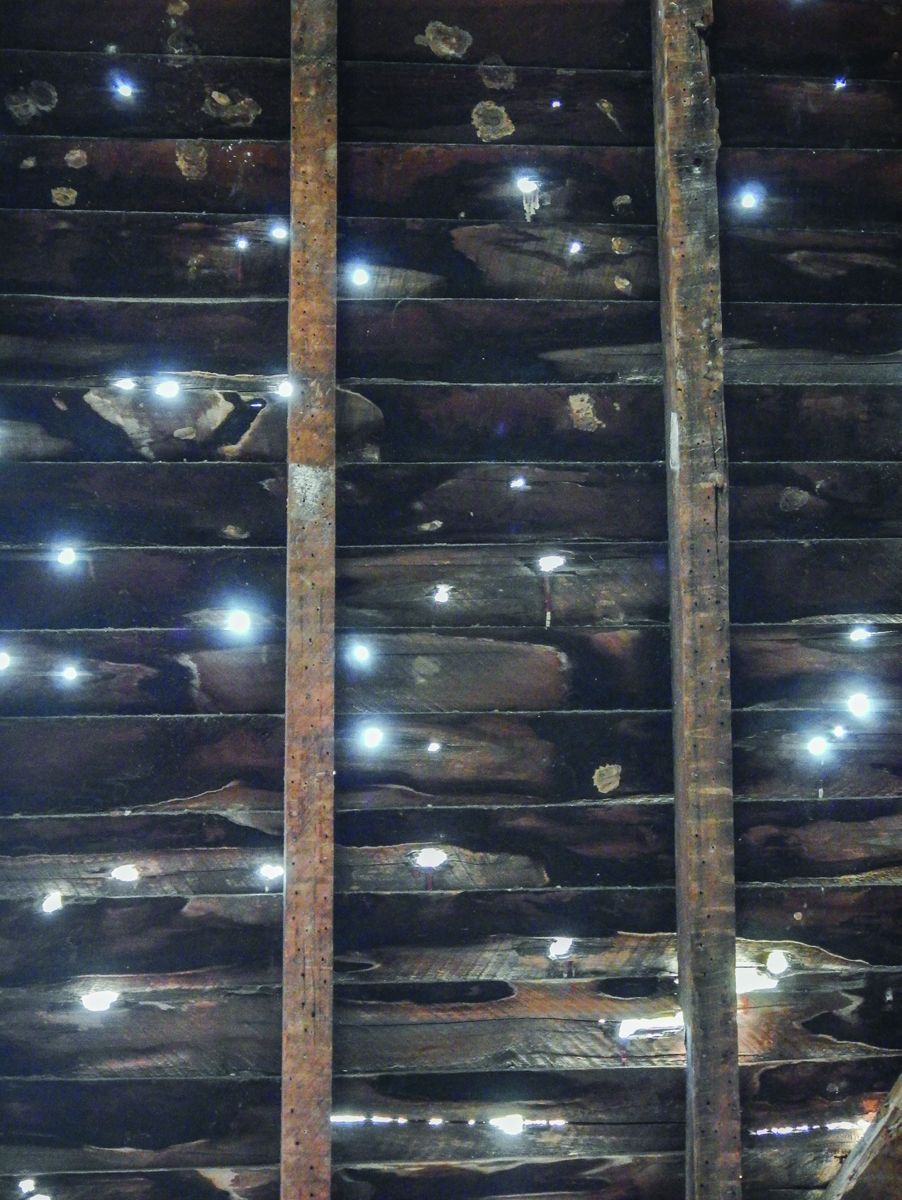
Carter House as a dining room addition . It was moved back to its original location in 1952. The structure was originally white with current restoration returning its original color. It had been painted red for several decades. “The office had gypsum covering the interior walls and when some of the main beams deteriorated we realized we had to do something to restore its integrity,” Stephens said. Once the gypsum was removed, the bullet holes, always visible from the outside, present a breathtaking internal view of the battles intensity. The light coming thru the 350 or so holes reveals that some rounds penetrated the south side and passed thru the north wall as well. Jacobson noted that looking at the bullet damage from the inside helps one “better understand the intensity of the Battle of Franklin.” As the interior walls were removed from the studs, several lead minie balls were recovered, including a .69 caliber which was not as heavily used during that time of the war. “They simply fell out and we collected them for our museum,” Stephens said. She noted that two walls will remain uncovered providing visitors with a rare view of preserved Civil War battle damage. The restoration venture included the Tennessee Historical Commission, Centric Architecture, Rock City Construction, and the BOFT, Stephens added.