
Book Reviews
Book Reviews — February 2018
Originally published February 2018 · pp. 32–40
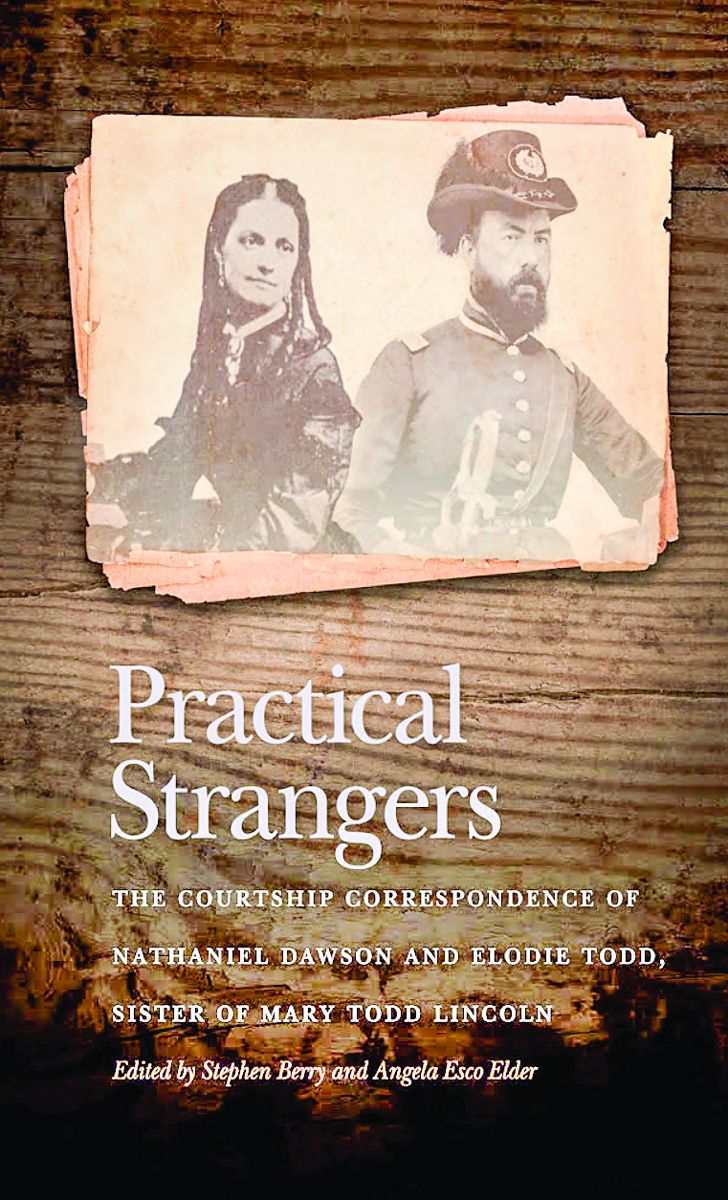
Seeking Love in the Civil War An Accurate and Useful Synopsis Practical Strangers: The Courtship Correspondence of Nathaniel Dawson and Elodie Todd, Sister of Mary Todd Lincoln. Edited by Stephen Berry and Angela Esco Elder. Photos, maps, notes, bibliography, index, 328 pp., 2017. University of Georgia Press, www.ugapress. org. $32.95 softcover.
The authors of this book transcribe a single year of letters from April 1861 to April 1862 between Elodie Todd, one of fourteen children of Robert S. Todd of Lexington, Ky., and a Confederate sister of first lady Mary Todd Lincoln, and Captain Nathaniel Dawson of Co. C, 4th Alabama Infantry (the Magnolia Cadets). After briefly meeting Elodie at Jefferson Davis’ inauguration, Nathaniel leaves for the war to fulfill his one year term of enlistment. During this year he engages in only one major battle, First Manassas, but sees his friends die, endures the rigors of camp life and yet carries on a romance with a woman he barely knows. Having been twice widowed with a young daughter, he nevertheless loves being married and regales Elodie with a plethora of letters expressing his undying love while simultaneously slowly revealing himself to his future bride. Elodie, in return, assures Nathaniel she will wait for him, return his love, and gain insight into his wants, needs and expectations. He is a lawyer, twenty years her senior, and she is apprehensive whether she can provide for all his desires in a wife. As the letters flow back and forth for an entire year, usually three or more a week, various themes emerge. The petty social intrigues of Selma, Ala., (where Elodie is residing with her older sister), the politics of camp life, the loss of loved ones, the desire to fight for a free Southern Confederacy, and charges of cowardice are touched on in their intimate letters. Yet the authors provide virtually no commentary of any of these home front stresses, courtship customs, gender roles, military organization, burial customs, or the effects of reputation in a Southern community. This is a missed opportunity that reduces the historical value of the letters to little more than 300 pages of flowery protestations of love. The editors also frequently transcribe the letters without correcting for historical accuracy, e.g., Gen. Johnson and Gen. Johnston both refer to Gen. Albert Sidney Johnston. This becomes another missed opportunity to place these historical personages in a context easily understandable to the average reader. Finally, the softcover price of $32.95 and the prohibitive hardcover cost of $89.95 are a great deal for a romance novel devoid of any attempt to delve deeply into the strains of war on families, society, and individuals. The Lincoln-Todd relationships go unexplored. The effect of tableaux to raise funds for the soldiers, ripe for social strata differences, are left unexplored. Perhaps a second edition where the editors use their primary resource material to add to an understanding of these critical issues would be a redeeming addition. Without this, only the most ardent romantic will enjoy this collection of love letters. Wayne L. Wolf is Professor Emeritus at South Suburban College of Illinois and the author of numerous books and articles on the Civil War, including The Last Confederate Scout (1995). He is currently researching previously unpublished letters from a South Carolina artillery private and from Gen. Nathaniel McLean.
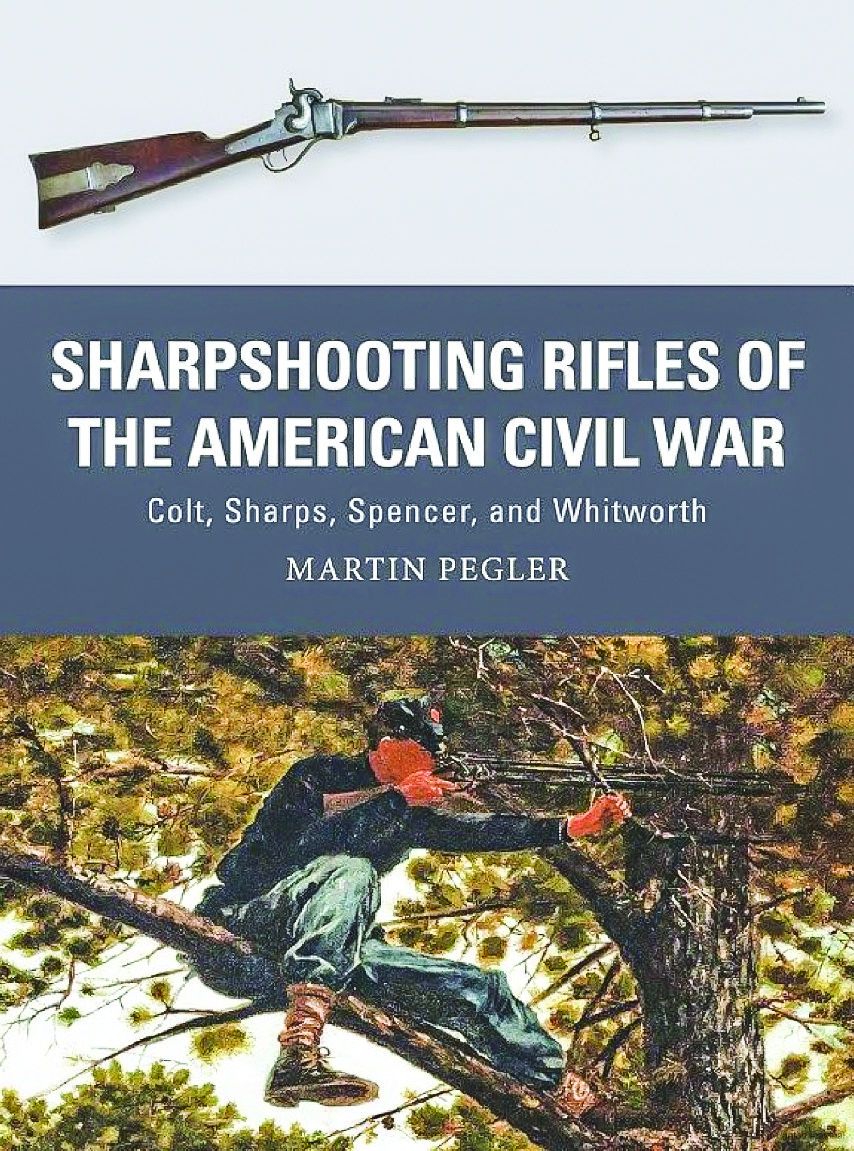
An Accurate and Useful Synopsis Sharpshooting Rifles of the American Civil War. By Martin Pegler. Bibliography, index, 80 pp., 2017, Osprey Publishing, Oxford, UK. http://www. ospreypubishing.com $20.00 paperback. Reviewed by Joe Bilby
Martin Pegler’s Sharpshooting Rifles of the American Civil War begins with a summary of the development of the rifle in America, and I agree wholeheartedly with his point that riflemen during the American Revolution had a “perceived impact [that] was out of all proportion to their actual effect.” The usefulness of the rifle in certain tactical circumstances was, however, appreciated by the British, who issued a limited number of rifles to certain units, particularly Highlanders, during the Revolution, and then formed their own rifle units for later conflicts. The British, of course, fielded Captain Patrick Ferguson’s company armed with breech loading flintlocks of his own design, although the breech loaders proved too few to have a tactical impact. Muzzle loading rifles, despite their significance on a few occasions, were, as Pegler points out, too slow to load due to the necessity of providing a patch to grip rifling (and thus provide accuracy by producing spin to the ball on firing), and were also hampered, at least in American service, by not being able to mount a bayonet. Pegler offers an accurate and useful synopsis of the often overlooked development and employment of rifled arms in European armies in the pre-Civil War era, primarily the search for a rifle that loaded as fast as a musket, predicated on loading an undersized bullet that, on firing, expanded into the rifling. These developments included the significant contributions of French inventors, beginning with Delvigne’s concept of using an undersized projectile expanded by being rammed against an even more undersized powder chamber, and Thouvenin’s breech “a tige” spike to expand a rammed bullet, to Captain Minie’s perfection of the concept with a hollow base projectile fitted with an expansion cup, which was, in its turn, modified and improved upon by both British and American ordnance personnel. Sharpshooting Rifles of the American Civil War provides a well-illustrated rundown on the rifles used by sharpshooters over the course of the conflict, including the famed Whitworth and lesser known Kerr British rifles imported by the Confederacy as well as the Colt, Sharps and Spencer, along with civilian hunting or “plains rifles” and heavy target arms in the hands of Union troops. Pegler follows up with chapters on the use of these weapons in combat and goes on to cover early optical sights, and, of particular value, his own experience firing various rifles of the era. I use the term sharpshooter loosely, myself, because at the time it covered soldiers who would today be classified as “snipers” taking careful shots at specific targets at extreme range, as well as simple skirmishers, who, towards the end of the war, were increasingly equipped with Spencer repeaters when available. I have a few minor caveats with the book, including Pegler’s acceptance of Berdan’s men’s complaints about unlikely chain fires with their initial issue Colts, although lead shavings did make them change the placement of their left hands while firing. The complaints were part of a campaign to replace the Colts with preferred Sharps rifles. Some of photos are misidentified as well, most notably the scene of the alleged dead Confederate sharpshooter and his rifle musket at Devil’s Den, which was actually staged by Alexander Gardner, whose assistants dragged a body to the scene and enhanced it with a planted prop gun. All in all, though, Martin Pegler provides an excellent introduction along with a readable and succinct summary of the sharpshooter arms of the American Civil War and their use. Joe Bilby writes the regular “Black Powder, White Smoke” articles for Civil War News.
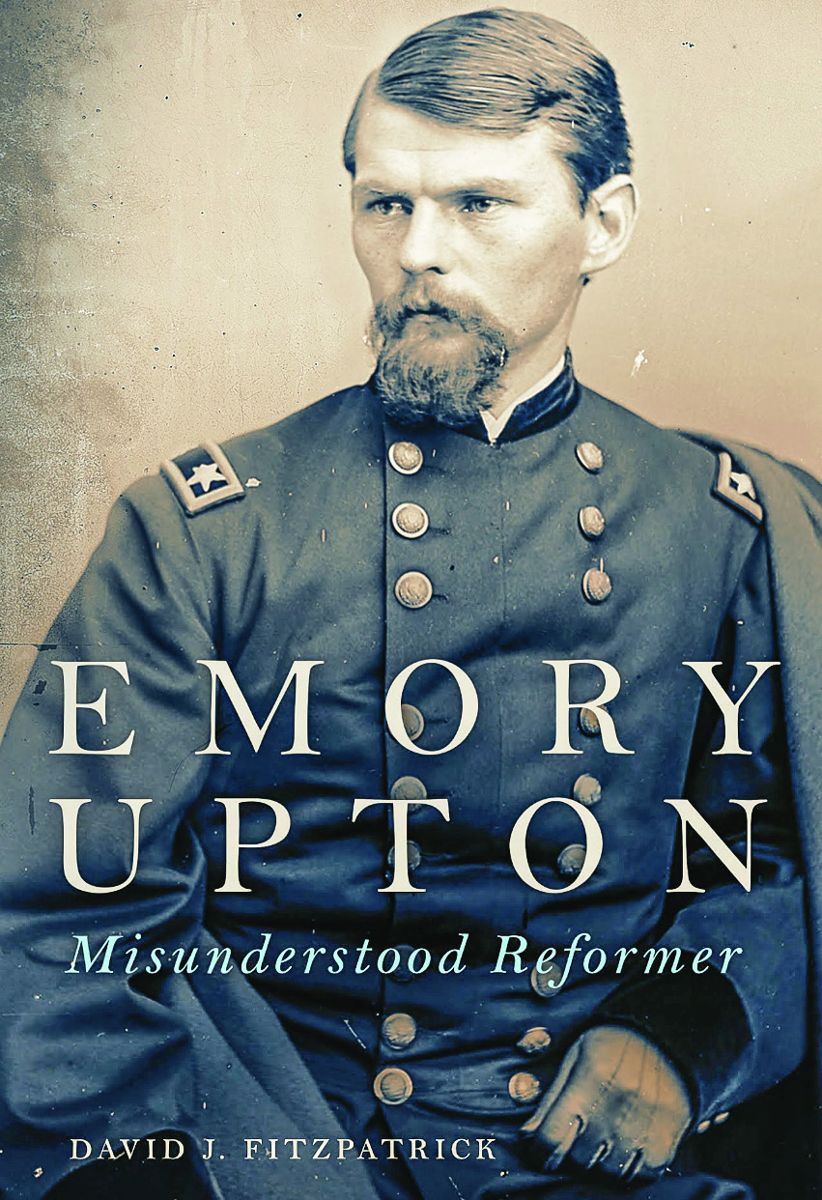
New Biography of Upton Will Be the Standard Patients Read the Papers, Too Emory Upton: Misunderstood Reformer. By David J. Fitzpatrick. Bibliography, endnotes, illustrations, maps, 344 pp., 2017, University of Oklahoma Press, www.oupress.com, $39.95 hardcover. Reviewed by John Foskett
Emory Upton is one of the more important figures to emerge during and from the Civil War. Known as an innovative infantry tactician in his service as a Union brigade commander, he authored a major revision of the Army’s infantry tactics manual after the war. He then exerted large influence on the Army’s gradual evolution into a professional force with a significant permanent component, primarily after his premature death by suicide. Surprisingly, however, until now there has been only one modern biography of Upton—a slim volume by Stephen Ambrose which was published more than fifty years ago. The word “definitive” is used too loosely in the publishing world, but it properly applies to David Fitzpatrick’s new book. Fitzpatrick, a college professor, has spent years researching and writing about Upton, and this is the culmination of his work. Upton’s life is fully covered. Fitzpatrick addresses Upton’s education at Oberlin College and then West Point as a sober, discipline-oriented young man; covers his initial Civil War service as a battery commander; details his infantry experience, first as commander of the 121st New York (testing Upton’s disdain for citizen volunteers, especially among the officers), and then as brigade commander in which he won fame for his assault tactics at Spotsylvania on May 10, 1864; and describes, last, Upton’s experiences as a cavalry division commander in James Wilson’s massive mounted raid through Alabama and Georgia in March-April, 1865. The heart of Fitzpatrick’s book is Upton’s highly important postwar career. While Upton held various positions, including Commandant of Cadets of West Point, he was consumed with reforming army tactics and organization and with changing United States military policy to insulate the army from what he saw as two pernicious elements—reliance on an untrained force of citizen volunteers to be called upon only in crisis, and meddling by civilian officials in directing the military. Fitzpatrick thoroughly examines Upton’s 1867 and 1873 revisions of the tactics manual, in which Upton adapted to the perceived impact of the rifle musket and breech-loading weapons on attackers by advocating a basic unit of four soldiers and a single-rank formation, as well as full utilization of skirmishers. Fitzpatrick perceptively observes that while this volume was more a drill manual than a tactical treatise, it anticipated the use of squad-based formations in later, more modern wars. Upton’s controversial efforts at reforming the army itself and American military policy started with his trip around the world in 1875–76, during which he observed a number of nations’ militaries, resulting in The Armies of Europe & Asia (1878). That book drew lessons for the United States (primarily from Prussia) for the professionalization and continuing education of the officer corps, use of a professional general staff with regular infusion of “new blood,” and maintaining and mobilizing a large cadre of troops which he labeled “the National Volunteers.” This book in turn was the launching pad for Upton’s intended magnum opus, The Military Policy of the United States, which for a number of reasons would not be published until nearly a quarter-century after Upton’s untimely death in 1881. It is this work, with its emphasis on a professional military and insulation from civilian interference, which has fueled the popular perception of Upton as a Prussian-oriented “militarist” with anti-democratic views. Fitzpatrick thoroughly debunks this characterization, especially as it has been articulated by historians such as Ambrose and Russell Weigley. The author demonstrates that Upton’s motivation in substantial part was his experience with the often harmful meddling in the military by Lincoln’s and Grant’s Secretary of War, Edwin Stanton, and by his own fear that Grant would seek a virtual dictatorship through a third term as President. Fitzpatrick shows that Upton was committed to a republican form of government and that his proposals not only envisioned a role for the citizen volunteer but were actually directed at preventing military control of a civilian democracy. Many of Upton’s broad concepts, including enlargement of the regular army, creation of a general staff, and expanded federal involvement in the state militias, were undertaken by Congress in the “Root Reforms” of 1901–08. While Fitzpatrick concludes that it is unclear precisely how many of these measures were directly attributable to Upton’s efforts, there is reason to think that they had a substantial role because the government finally published his manuscript in 1904. The research here is thorough and the analysis is insightful. Even Upton’s famous tactical innovation at Spotsylvania—eschewing the standard use of a linear formation for attacks in favor of a column three regiments wide and four regiments deep—is ably scrutinized. Fitzpatrick determines that the “revolutionary” aspect of this tactic was not so much the formation itself, but Upton’s assignment of a specific function to each regiment. Fitzpatrick’s analysis is balanced. As noted, he rejects the superficial conclusions of earlier historians by conducting a deep probe of Upton’s writings (many of which are barely legible), but he also raises criticism of his subject where warranted. For example, he exposes Upton’s reversal regarding George B. McClellan. At one point, highly critical of the “Little Napoleon,” Upton later changed course when it became useful to pin McClellan’s failures on interference by Stanton and Lincoln in McClellan’s operations on the Peninsula. While this is a work of significant scholarship, it is written in an accessible style which should satisfy the needs of any interested student. This important book is highly recommended for Civil War readers. John Foskett is a practicing attorney in Boston with a lifelong interest in the Civil War. He is descended from Isaac Foskett, who served for three years in the Engineer Battalion with the Army of the Potomac. In addition to numerous reviews in CWN, he has given Civil War Roundtable presentations on the subject of Civil War field artillery tactics.
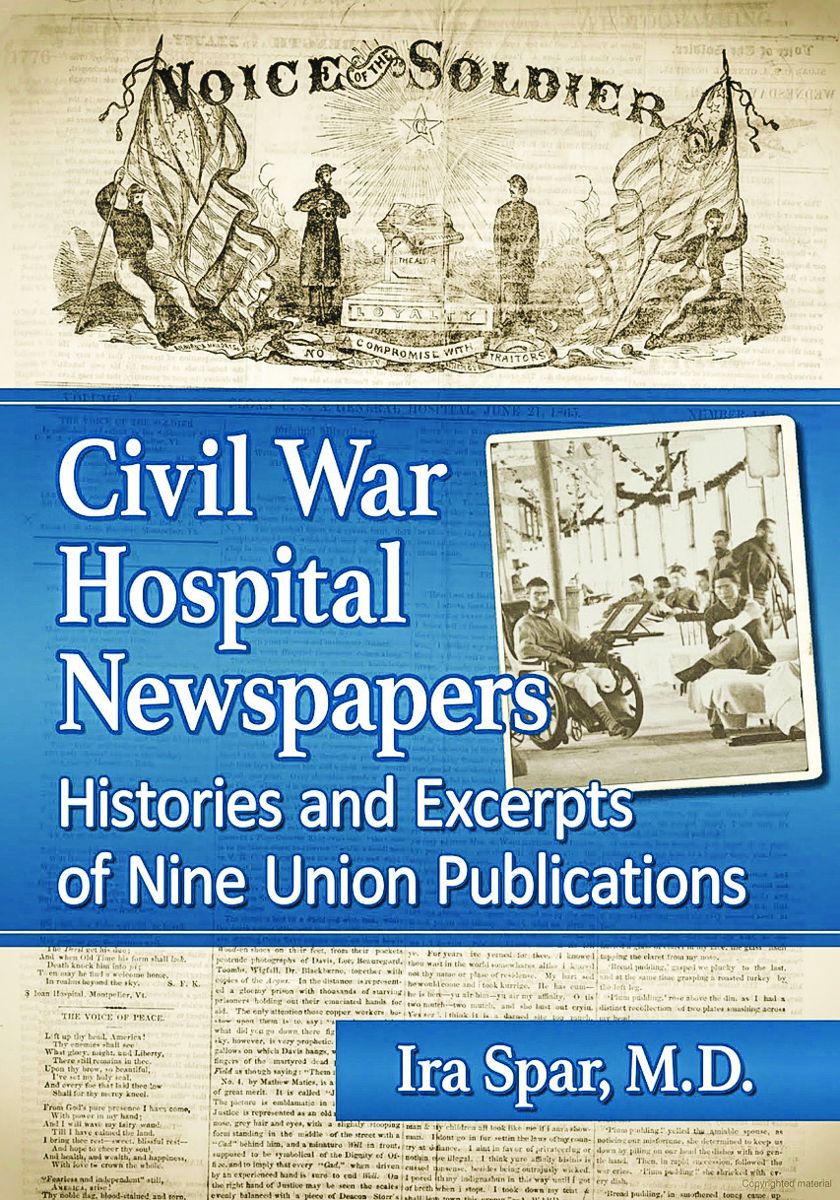
Civil War Hospital Newspapers: Histories and Excerpts of Nine Union Publications. By Ira Spar. Illustrations, notes, appendices, index, 2017, 246 pp., McFarland, www.mcfarlandpub. com. $39.95 softcover. Reviewed by Stephen Davis “One blacks his boots and the other boots his blacks.” Such is the humor passed on in the pages of the West Philadelphia Hospital Register, one of the newspapers featured in Ira Spar’s Civil War Hospital Newspapers: Histories and Excerpts of Nine Union Publications. This is a specialized study, obviously, but a welcome one. The author, Ira Spar, is a surgeon and medical historian. Much of this work, therefore, deals with the medical care Union soldiers received in general hospitals, and how those institutions were administered. But for me, the attraction is Dr. Spar’s treatment of the Northern army hospital newspapers that he has found. The author has identified nineteen self-published Northern military hospital newspapers; copies still exist for nine of them. A chapter is devoted to each of the nine. The Satterlee U.S. Army General Hospital in Philadelphia gave rise to the above-named Register, the war’s first hospital paper, published from February 1863 to June ’65. Patients submitted articles; convalescents performed the typesetting and press work. The hospital had its own printing machines, and every Saturday an issue of the Register, four pages long, came out for its 2,500 patients. Content featured soldier-patients’ stories of their experiences, columns of humor and religious inspiration. “Make your articles concise with all readable brevity,” the editors instructed, as they interspersed original pieces with directories of hospital officers, listings of patients admitted and discharged, even advertisements (generally on the last page). Other contributions came from surgeons, chaplains and female volunteers. Production costs were met by sales (one to five cents per copy) and advertising revenue from local businesses. The other papers treated by Dr. Spar, such as The Armory Square Hospital Gazette (Washington) and The Cartridge Box (York, Pa.) follow suit. Some bore names unabashedly proclaiming their readership, such as The Cripple or The Crutch (issued by an Annapolis hospital). They shared the common purpose of helping the hospitalized soldiers find diversion as well as assistance. The Soldier’s Journal, for instance, published by a hospital in Alexandria, offered information for the men on how to obtain pay, clothing and furloughs. Profits from the paper went into a fund for slain soldiers’ orphans. Dr. Spar concludes with an appreciation of hospital newspapers. When ailing soldiers spent weeks and even months in a general hospital, “keeping mind and body occupied was a therapeutic goal.” Poring through these papers helped countless Billy Yanks, “be it in their last hours of life, a return to field duty or a discharge home.” Steve Davis of Atlanta is a regular contributor to Civil War News and is the Book Review Editor. He is the author of several books on the Atlanta Campaign.
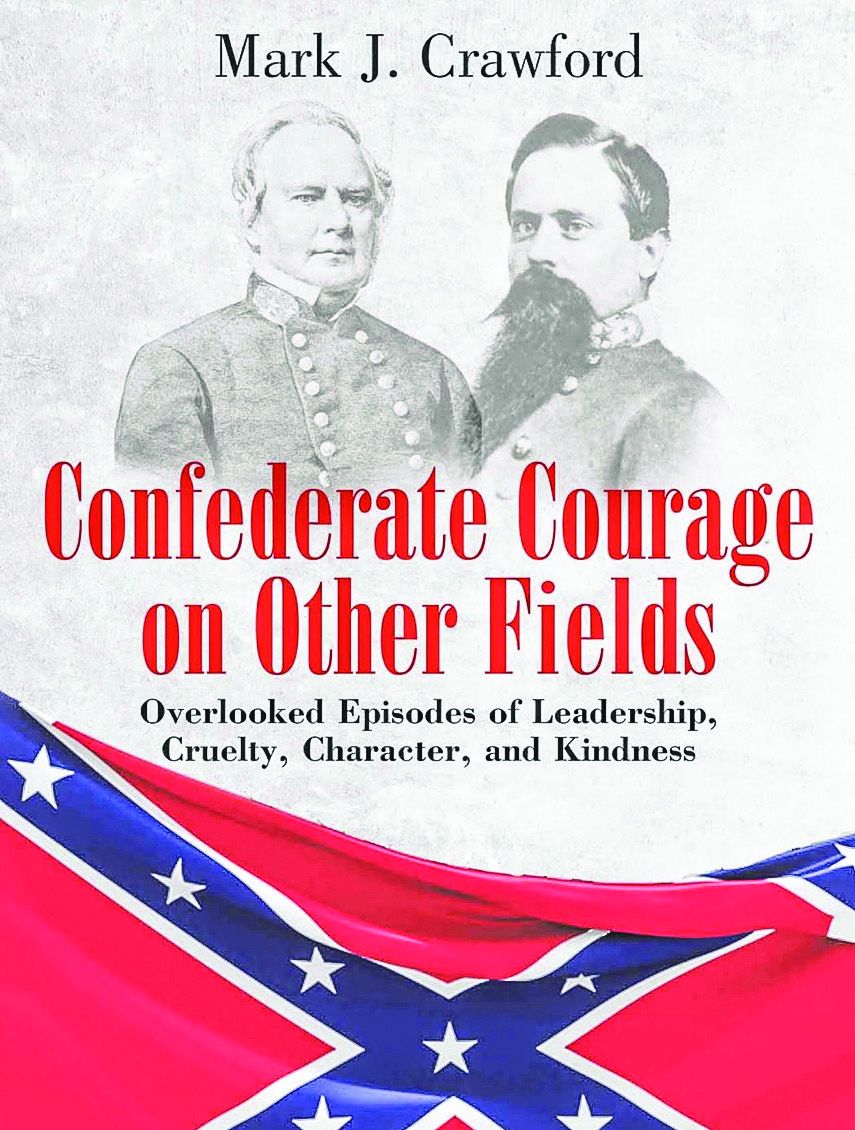
Vivid Pictures of the Face of War Organized and Well-Written Confederate Courage on Other Fields: Overlooked Episodes of Leadership, Character, and Kindness. By Mark J. Crawford. Maps, photos, notes, index, 178 pp., 2017. Savas Beatie, www.savasbeatie.com. $18.95. (Softcover reprint from McFarland, www.mcfarlandpub.com.)
This work offers detailed examinations of four little-known episodes in the Confederate struggle to maintain its separation from the United States. The first is “The South’s ‘Sunset Charge’: The Battle of Dinwiddie Courthouse, Virginia, March 31, 1865.” In this piece the author has done detailed research on the movements of the various Union and Confederate units on the right flank of Lee’s army in the prelude to the battle of Five Forks, which turned Lee out of the defenses of Richmond and Petersburg. The “Sunset Charge” refers to the heroic last Confederate charge that pushed the Union forces back onto Dinwiddie Courthouse in the twilight hours of the day, in the twilight days of the Confederacy. I found the author’s switching back and forth between the hour-by-hour movements of the various troop movements difficult to follow, but he provides maps and illustrations that would enable a strategist to follow along with close study. But he brings home forcefully the wet, cold, soggy miseries of warfare in the late March days, with hungry men soaked to the skin in sleepless days and nights, with mud up to the girths of the exhausted cavalry horses, and the treacherous fordings of swollen streams and flooded swamps to get the troops into position. And after all of that misery, a Union lieutenant brings home to the reader the gallant fight as the Confederates made their final charge: “Above all the noise and confusion, the rattling of the carbines, the screaming and bursting of the shells, the commands of officers and the shouts of men, rose the shrieking, whining rebel charge-yell.” I found the second offering to be the most engaging of the four selections. “‘I’ll Live Yet to Dance on That Foot!’: The Civil War Experiences of Colonel Charles C. Blacknall, 23rd North Carolina Infantry” introduces the reader to a gallant son of the Old North State and his service with the Army of Northern Virginia through his letters home. One follows his career through battle, capture, exchange, more battle, wounds, furloughs, and his unwavering devotion to the cause until he was wounded in the foot and ankle in General Jubal Early’s 1864 Valley Campaign. His letters home are optimistic of his recovery, until gangrene, amputation, and fatal complications set in. This section on Blacknall’s accounts are directly connected to the last section of the book, “Rebel Resort of the Dead: The History of General Hospital Number One, Kittrell’s Springs, North Carolina,” This hospital was opened late in the war in the Kittrell’s Springs resort that had been run by the Blacknall family before the war. In this account, the hospital chaplain’s recently discovered recollections are brought out as part of the moving narrative of the events that took place there among the sick, wounded, and dying. The one other account in the book, “An Eye for an Eye: An Episode from Missouri’s Civil War,” takes us far from the sweeping campaigns in the East and into the Western border country and the warfare of personal vendettas that happened in the dark background of Gen. Sterling Price’s campaign into Missouri towards the end of the war. The focus is on the revenge murder of Union Major Wilson while a prisoner of a Confederate guerrilla command for his burning of towns and the killing of women and children at a Christmas feast, and the retaliation by the Union authorities with the execution of some Confederate prisoners of war from Price’s command. With the new sources that the author has employed, combined with some more readily available standard records, and with his skillful and engaging style, Mr. Crawford’s book gives us vivid pictures of some good, bad, and ugly faces of war.
H. V. Traywick Jr., of Virginia, is the author/editor of three books on the war: Empire of the Owls: Reflections on the North’s War against Southern Secession; Virginia Iliad: The Death and Destruction of “The Mother of States and of Statesmen”; and A Southern Soldier Boy: The Diary of Sgt. Beaufort Simpson Buzhardt, 3rd Regt. S.C. Volunteers. He is also a contributor to Confederate Veteran and the Abbeville Institute.
Minnesota G.A.R. History
G.A.R. Grand Army of the Republic, Minnesota Department: An Illustrated History. By Richard V. Punchard. Index, photographs, 167 pp., 2016. VOL Publishing, Bloomington MN. [email protected]. $35 paperback. Reviewed by Brad Quinlin
I have always loved studying the Grand Army of the Republic, collecting its memorabilia and all things from the soldiers’ reunions. When asked to review Richard Punchard’s history of the Minnesota Department of the G.A.R., I knew it would be a read I would love. Richard’s book is filled with photos of reunion ribbons, G.A.R. halls, and G.A.R. post reunions. It is a true journey through the Minnesota Department of the Grand Army of the Republic. Richard starts with a short review of the origin of the G.A.R. and its development, then to the history of the Department of Minnesota. The stories and photos of the men from Minnesota are an important part of the book, and he intertwines them with the history of posts. There are many group photos of the reunions, and reunion ribbons. As a collector of G.A.R. ribbons, I found this book to be an enjoyable read, and every time I picked up the book, I found something new that I had missed before. Richard closes with the story of a Minnesota Civil War soldier, Albert Woolson, who was the last Minnesota Civil War soldier to die, as well as the last Union soldier to die. A monument was dedicated to Albert in Minnesota and one on the Gettysburg battlefield. The story of the Minnesota G.A.R. is very well told and organized. This book is a great tribute to the Civil War Minnesota veteran. I totally recommend it to those who enjoy the history of the G.A.R. and how it is related to Minnesota. Brad Quinlin of Marietta, Ga., a member of the Sons of Union Veterans, has studied the Civil War for 34 years, and has written nine books. Borne in Battle: The History of the 123rd New York, co-written with Jason Rusk, is his latest.
In his most recent work French arms collector and author Peter Schiffers explores the Confederate Morse Carbine, one of the most advanced firearms to be fielded during the American Civil War. It was not the breechloading carbine’s design that was so innovative, but rather the fact that it utilized reloadable, centerfire metallic cartridges. As only about 1,000 of the guns were produced, these scarce Confederate manufactured guns have long been the subject of great interest and some conjecture by collectors. In his first chapter, Schiffers tells the story of the invention of Morse carbine chronologically. Here the author covers the prewar history of the gun’s inventor, George W. Morse, and his alterations of U.S. military long arms to the Morse breechloading system. In chapters two and three Schiffer goes on to chronicle Morse’s wartime work for the Confederacy, from his work as superintendent at the short-lived Tennessee Armory in Nashville, to his brief stop in Atlanta after the fall of Nashville, and to his eventual position at the Greenville State Military Works in South Carolina, where the Morse Carbine would be produced. The next two chapters then cover the production of the Morse Carbine, and its variant “models,” as well as the ammunition used in the carbine. These first five chapters comprise about one-third of the book. The next five chapters are probably the most important contribution to available knowledge in print about the Morse Carbine, as Schiffers provides a detailed history of units that were issued the innovative carbine. He starts by dealing with documentable issues of the guns, then proceeds to attempt to determine where the 298 guns that cannot be accounted for in surviving period documents were issued. The author carefully goes through all of the potential units to which the carbine might have been issued, and methodically examines the historical record to make defendable arguments about where these unaccounted-for arms might have seen service. In my opinion, the most interesting chapter is the eleventh one, where Schiffers participates in the “experimental archeology” of shooting an original Morse Carbine. The author has done similar live fire exercises before and they provide the meat of the information in his previous works: Civil War Carbines: Myth vs. Reality and Civil War Revolvers: Myth vs. Reality. This section provides some previously unavailable insight into the shortcomings of the design. The most interesting one is that the gun was horribly prone to fouling, to the point where ignition of the cartridges became inconsistent after about two dozen rounds were fired. The other interesting revelation is that the carbine’s accuracy was seriously degraded by fouling, with no five-shot group being as tight and accurate as the author’s initial one. The fact that Schiffers has documented the accuracy of other breechloading Civil War carbines in another work allowed him to make comparisons between the Morse and these other arms, providing a perspective never before offered in print. The book is well researched, well laid out and well footnoted. This last is a pet peeve of mine, as too many similar books today do not provide adequate citation, preventing the author’s statements and assertions from being verified or further investigated. Mr. Schiffers does a nice job of documenting all of his work. Like any book, there are some minor editing issues that could have been caught and corrected, like incorrectly mated pictures and captions, and some minor grammatical issues, such as the footnote that states that the Perrin and Devisme revolver cartridges were “asthmatic” (I think the word he was looking for was “anemic”). These are truly minor issues, and having been involved in book projects, I know how easy it is to miss things during proofreading and how you tend to read what you “meant” to write, rather than what you actually wrote. If you are interested in the story of the Morse Carbine, or even the story of the Confederate ordnance manufacturing during the Civil War, then I highly recommend this book to you. It is also worth having on the shelf if you have an interest in South Carolina mounted units of the Civil War, as much of the research provided in the book is not available in any other printed source, and certainly not all together in one place. I look forward to Mr. Schiffer’s forthcoming projects, at least one of which is currently in the works. Tim Prince is a regular columnist in Civil War News, as well as a contributing author to The English Connection: Arms, Material and Support Furnished to the Confederate States of America by Great Britain, and the new book Confederate Shotguns and Southern Agent Marked Shotguns.
New Insight on George Morse’s Breechloading Carbines The Confederate Morse Carbine Myth vs. Reality. By Peter Schiffers. Illustrated, photos, 212 pp., 2017, Andrew Mowbray Inc. Publishers, https://gunandswordcollector.com. $39.99 soft cover. Reviewed by Tim Prince
First Full-Length History of the Fifth Texas Infantry “The Bloody Fifth”: The Fifth Texas Infantry Regiment, Hood’s Texas Brigade, Army of Northern Virginia, Vol. 1: Secession to the Suffolk Campaign and Vol. 2: Gettysburg to Appomattox. By John F. Schmutz. Illustrations, maps, photos, appendices, bibliography, index, vol. 1: 344 pp., 2016, and vol. 2, 384 pp., 2017, Savas Beatie LLC, www.savasbeatie. com, $32.95 per vol., hardcover. Reviewed by C. Michael Harrington
Much has been written over the generations about the acclaimed infantry brigade in General Robert E. Lee’s Army of Northern Virginia generally known as Hood’s Texas Brigade. The bibliography of books, articles and other publications about this brigade is both extensive and hoary, stretching all the way back to veteran Joseph Polley’s seminal Hood’s Texas Brigade: its marches, its battles, its achievements, first published in 1910, and Harold Simpson’s four-volume study published more than 40 years ago. In this sea of ink on Hood’s Texas Brigade, John Schmutz’s new twin books represent the first comprehensive history of one of the regiments that made up the brigade: the Fifth Texas Infantry Regiment, the “Bloody Fifth.” Readers interested in Hood’s Texas Brigade, in particular, and in the war in the Virginia theater, in general, will find much to like in “The Bloody Fifth.” Schmutz’s history of the Fifth Texas is chronological. It begins with an overview of the secession of Texas from the Union and the recruitment and organization of the Fifth Texas; and it ends with an account of the surrender of the remnant of the regiment at Appomattox and the long road home to Texas. The first volume takes the reader through the Suffolk Campaign in southeastern Virginia in the spring of 1863, and the second volume picks up with the battle of Gettysburg in July 1863 and ends when the last of the Appomattox parolees reach home. Initially, the Confederate war department in Richmond refused to accept Texas troops for service in Virginia. After intense lobbying from Texas politicians, Richmond eventually relented, but not in time for any Texans to make it to Virginia for the first major battle of the war at Manassas. The volunteers who eventually made up the Fifth Texas were recruited mostly in eastern Texas, an area of the Lone Star State populated heavily by Texans with family roots in Tennessee and the Deep South. To get to the war zone in the East, these volunteers had to travel nearly 1,500 miles from their training camp near Houston at a time when Texas had no interstate rail service. With the port of Galveston blockaded, the Texans’ only route to New Orleans (and eventual rail transportation to Richmond) lay by marching overland, in the sweltering summer heat, from the railroad’s end near Beaumont, Texas, across the swamplands of southwestern Louisiana, teeming with alligators and mosquitos. Once the men reached New Iberia they were able to proceed by boat and rail to the Crescent City. The second leg of the Texans’ journey, a 1,200-mile trip from New Orleans to Richmond, was long and tedious, requiring the men to ride on eight different rail lines before reaching their destination. The popular reception that the Texans received along their way to Virginia enlivened their spirits. One of them wrote home that “[w]e were a perfect curiosity on the road. People would come from every direction to see the boys from Texas. They had great ideas of the Texans.” As time would tell, the Texans would not disappoint their admirers. Once they reached Richmond in September 1861, ten companies of Texas volunteers were organized as the Fifth Texas Infantry Regiment. Along with the First and Fourth Texas Infantry Regiments, the Fifth Texas would be the only Texas troops to see service in the eastern theater of the war. Over the next three and a half years, the Fifth Texas would compile a remarkable combat record, participating in 38 major engagements, including almost every significant battle in the
East as well as Chickamauga and Knoxville in the western theater. The regiment earned its sobriquet “The Bloody Fifth” in late August 1862 at the Second Battle of Manassas where it fought in the vanguard of Longstreet’s assault that sent the Union army into full retreat. Showing its Texas pride (and little regard for Confederate regulations), the Fifth Texas went into battle at Second Manassas flying the unauthorized “Lone Star and Bars,” a Confederate battle flag the Texans had doctored to resemble the Texas state flag. The battle left the regiment with no field grade officers, and the Fifth Texas as a whole suffered the heaviest casualties of any regiment in Lee’s army. But the Fifth Texas inflicted even more casualties than it suffered at Second Manassas. The famous Fifth New York, Duryee’s Zouaves, suffered the largest loss of life in any single battle for a regiment in the entire war, mostly at the hands of the Fifth Texas. During the second day’s fighting at Gettysburg, the Fifth Texas again hauled out the inspirational Lone Star and Bars flag as the men began an advance that ended with a futile assault on Little Round Top and cost the regiment casualties in excess of 50 percent of its ranks. The Fifth Texas was part of Longstreet’s Corps that Richmond dispatched in September 1863 to aid the Confederacy’s main western army. The Fifth Texas was among the first of Longstreet’s men to arrive in Georgia, and it was heavily engaged in the Confederacy’s pyrrhic victory at Chickamauga, suffering casualties that cut its ranks about in half. After returning to Virginia in the spring of 1864 from a miserable winter’s encampment in the hostile mountain country of East Tennessee, the regiment suffered an even greater bloodletting in the Battle of the Wilderness. Agitated by the sight of other Rebel troops fleeing in the face of a Federal onslaught, General Lee threatened to lead the Texas Brigade into the battle. Only when a private in the Fifth Texas took Traveller by the bridle and led the general away did the Texas Brigade agree to charge into the oncoming Federal host. That near-suicidal charge blunted a Union offensive that had threatened to destroy Lee’s army. But for all intents and purposes, the charge of the Texas Brigade at the Wilderness also effectively destroyed the Fifth Texas and the entire brigade. The Fifth Texas carried 180 men into the battle, and within 25 minutes 111 of them were killed or wounded.
The Fifth Texas would spend the balance of the war in the trenches north of the James River defending Richmond. At Appomattox, the regiment surrendered 161 out of the more than 1,400 men who had served in the Fifth Texas at some time in the war. A retired lawyer who has published a well-received study of the Battle of the Crater, Schmutz writes well. His prose is crisp and clear, though it is also marred by more typos and (small) factual errors than I would have expected in a work that is otherwise of such high quality. Unlike some regimental histories where the regiment tends to get lost in sweeping descriptions of marches and battles, throughout both volumes Schmutz keeps his focus steadily on the Fifth Texas, its officers and men. Through the author’s pen, we come to know quite a few of the personalities of the regiment, including some privates and non-commissioned officers, helping us put faces on men long dead. I particularly enjoyed reading through the appendix in the first volume that provides thumbnail bios of nearly 100 men of the Fifth Texas. Additional appendices summarize the organization of each company in the regiment and list battlefield deaths as well as the men who died from disease or accident. Both volumes include helpful maps of the regiment’s battles. Photos of a few of the Fifth Texans are also included. Kudos to Savas Beatie for setting both volumes in easy-to-read double spaced type, and for including notes at the foot of the pages instead of parking them in the back of the books, thus sparing the diligent reader the chore of flipping back and forth between text and end notes. I stand in awe of the amount of research that Schmutz put into “The Bloody Fifth.” The bibliography runs more than 30 pages. Clearly, Schmutz devoted years to scouring archival, internet and other sources. He also walked the fields where the Fifth Texas fought. In a word, Schmutz did his homework, and the result is surely the definitive regimental history of the Fifth Texas. I recommend it enthusiastically, especially to readers with an interest in Texas Confederate units. C. Michael Harrington practices law in Houston. He has written several published articles on South Carolina soldiers, and he’s lectured to Civil War organizations in Houston on multiple topics, including South Carolinians in the war. Mr. Harrington is a long-time director of the Houston CWRT.
Utah emerges from the Civil War’s sideline Utah and the American Civil War. By Kenneth L. Alford. Appendices, bibliography, index, map, tables, 864 pp., 2017, University of Oklahoma Press, oupress.com, $60 cloth. Reviewed by Robert P. Bender Only four years prior to the South’s secession and the outbreak of the Civil War, Utah’s Mormon community stood on the brink of its own armed conflict with the federal government. Although the 1857 Mormon Expedition concluded without bloodshed, it nonetheless aggravated an already tense and strained relationship between the Church of Latter Day Saints and the United States government during the administration of President James Buchanan. By most accounts the 1857 expedition inspired Brigham Young and the Mormon church to remain on the sidelines during the Civil War, which Young viewed as a providential punishment for federal mistreatment of his church and community. Despite this contentious relationship, Utah Territory did not remain entirely on the sidelines during the national conflict. Young permitted the recruitment of a single military unit, the Lot Smith Cavalry Company. Enrolled in 1862, Smith’s company helped protect the federal overland mail route and telegraph lines from the threat of potential Native American attacks. Kenneth L. Alford, a retired U.S. Army officer and Professor of Church History and Doctrine at Brigham Young University, states that the war deeply affected the territory’s population (including regular U.S. Army soldiers, civilians, and Native Americans). Alford’s goal for this volume is “to make war-related Civil War records pertaining to Utah Territory more accessible,” as well as “more transparent, easier to access, and better known.” This project also serves to correct errors or difficulties inherent to the transcription or organization of the Official Records, such as bringing together materials for specific campaigns and materials that are otherwise scattered across numerous volumes of the Official Records. Alford’s volume, therefore, intentionally does not include documents related to applications for statehood or territorial issues and events unrelated to the Civil War. Alford includes a helpful timeline of the major events for both the U.S. and Utah Territory, beginning with the outbreak of the Mexican War on April 25, 1846, and Utah’s July 1 recruitment of volunteers for that conflict. The timeline concludes with the February acquittal of Robert T. Burton for an 1862 murder of a Morrisite woman at South Weber and the passage of the Fifteenth Amendment on March 30, 1870. Alford follows up with a narrative summary of Utah Territory during the Civil War, a summary of the Official Records, a summary description of Utah’s Civil War records, Utah’s records from the Official Records (which comprise the bulk of the volume), additional war-related records about Utah not included in the Official Records, and concludes with eight appendices that cover a wide variety of subjects including supplements to the Official Records and Utah’s assignment within the various military departments from 1858 to 1865, as well as a complete list of Union military units that served in Utah during the Civil War. Although the number of such units is limited to six infantry regiments and ten cavalry regiments, it is interesting to note that they came from as far away as Michigan and Ohio. Alford has also created a system of identifier codes unique to this volume, rather than citing the original series and volume identifiers from the Official Records. Alford’s introduction offers no explanation for the need to make this change, so it is not immediately clear whether this change clarifies any issue related to the Official Records. With the publication of Utah and the American Civil War, Kenneth L. Alford and the University of Oklahoma Press have created a valuable resource that will help facilitate additional research on Utah Territory’s wartime experience for generations to come. Robert Patrick Bender graduated from the University of WisconsinLa Crosse and the University of Arkansas. He is a tenured Instructor of History at Eastern New Mexico University-Roswell. His publications include Like Grass before the Scythe: The Life and Death of Sgt. William Remmel, 121st New York Infantry (Tuscaloosa: University of Alabama Press, 2007) and Worthy of the Cause for which they Fight: The Civil War Diary of Brigadier General Daniel Harris Reynolds, 1861–1865 (Fayetteville: University of Arkansas Press, 2011). He has also contributed numerous articles to the Encyclopedia of Arkansas History and Culture.
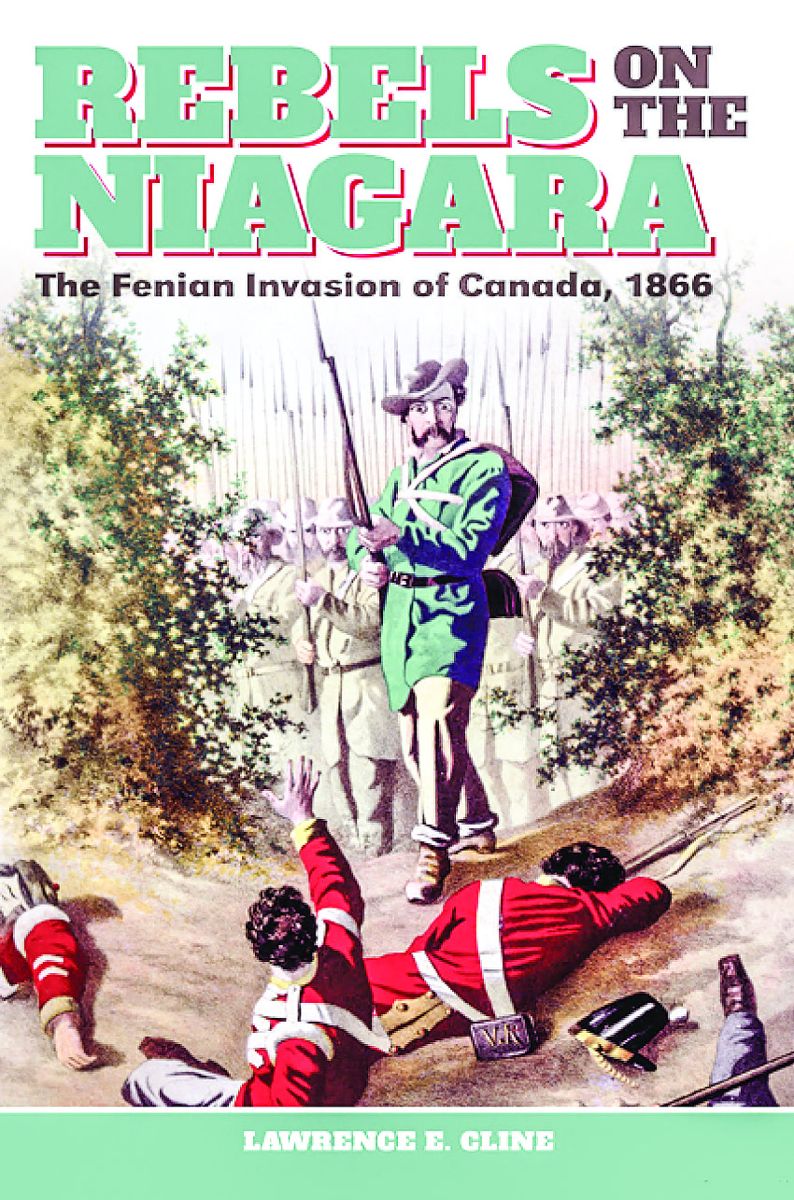
Another Lost Cause Rebels on the Niagara: The Fenian Invasion of Canada, 1866. By Lawrence E. Cline. Maps, photos, endnotes, index, bibliography, 242 pp. State University of New York Press, www. sunypress.edu. $24.95 paperback, $70.00 hardcover. Reviewed by Gould Hagler
Lawrence Cline is a lecturer in intelligence analysis at Buffalo State College whose previous works include books on modern insurgencies and counterinsurgency operations. With Rebels on the Niagara, Cline delves into a little-known invasion of Canada by Irish nationalists in the years following the American Civil War. “Invasions,” plural, would be a better word, as in 1866 and subsequent years there were three or four, depending on how you count them. Well, maybe “invasions” is not the right word either, as the operations were conducted on a very small scale and ended in failure almost before they began. Cline’s skills as a writer surpass the Fenians’ skills at waging war against America’s friendly neighbors. The efforts were underfunded, undermanned, under-gunned and under-everything else. Cavalrymen without horses and artillerymen without guns can expect little success. The performance on the other side wouldn’t earn many medals either. Still, though the warfare was small-scale and poorly organized, it was warfare and men were killed. Since the incursions were so short-lived, the battle narrative takes up relatively little of the story. Much of the book focuses on the history of the Fenian Brotherhood in the U.S., its relationship with the Irish Republican Brotherhood, and the endless internecine struggles that marked the organization’s existence. Primary sources are more abundant than one may expect, and the author uses these along with many secondary sources to document the actions of these other nineteenth-century rebels. Many of the characters who people Cline’s well-organized narrative were Civil War veterans. Former Union officers provided much of the leadership and men from the Yankee and Confederate rank and file provided the followship. Thomas Sweeny was perhaps the most noteworthy of the military leaders. This Irishman, known for the drunken row during the Atlanta Campaign at which he cussed at his corps commander Grenville Dodge and punched and wrestled with another general, somehow managed to lead one of the 1866 forays into Canada while still serving as an officer in the United States Army. U.S. politicians tolerated and even pretended to support the Fenians, who were popular with the important Irish-American voters, all the while sharing intelligence with the British authorities. Andrew Johnson, Ulysses Grant, George Meade, William Seward and Montgomery Blair have cameo roles in the story. We meet Meade as he rode on the same train as Sweeny toward the Fenians’ jumping off point at a New York border town. The Fenian Brotherhood sold six percent bonds payable when Irish independence was achieved. It took a lot of faith to invest in those bonds, and of course they were never paid. However, taking the long view, one can see that the work of the Fenians was but one part of the long and ultimately successful effort to win Irish independence, and the invasions of Canada were but one campaign in a long and bloody war. Cline aims to explain this campaign and he hits his target. Gould Hagler is the author of Georgia’s Confederate Monuments: In Honor of a Fallen Nation (Mercer University Press, 2014). His book is available from Mercer University Press, retail outlets, online sellers, and directly from the author (gould.hagler@gmail. com).
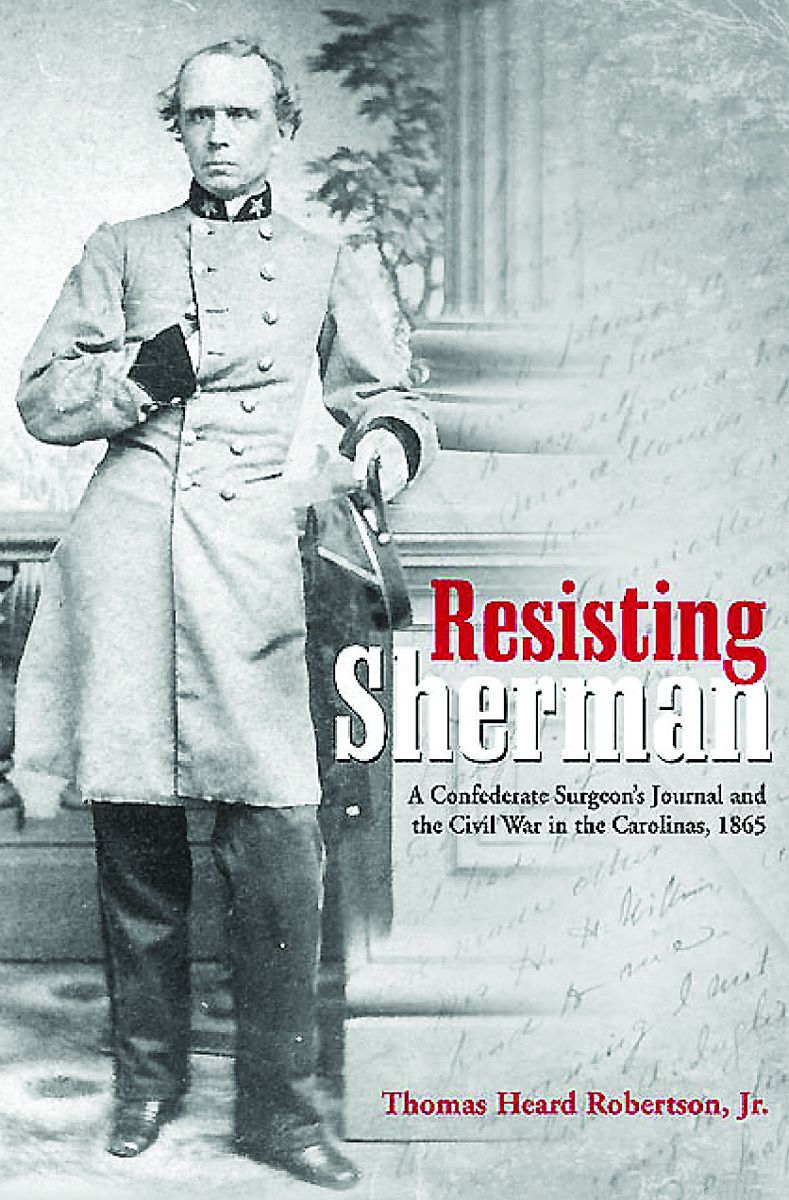
The Last Days of the War for a Confederate Doctor Resisting Sherman: A Confederate Surgeon’s Journal and the Civil War in the Carolinas, 1865. Edited by Thomas Heard Robertson, Jr. Maps, photos, illustrations, notes, bibliography, index, 168 pp., 2017. paperback. Savas Beatie, www.savasbeatie. com $18.95 (paperback reprint of original 2015 edition). Reviewed by Tom Elmore
In 1865 Dr. Francis Marion Robertson was a 58 year-old Confederate Army surgeon based in Charleston, S.C. Having descended from a line of army and militia officers, Robertson first considered a military career and attended West Point for four years, but he resigned before graduating in order to study medicine. He obtained his medical degree in 1830 and established a successful medical practice in Charleston. However, he never could let go of his interest in the military, and served as a captain in a local militia unit. When the Civil War started he was the surgeon of the 16th S.C. Militia. In 1862 he was appointed to the rank of surgeon in the Confederate Medical Department, serving primarily in a supervisory role in the Charleston area, with limited field duties. When Lt. Gen. William Hardee evacuated the Confederate forces out of Charleston, in advance of Maj. Gen. William T. Sherman’s Carolinas Campaign, Dr. Robertson also fled the city.
The diary starts about this point and covers the doctor’s adventures over the next three months, in which he traveled 900 miles through four states. There is not a lot of new information here. In fact the doctor only occasionally ever comes in contact with anyone famous. Perhaps the biggest disappointment is that Robertson hardly ever mentions medical issues or discusses practicing his trade. What we do get is the doctor’s conversations with a number of local people who were not too shy to share their feelings, including one woman who was convinced that the Confederacy would still win the war. These revelations are fascinating in their own right for those studying the mood of the South at war’s end. After the war, Dr. Robertson returned to Charleston, where his house had luckily survived the numerous fires and shelling of the city. He became a professor and later dean of a Charleston medical school until 1873 when he retired from education, though he remained a practicing physician until 1881. He died in 1892. Unfortunately, the old saying “less is more” certainly applies to this book. The good doctor’s observations are almost drowned out by an excessive amount of annotation and commentary which takes up as much, if not more, of the text as the doctor’s diary. The book’s prologue is 28 pages long, and much of the information, while admittedly interesting, is not fully germane to the book. (Oddly enough, the prologue makes no mention of the burning of Columbia, S.C., arguably the biggest event of the Carolinas Campaign). In addition there are three appendixes. Finally, the editing and formatting of the pages could have been tighter. Nonetheless, those with an interest in the final days of the war and the Carolinas Campaign will find Robertson’s account interesting.
A resident of Columbia, S.C., Tom Elmore’s books include A Carnival of Destruction: Sherman’s Invasion of South Carolina (2012).