
An Early Defense of Hood’s Georgia and Tennessee Campaigns
By Stephen Davis · Originally published February 2018 · pp. 22–23
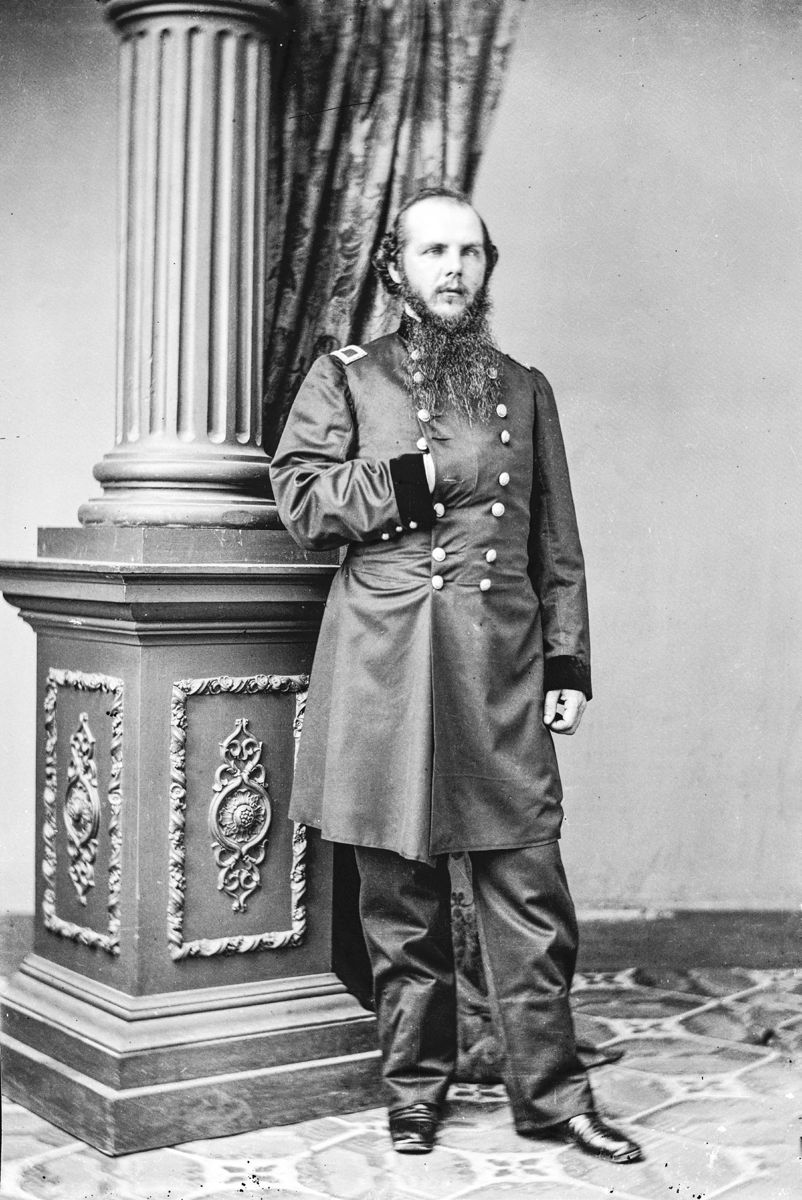
A month after his army had been routed in mid-December 1864 at Nashville, Gen. John B. Hood was at Tupelo, Miss., with his remaining troops. His superior, Gen. P. G. T. Beauregard, was on his way to Tupelo; Hood may have known that Beauregard was planning to relieve him of command. Before the Creole arrived, though, on Jan. 13, 1865, Hood submitted his resignation in a telegram to the War Department. Secretary James A. Seddon quickly accepted it, and directed Hood to return to Richmond for further orders.
Gen. John Bell Hood. (Library of Congress)
(Library of Congress)
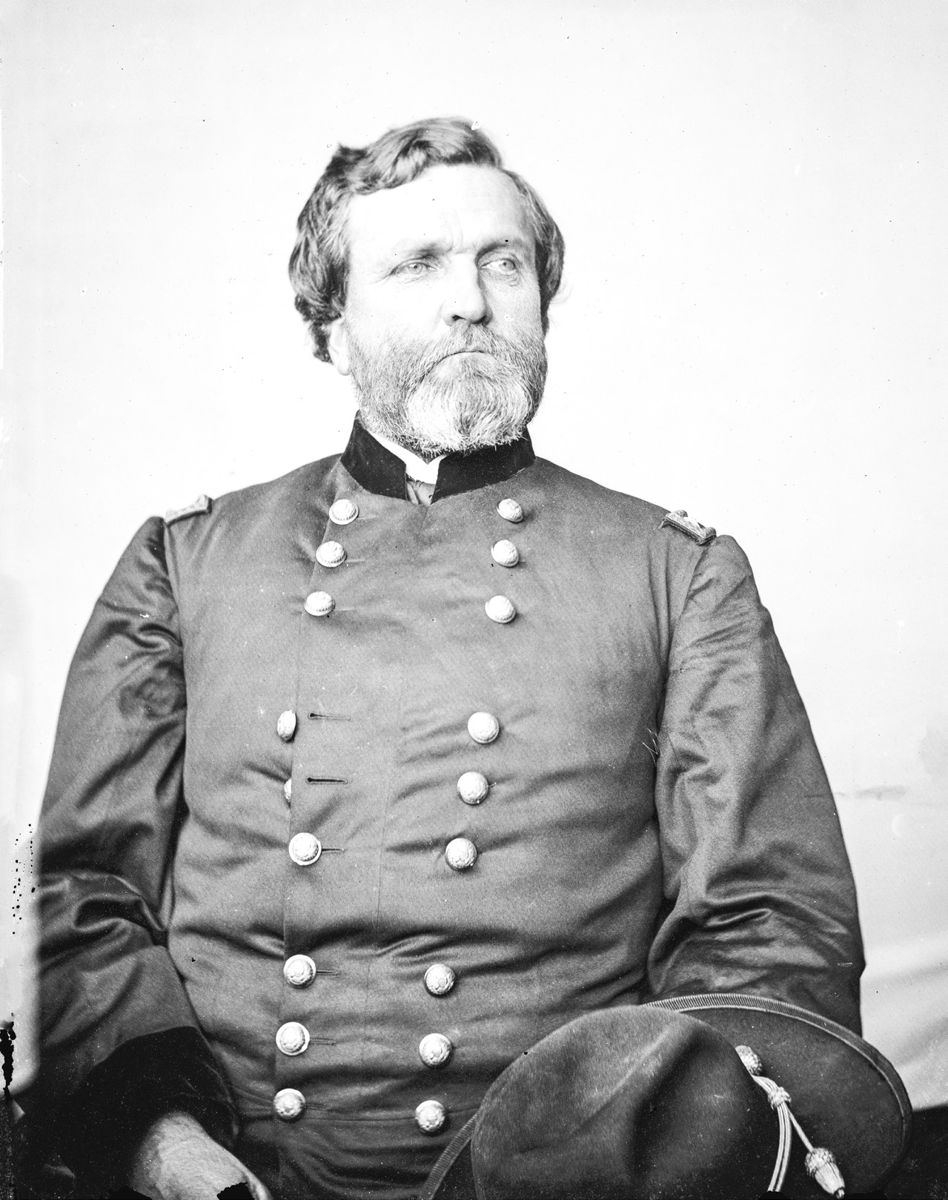
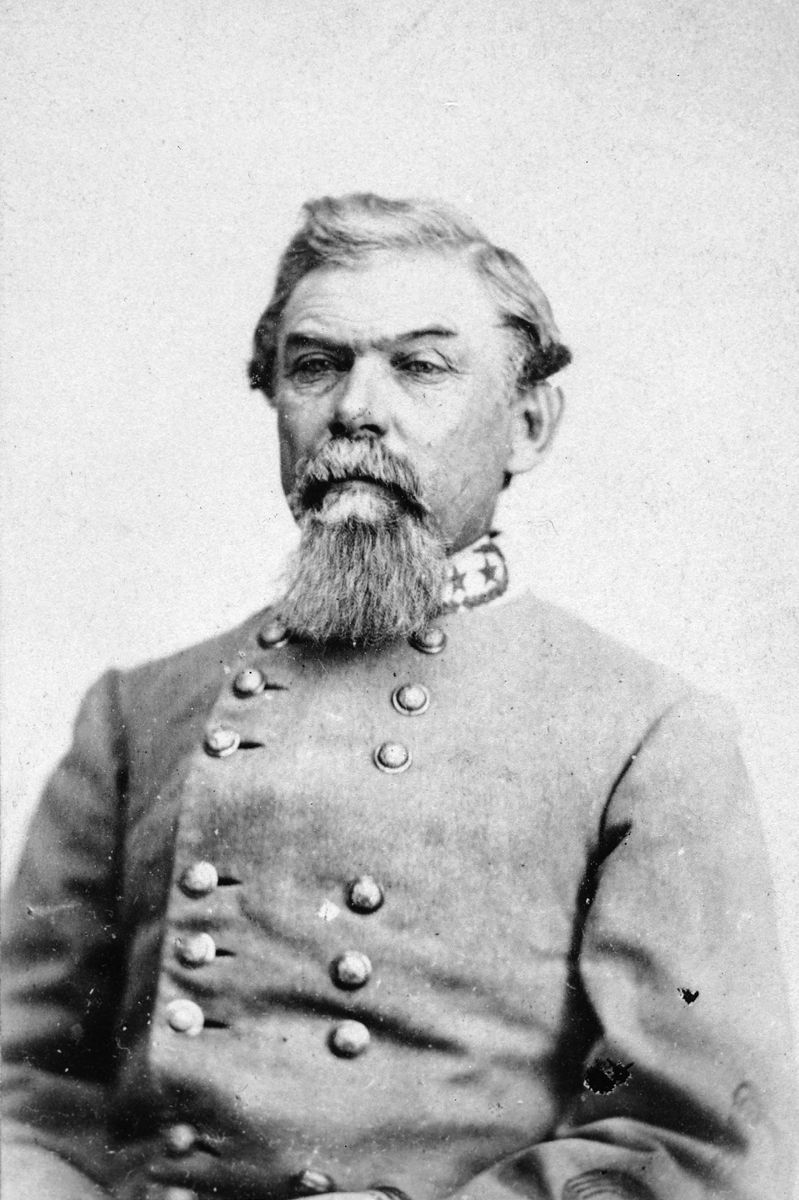
Before he left Tupelo on January 23, Hood probably began working on a full report of his tenure as commander of the Army of Tennessee, which had begun the previous July. At that time he had taken over from Gen. Joseph E. Johnston, who had retreated through north Georgia all the way to Atlanta. Hood had held the city for a month and a half before Maj. Gen. William T. Sherman’s forces cut his supply lines and forced the Confederates to abandon the city. With Sherman holding Atlanta in late September ’64, Hood led his army into north Georgia, then north Alabama. In late November, he marched into Tennessee, where Union Maj. Gens. John Schofield and George Thomas were concentrating forces against him. At Franklin, Hood attacked Schofield’s army and was bloodily repulsed on November 30. Schofield withdrew to Nashville to unite with Thomas’ garrison. Hood followed Schofield to Nashville and dug in. On December 16, Thomas’ forces attacked and routed the Army of Tennessee. This was the record of six months’ service that Hood was writing up. Like all generals, he sought to put the best face on his campaigns before Atlanta and Nashville. He probably used his long train trip to Richmond to outline his thoughts and perhaps start writing. His travel pace seemed unrushed; on February 3 he pulled into Augusta, Ga., about halfway to the capital. Hood stopped there long enough to visit his distant cousin, Maj. Gen. Gustavus W. Smith. The kinsmen apparently discussed how Hood planned to defend himself in his campaign report. Either at Hood’s request or on his own, General Smith wrote an account of the Georgia and Tennessee campaigns, one which was overtly pro-Hood. More, Smith got a local newspaper, the Augusta Constitutionalist, to print it over his initials. The paper botched the letters, though, and signed the article, “G. W. Y.” Two days later it apologized and published the author’s initials, “G. W. S.” correctly. Smith’s “Atlanta and Nashville” appeared in the Constitutionalist on February 5, well before Hood arrived in Richmond and submitted his final report ten days later. The “G. W. Y./G. W. S” article thus figures as the first publicly printed defense of John Bell Hood as commander of the Army of Tennessee. It was reprinted fully in the Richmond Sentinel on February 17, probably at the request of Hood. Yet Smith’s apologia has largely gone ignored in the Hood literature. “Atlanta and Nashville” makes a number of points. “The spirit of the army” had been “almost ruined” by Johnston’s constant retreating. When Hood was appointed to succeed him, Sherman’s’ armies were just a few miles from Atlanta. “Never, probably,” Smith contended, “was a young officer promoted and assigned to the command of any army under more difficult and trying circumstances.” Then “G. W. S.” sprang to Hood’s defense. • “He immediately changed the policy of the campaign from the defensive to the active offensive.” • “On the 20th [of July], he attacked the enemy in position, and if Hardee’s corps had executed the part assigned to it, what was only a partial success, would have resulted in a complete victory.” • “Again, on the 22d, Hood attacked the enemy and the partial success of Hardee demonstrated conclusively, what the result would have been had Hardee executed the orders given him by General Hood.” • “He held Sherman at bay for more than forty days….Hood lost during this time less than seven thousand men, but not
Maj. Gen. Gustavus Woodson Smith.
one inch of ground.” • After the fall of Atlanta, Hood “determined to take the initiative, and moved upon Sherman’s rear….Hood then moved by way of Gadsden to the Tennessee river.”
“Thomas had in Tennessee the smaller portion of Sherman’s army….Thomas beaten, Nashville in our possession, the road to the Ohio river would be open…. Hood, for these reasons, determined to attack Thomas.” “He moved upon Columbia [Tennessee]….The enemy crossed Duck river and took position….Hood crossed higher up, and succeeded in gaining position near their line of communications at Spring Hill. The reason why this masterly and successful movement did not result in the destruction or capture of eighteen thousand of the enemy’s infantry, and all their artillery and trains, is well known in Hood’s army, and it is not necessary to allude to it further.” “The enemy, after making this narrow escape, retreated rapidly to Franklin….It being inexpedient to attempt a flank movement, and this being the last chance to crush the enemy before he could reach the strong fortification at Nashville, it was necessary to attack as soon as the troops could be put in position.” At Franklin, when Hood attacked Schofield, “the courage and conduct of the army… proved, beyond a doubt, that its old fighting spirit was restored.” “After this decisive victory, Hood pushed forward to Nashville and fortified his position.” “Thomas did attack, and whilst all was going well along Hood’s whole line, one division unaccountably gave way, which resulted in the retreat of the whole line in disorder.” “Notwithstanding the confusion and disorder, in which the troops left the field, they were soon rallied, and though the enemy made a vigorous pursuit, the army with its material safely crossed the Tennessee river—and the campaign ended.” That was it, in its main points, according to Gustavus Smith. Hood had done his best to hold Atlanta, but was stymied by mediocre performances by William J. Hardee, his senior corps commander. Then he had assumed the offensive into Tennessee. Schofield had slipped away at Spring Hill, November 29, but Hood declined to lay blame among his officers. The subsequent attacking battle at Franklin had been a “decisive victory,” for which “G. W. S.” offered no casualty figures. Later, at Nashville, “Hood was beaten by a giving way of a division.” Given the consensus of historians that the Army of Tennessee was effectively destroyed in Hood’s Tennessee Campaign, this was an exceedingly one-sided account of its tragic campaign. Notice that there was no effort to (Library of Congress)

provide the strength of the army by the time it had reached Tupelo. In concluding, General Smith addressed Hood’s reputation as a “reckless fighter” by asking if Hood were any more reckless than—catch this—Robert E. Lee. “In his [Hood’s] record there is no Malvern Hill, or any approach to the like of it,” an astonishing statement, given the bloody charge at Franklin. Worse, Smith mentioned Lee’s two failed incursions into the North in 1862 and 1863: “What great results were gained by either?” Gustavus Smith may have conceived these ruminations, or they may have been suggested by his cousin. The closing declaration of “G. W. S.” that, in the historical record, “in management and generalship Hood’s [campaign] will compare favorably with either of Lee’s” strikes one as gratuitous flattery. It also goes completely against history’s judgment that, at least in Tennessee, John B. Hood had been a colossal failure as army commander. In this light, it is little wonder that Smith’s essay for the Augusta newspaper has been largely forgotten. But it remains notable as probably the earliest, and one of the most ardent defenses of Hood in print. Steve Davis of Atlanta is a regular contributor to Civil War News and is the Book Review Editor. He is the author of several books on the Atlanta Campaign.