
The Atlanta Ponder House Story
By John A. Dietrichs · Originally published December 2018 · pp. 18–21
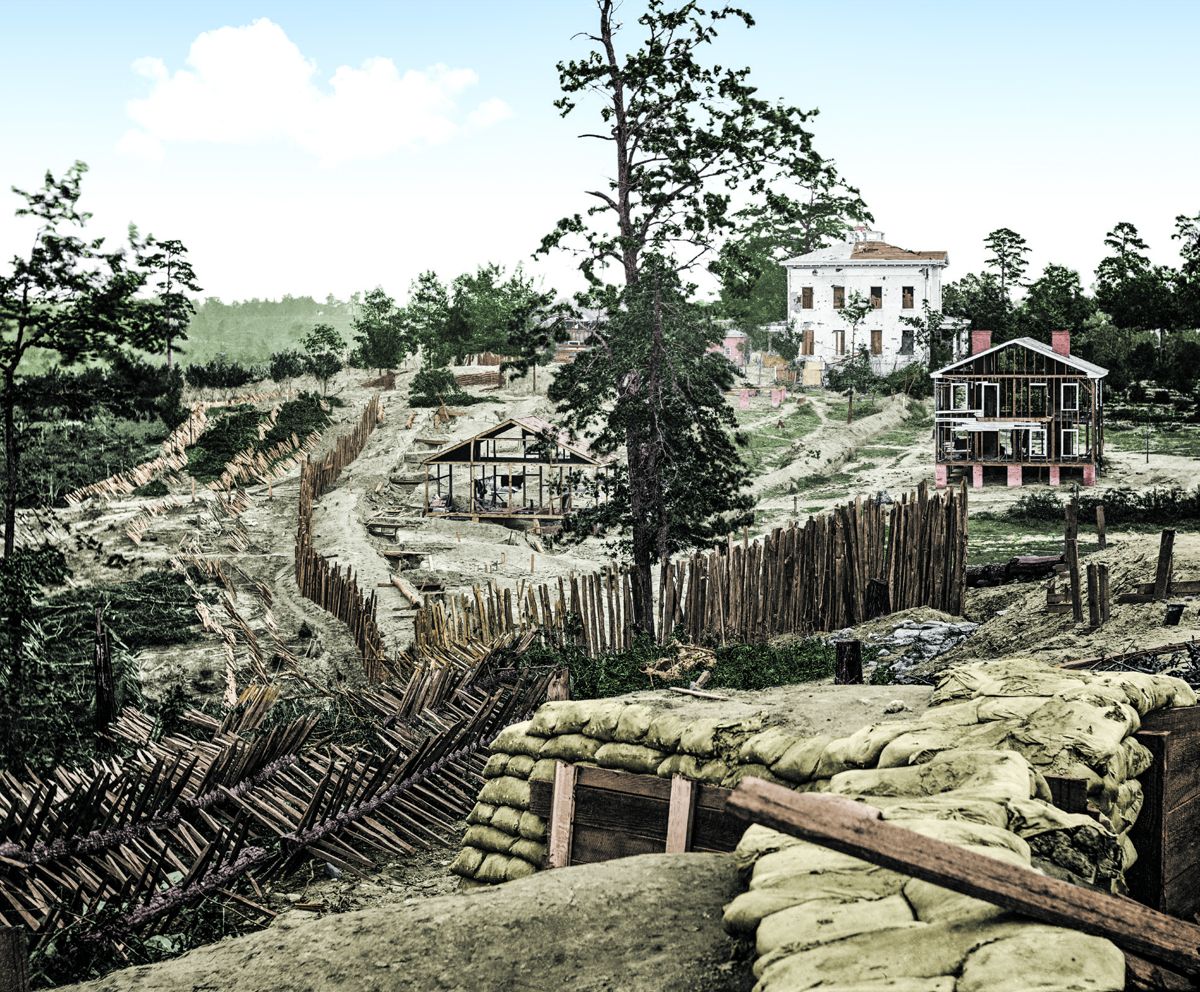
Most of us interested in Civil War history have seen the famous Ponder House picture taken, just outside Atlanta, along the outer fortification line at the southern edge of what is now the Georgia Tech campus and Marietta Street. The elegant and beautiful lines of a two-story plantation mansion remain, but are marred by many artillery shell holes, one section of the second floor wall is blown out, and trees felled by shot lie around it. The bright white plaster finish is cracked and broken, exposing the brick beneath, and hundreds of bullet holes are seen clearly in the original black and white photograph, which has now been colorized. A second photo, also now colorized, was taken some 100 yards west of the house at Fort Hood, a salient where the east-west fortification line angled south. Sandbags can be seen around the bomb-proof for this observation point; a landscape of cheveaux des frise runs to the once magnificent gardens filled with boxwood and fruit trees still visible just north of the house. Two former wooden slave quarters, stripped of their lumber to strengthen the fortification line, stand naked and yet still with some dignity in the foreground.
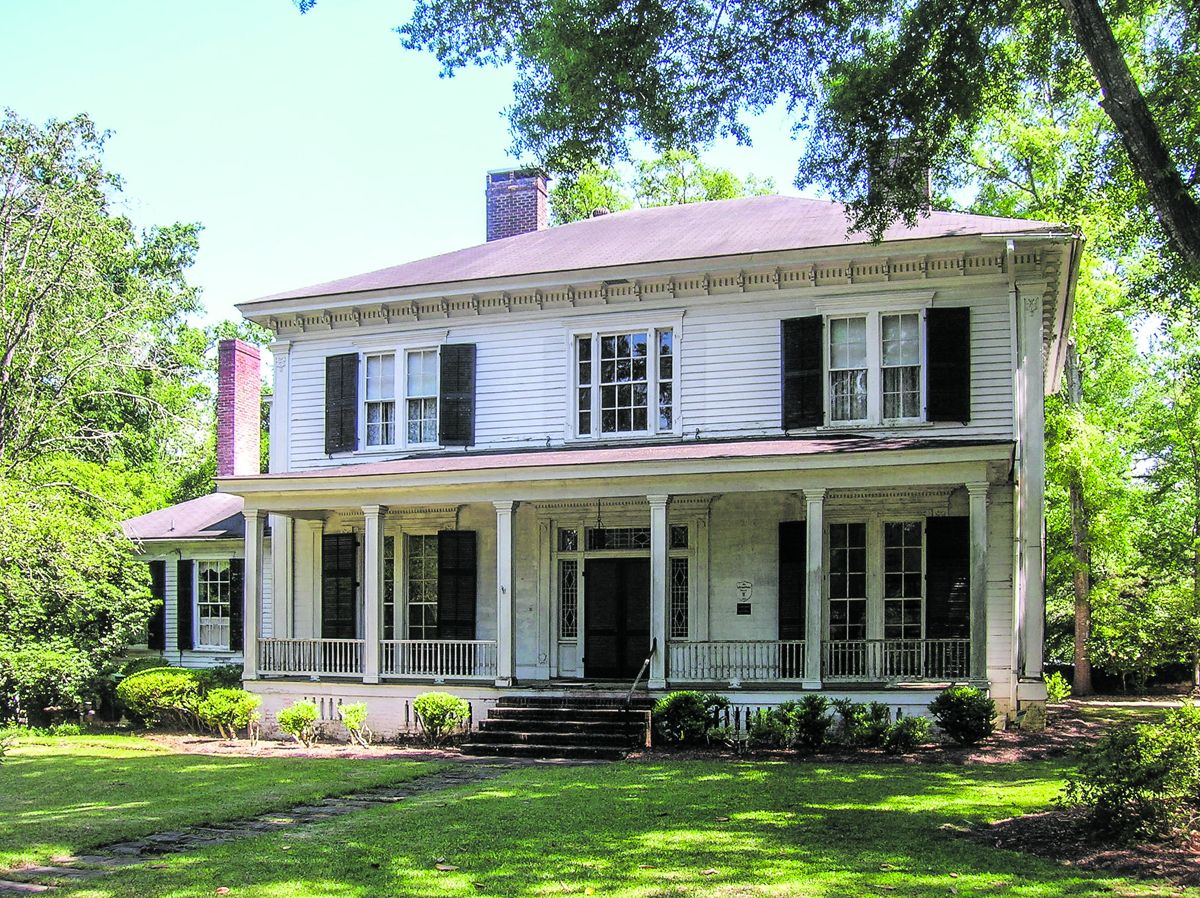
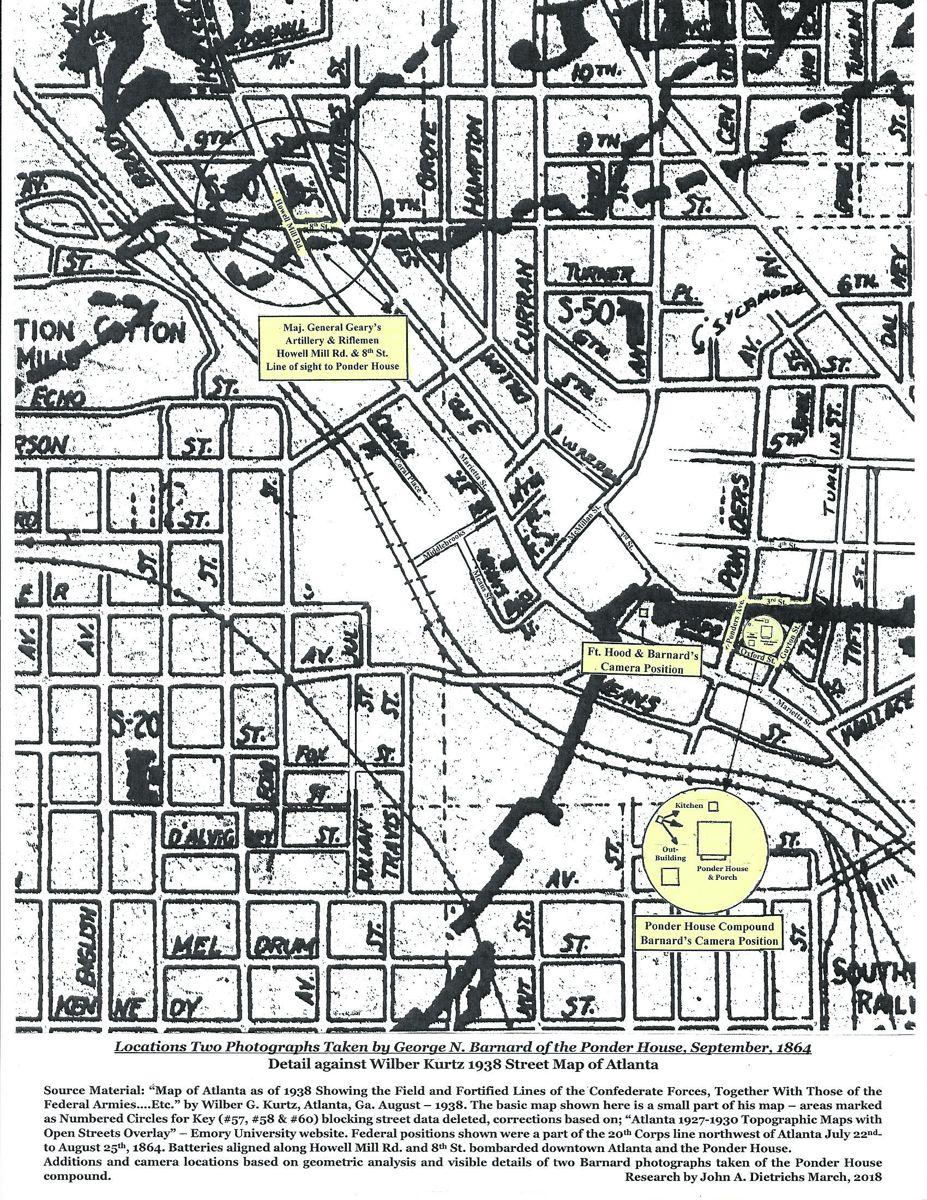
com/cwn. (Library of Congress) (John Dietrichs) city. The famous artist and Civil War historian Wilber Kurtz had marked this historical gem, with a descriptive legend keyed to sixty circled numbers on the map. Number 57 was “Site of Ephraim G. Ponder House,” pointing to a particular block on the map. Now I could find the actual physical spot where the house had been! I searched the internet for information on the Ponder House; several sites had some, limited, information. I contacted a friend and colleague of mine in the Civil War Round Table of Atlanta, Charlie Crawford, who I consider the most knowledgeable living person I know concerning Atlanta’s Civil War history, and his comments were very helpful. He said, “Well of course you have seen the description Franklin Garrett had on the Ponder House in his ‘Atlanta & Environs,’ right?” Well, no, I hadn’t. It turned out that three fact-filled pages, 511-513 in Volume I, were just what I needed to continue the search. Garrett says of the Ponder House: …if still standing would be bound by the following streets, none of which existed at the time: North, by Third St., N.W., South, by Oxford St., N.W., East, by Guyton St., N.W., and West by Ponder Ave., N.W. In addition to his home, Mr. Ponder erected, contiguous thereto, a number of substantial frame buildings for his slaves, and three large buildings for manufacturing puroses, along the Marietta Road.” These same streets were shown on Kurtz’s 1938 map with #57 for the Ponder House. I found a website with information by Jack Kittle and a c.1930 topographical map with footprints of contemporary buildings showing the streets named by Garrett, with Marietta Street just another block south. Center north on the Ponder block was the high point where the mansion would have stood; this high point had no buildings on it at that time. It is my theory that Mr. DuBose walked the area with his friend Wilber Kurtz, and possibly Franklin Garrett, and found the original foundations or at least some remnant bricks lying about on this knoll. Bo has several pictures taken in the 1930’s of the three of them on forays to Georgia battlefields. Since Kurtz identified the mansion’s location by 1938, this is likely confirmation for Garrett’s book as well. As it happens, the third period photo taken by Barnard showing the Ponder House was from just south of the Marietta Road, now Marietta Street, looking north east, and offering further confirmation of the mansion’s location. The best starting point to investigate the Ponder family and their history is the three pages in Garrett’s book on Atlanta. The owner’s name was Ephraim G. Ponder, originally a slave-dealer from Thomasville, Ga. Late in life at 45, he married a young beauty named Ellen B. Gibson. Very little detailed information has been found on Ellen to this point, but she must have had a strong spirit with an iron will to complement her beauty. She is described as “beautiful, accomplished and wealthy” in her own right before the marriage, and “born about 1825.” Ephraim Ponder was born Nov. 17, 1808. They married in Sumter County, Ga., near Americus, on Dec. 8, 1853. He was 45 years old, and Ellen was about 28. Most women in this time were married by 20 or 22—Ellen might have been considered almost an old maid, but clues in the record indicate she might have been something else, almost a Scarlet O’Hara type figure, strikingly beautiful, spirited, never short of male company, and quite a catch for Ephraim. Having lived to this point on his plantation, Ephraim built a large, two-story house on property he bought in Thomasville at
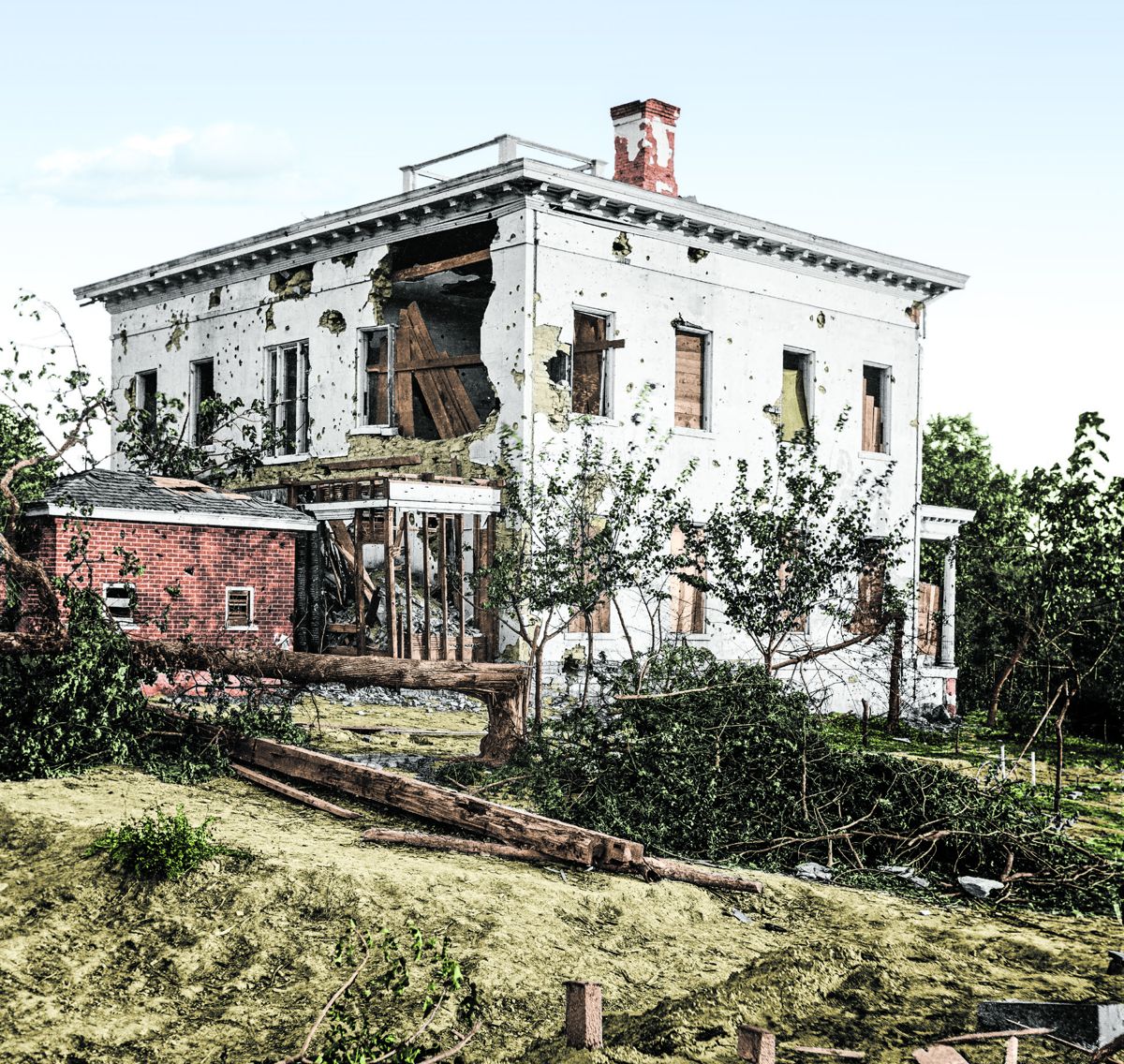
A civilian photographer, George N. Barnard, accompanied Sherman’s Army attached to the Corps of Engineers who were mapping and recording the progress and destruction in war’s wake. Within days of Atlanta’s surrender on Sept. 1, 1864, Barnard was photographing key buildings and streets in Atlanta, showing the conquering army with its horses, supply wagons, tents, and campfires as it went about the daily business of investing the city. Barnard also took three pictures from different vantage points of the ruined, yet once beautiful and stately plantation house of Ephraim and Ellen Ponder. Two images captured as almost no others the War as brought to civilians in the South, and symbolically, the loss of wealth and a way of life for an entire class of people that had once ruled, and now would be ruled by Northern interests for a generation.
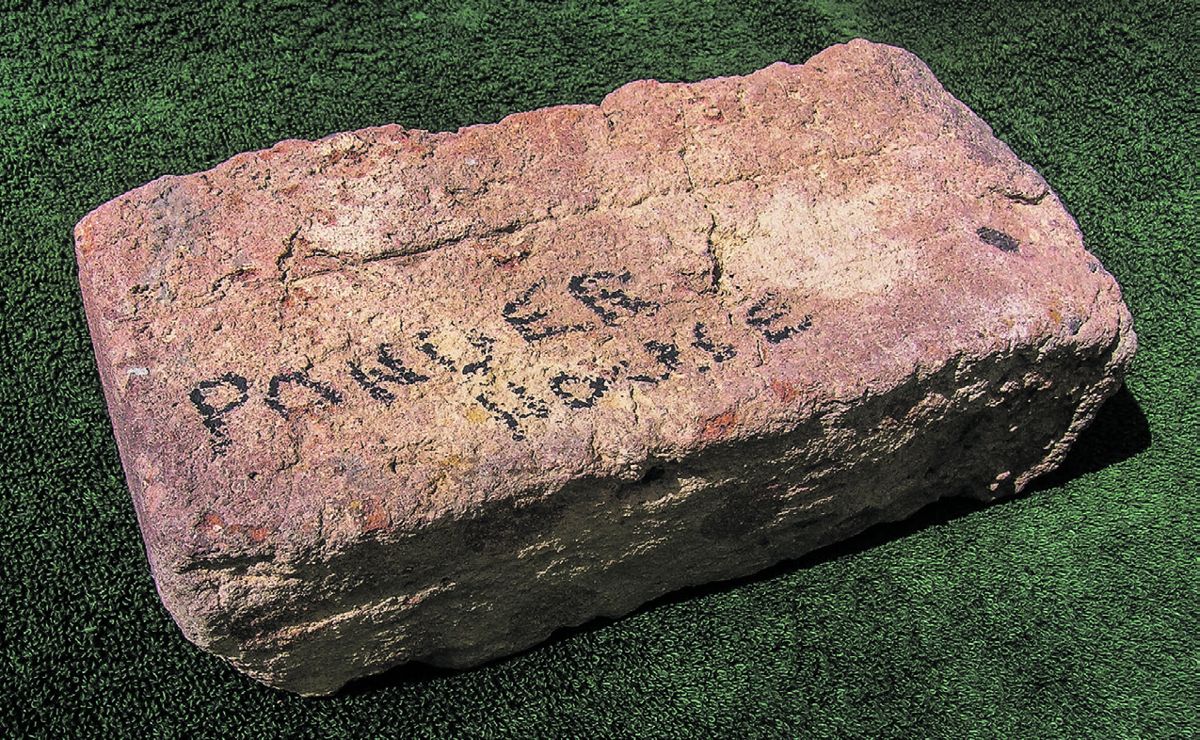
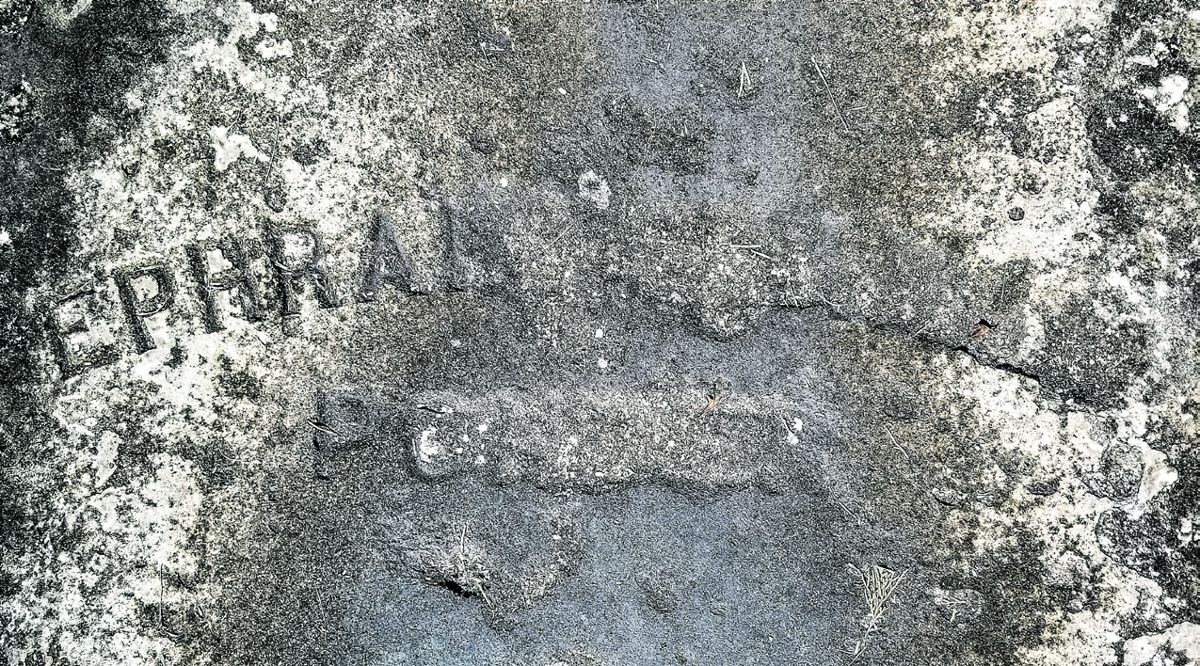
What’s in a Brick? In August 2017, I was made privy to a cache of bricks that had been collected in situ between c.1938 and c.1971 by Beverly Means DuBose Jr., who with his son, Bo, amassed the single largest and most complete Civil War collection in private hands at the time of his death in 1986. This collection is now at the Atlanta History Center in Buckhead, just northwest of Atlanta. It turned out there were some 50 or 60 bricks laying unnoticed in a corner bin when the collection was moved to the Atlanta History Center in the 1990’s. My friend Bo found out that I had been collecting a few bricks over the last ten years or so, with all of twelve in my own collection to that time. Would I be interested in digging into this pile of crude, old hand-made bricks hiding in the basement’s back room in his folks’ house to see what they might be about? After putting a flashlight on the bricks, we found that many were marked with the location where they had been found. The one that instantly captured my interest and imagination was the one with “Ponder House” scrawled on it in black ink. I held it in my hand and the Barnard images suddenly came to mind, images focused like a laser when I realized I was actually touching the Ponder House. I immediately remembered I had a 1938 street map of Atlanta, overlaid with the movements and landmarks associated with the siege, battles, and capture of the
civilwarincolor.com/cwn. (Library of Congress) 324 N. Dawson St. for his beautiful new bride, and they settled into married life. This house still stands today. At this point it would be helpful to delve into Ephraim’s history and livelihood. Ponders’ parents and siblings lived on large plantations in the Thomasville area, where cotton, corn, wheat, sugar cane, tobacco, molasses, and sweet potatoes were the primary crops. His property straddled the Fla./Ga. state lines, in Leon County, Fla., and Camden County, Ga. While growing and selling crops from his land, at some point in the mid-1830’s, Ephraim entered the slave trade, buying slaves he kept and some he resold for profit. There are numerous surviving legal documents concerning his slave dealings in Alabama, Florida, and Georgia from 1837 to 1855. Ephraim’s brother or uncle,
James, (the record conflicts on this) lived in Duncansville, Ga., and owned a slave who made “Negro shoes” that sold locally for one dollar a pair. Ephraim had become wealthy and politically influential from the slave trade and plantation revenues at the time of his 1853 marriage. He was a Thomasville City Alderman in the Thomas County seat, and after marriage immediately began construction of the Thomasville mansion he and Ellen moved into in 1854. At some point in 1851 or 1852, Ephraim purchased Festus Flipper, the slave who made “Negro shoes” from his brother or uncle James for $1,180. At this time or possibly earlier, he recognized the value of acquiring slaves who were “mechanics,” as they were called, rather than simple farmhands. Mechanics included wheelwrights, blacksmiths, carpenters, boot makers, printers, and other skilled workers who could make or provide profitable goods and services. He clearly began to search for and buy other slaves with these mechanic skills, and likely had others who trained or apprenticed into useful trades. By 1858, he had a well-established “Ponder Shop” in Thomasville where the products and services provided by these slaves were sold. Sometime in 1857, Ephraim decided to move to Atlanta with his household and select slave craftsmen and their families. He bought approximately 27 acres from John J. Thrasher for $1,460 on Nov. 25, 1857. The property was along the Marietta Road, just outside Atlanta’s one mile city limit. He then ordered construction of the mansion, two slave quarters, and three large manufacturing buildings where the slaves could conduct their business and manufacturing activities. While we can opine on the character of Ephraim Ponder the slave dealer, he had instituted a policy with these slaves while still in Thomasville that they would work a set number of hours each day for Ponder, but in their free time they could make products or provide services on their own, sell them, and keep the money for themselves and their families. This was the “task system,” a form of slavery that originated in the southeastern rice fields. It was somewhat unusual for inland slave owners at that (John Dietrichs)
(John Dietrichs) time, and allowed these slaves to learn how to save and handle money. Their experience and ability would help prepare them for freedom after the War. It is of special interest that an April 27, 1858 document survives detailing Ponder’s assets before moving to Atlanta. Reference is made to the Ponder Shop in Thomasville, and lists by name, age, skill (if any), and “complexion” of all Ponders’ slaves at that time. Also included are details of the Atlanta property purchase “… about 1 ½ miles from the Atlanta Depot.” Forty-seven slaves are noted; of these, fourteen men were “skilled,” thirteen men had no skills, nine women without skills, and eleven children. It is not known how many slaves were transferred to Atlanta, but likely all the skilled slaves, their wives and children, and some others made the move. It is possible that the slaves without skills were “house” slaves.
Ephraim and Ellen moved to Atlanta and took possession of the completed mansion and property in 1859. The Atlanta Ponder Shop must have been an immediate success, because by late 1860, the “White Business Owners” found this competition from Ponder and his slaves most annoying, and demanded official action be taken by Atlanta’s town council. A resolution was presented on Jan. 4, 1861, to levy a $100 tax on all slave craftsmen
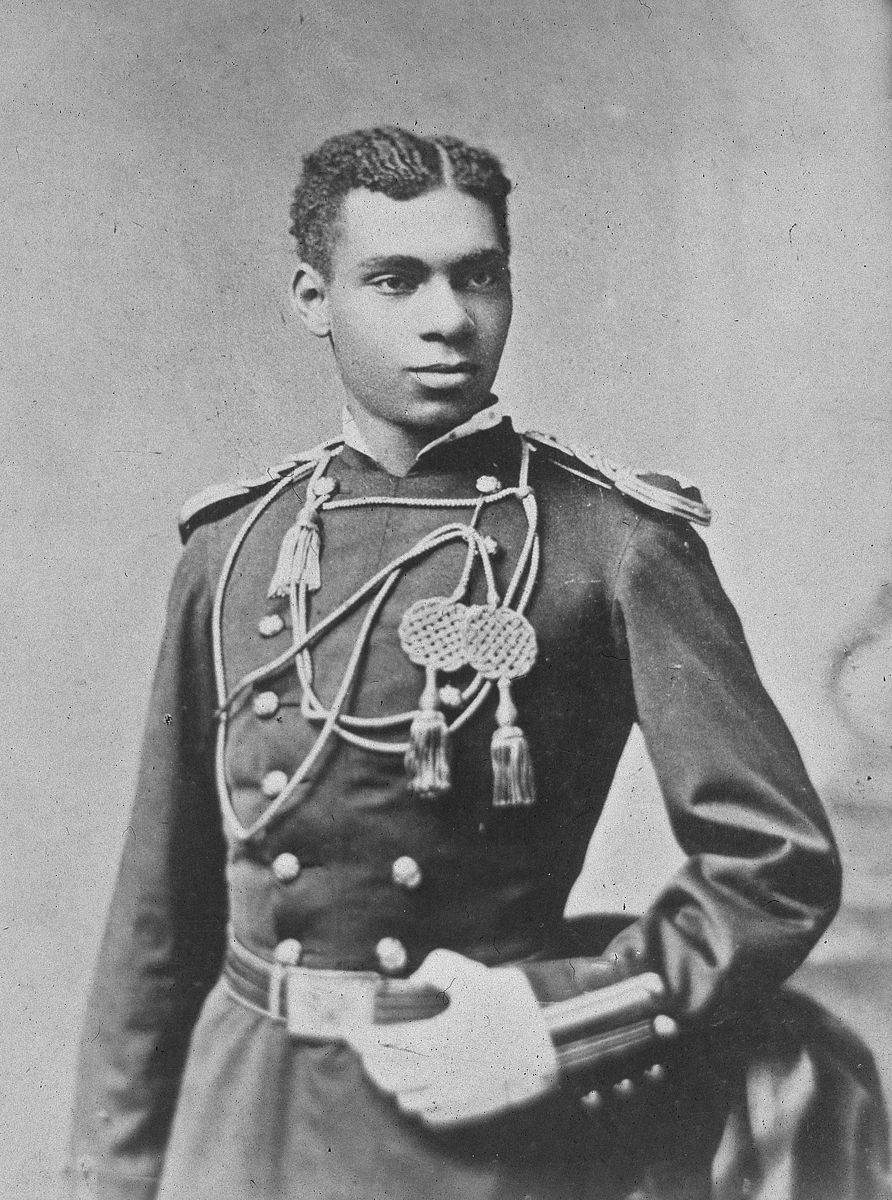
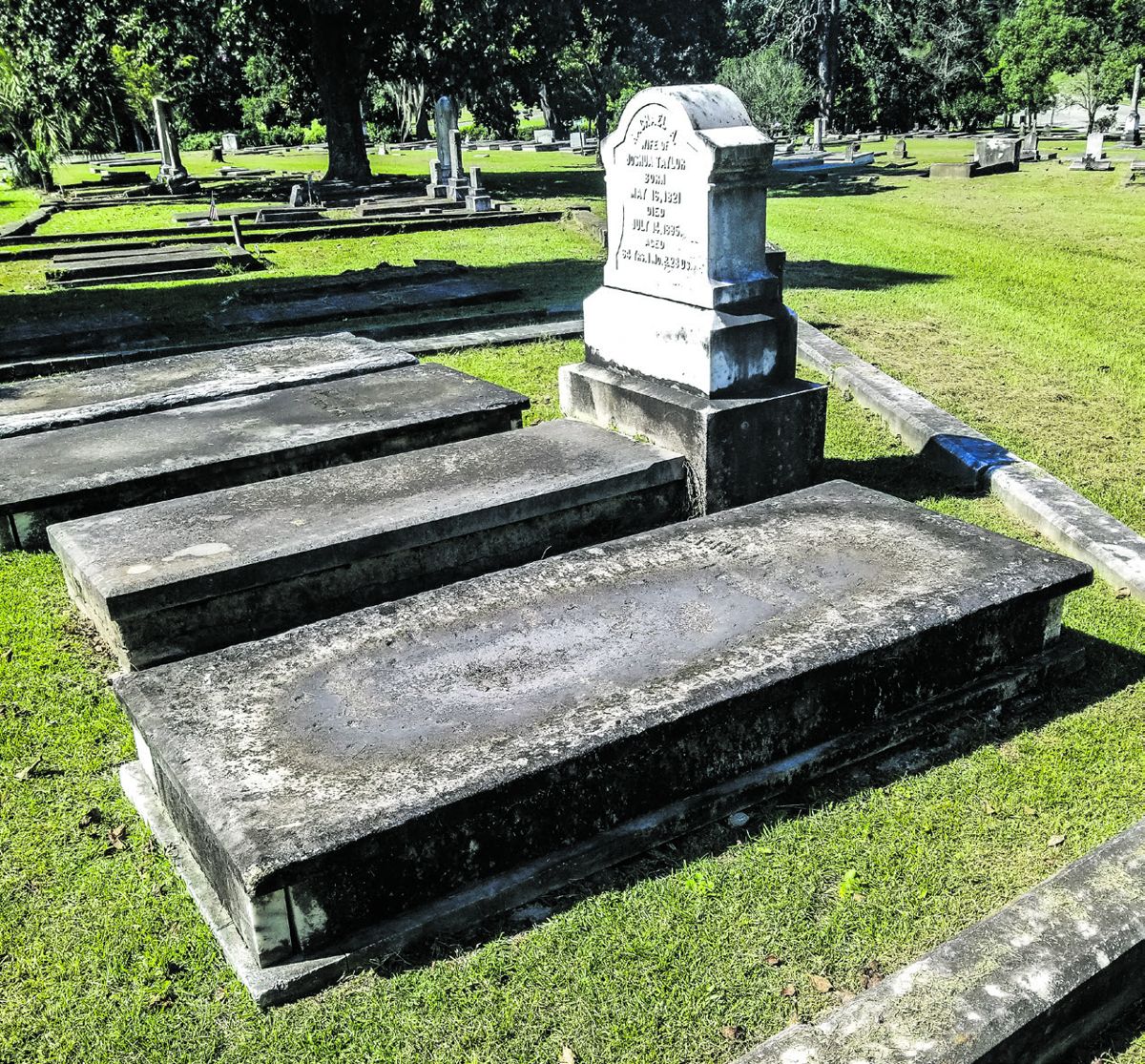
“…whose owners reside out of said City (limit),” obviously directed at Ponder in particular. Eventually the council tabled the resolution, an indication of the political influence Ponder must have wielded after so short a time in Atlanta. One of the Ponder slaves was Festus Flipper, who had been acquired in 1851 or 1852, and was a skilled carriage trimmer and shoemaker (leather worker). Festus and his wife, Isabella, had a son Henry Ossian Flipper in 1856. Henry wrote his autobiography many years after the war in which he commented that all was not peace and harmony at the Ponder estate: The mistress of this fortunate household, far from discharging the duties and functions of her station, left them unnoticed and devoted her whole attention to illegitimate pleasures. The outraged husband appointed a guardian and returned broken hearted to the bosom of his own family, where he devoted himself till death to agricultural pursuits. In October 1861 Ephraim filed for divorce in Fulton County Superior Court. Among many allegations made in this petition were that his wife had committed adultery as long ago as 1854, only one year into their marriage, with “divers” (many) men; that she was a continual drunkard; that she had threatened her husband with a pistol; and that she used abusive language and treated him with the utmost disrespect. We might wonder if Ephraim had left Thomasville for Atlanta with the hope of reforming his wife’s ways, but to no avail. Again, according to the petition, the joint property included the mansion and grounds, valued at $10,000, and slaves, valued at $45,000. The divorce was not granted until June 21, 1871. Ephraim left Atlanta, presumably in 1861 or 1862, and lived out his life in Thomasville until his death Aug. 19, 1874. He is buried in Laurel Hill Cemetery in Thomasville. Meanwhile, Ellen continued to live in the mansion, run the household, and presumably the Ponder Shop. As already indicated, both Ephraim and Ellen were complicated human beings who certainly had their dark sides. However, it is known that in 1864, Ellen allowed or encouraged one of her slaves, John F. Quarles, a wheelwright and man with some education, to teach the younger slave children to read and write. This was a blatant violation of Georgia law, and punishable by imprisonment for the adults involved. Ironically, a Confederate reprint of Webster’s “Bluebook Speller” was used in these classes. When war came to Atlanta’s doorstep in 1864, Ellen fled to Macon, then Fort Valley, leaving Festus Flipper in charge of the estate. The fate of the house in the siege has been discussed; it lay desolate and in ruin until the divorce was granted in 1871. The house was then razed and the property sold at auction to various individuals. The Ponder slaves in Atlanta were given three benefits by their owners that most slaves never had. First, Ephraim acquired or was responsible for training many slaves in tradecraft that allowed them a degree of independence and self-reliance during their captivity, but also prepared them for freedom after the war with skills immediately useful and needed by society at large. Secondly, Ephraim Ponder allowed these slaves to create or offer goods and services to the local community on their own time, and to keep the rewards (money) they earned and use it as they would. Finally, Ellen Ponder allowed slave children to receive an early education, which again prepared them for freedom and allowed them to progress and advance in the post-war society beyond most of their contemporaries.
The Ponder slaves’s story deserves their own article. There were 65 Ponder slaves at the time of Atlanta’s surrender to Sherman’s forces. One son of Festus and Isabella, Henry Ossian Flipper, became the first Black to graduate from the U.S. Military Academy. The first Black to command regular troops in the U.S. Army, he was assigned to the 10th Cavalry, one of the “Buffalo Soldier” regiments. The story of Henry and the other Ponder slaves will be told in a future article. John A. Dietrichs has been an Environmental Consultant and trainer for more than 35 years, including conducting adulteducation seminars at Georgia Tech for more than 20 years. He has been President of the National Asbestos Council and Environmental Information Association, Commandant of the Old Guard of the Gate City Guard of Atlanta, and is currently the President-Elect of the Atlanta Civil War Round Table in Atlanta, Georgia. He acquired his first Civil War cannonball (from Kennesaw Mountain) at age 11 for $5, and since the early 1990’s has been a serious collector of artillery and other Civil War and military memorabilia. His passion for collecting comes from researching most items to find the story and history behind them, finding that this brings otherwise simple inanimate objects to life.