Ironclad Revolution Exhibit Offers Unique View of Civil War Naval History
By Bob Ruegsegger · Originally published December 2018 · pp. 24–25
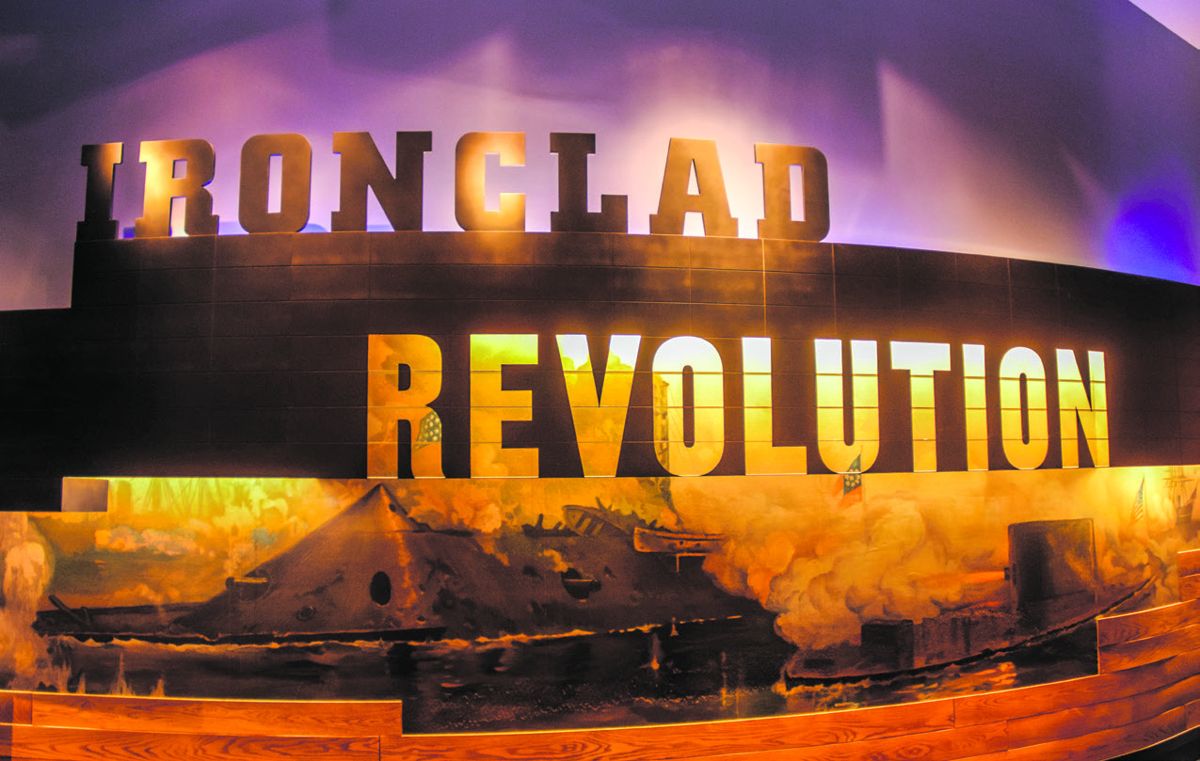
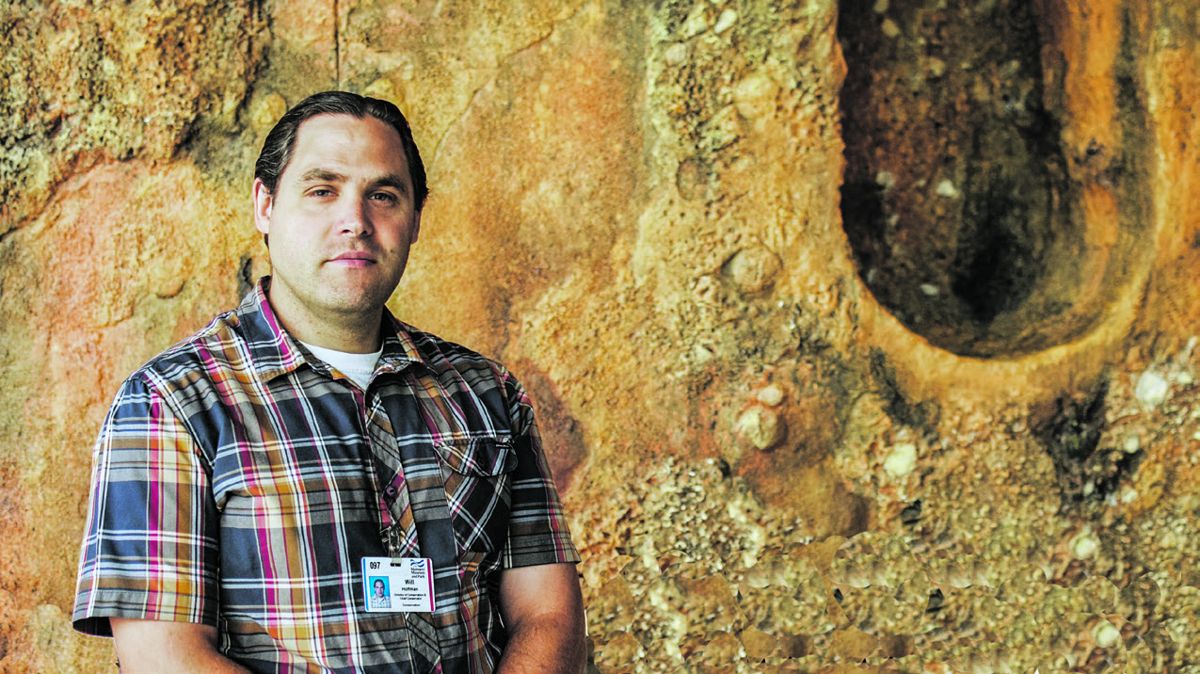
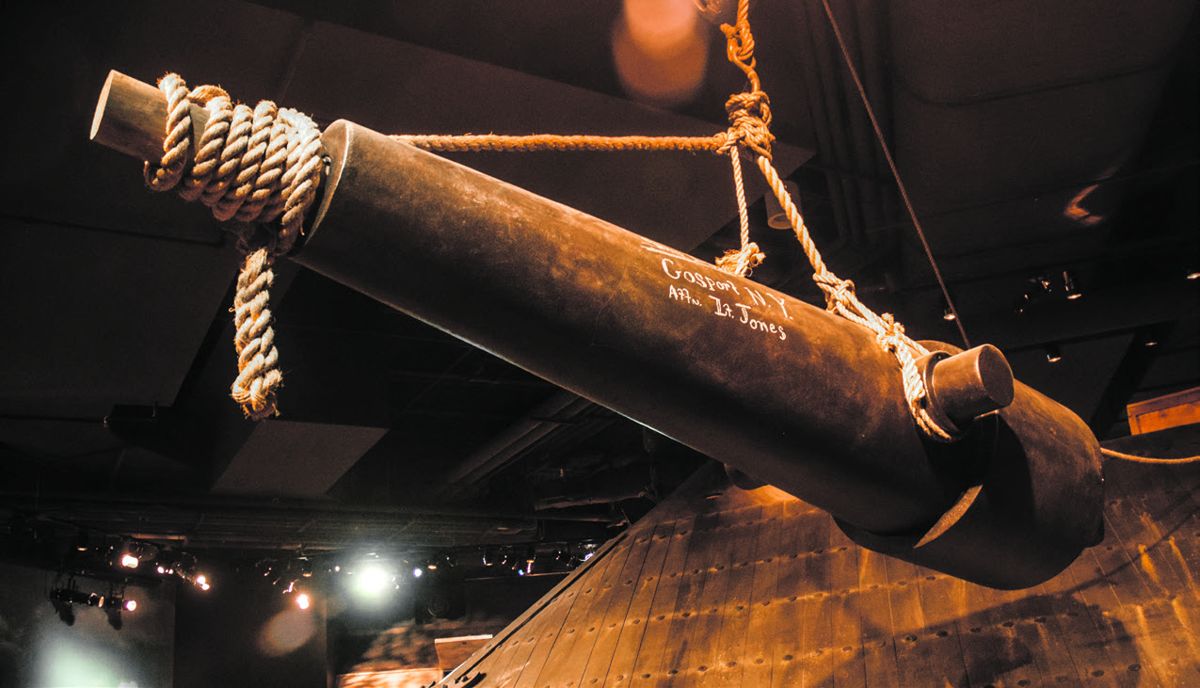
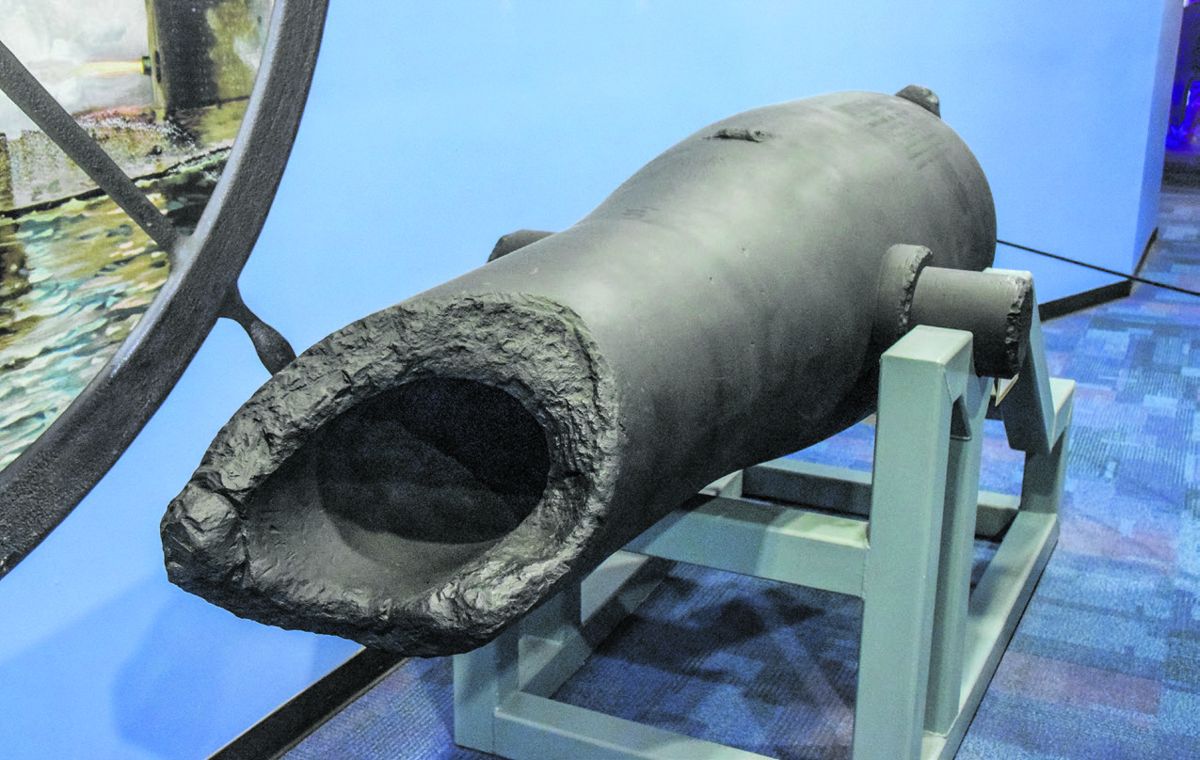
When the ironclads USS Monitor and CSS Virginia fought the Battle of Hampton Roads on March 9, 1862, it essentially marked the beginning of the end of the era of sail-powered wooden warships. Steam and iron instantly became the new key elements in developing and advancing naval engineering technology. In the Monitor Center at the Mariners’ Museum in Newport News, Va., visitors are offered an opportunity to step right into ironclad maritime history in a very tangible way through the Ironclad Revolution. While significant artifacts from both ironclads are included in the Ironclad Revolution galleries, the bulk of the exhibition items are representations and relics, taken from the turret and engineering spaces of the USS Monitor. They include guns, lanterns, and engines. The artifacts and reproductions illustrate the efforts of the two navies to develop maritime ironclad technology in the middle of the 19th century. Artifacts from the CSS Virginia illustrate how the Confederate Navy was able to create a steam-powered, ironclad warship from salvaged materials through resourcefulness and ingenuity. On the other hand, the relics and representations of artifacts from the USS Monitor exemplify what inter-connected industries with the equipment, machinery, and state of the art shipyards, can produce quickly and efficiently. The very first exhibit features an IX-inch Dahlgren shell gun that once served aboard the CSS Virginia. This salvaged weapon was cast at the Tredegar Ironworks in Richmond, Va., for the U.S. Navy in 1859. It bears the scars from combat as well as from intentional damage inflicted by Union sailors before Federal forces burned and abandoned the Gosport Navy Yard. “It was on the Virginia on March 8th. It lost part of its barrel probably, from a gun on the Cumberland,” said Will Hoffman, director of conservation and chief conservator at the Mariners’ Museum. “It’s interesting because it’s a really good story about the whole beginning of the Civil War.” When Virginia seceded in April 1861, Union forces decided to abandon the Gosport Navy Yard in Portsmouth. Before departing, the Federals attempted with considerable success to destroy or damage what they could not take with them. “One of the ships docked there the USS Merrimac; eventually it was converted into the ironclad CSS Virginia,” said Hoffman. “The Union couldn’t take everything with them so what they didn’t take, they did their best to destroy.” While the major damage to the gun’s barrel was caused during combat with the Union warships, most of the other damage, minus the barrel’s, was done when the Union abandoned the shipyard. “The trunnions were smashed. The sight mounts were damaged. The cascabel was knocked off the back.” said Hoffman. “You can still see the hammer hits from the Union sailors’ efforts to make the gun unusable.” The cosmetic damage was of minor concern to Confederate sailors. When the gun was salvaged, it was still functional. When the CSS Virginia was built, Rebel sailors weren’t worried about being able to aim it. Their intention was to fire from point blank range. “It was damaged in the March 8th battle and potentially used against the Monitor on March 9th,” said Hoffman. “There were writings from a sailor who mentions the casemate near the gun port being set on fire,” he said. “When you have a short barrel and the gun recoils, it’s going to burn the casemate.” Before the Confederates scuttled their first ironclad, the Dahlgren gun was removed from the vessel. Eventually, the weapon was captured as a trophy of war and made its way to the Washington Navy Yard. “It spent most of the next 100 years at the Washington Navy Yard,” said Hoffman. “It ended up going to Dahlgren Naval Weapons Center for a couple of years and went down to Fredericksburg. Ultimately, we obtained it on long-term loan from the U.S. Navy.” The gun bears an inscription that clearly validates its provenance: “One of the guns of the Merrimac in the action with the U.S. Frigates Cumberland and Congress, March 8th 1862.” In addition to the inscription, the gun bears marks stamped into the metal indicating it was cast at the Tredegar Foundry and proofed 1859. When people spoke of the agrarian South and the Industrial North during the Civil War what it meant in a lot of ways was the inability of the South to mass produce munitions and build arms from scratch. “It was not that they didn’t have the knowledge,” said Hoffman. “They didn’t have the infrastructure.” Part of the reason for the converting the burned-out hulk of the USS Merrimac into the CSS Virginia was the South’s lack of machine shops. Outside Richmond, the South had few foundries, in New Orleans and Georgia, but nothing on the scale of Tredegar. While the USS Monitor was built in 160 days and was brand new, the Confederates had, essentially, to make do with repurposing scrap. “They converted it. They used scrap. It’s the untold story. They didn’t have the ability to have the newest, finest things,” said Hoffman. Using what was available was really the story of the CSS Virginia according to Hoffman. If the Confederates had the potential to have constructed a better engine room, they probably would have. “The steam engine worked. They converted it and used it,” said Hoffman. The story of the Battle of Hampton Roads is a prime example of the contrast between having the “best of the best resources” and making available components work. “The
Merrimac was a steamer but its primary propulsion was the sails. It wasn’t steam.” “It took the Virginia an hour to turn whereas it took the Monitor only fifteen minutes.” “The Monitor was built as a steamship, whereas the Virginia was a conversion of a [sail-powered] steamer to an ironclad ship,” said Hoffman. Most of what remains of the CSS Virginia now probably rests under the dredge spoils that make up Craney Island. When Union
Josiah Tattnall ordered the CSS Virginia destroyed to keep the vessel from falling into Federal hands.
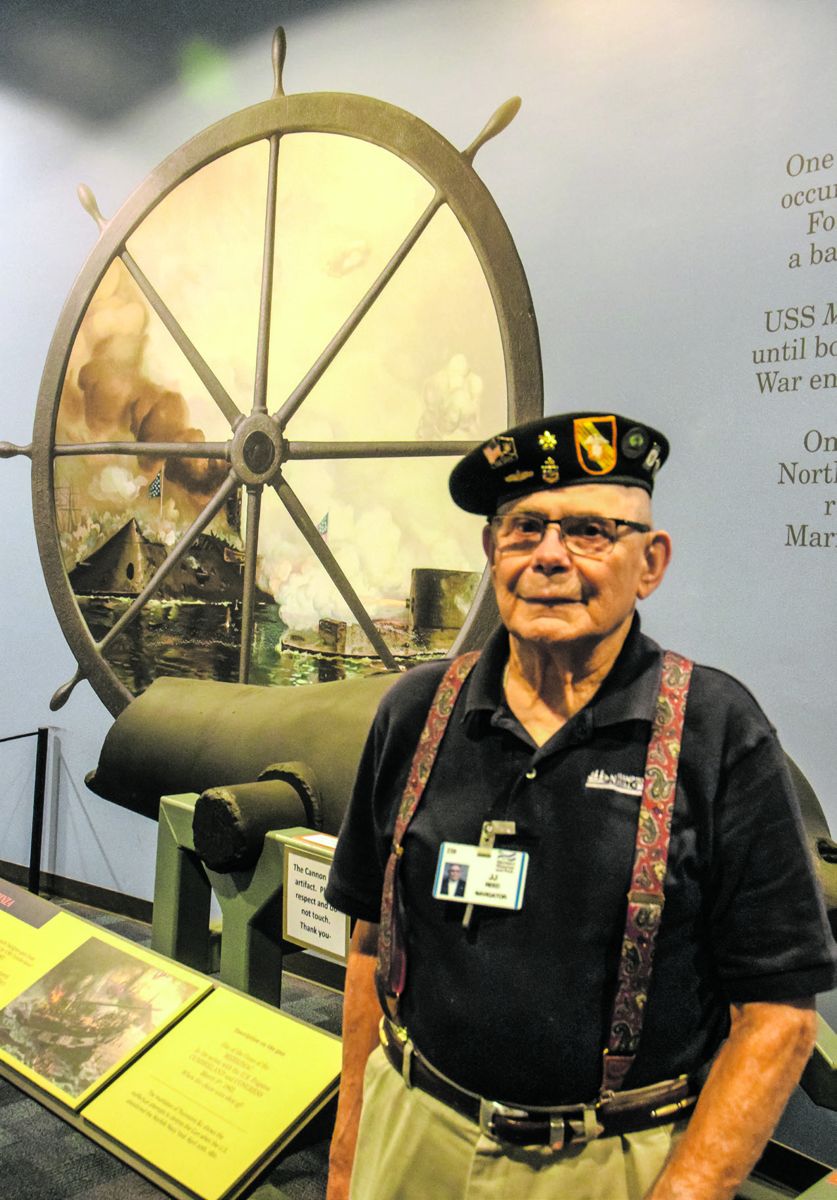
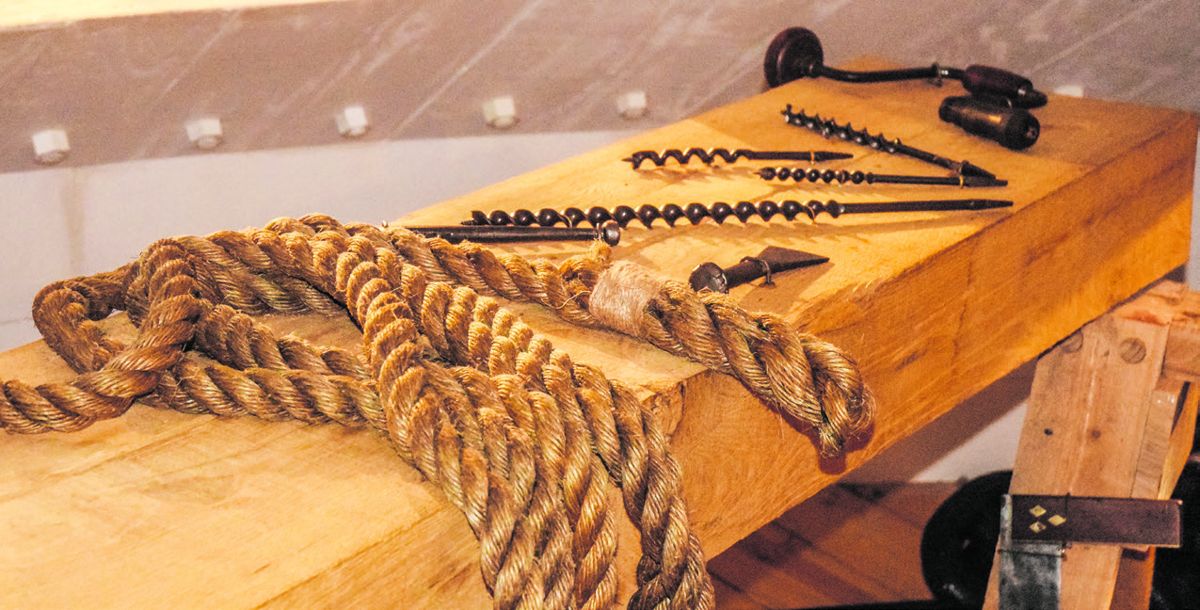
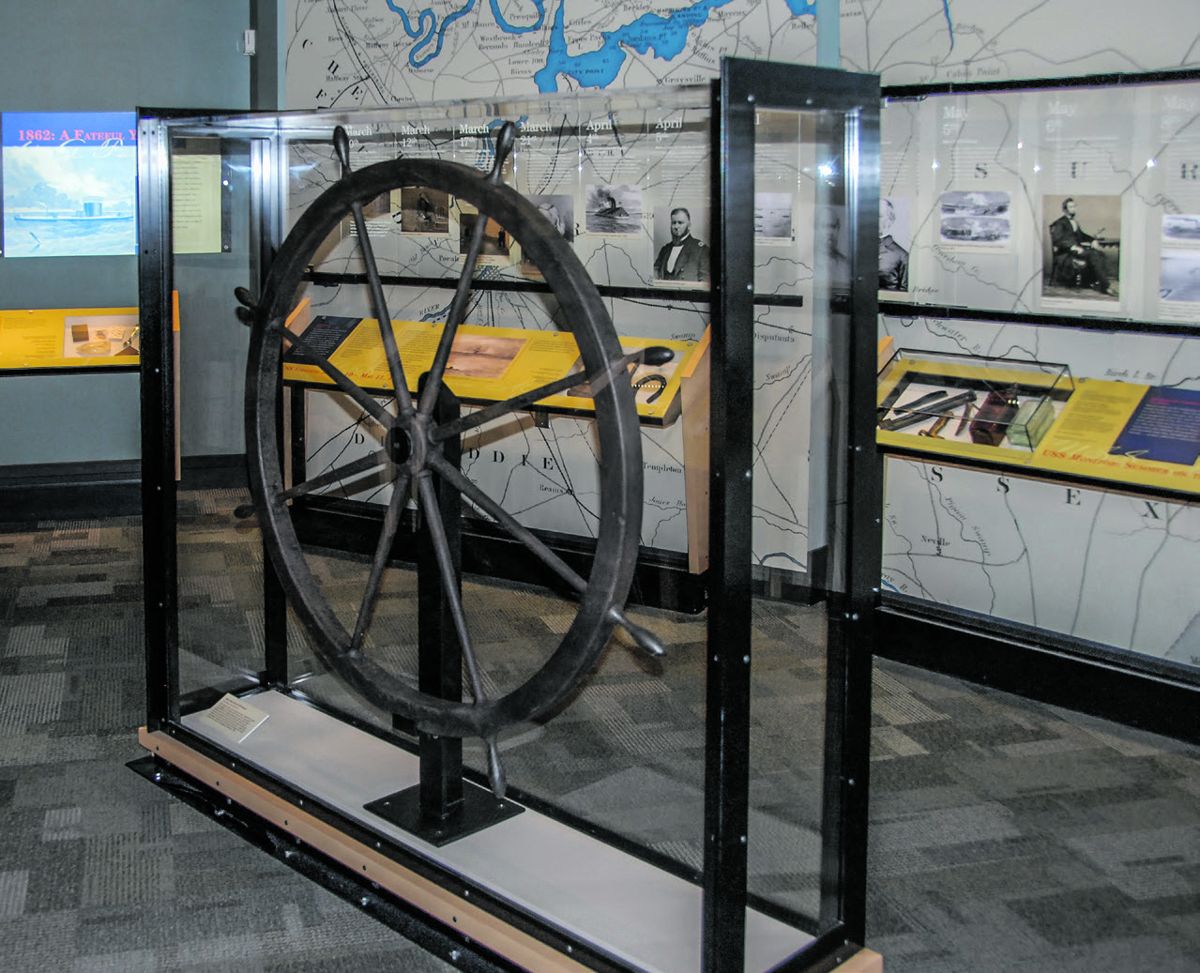
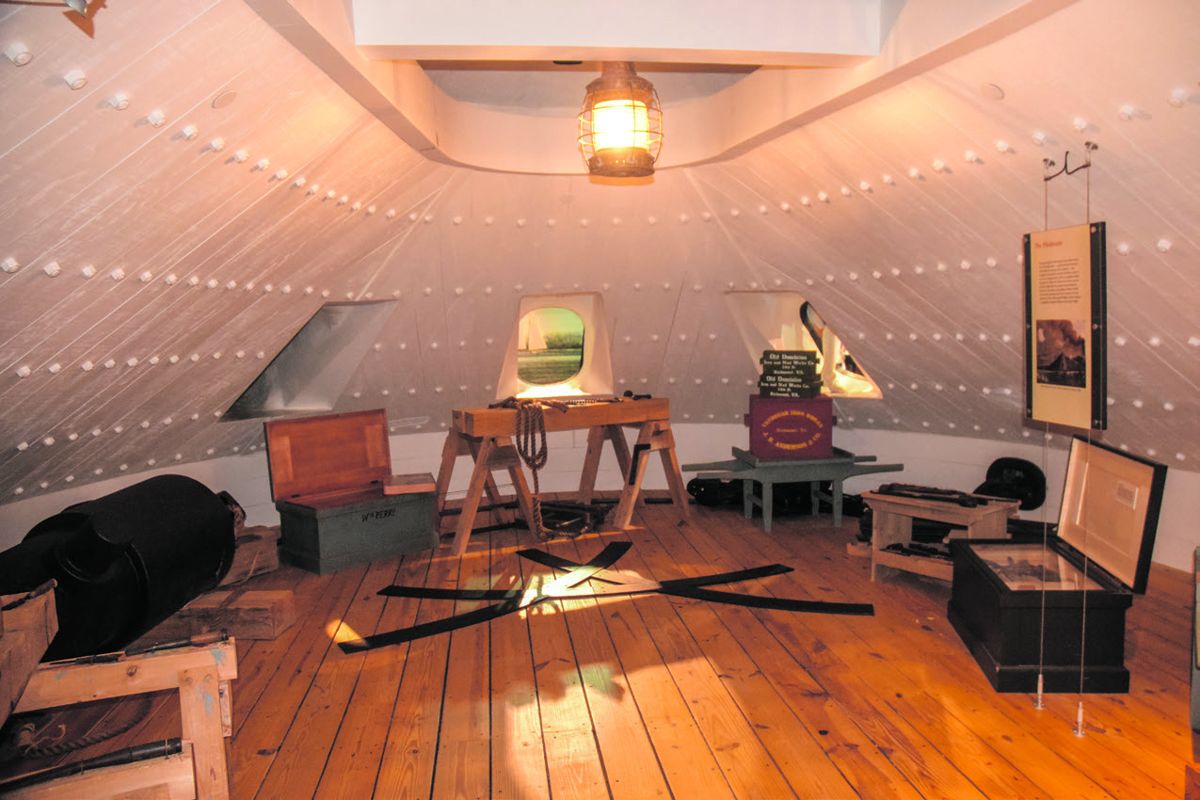
forces threatened Norfolk, the commander of the CSS Virginia, Josiah Tattnall, ordered the ironclad destroyed fearing the vessel might fall into Union hands. The CSS Virginia was intentionally grounded off Craney Island and destroyed when the powder in the ship’s magazine exploded by design. The sunken hulk presented a hazard to navigation so the remnants were recovered by a number of companies beginning in 1867. Baker Brothers salvaged the hull for a second time in 1875 and sold most of the material for scrap. A few iron plate sections, the drive shaft, the anchor, and the ship’s wheel were saved, an indication of the great affection Virginians had for the ironclad warship. The ship’s wheel is on exhibit in a display case near the portrait of Josiah Tattnall, the man who ordered the ironclad’s destruction. The iron wheel was presented to the Mariners’ Museum by Tredegar Ironworks in 1951. One of the galleries in the museum’s Ironclad Revolution exhibition features a full-scale replica of a portion of the Confederate ironclad’s casemate as it would’ve appeared during the time of its conversion in the Gosport Navy Yard. Visitors can enter the interior’s mockup and learn about its officers and crew. Work benches, assorted shipbuilding tools, and replicated munition containers are stacked and stenciled with the names of arms manufacturers. “We couldn’t rebuild the whole ship. We did rebuild some of the signature elements. We’ve got the casemate. We’ve got the exterior,” said Hoffman. “It gives you a sense of scale. It also provides an insight into the design of the ironclad. We get a taste of the Virginia with this section.” Using the reconstruction of the section of the Virginia’s casemate was an attempt to put visitors in a place. It’s a tangible re-creation that helps tell the story. It also sets the stage for a visit to the museum’s battle theatre that brings the Battle of Hampton Roads to life. While artifacts from the CSS Virginia are scarce, relics salvaged from the USS Monitor seem plentiful in contrast. Conservation in the Monitor Center continues on the turret and other recovered artifacts. Using dry ice blasting as an abrasive cleaner has gone well. Almost the entirety of the engine room has been recovered, including floors, steps, bulkheads, steam engines, the condenser, propeller, propeller shaft, and railings. “The engineering section is all disarticulated because the Navy brought it up in sections.” “We’ve got most of those things taken apart and we’ve been spending a lot of time going back and doing cleaning regimes on the wrought iron components.” Hoffman and his associates have been between projects and advancing other projects. The Monitor’s turret has been the elephant in the room since it arrived at the Monitor Center. It still rests on the recovery pad it was brought up on. Marine growth has been largely removed. Plans are in place to install new support stands so the roof can be dismantled. Once the roof is off, there are no plans to take apart the 192 plates of wrought iron [3 feet by 9 feet by 1-inch thick] that make up the 8-inch armored walls of the turret. The Ironclad Revolution exhibit includes artifacts and exhibits that embrace both the Monitor and the Virginia. “We don’t have that much of the Virginia. Ultimately, it has become about recovering Monitor artifacts,” said Hoffman. “We can tell more about Monitor because we have more of Monitor.” Volunteer guides called “navigators” roam the galleries at the Monitor Center. They share J.J. Reed has been a museum “navigator” for six months. He served in the U.S. Navy for 21 years. His volunteer service at the museum started out as a “bit of payback.” Reed figured he got more out of the U.S. Navy than he gave. “This was my way of keeping occupied and enjoying it and giving a little back to the country,” said Reed. “I enjoy talking with people and trying to relate their opinions to what they see. That’s sometimes a big education for both of us.” Reed observed that armor was used to protect warships long before the Battle of Hampton Roads and the Monitor and Merrimac. “The idea of iron armor was definitely not new. The idea of steam power had been around for a while,” noted Reed. “This was the first time the two, steam and armor, had been put together on two different ships that fought each other.” Bob Ruegsegger is an American by birth and a Virginian. His assignments frequently take him to historic sites throughout Virginia, the Mid-Atlantic, and the Southeast. His favorite haunts include sites within Virginia’s Historic Triangle—Jamestown, Yorktown, and Williamsburg. Bob served briefly in the U.S. Navy. He is a retired educator and has been an active newspaper journalist for the last twenty years.