This And That
Iron and Wood, Cloth and Paper: Naval Museum Displays It All
By Gould Hagler · Originally published December 2018 · pp. 28–29
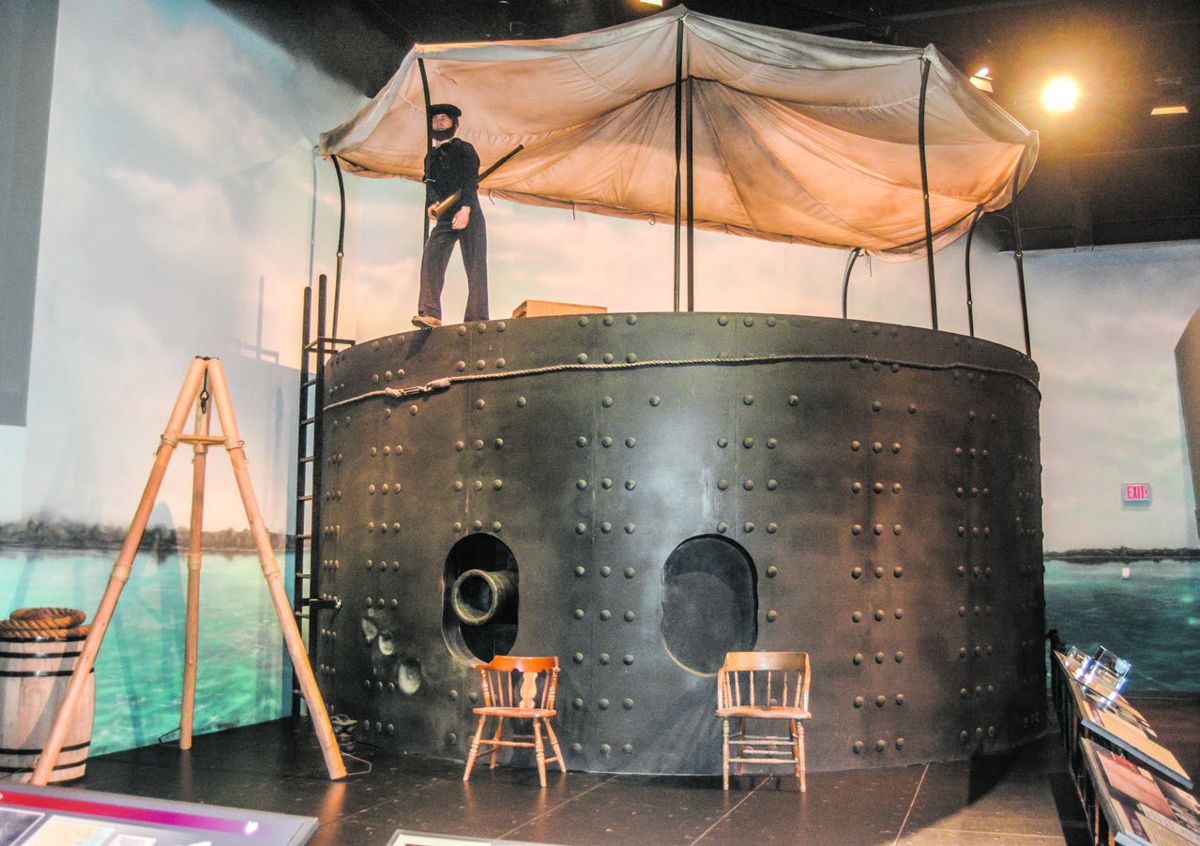
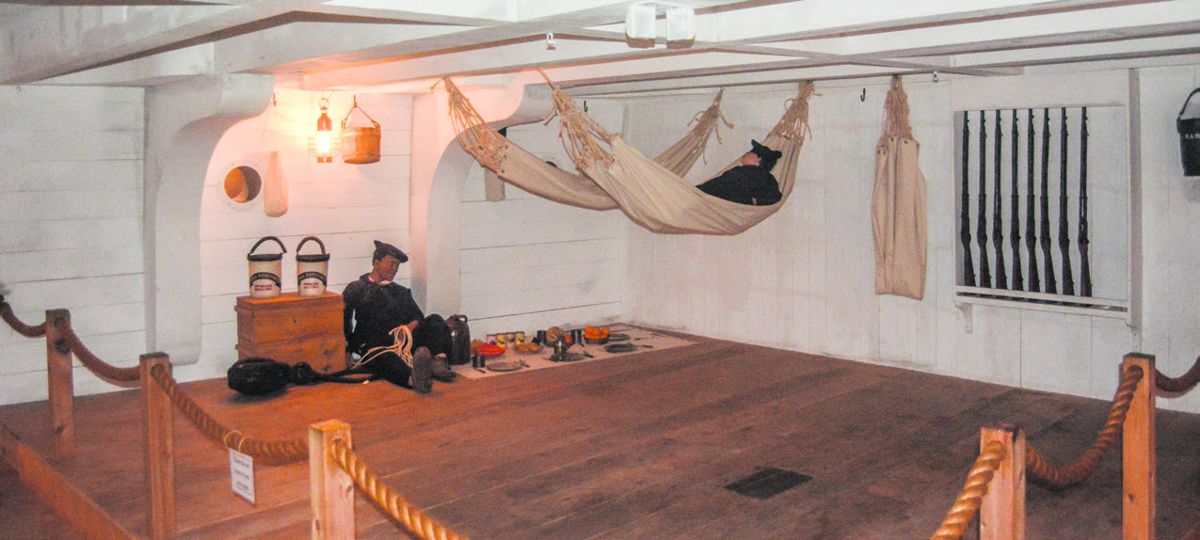
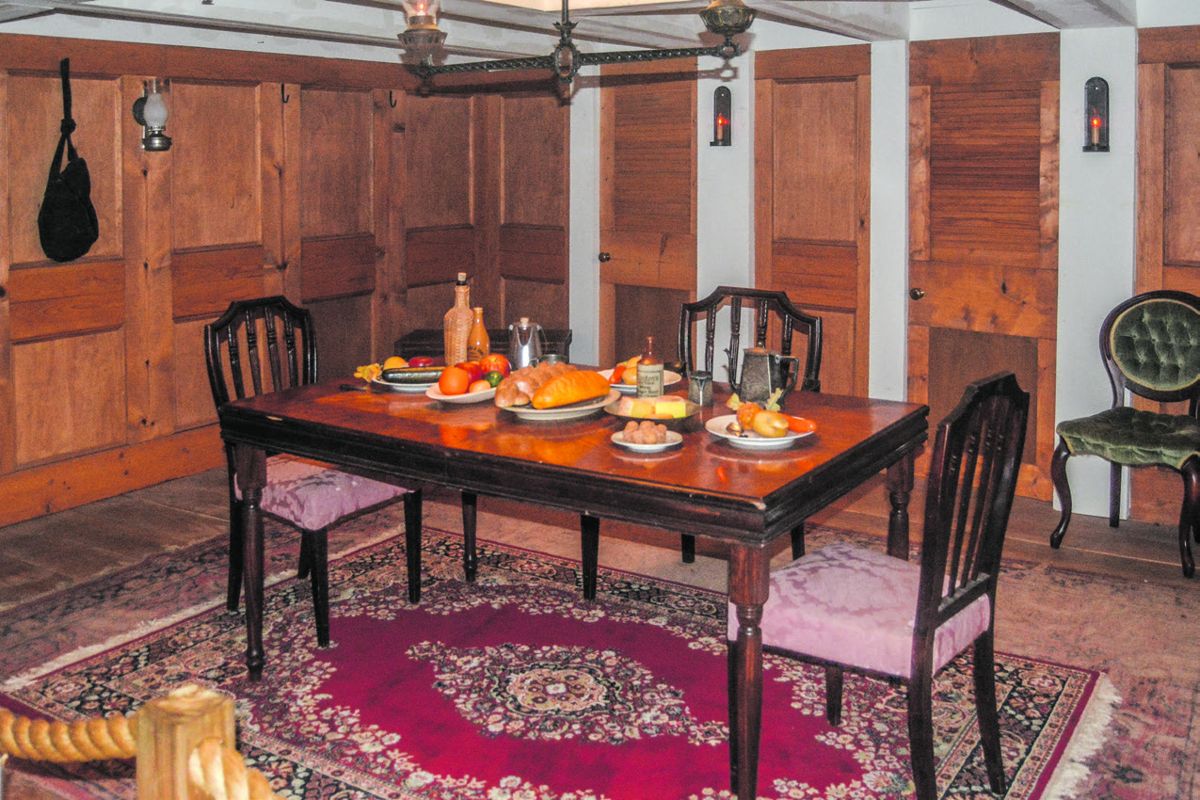
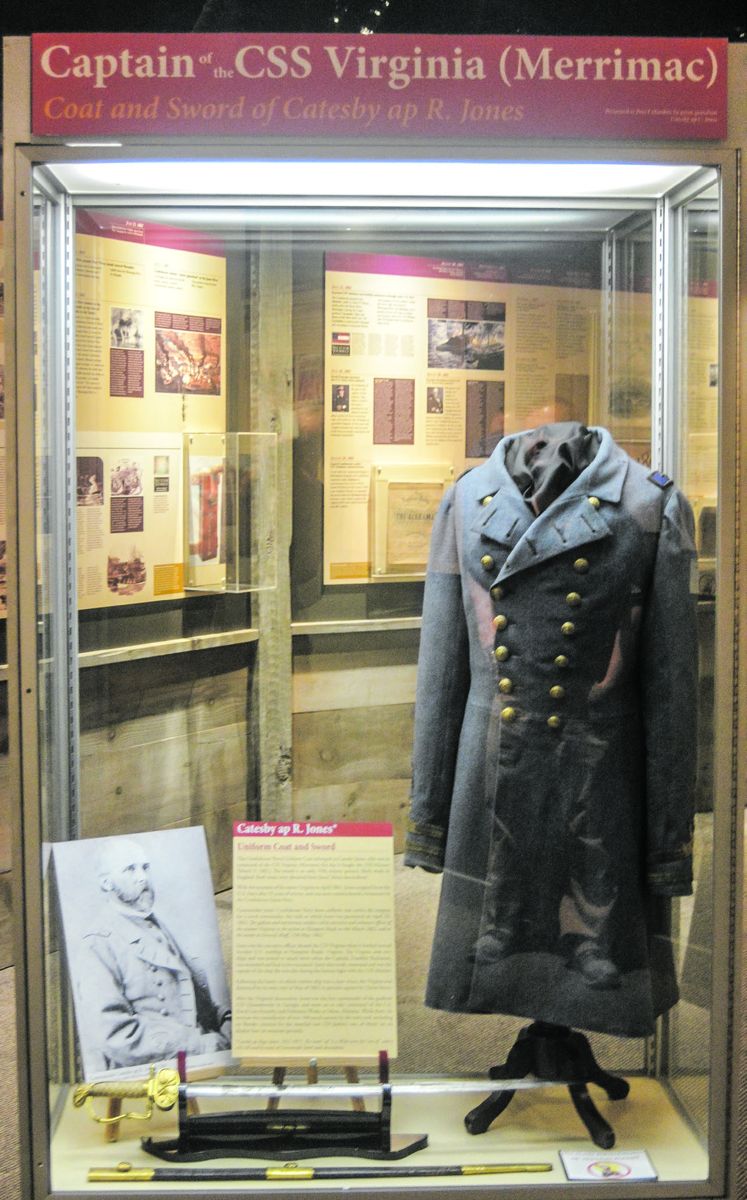
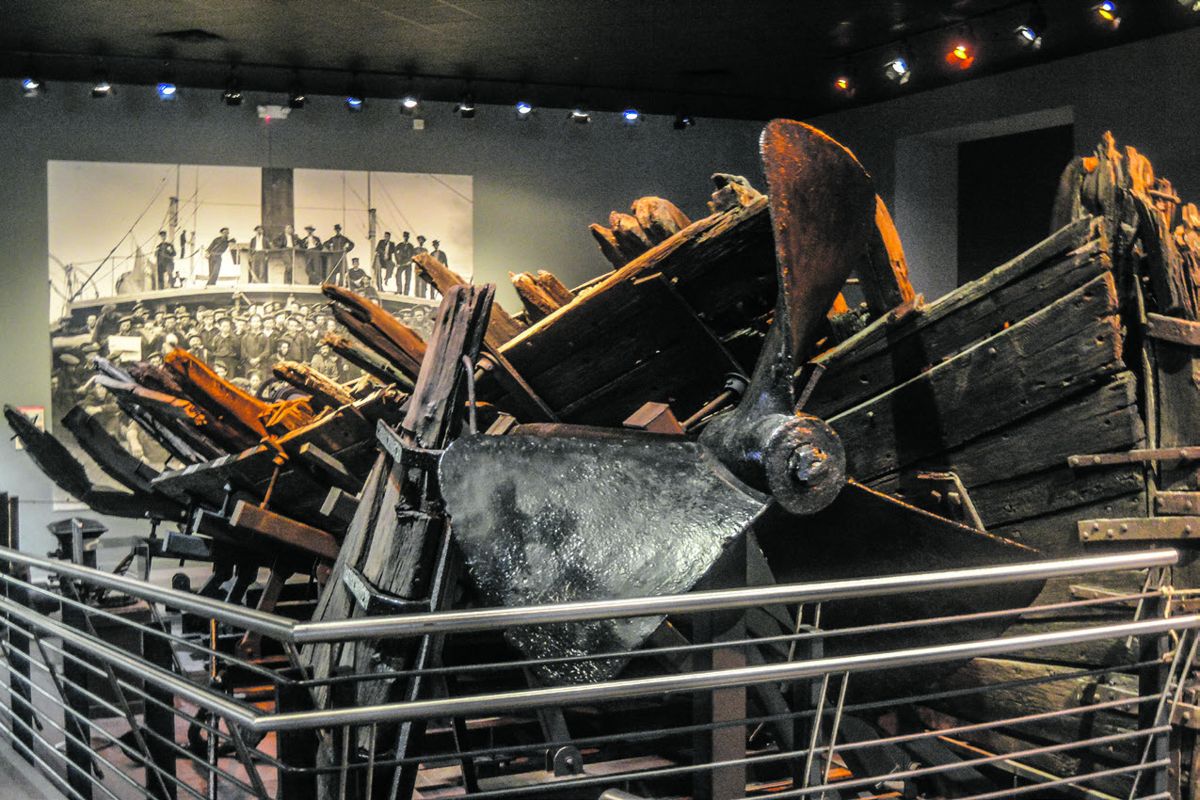
In 2001 the Confederate Naval Museum in Columbus, Ga., was relocated, renamed, and refocused on a broader mission. Since then the National Civil War Naval Museum has grown steadily and boasts a fine collection of exhibits and artifacts conveying the story of war waged on water between 1861 and 1865. The most striking exhibits are the remains of the CSS Jackson and CSS Chattahoochee, craft sunk in the Chattahoochee River late in the war, where they remained until salvaged in the early 1960s. The Chattahoochee went down twice, once in 1863 on the Apalachicola when its boiler blew. Among the 19 dead was a nephew of Secretary of the Navy Stephen Mallory. The ram was repaired in Columbus and relaunched. Federal forces under Brig. Gen. James H. Wilson burned and scuttled both the Chattahoochee and the Jackson when they took Columbus in April 1865. The giant ships of wood and iron alone do not tell the story, of course, and the museum contains numerous displays to teach visitors about the men who manned the vessels, the weapons they wielded, the flags they flew, and the uniforms they wore. Now the exhibits include the letters of Third Assistant Engineer George S. Paul, U.S.N. On September 19, the museum opened a new exhibit, a collection of 124 letters, nearly all written by Paul to his family, with a few being letters sent to him. Paul served on three different South Atlantic Blockading Squadron ships from early 1863 to the war’s end. In his letters—sometimes illustrated with simple drawings —Paul told his family (and now, 21st century readers) of his experiences at sea and ashore. He described the effect of naval gunfire on a sand fort and the impression shore fire made on an ironclad’s deck. He wrote of his encounter with the 54th Massachusetts and its colonel before their ill-fated attack on Fort Wagner. He told his family that the temperature in the ship reached 120 degrees, and (as if his mother didn’t have enough to worry about) provided grisly details of a surgery he witnessed. In welcoming the visitors to the unveiling, the museum’s executive director Holly Wait read the names of all 49 donors whose gifts made the acquisition possible. She also stressed the museum’s goal to have a balanced collection of materials and exhibits from both the Federal and Confederate navies. Considering the museum’s modest budget, the collection was very costly. However, according to curator Jeff Seymour, “this was too important a collection for us to let go by.” As he opened the display of the first ten letters, Seymour (“the source of all knowledge as regards Civil War navies,” according to Wait) reviewed Paul’s work in New York navy yards early in the war where existing gunboats were being transformed and new ones were being built. Paul’s letters provide information that is otherwise missing from the literature about shipbuilding in the era, Seymour said. But it wasn’t all work. Paul also wrote home about the sights in the big city, sights that must have sounded exotic to the folks back in Cuyahoga Falls, Ohio. The array of letters, significant as they are, takes up little space in the museum which is dominated by the ship displays. In addition to the remains of the real things, the museum also has replicas of the USS Hartford (Admiral Farragut’s flagship), the CSS Albemarle, and the turret of the USS Monitor. Flags from the museum’s impressive collection—the largest collection of Civil War naval flags anywhere, according to education director Brandon Gilland—hang on one huge wall. Among the exhibits are the frock coat of Catesby ap Roger Jones, who captained the CSS Virginia in its famous battle with the USS Monitor and later commanded the Columbus Navy Yard and Selma Naval Gun Foundry and Ordnance Works. Near Jones’ coat are the jacket, straw hat, and blood-stained vest of a U.S. Navy assistant surgeon. A major display is the Civil War Naval Timeline, which leads the visitor from the war’s start to its end, with numerous artifacts and ship models to accompany the text, maps, and photographs. Another display tells the story of Horace King, the freed slave
Sailor uniforms of the navy.
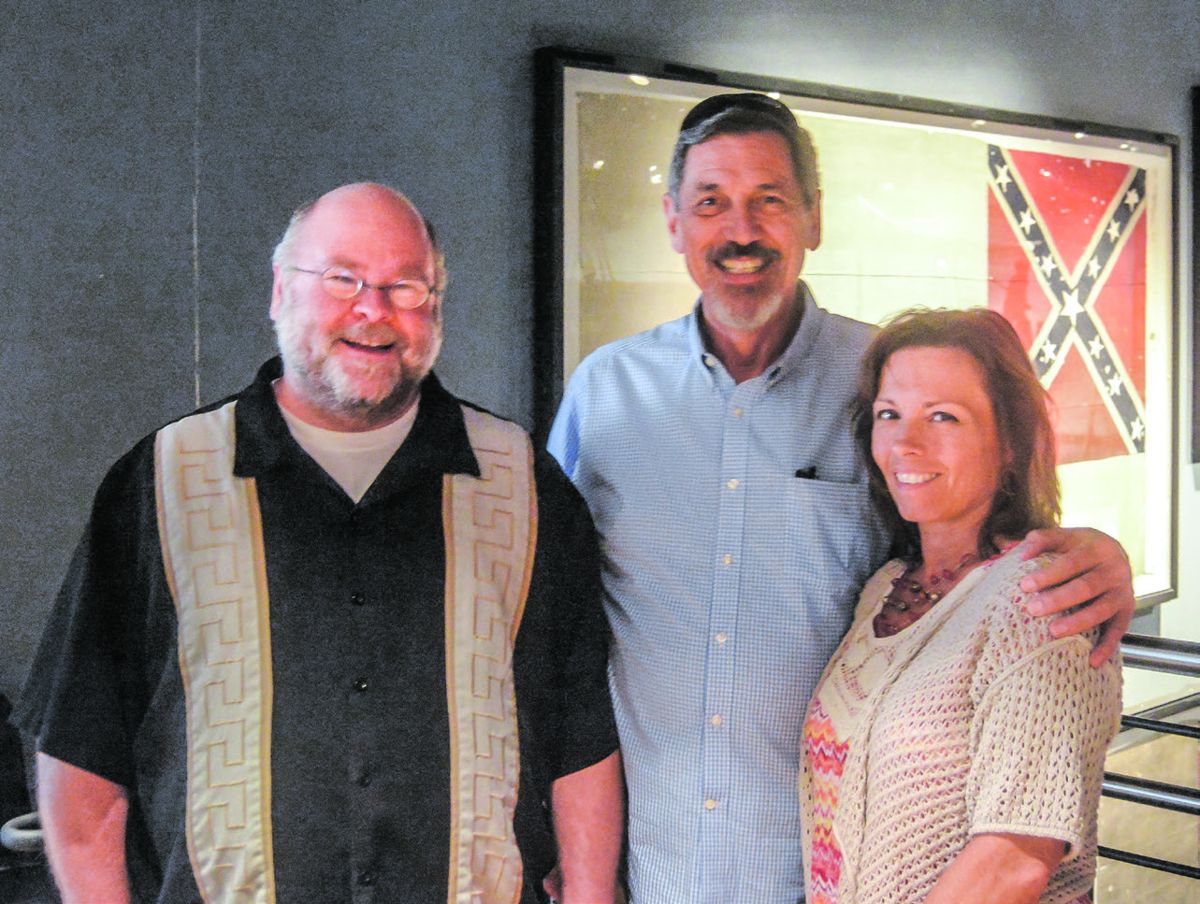
prominent as a bridge builder before and after the war, who contracted with the Confederate government to work on the defenses on the Chattahoochee, Apalachicola, and Alabama rivers. The budget of $450,000 covers the museum’s basic operations but for new acquisitions like the Paul letters the museum relies on special donations. The museum receives no support from the city or the state, counting instead on private donations, admission fees, Flags and more—Note the unusual arrangement of the stars on the First National flag in the distance.
and rentals for special events. The museum has a staff of seven, four of whom are parttime. The museum also relies on many volunteers who lead tours, raise funds, and help with mundane tasks like folding newsletters. The museum draws about 20,000 visitors per year, mostly tourists, while special events, such as September’s “Ghost Tour,” draw many local people. Wait has plans for expansion and intends to hire a consultant to assist in fundraising efforts. The 20-year-old building needs some updating and improved facilities would enhance the income from rentals. The building needs to be enlarged to gain more office space, more storage space for things not on display, and room for more major exhibits. Wait said that the museum hopes to get some items from the CSS Georgia, currently being raised one piece at a time from the Savannah River at the other end of the state. The museum does more than teach about the war: it also teaches about the science of preservation. One display demonstrates the process of conserving and cleaning iron artifacts by electrolytic conversion. Inside the tank are an iron hook and a partially exploded cannon ball, both from the CSS Chattahoochee. Readers interested in a fuller explanation of this process should not expect to get it in this column. Visit the museum at its location at 1002 Victory Drive, Columbus, Ga. It is open every day except New Year’s Day, Easter, Thanksgiving, and Christmas.
Gould Hagler is a retired lobbyist living in Dunwoody, Ga. He is a past president of the Civil War Round Table of Atlanta and is the author of Georgia’s Confederate Monuments: In Honor of a Fallen Nation, published by Mercer University Press in 2014. He speaks frequently on this topic and others related to different aspects of the Civil War and has been a regular contributor to CWN since 2016. He can be reached at [email protected].