
After the Storm in Harpers Ferry
By Joseph Bordonaro · Originally published December 2018 · pp. 41–45
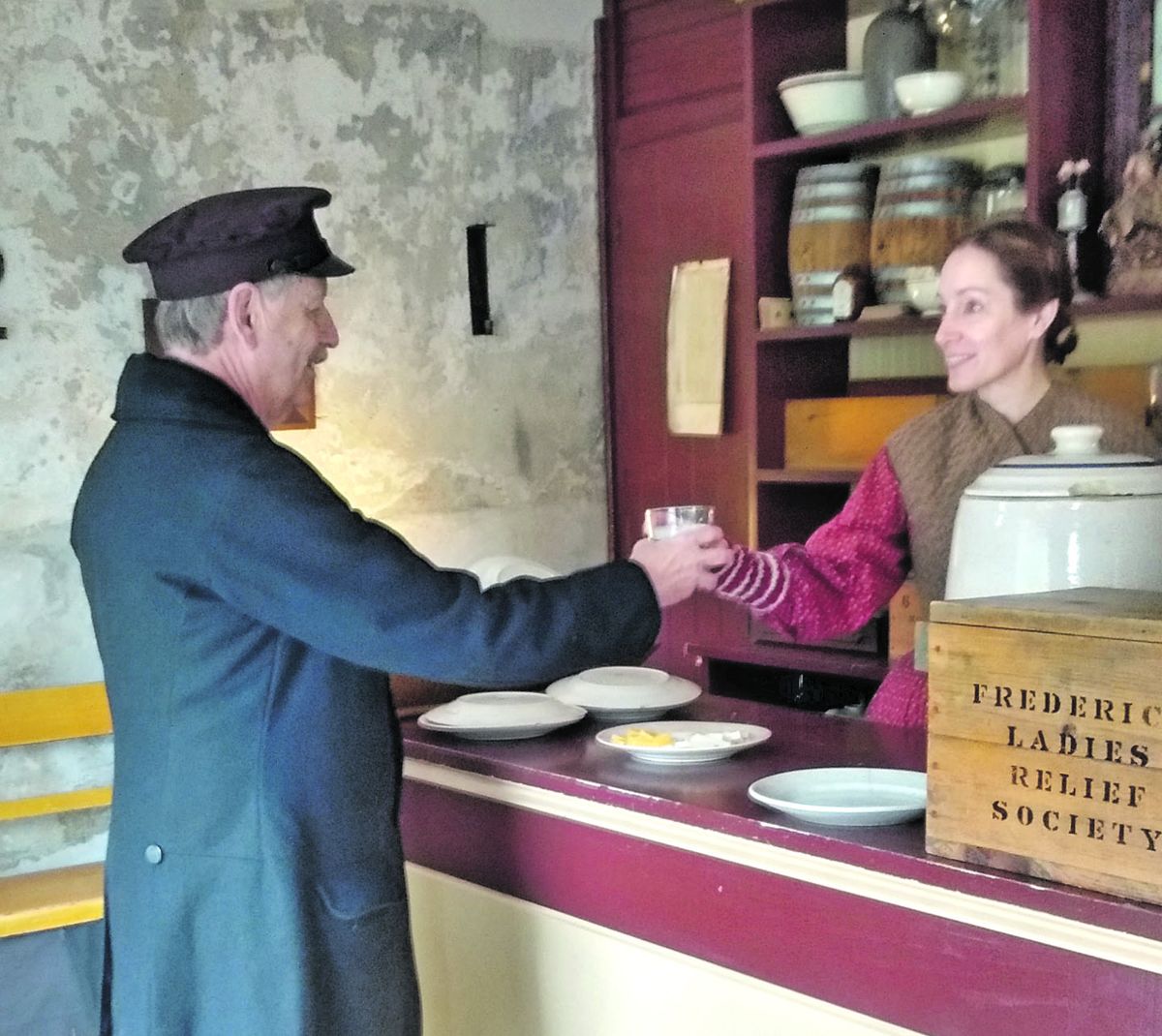
Responding to reports received about the capture of the U.S. Arsenal in Harpers Ferry, Va., Lt. Israel Green, USMC, stationed at the Marine Barracks in Washington, D.C., was ordered to take 90 Marines by train on Oct. 17, 1859. The day before, on Oct. 16, 1859, John Brown and 21 associates had seized the arsenal and were intent on using the weapons in it to arm slaves and begin a slave revolt in the South. Once there, the Marines met U.S. Army Lieutenant Colonel Robert E. Lee, who took command of the relief force. Inside the arsenal’s fire house were John Brown, his associates, and nine hostages, including Colonel Lewis Washington, great-grandnephew of George Washington. The rest of the story will be told by three participants in the “After the Storm” event that took place in Harpers Ferry the weekend of Oct. 13-14, 2018. The first participant telling his story is an active duty member of the USMC. He and a group of his fellow Marines were outfitted in the uniforms of the 1859 Marine Corps and, because of their sharp appearance and military bearing, looked perfect for the part they played. Here is Private Thomas Frezza’s account of the stirring events of Oct. 18, 1859, when the Fire Hall, or “John Brown’s Fort,” as it became known, was stormed by Marines under the command of Army Lt. Col. Lee: “When we arrived, local militia and townsfolk were surrounding the fire hall. We Marines took over from them and urged them to return to their homes. An Army officer (Lt. J.E.B. Stuart) went to the door of the fire hall and talked to someone at the door. It was a brief conversation. The officer removed his hat, the pre-arranged signal for the Marines to storm the building. Lt. Green led the storming party and two Marines attempted to break down the door using sledgehammers. They were unsuccessful. Next, about ten Marines took a fire ladder and rammed the door to the fire hall, breaking a hinge of the door. This created a space large enough for a man to enter. Lt. Green led the assault into the fort. The raiders and the hostages were seen inside. Many raiders, refusing to surrender, were bayonetted by the Marines. John Brown was taken prisoner after receiving a wound from Lt. Green’s saber. Marine Private Luke Quinn was killed. Private Matthew Ruppert was shot in the face but is expected to survive (he did).The surviving prisoners were secured, the hostages were freed, and the Marines guarded the prisoners (who likely would have been torn limb from limb by the enraged mob still gathered nearby.)” The ringleader of this assault, John Brown (portrayed by Steve Hanson, of Ellicott City, M.D.) was next interviewed to get a perspective of the events from the raiders’ perspective: “It was dark outside, and smoky inside the fire hall (sporadic firing had taken place between members of the militia augmented by townsfolk and the raiders inside the fire hall; the black powder weapons had filled the fire hall with acrid, dark smoke). An officer (Lt. J.E.B. Stuart) in civilian clothes came to the door. He offered terms of surrender which were: Surrender. Protection from the mob would (Joe Bordonaro)
be provided. Charges against the raiders were to be drawn up. I refused these offers and the officer walked away after refusing to let me talk to the officer in charge. I closed the doors. I heard Marines outside. I heard pounding on the doors. The doors held because we had them tied together inside. More noise was heard outside. Then there was a loud sound of banging. The top hinge of one door was broken and the door twisted open. A gap at the bottom allowed entry of the Marines. An officer charged inside (Lt. Green). A hostage pointed me out, saying, “There is Old Osawatomie.” (Brown had attempted to defend the free soil settlement of Osawatomie, Kan., from a large force of “Border Ruffians” on Aug. 30, 1856, and became known by that nickname.) The officer attacked me with his saber. I was armed with a Sharps carbine but had no time to fire again after firing when the fire hall was first entered. I put my arm up to deflect the saber and received slash wounds on my arm and in the back of my neck. I fell to the ground. I could dimly hear other Marines fighting my associates. My son Owen was killed, along with others. Three of my associates were captured. I am being taken to Charles Town for trial. But I will trust in the judgement of the Lord.” Finally, the perspective of the townsfolk on the arsenal attack is given by reenactor Mark Powell, of Wilmington, Del.: “Early in the morning [of Oct. 17, 1859] I heard a commotion. Possibly gunshots. When I looked outside my window I saw people near the fire hall. They seemed very excited. Everyone in town had been on edge since the arsenal was captured the day before. I dressed quickly and left home, walking toward the commotion. I went into White Hall Tavern, across the street from the arsenal. There was a large crowd inside. I started hearing rumors of a slave uprising. People were arming themselves, some from a cache of weapons discovered near the arsenal. I saw local militia beginning to arrive. Some people across the Potomac River were firing into town. People were starting to head towards the fire house, where it was said the raiders were holed up. Mayor Beckham was killed near the water tower about this time. The shot probably came from the fire hall. Late in the day I saw the Marines arrive and take command of the situation. I went home, as requested by the Marines. The “After the Storm” presentation at John Brown’s Fort was very well attended by the public and the National Park Service officials seemed pleased. In addition, several historic buildings throughout the town were interpreted by living historians so the public could experience life in Harpers Ferry as it was in 1859. Joe Bordonaro is a USAF veteran (1973–1977), Glassboro State College gradu-ate (1980), Catholic school teacher (St. Joseph’s ProCathedral, 1983–1988), and retired public school teacher (Mullica Township School, 1988–2009). He has been involved with Civil War reenacting/living history since 1999. Joe began submit-ting articles to the Civil War News in 2005 and has been covering events for the News on a regular basis since 2016. Joe lives in Mount Laurel, NJ, and has been married to his wife Karen for 29 years. If you wish to contact Joe, you may send an email to [email protected].
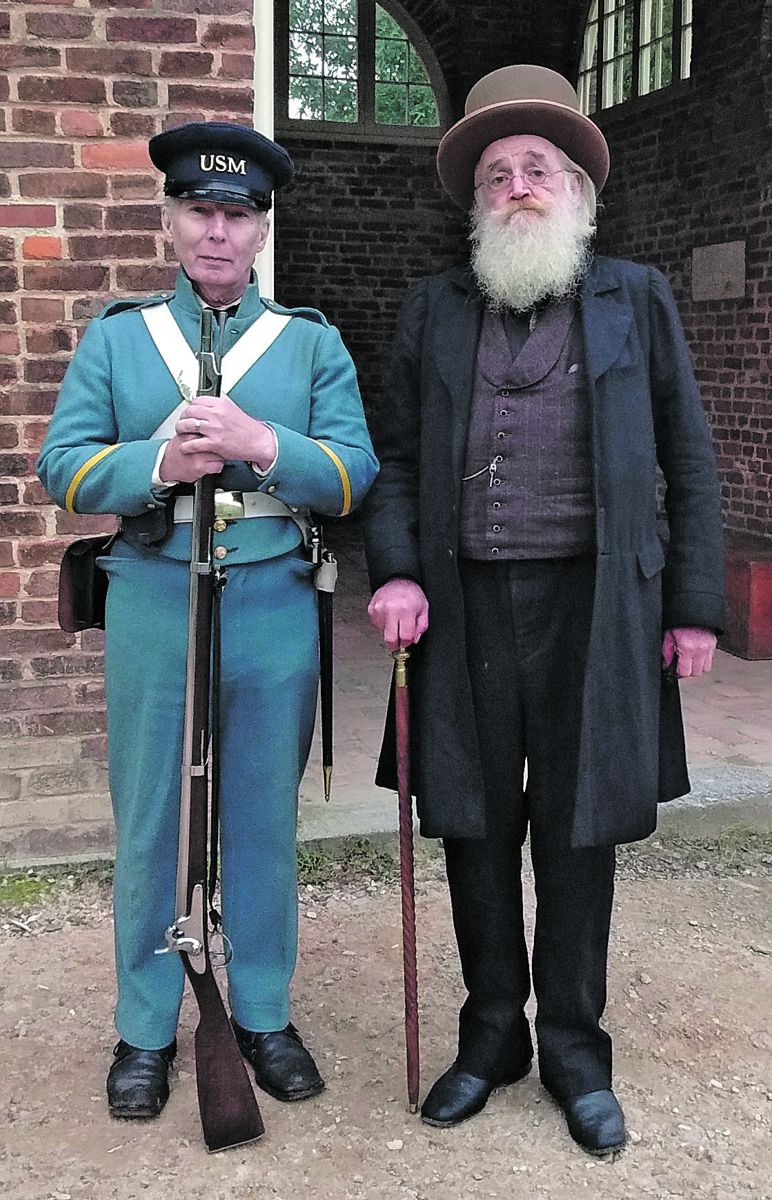
Marine Private Thomas Frezza, portrayed by Steve Hanson, of Ellicott City, M.D., in front of the U.S. Arsenal Fire Hall in Harpers Ferry.