Inspection, ARMS!
The Civil War Rifles of J. Henry & Son
By Tim Prince · Originally published August 2018 · pp. 20–21
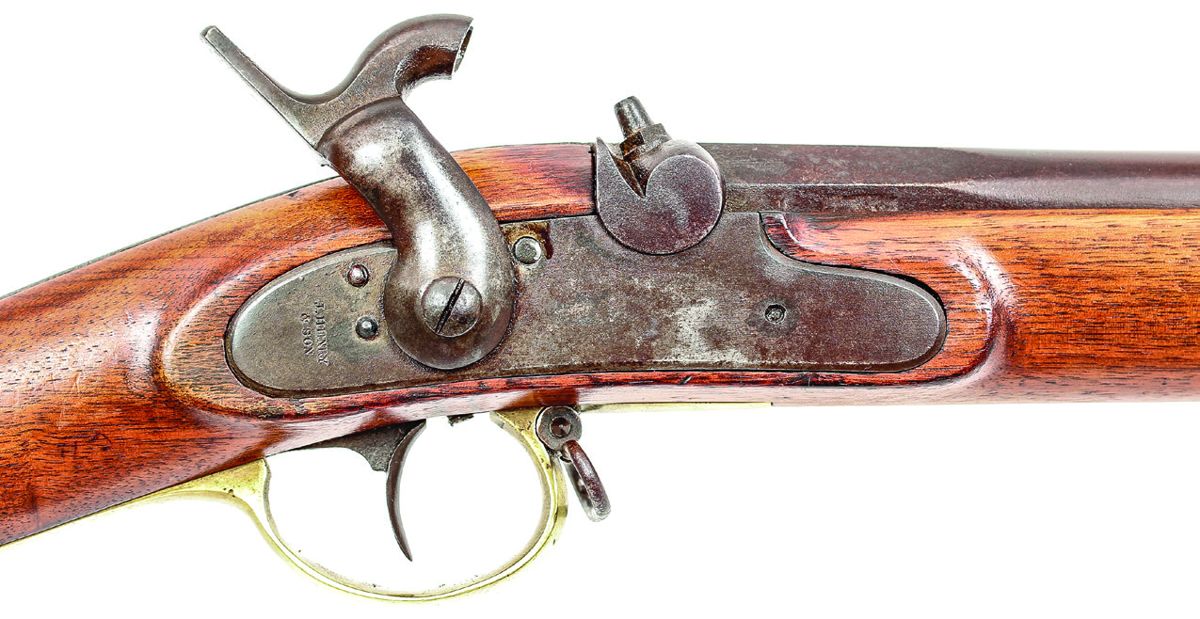
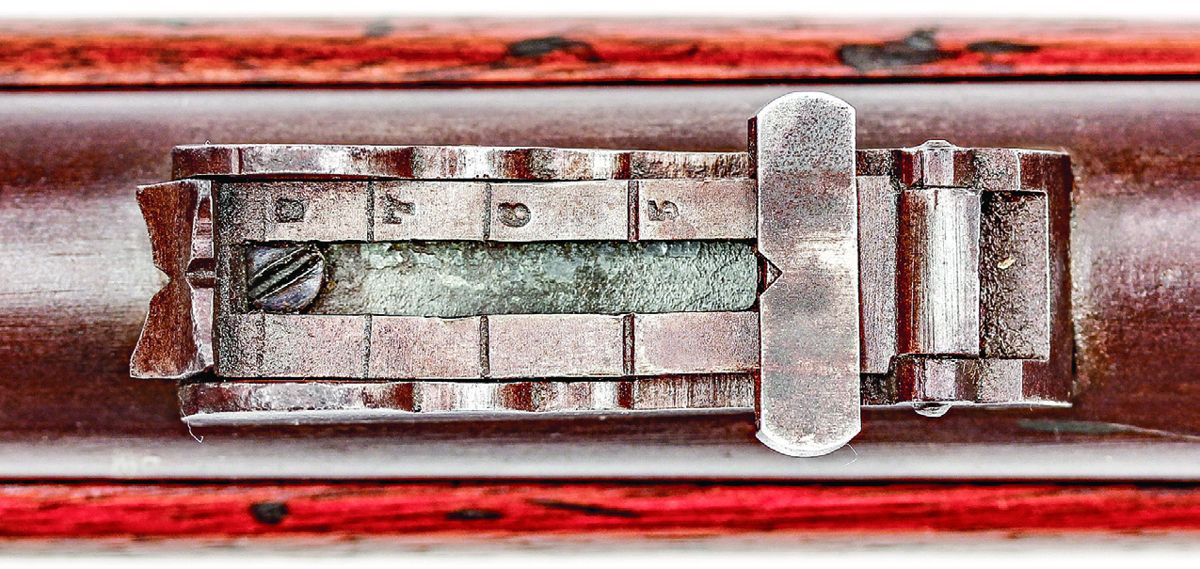
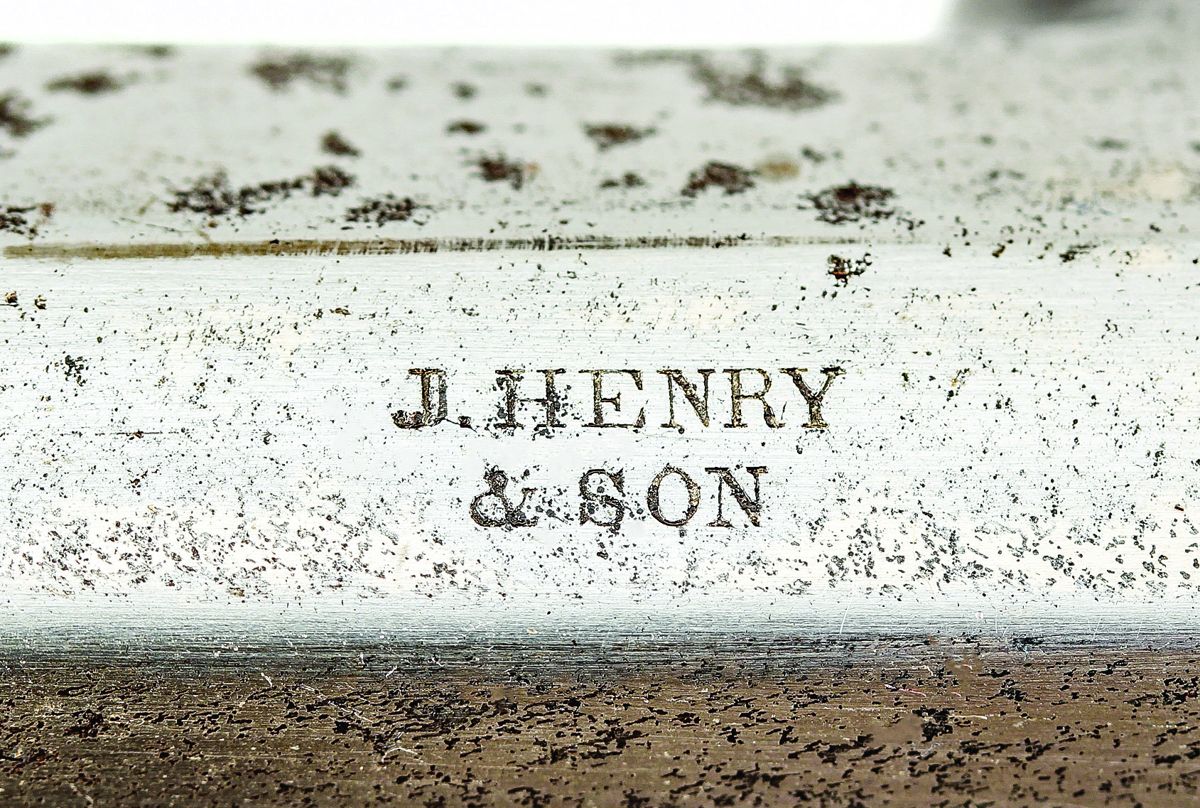
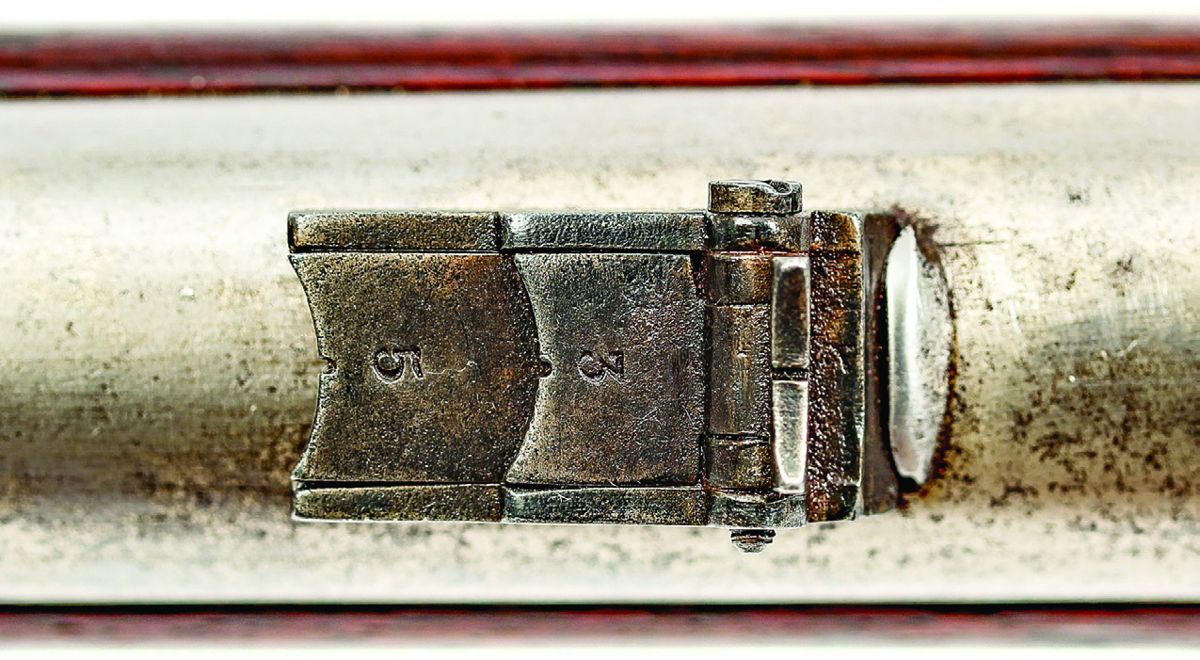
The gunmaking firm of J. Henry & Son was established by William Henry in Lancaster, Penn., prior to the French & Indian War. During that era, Henry produced arms for use by British colonial militiamen, and even took the field himself as an armorer during the 1758 campaign to capture Fort Duquesne. By about 1760, he had left the gun trade to become a successful Lancaster based iron monger. He also served as a delegate to the Continental Congress during the American Revolution. His son, John Joseph Henry, took up the family gunmaking business sometime around 1775 and the firm continued operation under his leadership until 1811, when John Joseph Henry II took over. During the early 1800s, the firm relocated to Boulton, Penn. The firm became known generally as the Boulton Gun Works (some references spell it “Bolton”). After John Joseph’s death, his son James took over, and in 1859 James’ son Granville joined the firm and the name was changed to “J. Henry & Son.” During their nearly six decades in business prior to the name change, the Henry family produced guns for the new United States government, the states of Pennsylvania, Delaware, and Maryland, and for numerous fur trading companies engaged in commerce with Native American tribes. The company also worked as manufacturers for other gunmakers and retailers including Philip S. Justice of Philadelphia, selling that firm both completed weapons and parts to manufacture arms. It is also likely that the Henry firm provided gun parts to other Pennsylvania gunmakers, like John Krider and possibly Henry Leman. With the coming of the American Civil War, the call for 100,000 volunteers to suppress the rebellion, and the calling out of Pennsylvania militia units to defend the state, Henry looked to produce military arms to cash in on the need for guns. He produced two patterns of military style rifles and a cadet musket. The rifles were offered with either a socket or a saber bayonet and were known respectively in the Henry company records as “Minié Rifles” or “Saber Rifles.” Both rifle patterns were .58 caliber muzzleloading percussion guns with 35-inch octagon-to-round barrels rifled with four grooves. The barrels were usually browned and retained by two barrel bands. The color casehardened locks were typically stamped “J. HENRY / & SON” in two vertical lines on the lock plate behind the hammer. This same marking was typically applied horizontally on the left angled barrel flat near the breech as well. These markings only appeared on guns retailed directly by Henry. Those that were sold by Justice bore that company’s markings. The Saber Rifles were also numbered on the muzzle to mate them with the brass-handled saber bayonets delivered with them. The rifles were brass mounted with brass buttplate, patchbox, barrel bands, nose cap, lock screw escutcheons, and triggerguard. Most had the unique “recurved” triggerguard commonly associated with arms made by both Henry and P.S. Justice. It appears that much of the brass furniture was probably obtained from Bernard Leman of Philadelphia in 1861. It is not clear if both Henry and Justice purchased brass furniture from Leman, or if Justice acquired the parts via Henry. The brass patchbox found on the Henry made rifles is also associated with arms made by Justice and Krider. It appears these patch boxes were left over parts purchased from the Sharps Firearms Manufacturing Company of Philadelphia. In 1859, Sharps had transitioned from brass to iron
Closeup of lock above stamped “J. HENRY & SON” behind the hammer. J. Henry “Minié Rifle” with the M1816 pattern socket bayonet mounted. (All photos by Tim Prince)
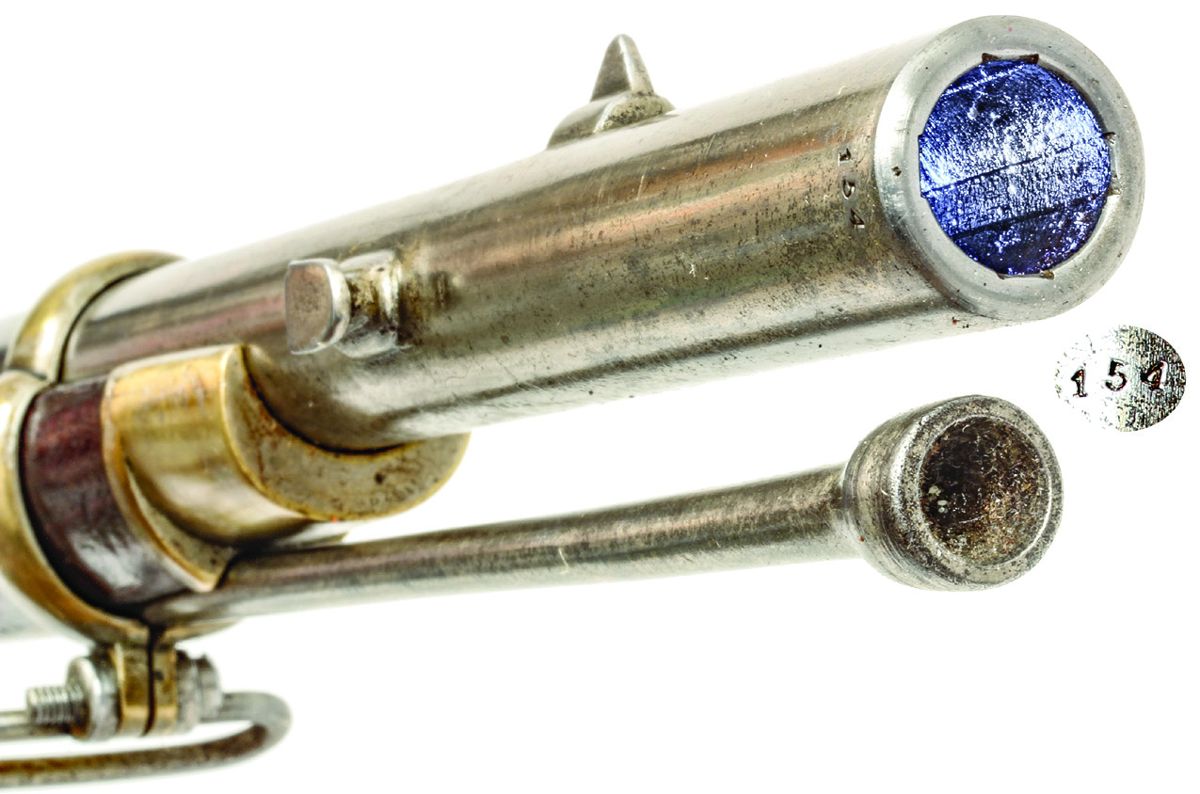
Overall view of a J. Henry “Saber Rifle” – apparently one of the six sample rifles submitted to the Ordnance Department for evaluation. mountings, and apparently a large number of brass patchboxes in varying states of manufacture were sold as unneeded surplus. The standard rear sight for the J. Henry rifles was a Whitney-style long range, long base ladder sight. However, at least two examples are known with U.S. M1858 pattern rear sights. One of those guns also has a period tinned finish. Both rifles were almost certainly part of the group of six sample guns that Henry produced in his attempt to secure Ordnance Department contracts. The front sights were tall blade sights similar to those found on U.S. M1855 rifles. The Saber Rifles had a saber bayonet lug on the right side of the barrel, while the Minié Rifles had their barrels turned down to accept a U.S. M1816
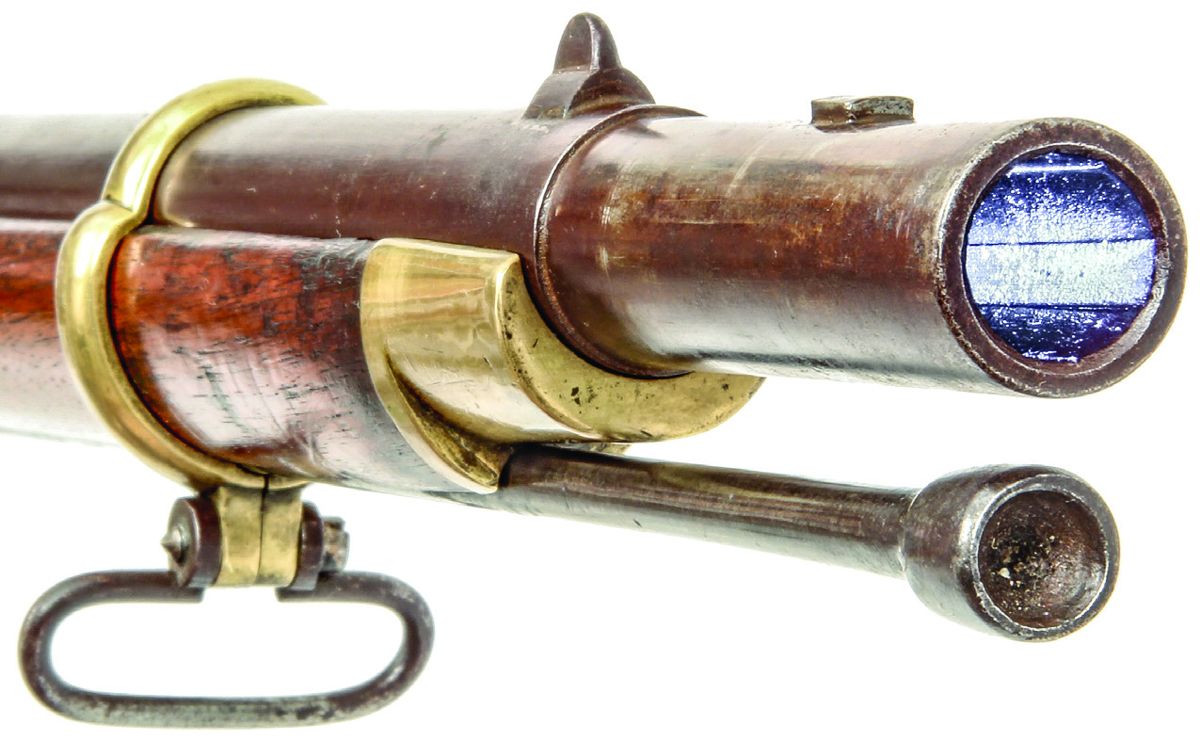
pattern socket bayonet with the appropriate stud mounted on top of the barrel near the muzzle. Sling swivels were mounted on the forward bow of the triggerguard and on a stud below the upper barrel band. The ramrod was a straight shank iron rod with a rudimentary tulip shaped head. Research by author George Moller indicates that 285 “Minié Rifles” produced by Henry during the summer of 1861 were sold almost entirely to Justice, who resold them to the U.S. government to help satisfy his own rifle contract. However, Henry sold 40 of these rifles to the Bethlehem Home Guard in August 1861. Henry also produced some 952 “Saber Rifles” during the summer of 1861, most of which, some 876 rifles, were also sold to Justice, with deliveries starting in September that year. However, 70 of these rifles were sold by Henry to the Catasanga Home Guard in October and November, and another 6 were used as sample rifles in an attempt to obtain other military contracts. As a total of only 1,237 J. Henry Rifles of both patterns were produced, either variant is fairly rare and desirable today. Since most were sold and marked by P.S. Justice, finding a J. Henry marked example is quite difficult, with only 40 Minié Rifles and 76 Saber Rifles bearing his marks. Although these guns appear to have only seen home guard service during the war, they represent a good example of the work done by northern gun makers in an attempt to support the war effort and the Union cause. Tim Prince is a full-time dealer in fine & collectible military arms from the Colonial Period through WWII. He operates College Hill Arsenal, a web-based antique arms retail site. A long time collector & researcher, Tim has been a contributing author to two major book projects about Civil War era arms including The English Connection and a new book on southern retailer marked and Confederate used shotguns. Tim is also a featured Arms & Militaria appraiser on the PBS Series Antiques Roadshow.