
Stonewall Jackson – America’s Most Uncelebrated Humorist
By Bob Ruegsegger · Originally published August 2018 · pp. 14–15
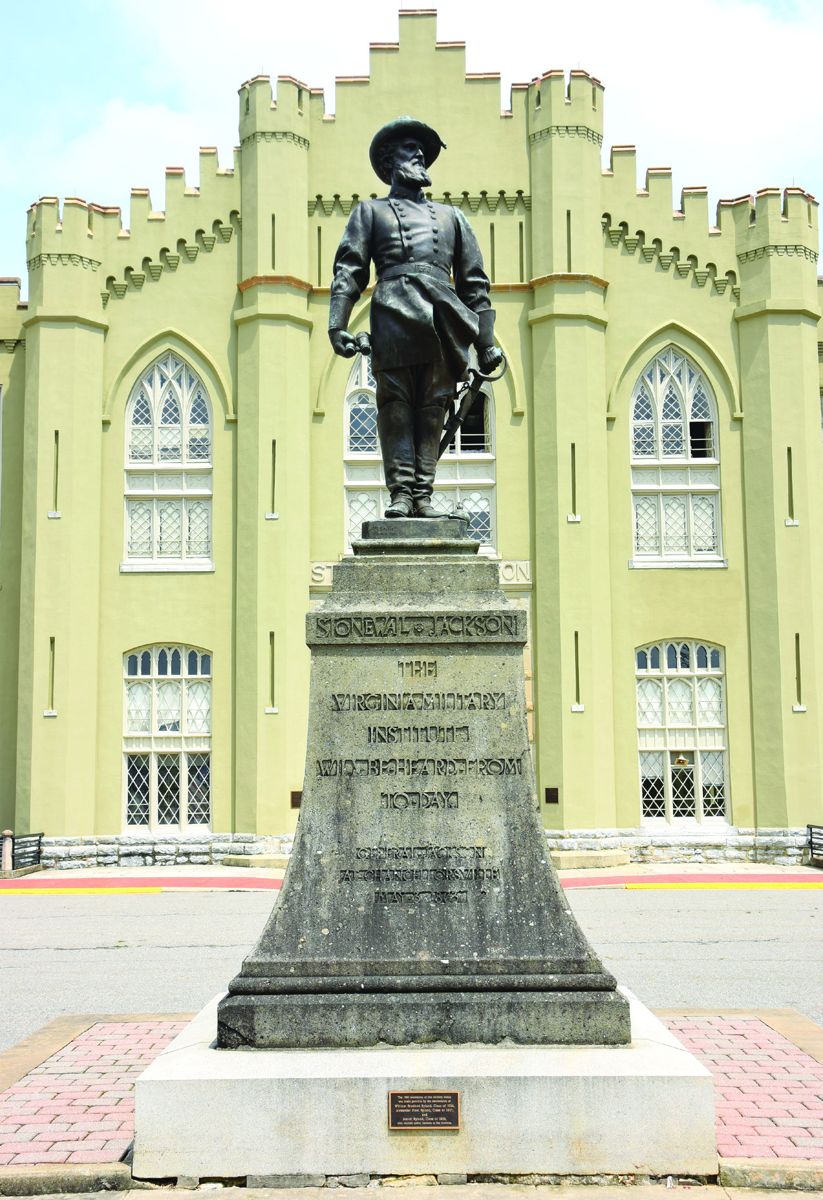
“You may be whatever you resolve to be” are the inspirational words inscribed over the Stonewall Jackson Arch at the entrance to the Virginia Military Institute barracks in Lexington, Va. According to some historians, Thomas Jonathan Jackson was invariably sober and serious as well as socially awkward. He was not considered to be an especially able teacher. Jackson, in the modern sense, simply had no aptitude for teaching. Many VMI cadets actually disliked him because he exhibited a dearth of tact in dealing with them. Major Jackson was fortunate, it would seem, to have secured and maintained his situation at VMI. “I cannot remember that I ever knew him to give at VMI a hearty burst of laughter,” wrote VMI colleague Raleigh Colston. “It was a settled opinion with us that Jackson could never see a joke and was utterly incapable of appreciating a pun,” Colston added. While Major Thomas J. Jackson, a professor of Natural Philosophy and an instructor of artillery tactics at VMI, Old Jack, as the cadets at VMI called him, did not completely lack a sense of humor. Still, had Jackson resolved to seek gainful employment as an
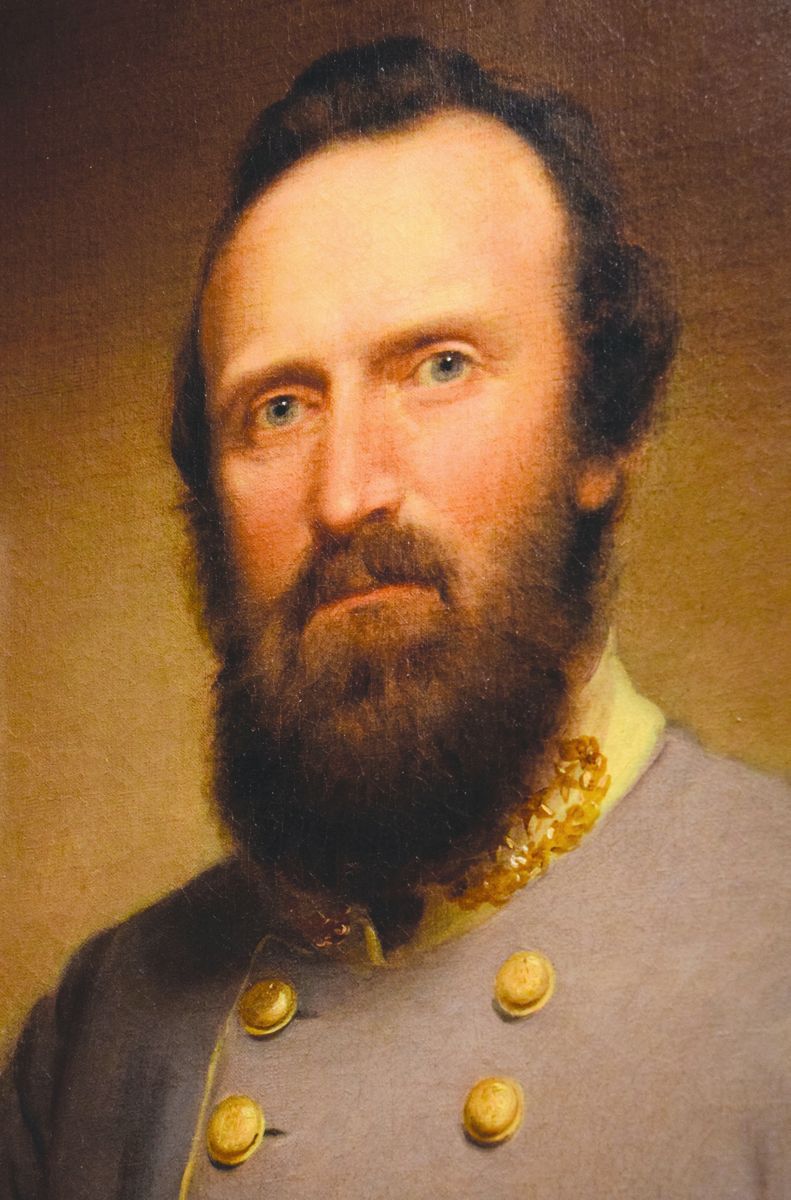
American humorist instead of applying his practical military genius, he would certainly have starved to death before fading into total oblivion. While American humorist Mark Twain would never have regarded Old Jack even remotely as serious competition, Jackson was very capable of infrequent flashes of rather unusual wit. One account by Jackson biographer James I. Robertson Jr., in Standing Like a Stone Wall, observed that “humor rarely surfaced” in Major Jackson’s classes. According to Robertson, the closest Jackson ever came to joking in class occurred when Jackson asked a class why a telegram could not be sent the thirty miles between Lexington and Staunton. Although his students proposed every scientific theory they could imagine, no one came up with an acceptable response. Finally, a completely perplexed student, Gabriel Gray, offered, maybe half in jest, that perhaps no telegraph link existed between the pair of towns. “Yes, sir! That is right!” responded an obviously pleased Jackson. Creative thought had no place in Jackson’s course. He based a large part of his students’ final grades upon regular classroom recitations; memorization was the key to succeeding in Old Jack’s class. Students resented his detached attitude and steadfast enforcement of regulations. Major Jackson was frequently the object of student jokes and pranks. Students would draw unflattering pictures and scribble insulting expressions on the blackboard before class. “Though I drilled under him for three years and recited daily for him for a year and a half, I never saw him laugh outright,” wrote Reverend J. C. Hiden, a former VMI cadet and student of Jackson. “A very quiet subdued sort of smile was the nearest thing to laughter that I ever saw him indulge in,” recalled Hiden in his reminiscences of Major Jackson as a VMI professor, preserved in the Southern Historical Society Papers. Were it not for the War of Northern Aggression, Old Jack might never have had an opportunity to exercise his incredible military talents or his unusually wry wit. During the War for Southern Independence, evidence of Jackson’s droll humor emerged from time to time. In I Rode with Stonewall, by Henry Kyd Douglas, the youngest member of Jackson’s staff, relates an occasion when General Jeb Stuart, a superb cavalryman, was subjected to Jackson’s peculiar sense of humor. Stuart was the only one who ventured to tease Jackson; therefore the majority of Jackson’s subtle attempts at humor were aimed at the gallant Stuart. One night, according to Douglas, Stuart arrived at Jackson’s headquarters to find Old Jack asleep. Stuart removed his saber and crawled into bed with Jackson. Stuart and Jackson spent the night struggling for possession of a single blanket. When Stuart awoke in the morning, Jackson and a few members of his staff were standing over the campfire. “Good morning, General Jackson!” said Stuart heartily. “How are you?” Suppressing all but a hint of a smile, Jackson glared at Stuart solemnly. “General Stuart, I’m always glad to see you here. You might select better hours sometimes, but I’m always glad to see you,” offered Old Jack. “But General, you must not get into my bed with your boots and spurs on and ride me around like a cavalry horse all night!” Jackson chided. After the War of the Rebellion had run its course, additional accounts of Jackson’s wry humor surfaced. “It was generally believed that General Jackson was harsh, unsociable, that he had no sense of the ridiculous, and could not appreciate a joke,” wrote Major J. Coleman Alderson in a short article that appeared in Confederate Veteran. Alderson recalled an amusing letter written by Jackson to Moffatt and McKnabb wagon manufacturers in Wheeling, Va., who supplied wagons for the Federal armies operating in the Shenandoah Valley during Jackson’s 1862 Valley Campaign. “Mr. McKnabb informed me that his firm generally shipped from fifty to seventy-five wagons to the Federal armies in the Valley every morning, and Jackson was in the habit of capturing every one of the wagons before their shipment,” wrote Alderson. One morning McKnabb brought a rather humorous letter that he had received from General Jackson, via a paroled Federal soldier, to Alderson’s office. The letter to Messrs. Moffatt and McKnabb read: “Dear Sirs: I have just received your last consignment of wagons. I like them very much, but hereafter please make the tongues a little stronger, as many of them are broken off when turned over to me. Respectfully, T.J. Jackson.” Charles Strahan, who served with the 21st Virginia Regiment, offered a previously unpublished anecdote to Confederate Veteran while recuperating in St. Luke’s Hospital in Richmond. Strahan was urged by several of the hospital’s physicians to submit the story “as it exhibited a phase of Stonewall’s character but little known – that of a grim humor.” Strahan was sitting on a fence with a comrade along the Old Warrenton Road prior to the Second Battle of Bull Run. When Old Jack and his staff approached from the east and General Jeb Stuart rode up from the west. Jackson and Stuart came to a halt directly in front of Strahan and his associate. Stuart had just completed a raid around General John Pope’s army and capturing his headquarters. Stuart held up a splendid new major general’s coat. “Hello, Jackson, I’ve got Pope’s coat,” said Stuart as he rode up. “If you don’t believe it, there’s his name,” said Stuart, displaying the coat and expecting a congratulatory remark from Jackson. “General Stuart,” saluted Old Jack, “I would much rather you had brought General Pope than his coat.”
Bob Ruegsegger is an American by birth and a Virginian. His assignments frequently take him to historic sites throughout Virginia, the Mid-Atlantic, and the
Southeast. His favorite haunts include sites within Virginia’s Historic Triangle—Jamestown, Yorktown, and Williamsburg. Bob served briefly in the U.S. Navy. He is a retired educator and has been an active newspaper journalist for the last twenty years.