
This And That
Perspectives on Second Manassas
By Gould Hagler · Originally published August 2018 · pp. 22–23
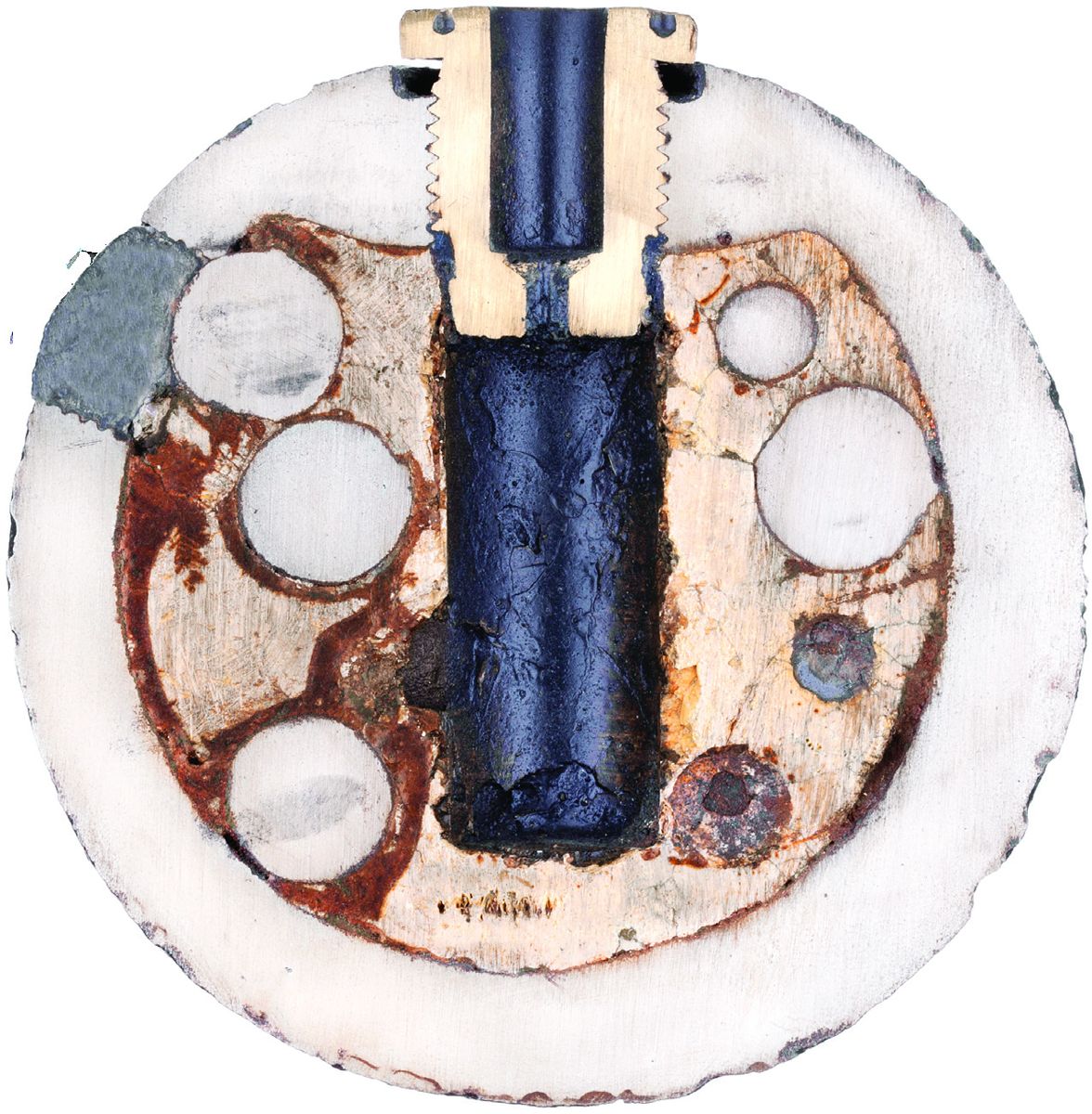
After a severe struggle the enemy gave way in great confusion on the left of the pike, and by direction of the general commanding I moved forward with this division. – Brig. Gen. John Bell Hood In late August 1862, the Confederates maneuvered northward from the Rappahannock and drew the Federals away from Richmond. Gen. John Pope’s Federal Army of Virginia, with part of Gen. George McClellan’s under Pope’s command, followed, and clashed with the Gen. Robert E. Lee’s force in the final days of August near the battlefield made famous the previous year. The climax of the battle occurred the afternoon of the 30th, as the Federal corps under Gen. Fitz John Porter mounted a furious assault against the right end of Gen. Stonewall Jackson’s line, seemingly unaware that the Confederate divisions in Gen. James Longstreet’s wing were lying in wait, ready to pounce against the Federal left flank. Imagine the number “7” rotated 90 degrees counterclockwise. Jackson’s position stretched along the horizontal line in a railroad cut; Longstreet was on the shorter, vertical line; where the lines intersected was the killing field. In last month’s column we viewed this second great battle near the banks of Bull Run through the eyes of some Union officers. Let us now see what their opposite numbers have to tell us about these same events. Brig. Gen. Cadmus Wilcox commanded his own brigade and two others on the left of Longstreet’s wing. Wilcox was positioned to observe Porter’s charge and his report provides a vivid description as the Federals moved against Jackson’s position at the railroad cut. “The first line of the enemy advanced in fine style across the open field. There was but little to oppose them. They were fired upon by our pickets and skirmishers, but they continued to advance…and came within full view of Jackson’s line, and were…received with a terrible fire of musketry at short range. They hesitated for an instant, recoiling slightly, and then advanced to near the embankment. Twice did I see this line advance and retire, exposed to a close and deadly fire of musketry.” Even worse was in store for Porter’s men, as Confederate artillery opened up. Wilcox continues: “The fire of this battery was most opportunely delivered upon this advancing line of the enemy. They were caught in the open field. The effect of every shot could be seen. A rapid fire of shot, shell, and spherical case, delivered with admirable precision, checked their advance. As the shells and spherical case would burst over in front and near them, their ranks would break, hesitate, and scatter. The artillery fire alone broke regiment after regiment and drove them back into the woods.” Stephen D. Lee, then a colonel, commanded four batteries placed where Longstreet’s and Jackson’s lines met. Lee’s report describes this same assault and his artillerymen’s response. He positioned his pieces “so as to fire on the enemy in flank and on the woods containing their reserves. With …eighteen guns a continuous fire was kept up on the enemy during his attack, which lasted about half an hour. His reserves moved twice out of the woods to the support of the attacking columns and twice were they repulsed by the artillery and driven back to the woods. After the reserves failed to reach the front or attacking columns they were repulsed and endeavored to rally in the open field, but the range of every part of the field was obtained, and a few discharges broke them in confusion and sent them back to the woods.” The Federal infantry attempted to charge the batteries that were causing such mayhem, but to no avail. “They were repulsed,” Lee continues, “some of their dead being within 200 yards of the guns.” This part of the battle was a one-sided affair. S.D. Lee’s casualties numbered six wounded. Lt. Col. E. Porter Alexander was Chief of Ordnance, and by his own account, his “personal part in [the battle] was very uneventful.” Alexander offers his professional opinion on the placement of S.D. Lee’s artillery, an opinion that reminds me of the real estate adage about “location, location, and location.” Lee’s battalion “had a beautiful position in easy range & the weight of its fire was very effective in breaking up the enemy’s lines & columns.” Three months later Alexander took command of this same artillery battalion. Lee and Wilcox were part of Longstreet’s wing, the force not facing Porter’s attack. Col. Bradley Johnson commanded a brigade in Jackson’s wing. In his report he describes the ferocious afternoon struggle between Porter’s troops and Jackson’s which preceded the flank attack by Longstreet’s infantry. “About 4 p.m., the movements of the enemy were suddenly developed in a decided matter,” Johnson writes, and adds that his regiments “by themselves breasted the storm, driving back certainly twenty times their number.” “Before the railroad cut,” Johnson continues, “the fight was most obstinate. I saw a Federal flag hold its position for half an hour within 10 yards of a flag of one of our regiments in the cut and go down six or eight times, and after the fight 100 dead were lying 20 yards from the cut, some of them within 2 feet of it. The men fought until their ammunition was exhausted and then threw stones.” Johnson goes on: “As line after line surged up the hill, time after time, led up by their officers, they were dashed back on one another until the whole field was covered with a confused mass of struggling, running, routed Yankees.
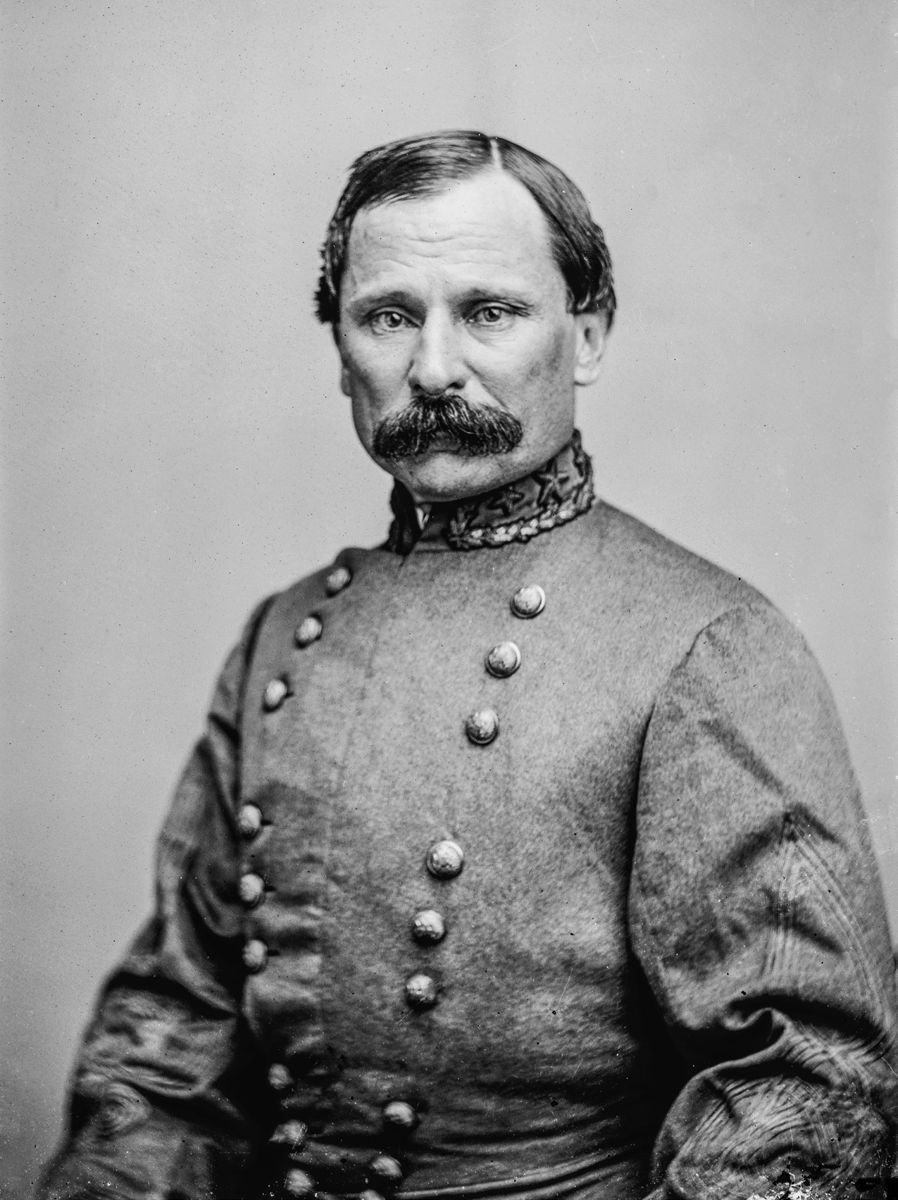
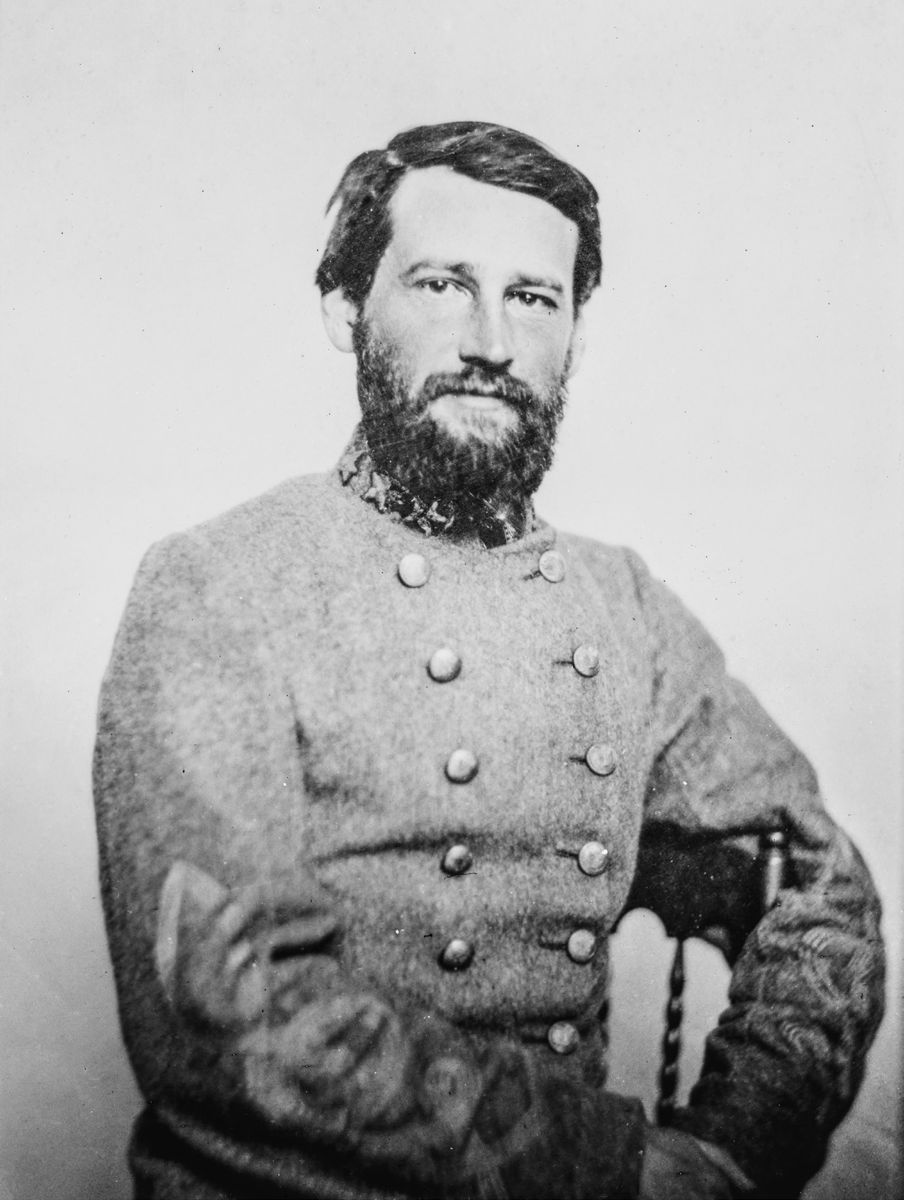
Stephen Dill Lee.
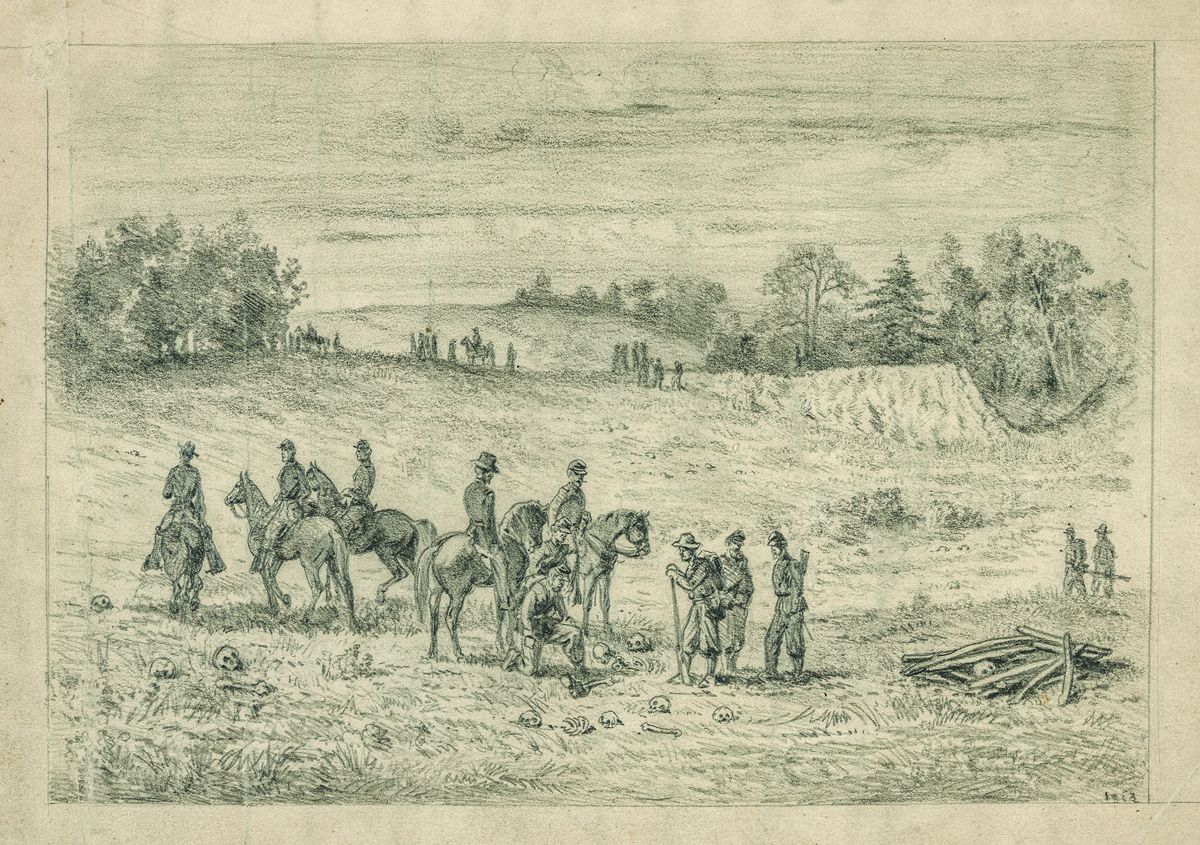
They failed to take the cut.” As Johnson relates, the Confederates resorted to throwing stones when they used up their regulation-issue ammunition. Lest the reader think there is something comical about rock-throwing soldiers, Johnson tells us that a Lieut. Lewis “killed one [Federal soldier] with a stone, and I saw him after the fight with his skull fractured.” So now it is late afternoon. Porter’s corps has engaged in deadly combat with Jackson’s forces and endured the raking fire of Longstreet’s batteries. When Longstreet unleashed his infantry, the Federals, already a spent force, were overwhelmed. Brig. Gen. John B. Hood’s division delivered the death blow. After conferring with Longstreet sometime after 4:00 o’clock, Hood rode rapidly to overtake his advancing troops. At the Chinn House, he found that “the Texas Brigade had captured a battery, routed the Federal Zouaves – literally strewing the ground with their dead and wounded…. The field where lay the dead and dying zouaves in their gay uniforms, amid the tall green grass, presented indeed a singular appearance.” Col. Evander Law, who commanded one of Hood’s brigades, also describes this final push. “I continued the advance beyond Dogan’s house, driving the enemy backward until after dark, when, by General Longstreet’s order, I halted for the night.” Law adds a brief note on conditions on the following day: “At daylight on the 31st nothing was to be seen of the enemy except evidences of a precipitate retreat.” As I did the research for this article, and the one preceding it, I wondered constantly why General Pope continued to insist that the Confederates were retreating, why he issued pre-emptory orders to Porter to assault Jackson’s right, as if Longstreet’s wing did not exist, why he ignored the warnings and dismissed the pleas of his subordinate generals. I am not competent to opine on that, but I can tell you what John Bell Hood thought. In Advance and Retreat, Hood describes events in the wee hours of the morning of the 30th. In the dark Maj. Gen. Richard Anderson had moved his division too far, and bivouacked in a position exposed to Federal artillery. Warned of the situation by Hood, Anderson “aroused his men and, just after daybreak, marched to the rear of [Hood’s] line of battle. The pike was very dry, and [Anderson’s] division, as it moved back, left a cloud of dust in its wake.” This cloud of dust in the dawn sky, Hood believed,
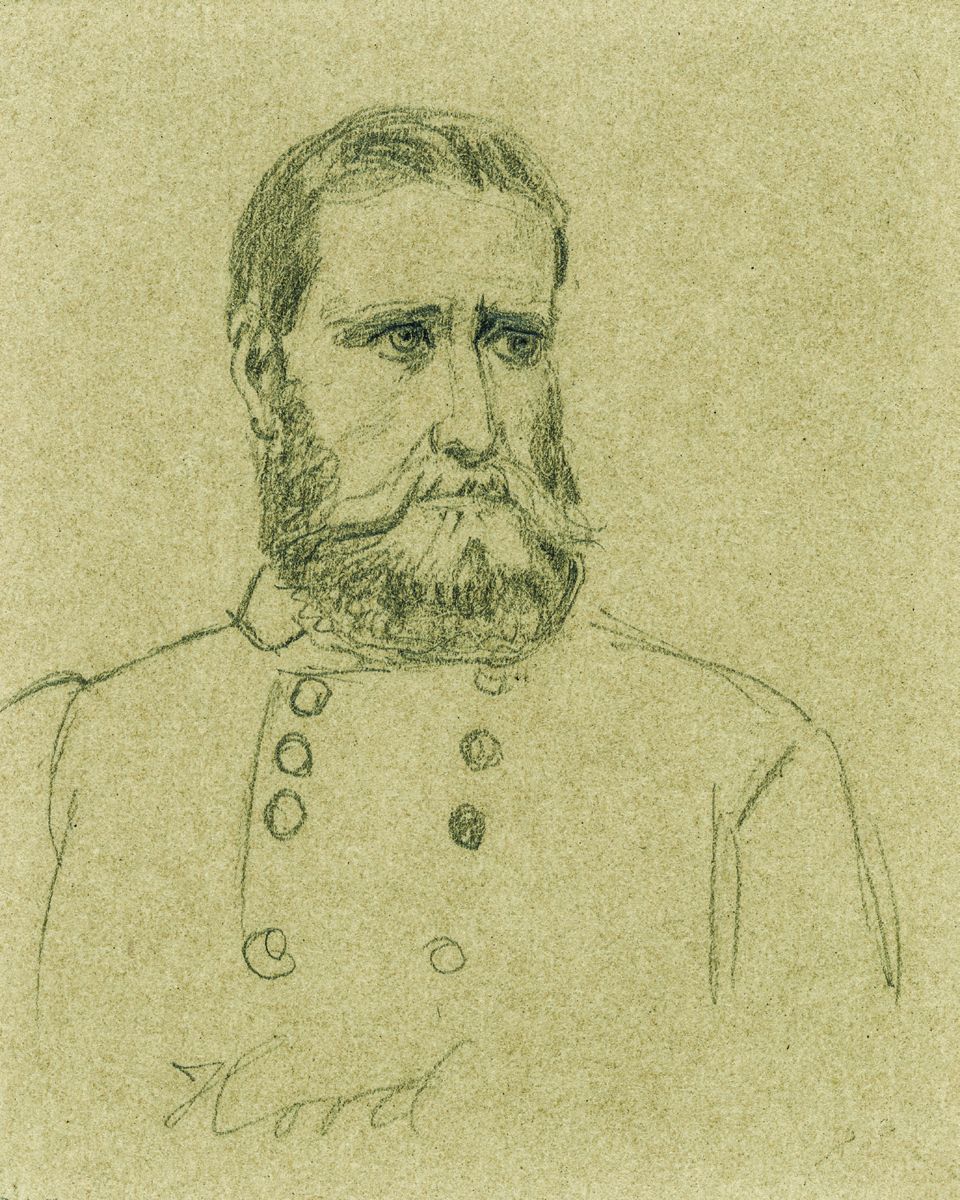
“induced General Pope to send his celebrated despatch [sic] to Washington to the effect that Lee was in full retreat.” As Pope and his men were soon to learn, Lee was not retreating that day and would not do so for another month. After Second Manassas Lee marched across the Potomac and fought a fierce battle at Sharpsburg, on a day that witnessed more American battle deaths than any day before or since. Sources:
Gary W. Gallagher, Ed., Fighting for the Confederacy: The Personal Recollections of Edward Porter Alexander, University of North Carolina Press, 1989 • General John Bell Hood, Advance and Retreat, Da Capo Press, 1993 •
•
United States War Department, Official Records of the War of the Rebellion, Series I, Volume XII, Part II, reports of J.B. Hood, B.T. Johnson, E.M Law, S.D. Lee, C.M. Wilcox
Gould Hagler is a retired lobbyist living in Dunwoody, Ga. He is a past president of the Civil War Round Table of Atlanta and the author Georgia’s Confederate Monuments: In Honor of a Fallen Nation, published by Mercer University Press in 2014. Hagler speaks frequently on this topic and others related to different aspects of the Civil War and has been a regular contributor to CWN since 2016. He can be reached by email at [email protected].