
Book Reviews
Book Reviews — August 2018
Originally published August 2018 · pp. 36–41
Civil War News book reviews provide our readers with timely analysis of the latest and most significant Civil War research and scholarship. Contact Stephen Davis, Civil War News Book Review Editor. Email: [email protected].
Long Range Recon Patrols, a Hundred Years Earlier Wade Hampton’s Iron Scouts: Confederate Special Forces. By D. Michael Thomas. Maps, photos, notes, index, 143 pages 2018. The History Press, www.historypress.net. $21.99 paperback. Reviewed by H. V. Traywick Jr. This work offers the exciting account of a little-known and little-documented organization of Confederate cavalry scouts comparable to the Army’s Long Range Reconnaissance Patrols (LRRPs) in Vietnam. These men were from General Wade Hampton’s South Carolina cavalry, and operated behind enemy lines during the Army of Northern Virginia’s campaigns, providing valuable intelligence on the Union army’s troop movements to Generals Hampton, J.E.B. Stuart, and Robert E. Lee. In addition, they captured enemy pickets, disrupted enemy scouting parties, and captured much-needed horses and mules for the Confederacy. D. Michael Thomas has done extensive research to present the story of these men for the first time. Using the rare memoirs of several survivors of the scouts published long after the war, and sifting through the scanty reports on their operations found in the Official Records, the letters and reports of Hampton, Stuart, and others, scarce but exciting accounts found in contemporary newspapers, and other sources found in the South Caroliniana Library in Columbia, the author has brought together a stirring narrative of these brave men and their daring deeds. While these men operated in the campaigns of central and northern Virginia, on occasion they would be recalled to their units for major offensive campaigns, such as Lee’s Pennsylvania campaign in 1863. After the overland campaign in 1864, and the beginning of the siege of Petersburg, the Iron Scouts operated on the right of the army, south of the James River. It was here that they first encountered the Union Army’s application of total war, such as was being practiced elsewhere with Sheridan’s burning of the Shenandoah Valley and Sherman’s march through Georgia and the Carolinas. Mr. Thomas concludes his work with the quoted assertion of one source: “It is hard to place the proper estimate upon the great work that the scouts accomplished for the Confederate government. They kept General Lee better posted as to the movements of the Yankee army than a great many of the Union generals knew themselves.” The author has provided an annotated roster of the scouts at the end of the book, along with notes and sources for the text. He is a well-qualified historian and a lifelong student of Southern history, and this work reflects his careful research and professionalism. The only issue I have with the book is with the quality control of The History Press. In my copy, a segment of pages (33 through 64) was inserted upside down— which made for an annoying distraction. I hope this is only an isolated case with my copy alone, for otherwise I found it to be an excellent work of history. H. V. Traywick, Jr. is author/editor of Empire of the Owls: Reflections on the North’s War against Southern Secession; Virginia Iliad: The Death and Destruction of “The Mother of States and of Statesmen”; and A Southern Soldier Boy: The Diary of Sgt. Beaufort Simpson Buzhardt, 3rd Regiment, South Carolina Volunteers.
Confederates Never Gave Up on New Bern New Bern and the Civil War. By James Edward White III. Photographs, illustrations, notes, index, 206 pp., 2017. The History Press, www.historypress.net, $21.99 paperback. Reviewed by Joan Wenner
This book’s Foreword is written by Steve Shaffer, longtime New Bern, N.C., historian and volunteer with the New Bern Historical Society; he is exceptionally knowledgeable concerning the battles and its weaponry (some on display in the Society’s headquarters museum gallery). Shaffer rightly notes the author’s expertly crafted and very detailed focus on the repeated. The Confederate efforts to retake strategically significant coastal towns following the initial battle of New Bern on March 14, 1862, that resulted in the Union takeover and occupation. James Edward White III, award-winning author with impressive credentials, has published several books on Portsmouth Island and New Bern. His meticulous research includes Greenville’s highly respected repository ECU Joyner Library, the ORs, published and unpublished diaries and letters, newspaper reports, and manuscripts as well as reliable secondary sources, all to provide a much clearer understanding of Southern efforts to rid coastal North Carolina of Yankee intruders. Thirteen chapters cover the formulation of the Butler expedition of 1861, followed by Burnside’s of 1862 through to the second, third and fourth battles of New Bern, the battles of Batchelder’s Creek (where a Union officer earned the Medal of Honor), and Newport Barracks, plus the surrounding areas of Washington, N.C., and Plymouth (readers will recall the CSS Albemarle ironclad ram that figured prominently.) Images of the military principals including Foster, Reno, Wessels, John Parke, Col. Horace Lee, D.H. Hill, Pettigrew and Bragg. Excellent illustrations and maps of the places involved assist in orienting the reader to the strategic importance of nine forts, troop strength and positions throughout the arduous, hard-fought Confederate journey. Through it all, White makes us feel we are right in the thick of it with them; both attackers and defenders. A Southern newspaperman at Raleigh was reported asking dolefully, “What does the entrance of the Yankees into our waters amount to? It amounts to this: The whole of the eastern part of the state is now exposed to the ravages of the merciless vandals, New Bern, Plymouth, Edenton, Hertford, Elizabeth City are all now exposed…. Our state is now plunged into a great deal of trouble.” Indeed. It is well documented that the Federals would ultimately control much of the seacoast (though also well-known in history for not following up victories); hamper the blockade runners; and eventually command the Dismal Swamp Canal at Elizabeth City, the back door to the Confederate naval base at Norfolk. It was against this backdrop that the numerous fights, particularly for New Bern (the Union’s naval base), would begin. A Southern multi-pronged plan was devised, but did not go well in certain crucial instances. This book sheds considerable light on whys and wherefores. The author proceeds chronologically, beginning with the minimal number of troops Richmond assigned to guard the North Carolina coasts. Brig. Gen. Henry Wise (a former Virginian and brother-in-law of George Gordon Meade) quickly realized how sparsely manned the Outer Banks were; he made a hasty appeal to Richmond but to no avail. Meanwhile a plan was hatched by Benjamin Butler to launch an expedition to capture forts that North Carolina was building along its coast. It could provide the Federals, Butler reasoned, a base of operations for an attack inland to New Bern, Washington (N.C.) and Beaufort, and for amassing coaling and supplies for blockading ships. As Confederate installations were captured or evacuated, Butler could report that his initial objective was complete Enter the Burnside expedition and the first battle of New Bern on March 14, 1862, and “…in fact
New Berne was one of the Burnside’s major goals, as New Berne was a major port city in eastern North Carolina.” Located at the confluence of the Neuse and Trent Rivers, it was vital real estate; Burnside arrived with 14 ships, Commodore Stephan Rowan in charge. We are provided diary entries highlighting their anchoring, with troops disembarking, amid freezing cold and torrents of rain. White chronicles the Confederates’ repeated attempts to retake the river towns—and the Union pushback. D.H. Hill and James Pettigrew tried first, but failed. Pickett, too, in 1864, and Robert Hoke whom Lee sent in January 1864 for “special service with his brigade.” When Pickett was called back to Richmond, the expedition ended. No sooner had the Federals taken New Bern than the Confederates began planning to retake it. No small task. Union forces constructed and manned defensive forts, some of which remain today. Fort Totten was the largest, but each was formidable. They all led to the town’s recorded reputation in late 1862 as one of the “best fortified towns in the United States.” Burnside moved on Plymouth and Fort Macon at Beaufort Inlet. Foster was left in command as Burnside was ordered back to Virginia to reinforce McClellan. In April 1864 President Davis and Lee approved an assault upon the port of Plymouth, with the aid of the CSS Albemarle, which had been rushed into completion and into service on the Roanoke River. This operation was to be done in complete secrecy to preserve the element of surprise but in fact, relates author White, “The Confederate plan of attack was the worst-kept secret of the battle,” for a variety of reasons. This worthwhile book shows the dogged resistance of the North Carolinians to defend their beloved domain. It is an enlightening glimpse into the “chaotic history of New Bern in the Civil War” during this time. Joan Wenner, J.D. is a longtime contributor to Civil War News and history publications. Presently residing in eastern North Carolina, she has a special interest in Civil War naval operations and military courts of inquiry. Contact her by email at [email protected].
The Perfect Scout: A Soldier’s Memoir of the Great March to the Sea and the Campaign of the Carolinas. By George W. Quimby. Edited by Anne Sarah Rubin and Stephen Murphy. Notes, maps, bibliography, index, 224 pp., University of Alabama Press, www.uapress. ua.edu, $29.95 cloth. Reviewed by Paul Taylor
The published memoirs of Civil War soldiers exist by the hundreds if not thousands, yet this work stands unique in that it is one of only a handful written by a man who served as a scout in either army. These were the uniformed men formally assigned to their respective armies who utilized stealth and speed as they gathered enemy intelligence, generally on the flanks or even in the rear of the march. Meanwhile, their columns utilized advance guards or pickets toward the front. These activities separated scouts from spies who may have assumed secret civilian or military identities as they pretended to work for one side, while secretly feeding intelligence to the other. This is the important groundwork that author and Union scout George Quimby (1842–1926) sets out to convey to his readers. On occasion, though, that distinction became blurred. In Quimby’s case, he explains how he often rode into enemy territory wearing Confederate grey as a ruse to gain the locals’ trust or to slip past Confederate pickets. Left unsaid is that had he been captured by the Rebels in such attire, he most likely would have faced an immediate hanging. Readers will learn via the Introduction that Quimby first enlisted in 1862 with the 32nd Wisconsin Infantry and served in that regiment in western Tennessee and near Vicksburg before marching toward Georgia. The core of this book, however, is Quimby’s recollections as a scout in General William T. Sherman’s army during the legendary 1864 “March to the Sea” and 1865 Carolinas Campaign. Quimby’s memoir is certainly captivating for his war recollections. In one instance, for example, he details his disagreement with General Sherman’s recollections over a particular incident in the latter’s Memoirs. Even better are Quimby’s homespun accounts of his impressions and stories of contact with enemy soldiers, white civilians—especially trying to flirt with angry Southern women—and African American slaves. The author kept his personal politics out of his story; nonetheless, an element of sympathy shines through toward the hardscrabble Southern farmer who had little time to focus on war but merely wanted to feed his family. Quimby had low regard for the infamous “bummer” who “liberated” hams or chickens from the poor; however, his disapproval was less so when the homes of wealthy Southerners were plundered. Also enlightening are his tales of capturing Confederate scouts and pickets—often only briefly, for these men would consistently try to escape. Those butternut-or grey-clad clad men were always treated with respect by Quimby for he and his men knew that if—and when—the tables were turned, they wanted to be treated in a similar manner. Quimby wrote his memoir around 1901 and it is filled with derring-do and hilarity. His explanation as to how he and his fellow scouts would give fake commands in loud voices when the enemy was near-–in the hope that their adversaries would think they were leading a much larger force—will certainly bring a smile to any reader’s face. As Professor Anne Sarah Rubin points out in her illuminating Introduction, this memoir indeed reads more like an adventure novel than a dry retelling of names and dates. Such books written from memory long after the fact should generally be taken by the reader with a grain of salt; however, in this case, we are told that Quimby’s neatly typewritten manuscript often referred to other historical evidence to support his version of events. Though family lore often told of Quimby’s Civil War exploits, it appears the typed memoir lay dormant and unseen until 1990, when Stephen Murphy (the husband of Quimby’s great-great-granddaughter) found it in three legal-sized folders while cleaning out the house of his wife’s recently deceased father. Civil War students everywhere should be thankful that Mr. Murphy made his fortuitous discovery. Paul Taylor is an award-winning author of seven books pertaining to the Civil War era. His new book is titled “The Most Complete Political Machine Ever Known”: The North’s Union Leagues in the American Civil War, recently published by Kent State University Press.
Uncommon Memoir by One of General Sherman’s Scouts
Not Just Tree Huggers Any More!
California and the Civil War. By Richard Hurley. Endnotes, annotated bibliography, index, 144 pp., 2017. History Press, www.historypress.net. $21.99 softcover. Reviewed by Meg Groeling As a Californian, I say “Huzzah!” to this book and give it my enthusiastic endorsement. It is about time someone wrote a concise introductory book concerning the Golden State and its many contributions to the Civil War. Author Richard Hurley, former writer for the Harvard Lampoon, among other things, presents an entertaining and informative analysis of a part of Civil War history often unknown or blatantly ignored by other historians. Few realize that California’s entrance to the Union as a free state was up in the air for a while. The state’s sheer size—almost the length of the eastern seaboard— meant that newcomers to California arrived from different areas of the country. Southern California was mainly Confederate in sympathy, while northern California was Union-leaning. The mighty efforts of 5’ 2” Unitarian minister Starr King and several others made the difference in how the votes fell … well, that and a duel! This entertaining episode is brought to life by Hurley’s talented ability to weave a fact-based tale. California’s mammoth gold reserves are rarely given the credit they deserve for keeping Lincoln’s war efforts afloat, nor is the state’s considerable effort to support the United States Sanitary Commission. Few realize that California’s population, comprising 1.2 percent of the national total, was responsible for 25 percent of the funding for the USSC. The heart-warming story of the Gridley Flour Sack is retold here as well. It is this writer’s opinion that this compelling tale should be in every Civil War history book, so it was nice to reread it. As far as contributing to the military effort, it was the assignment of the California volunteers to take over the job the Federal troops had been doing on the Western frontier prior to the war. Settlements had to be protected, wagon trains and mail coming west had to be escorted and overseen, especially in some of the more dicey areas of the deserts and mountains. Gold shipments going east had to be guarded and often defended in order to help the Union keep their credit out of the red and the war could be financed. And the Native Americans who did not always agree with U.S. efforts to move them around and keep them under some sort of control needed soldiers to assist in the containment efforts. America may not have had the most enlightened programs concerning indigenous peoples at this time, but there was a program, and it needed to be adhered to. This was a dangerous, unpleasant job for loyal men who volunteered, hoping to fight for the Union in the east. Instead, they found themselves traveling through parched deserts on dying horses, hoping to make it to the next cache of supplies before complete disaster struck. One set of men actually got sent to the front—basically because they petitioned Massachusetts Governor John Andrews to fight for his state if he would pay their way to Boston. This helped Andrews meet his quota of volunteers and it got the “California Hundred” into the action back east. Described as “healthy, hard-riding, highly motivated,” by author Hurley, the men from the west often out-soldiered their pards from the east. Under the direction of Colonel James R. Lowell, the Second Massachusetts became known as one of the Union’s best cavalry units. Because I live and work in California, many of these episodes are well known to me, but seeing them in print is especially exciting. I hope this wonderful volume gets the exposure it deserves: it is well-written, annotated, and filled with pictures, maps, and great stories of the contributions made by the Golden State to the overall Civil War effort. This book will add depth and perception to every Civil War bookshelf. Meg Groeling, of Hollister, Calif., received her Master’s degree in military history, with a Civil War emphasis, in 2016 from American Public University. Savas Beatie published her first book, The Aftermath of Battle: The Burial of the Civil War Dead, in the fall of 2015. She has written First Fallen: The Life of Colonel Elmer Ellsworth, which Southern Illinois University Press has contracted for publication sometime in the next two years.
The Needs of War Drive Deadly
Gabriel Rains and the Confederate Torpedo Bureau. By W. Davis Waters and Joseph I. Brown. Bibliography, notes, index, maps, appendices, photos, illustrations, 168 pp., 2017. Savas Beatie, www.savasbeatie. com, $16.95 paperback. Reviewed by Gould Hagler
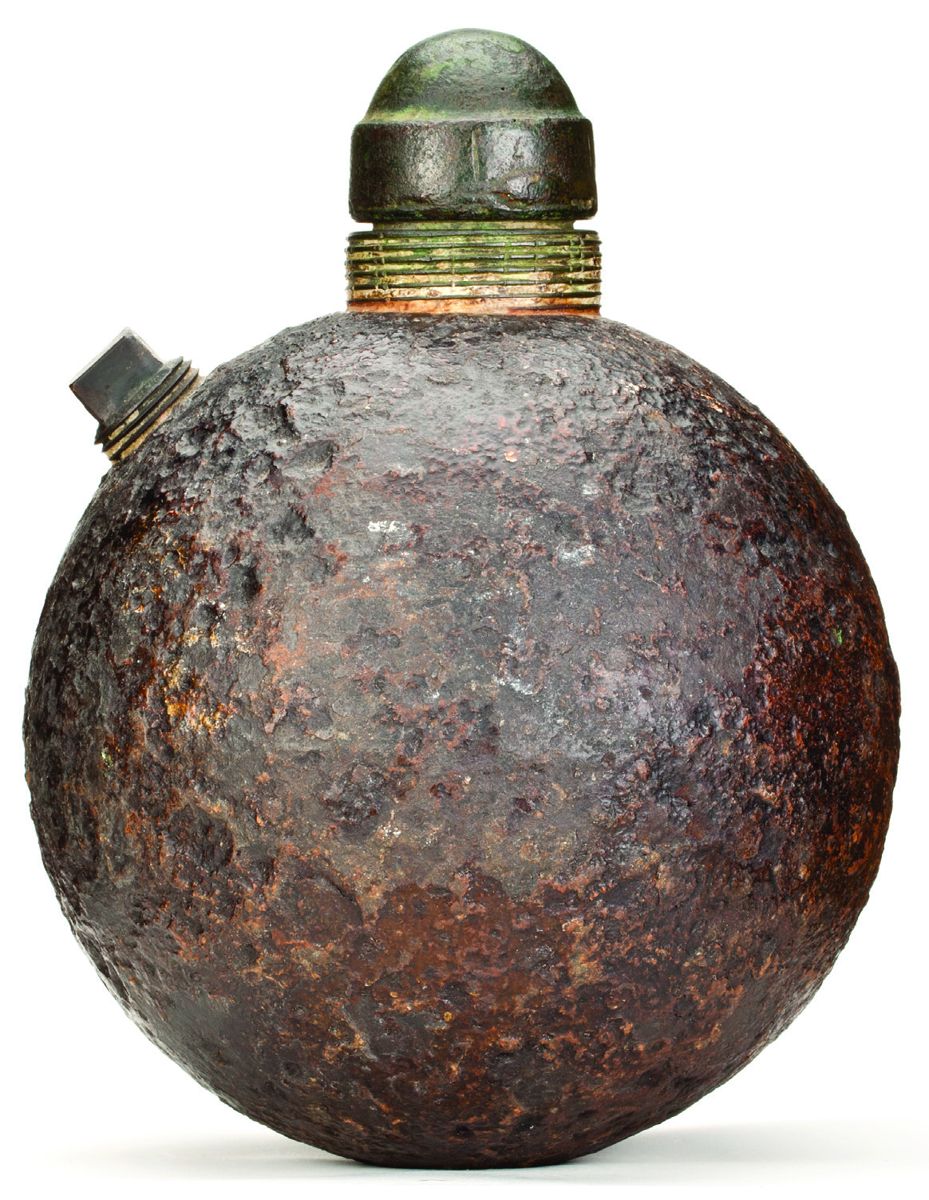
The new weaponry introduced by General Gabriel Rains in 1862 was roundly condemned as barbaric by his own commanders as well as by the enemy. Gabriel Rains and the Confederate Torpedo Bureau tells the story of innovative methods of killing and maiming that were beyond the pale at the beginning of the war, but accepted as legitimate as the war progressed. Rains, with the support of his friend President Jefferson Davis, worked to improve, manufacture and deploy his subterra shells (or land mines) and torpedoes (or underwater mines) in an effort to counterbalance the Union’s superiority in military manpower and hardware and in naval capability. Acting on his own, Rains had his rear guard troops mine the roads as they pulled out of Yorktown and Williamsburg. A few of these devices, jury-rigged from parts on hand by this inventive tinkerer, impeded the Federals marching toward Richmond, but his superiors disapproved and ordered him to cease. The war was, after all, still a gentlemen’s affair. That would change. Rains was a practical man, both as an inventor and in his way of reckoning the ethics of war. What, he asked, is the moral difference between mining a road and showering troops on that same road with shells from distant guns? Soon Rains won the argument. Or perhaps the grim necessity of war was the more persuasive factor.
In 1863 Rains was made the Confederacy’s Superintendent of Conscription but he actually wore two hats. The authors raise the possibility that the first job was just a cover for his secret work as Superintendent of the Army’s Torpedo Bureau. As the technology improved, the use of subterra shells and torpedoes expanded. Landmines and underwater mines were used guard the land approaches to key cities and protect Confederate ports from Union warships. Waters and Brown have written a sound account of Rains’ career (including his postwar years) and have also done a creditable job of explaining the technical aspects of the inventor’s deadly devices. (For the latter task the illustrations and the glossary are quite valuable). Several appendices supplement the main text. One appendix includes Rains’ letter to Pres. Davis discussing the sinking of the Tecumseh at Mobile. Another appendix includes the report by the saboteur John Maxwell, who in August 1864 set off the devastating explosion at City Point. Rains’ endorsement to this report stated that the mission was undertaken by his authority. The authors tell us that the discovery of the report led Gen. Henry Halleck to order Rains’ arrest June 1865.
Confederate 24-pounder Spherical Land Mine. The diameter of Compelling Letters by Three Pennsylvania Soldiers
The plentiful notes and the ample bibliography are indicative of much careful research. The bibliography includes numerous primary sources as well as about sixty books and articles. One entry is a reprint of Rains’ own Torpedo Book and another 19th-century work by a Federal officer, edited by Herbert Schiller and published together by McFarland in 2011. With the exception of Milton F. Perry’s Infernal Machines (1965) and a Civil War Times Illustrated article from 1963, the bibliography lists no work written since 1908 that focuses on the topic of the book under review. One judges from the works cited that little has been written about these “infernal machines.” Waters and Brown have filled—or perhaps have begun to fill—a gap in our knowledge of this interesting aspect of the most interesting era of American history. Gould Hagler is the author of Georgia’s Confederate Monuments: In Honor of a Fallen Nation (Mercer University Press, 2014). The book is available from Mercer University Press, retail outlets, online sellers and directly from the author, [email protected].
Three Brothers: Death and Love in the Civil War. By Thomas Power Lowry, MD. Illustrations, photographs. 118 pp., 2017. Idle Winter Press, www. idlewinter.com, $11.99 softcover. Reviewed by David D. Kindy
In 1861, as the United States was being torn apart by deep divisions, three brothers from Pennsylvania shared their thoughts in letters as they pondered their future and that of their country. Two would join the Union army and meet their fate at the calamitous battle of Fredericksburg. The surviving brother would go on to a long career as a journalist. The letters they wrote in that fateful year survive today and tell an intriguing story about life on the precipice of tragedy. Some of their reflections are piercing and insightful, others are frivolous and petty—all are poignant and brimming with portent of what is to come as young lives cast their eyes to an uncertain future. Prolific author Thomas Lowry has written an interesting but short book about his relatives at the outbreak of the Civil War. He transcribes each letter in its entirety and provides deep background on the political, religious and moral issues referred to by the brothers, offering useful context for an extremely divisive moment in American history. The letters of Emanuel and Michael Lowry and their half-brother John Suhre are like looking through an open window to a distant, faded past. They provide glimpses of the fears and frustrations, joys and jubilations, anticipations and apprehensions of young men—boys, really—trying to make sense of the crazy world around them while at the same time attempting to find where they fit into such a place. Sadly, Three Brothers is a book in search of a narrative. While the information is important and interesting, it lacks a compelling plotline to unify the letters into a cohesive chronicle recounting what was a momentous era in our country’s history. Historians will find the book compelling because of the brothers’ insight into issues of the day. Indeed, they write in detail about the pending war and the efforts to avert the bloodbath to come. Michael was the most prescient in writing, “And such a war! What mortal imagination can conceive of the awful horror attending it!” Though his writing was the most basic and rudimentary, John would become the brother most remembered. His name was focused in the spotlight just a few years ago when historian John Matteson discovered that it was John who was Louisa May Alcott’s “prince of patients.” While serving as a nurse, Alcott was deeply affected by the serenity of a severely wounded soldier. Three Brothers: Death and Love in the Civil War is another important volume about the impact of the Civil War on everyday lives. But it could have been so much more. David Kindy of Plymouth, Mass., is a lifelong student of history, and researcher of Civil War veterans from his hometown area.
Kentucky remained in the Union during the Civil War with the understanding that the country, at the conclusion of the Civil War, would not differ from the country that existed the day before Lincoln was elected president. However, as the war progressed, it became apparent to all Kentuckians that this return to 1859 normalcy was not to be and that the Commonwealth was to be forever changed. Kentucky soon divided into three camps: one that embraced these war-driven social, political, and economic changes; those who tolerated it; and those who were violently opposed. During the Civil War, western Kentucky, the Jackson Purchase Area, was the South Carolina of Kentucky. By 1864, law and order had broken down within western Kentucky and guerrilla warfare, at its worst, shrouded the land. It was into this quagmire that in 1864 Brig. Gen. Eleazer A. Paine was sent to restore order. Unfortunately for General Paine, the Union Army did not possess a field manual on how to deal with an insurgency, an insurgency that had open civilian support and was backed by uniformed and nonuniformed mounted Confederate partisan units who were led by Confederate “officers” who often did hold a valid Confederate commission. Brigadier General Paine had served with honor on the battlefield early in the war until sickness debilitated him. Thereafter, Paine served in administrative positions, which he fulfilled admirably. On July 19, 1864 he arrived in Paducah, Kentucky, and found that his garrison consisted of only infantry, partly U.S.C.T., and faced an enemy who was horse-mounted. These raiders struck at will throughout the Jackson Purchase Area, destroying property owned by Union men and executing Unionists. Often incapacitated by sickness, General Paine was still able to develop a semblance of security for the area. Paine’s downfall resulted from his abolitionist views, and his belief that everyone was equal under the eyes of the law. Thus, a coalition of citizens who objected to the end of the area’s pre-Civil War social status quo began to bombard Congress, the governor, and the War Department with various complaints about General Paine, stating that he was conducting a “Reign of Terror.” Within six months of the start of this anti-Paine campaign, the War Department relieved him of his command and ordered him court-martialed. A total of twenty-six charges, all thoroughly documented in the book, were levied against Paine. At the conclusion of his trial, only one of the charges could be proven, that of slandering a senior officer during a private conversation. All other charges were found to be false, yet the damage had been done. Months of the news media proclaiming General Paine was conducting a “Reign of Terror” in Western Kentucky could not be undone by a notice that he had been found innocent of all these charges. The authors close their book by examining how promoters of the Myth of the Lost Cause villainized General Paine by painting his actions in the worst light and concocting degrading fictional accounts of his time in office. It is interesting how those who during the Civil War destroyed the economic fabric of Western Kentucky became its heroes, but those who sought to preserve it, the villains. The book is an excellent case study of the tactics of insurgency, counter-insurgency, and the laws of war. Charles H. Bogart is a graduate of Thomas More College and Ohio State University. He is President of the Frankfort Civil War Roundtable and a member of the Board of Directors of the Kentucky Civil War Roundtable. He is presently employed as a living historian at the Fort Boone Civil War Battle Site in Frankfort, Kentucky. He is coauthor of the book 1st Kentucky Independent Battery.
A Compelling Look at Palmetto State’s Complex Memory Civil War Canon: Sites of Confederate Memory in South Carolina. By Thomas J. Brown. Maps, illustrations, notes, index, 376 pp., 2018. University of North Carolina Press, www.uncpress.org. $29.95 cloth. Reviewed by Jonathan A. Noyalas
Since South Carolina’s decision to sever its bonds with the Union in December 1860 to the state’s decision to remove the Confederate flag from the grounds of the state capitol— in the wake of the tragic and senseless murder of nine members of Charleston’s Emanuel A.M.E. Church—the Palmetto State has been a lightning rod for debate about our republic’s defining moment. While historians have long focused on South Carolina’s leading role in secession and its various battles, the state has never before been the singular focus of a study about how South Carolinians remembered the Civil War era. Thomas Brown’s latest volume, splendidly researched and masterfully crafted, remedies that deficiency in scholarship. Through Brown’s first-rate analysis of selected monuments, cemeteries, memorials and literature, this study achieves two broad objectives. First, the author examines the manner in which various groups commemorated the Civil War era in the decades following the conflict. Second, Brown’s magnificent work traces how those initial memories of the Civil War era evolved since the war’s end into the twenty-first century. To achieve the book’s initial goal, Brown analyzes an array of monuments, especially ones memorializing John C. Calhoun and those dedicated to the state’s Confederate soldiers and Confederate women in
Brigadier General E. A. Paine, U.S.A., a Casualty of the Lost Cause Myth General E. A. Paine in Western Kentucky: Assessing the “Reign of Terror” of the Summer of 1864. By Dieter C. Ullrich and Berry Craig. Maps, photos, notes, index, 188 pp., 2018. McFarland & Company, www.mcfarlandpub.com. $39.95 paperback. Reviewed by Charles H. Bogart
Columbia. The author poignantly illustrates that the monuments in Columbia to soldiers and women stood primarily to recount the heroism of soldiers who donned the gray, and women who did all they could on the home front to support the Confederate war effort. But the memorials also provided an opportunity for those who once supported the Confederacy to commemorate, with “jubilant remembrances,” the state’s “redemption” in the 1870s. In a fascinating manner, Brown examines efforts both during and after the conflict to memorialize Calhoun, and the lengths Confederate supporters took in an effort to secure his monument in Charleston. As Calhoun proved symbolic of the Union’s destruction, South Carolinians worked to protect his earthly remains during the conflict, fearing what Northern soldiers might to do them. Additionally, throughout the volume Brown analyzes how literature, from the poetry of authors such as Henry Timrod and novels penned by the likes of Dubose Heyward and Herbert Ravenel Sass, influenced how people perceived the Civil War. Perhaps one of the author’s more fascinating literary critiques comes with his analysis of novels penned about the Confederate submarine Hunley. Cyrus Townsend Brady’s A Little Traitor to the South, published in 1903, paints Lt. George Dixon, portrayed through the fictional character Harry Lacy, and his crew as men who set out on not just a mission to sink the USS Housatonic, but on a kamikaze-like undertaking for the Confederate war effort. Beyond Brown’s astute analysis of the way South Carolinians remembered the Civil War era, he offers an equally compelling examination of how memories of the era evolved over generations. For example, in his study of Fort Sumter, Brown traces its history from a historic site that celebrated a Lost Cause version of the conflict to the National Park Service’s interpretation which stresses how slavery’s wedge divided the nation and precipitated the war’s first shots in Charleston Harbor. Throughout the book Brown lucidly illustrates that numerous factors—including economics, political transformation and changing demographics—impact how individuals, groups and communities remember the Civil War. Brown’s splendidly crafted and thought-provoking history focuses on the Palmetto State, yet this volume is essential for any student of Civil War memory. Destined to take its place among the ranks of classic studies of this genre, it provides an excellent framework for how other historians might wish to approach analysis of the complexities of Civil War memory in other localities. Prof. Jonathan A. Noyalas is the director of Shenandoah University’s McCormick Civil War Institute. He is author or editor of eleven books on Civil War-era history, including Civil War Legacy in the Shenandoah: Remembrance, Reunion and Reconciliation. His next book will examine the tenuous nature of freedom for African Americans during the Civil War era in the Shenandoah Valley.