
This And That
Pristine Battlefield Preserved by State of Georgia
By Gould Hagler · Originally published April 2018 · pp. 20–21
This brigade, in two lines, was then pushed forward to attack the enemy, the other troops not moving. After skirmishing about 800 yards, the front line came upon and immediately engaged the enemy, when one of the most desperate engagements of my experience ensued….None of the other troops except about fifty men of the Forty-ninth Ohio advanced as far as my lines during their desperate and unsupported battle. Report of Brig. Gen. William B. Hazen on the engagement at Pickett’s Mill, May 27, 1864.
By the third week of the Atlanta Campaign, the Confederate Army of Tennessee had been forced from its original position at Dalton more than half way to Atlanta along the Western and Atlantic Railroad. By moving his Federal armies around the Confederate left, Maj. Gen. William T. Sherman again threatened his foe’s communications and supply lines. The Confederate commander, Gen. Joseph E. Johnston, positioned his force in a defensive line—from Dallas on the left, stretching six miles toward Pickett’s Mill Creek on the right—along which the armies fought from May 25 to June 4. Part of this line is now preserved by the state of Georgia at Pickett’s Mill Battlefield State Historic Site, where the unfortunate men of Hazen’s Brigade, a unit in Maj. Gen. O.O. Howard’s IV Corps, faced the Confederate division commanded by Maj. Gen. Patrick Cleburne, whose men fought on favorable terrain from a wellprepared defensive position. According to Dillan Lee, Curator and Interpretative Ranger at the site, the three battles fought along the Dallas-New Hope Church Line “represent a critical time of the Atlanta Campaign where Sherman left his railroadbased supply lines in an effort to get around the Allatoona Pass fortifications. Sherman was soundly beaten in two of these three efforts.” Nevertheless, when his flank was threatened, Johnston had to continue his withdrawal. While it is convenient to divide the action into three distinct fights, Lee points out that “there were innumerable skirmishes that took place and new ones are still being discovered every day.” At Pickett’s Mill itself, when the battle was fought on May 27, the Federals suffered some
1,600 casualties, while the Confederates lost less than onethird that number. Lee says the battle presents “a unique case study in that General Howard’s expedition can be examined as how not to conduct an operation. There’s a reason Ambrose Bierce wrote about this battle as a ‘criminal blunder.’ On the other hand, General Cleburne’s masterful defense and immediate responses to various threats can be given a close look as well.” This area of northwest Georgia, now a rapidly growing exurb of metropolitan Atlanta, was sparsely settled farmland during and long after the Civil War. Consequently, when the state began its effort to create the park it could do so on land undisturbed by development. In the words of historian Brad Butkovich, in his 2013 book The Battle of Pickett’s Mill: Along the Deadline, “Few parks have such a varied and storied tale to tell and still come out as they looked over a century and a half ago.” Much of the land was eventually acquired by a group of preservation-minded investors, who in turn sold it to the state in the 1970s. With additional purchases, the state has acquired a total of 755 acres. The park was dedicated in 1990 and opened to the public in 1992. There are no plans to acquire more property. There is no need. As Butkovich puts it, the park includes “the entirety of the battlefield and much of the
surrounding approaches and environs.” The park has a staff of two full-time and two part-time employees. The park is not blessed with abundant resources, but the staff does a great deal with the means at hand. A volunteer organization, Friends of Pickett’s Mill, supports the park’s mission with living history and routine chores like trail maintenance. The organization is also producing a new museum film, which is to be finished next year.
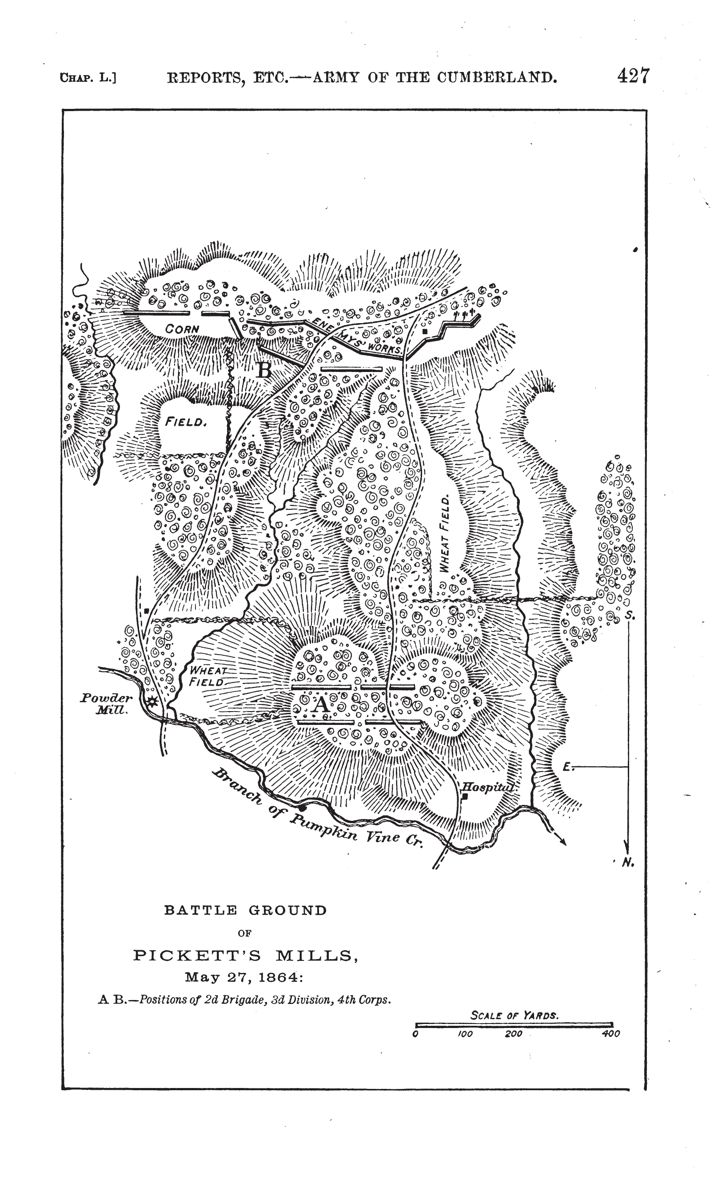
Map of Pickett’s Mill area drawn by Brig. Gen. Hazen from the Official Records, Series I, Vol. 38, Part I, page 427.
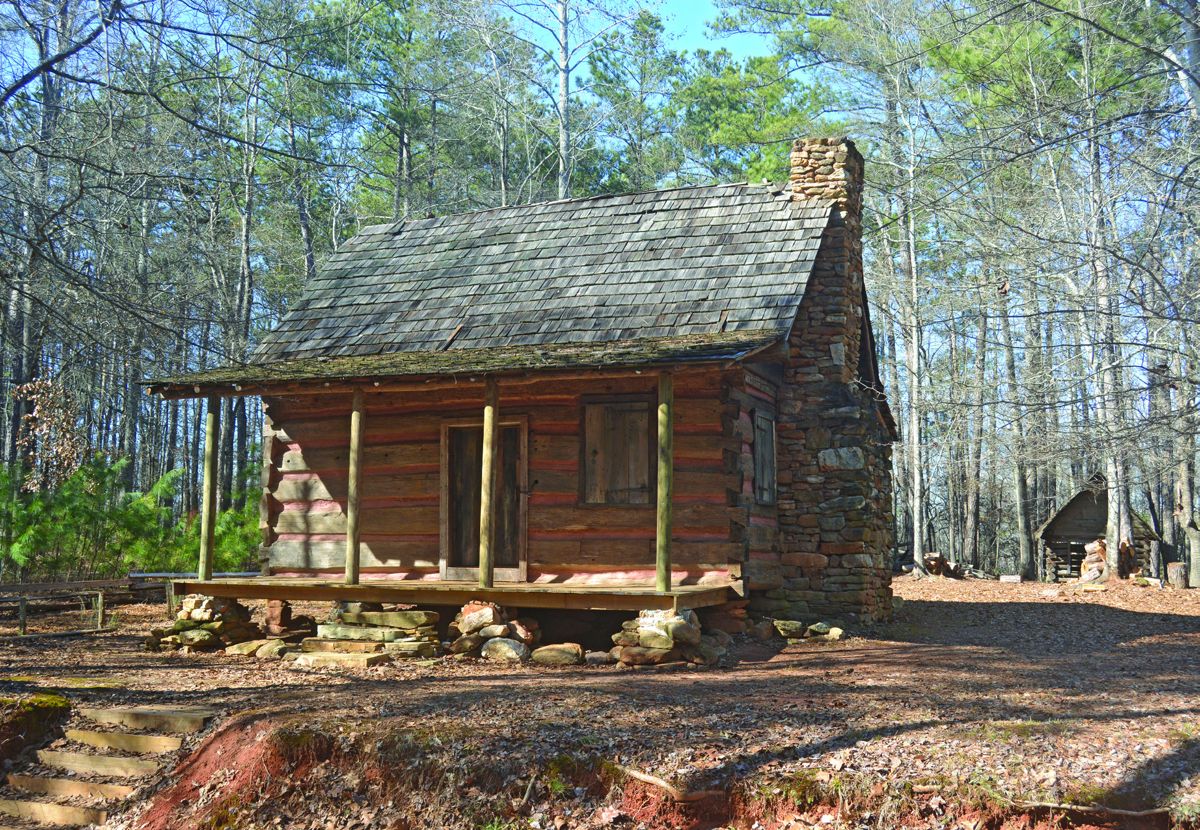
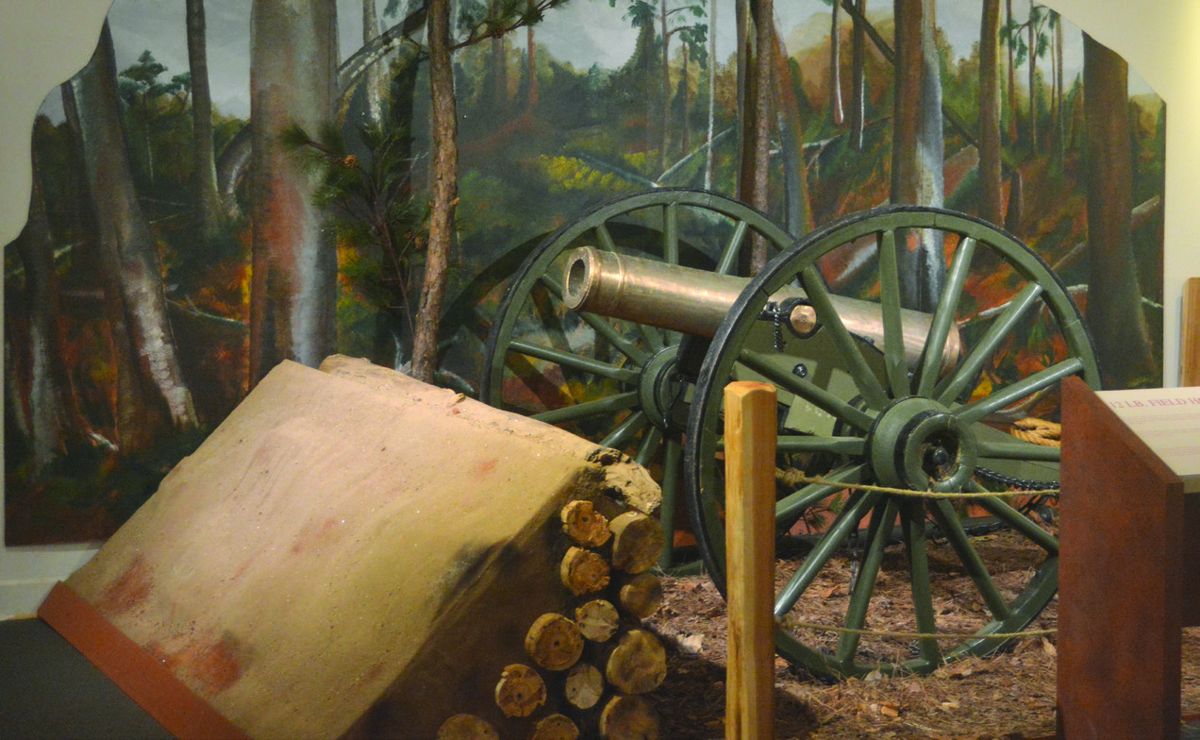
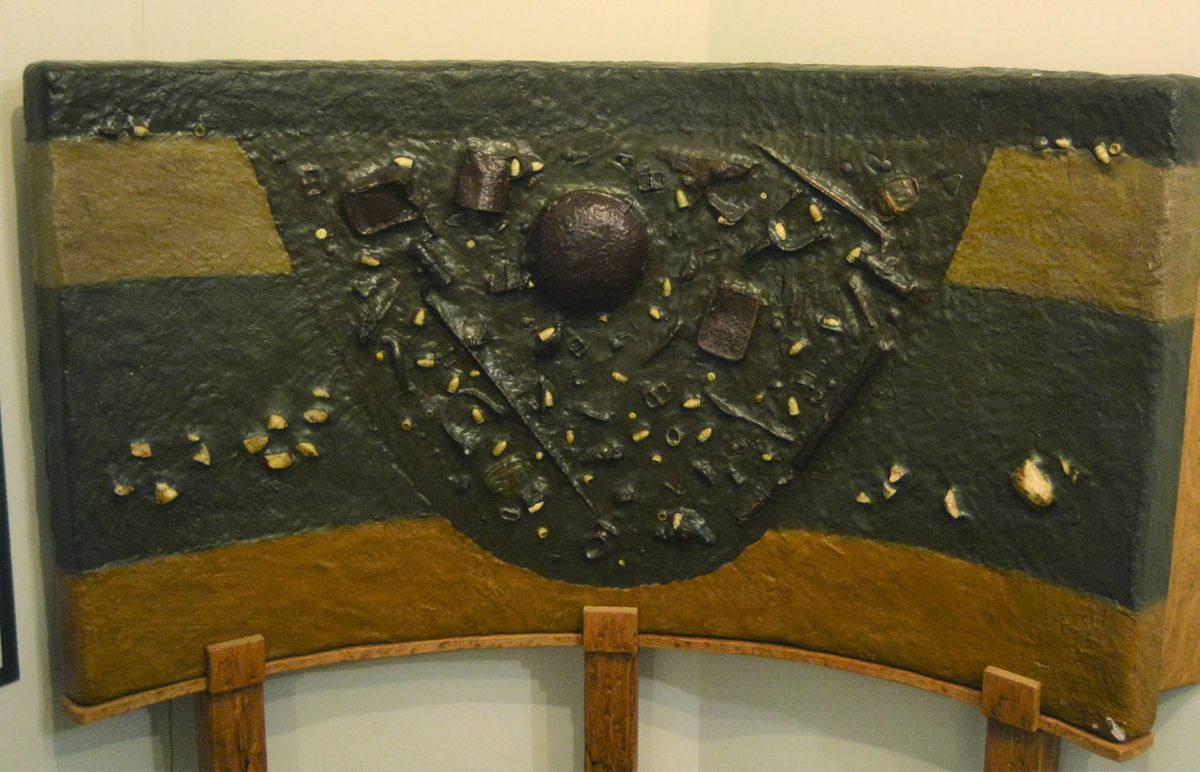
The visitors’ center contains numerous artifacts, some dug on the property before the state acquired it. Well-designed displays tell the story of the battle and educate the public about the war in general, the principles of military science, and military technology as it existed in the mid-nineteenth century. The exhibits also depict the lives of ordinary soldiers and of civilians buffeted by war’s stormy winds. The visitors’ center also houses a small library, with many donated works, including a set of the Official Records of the War of the Rebellion and all the volumes of the Confederate Veteran magazine. The park conducts numerous programs throughout the year. Lee, who started his career as a volunteer and reenactor, says that the programs place a major emphasis on living history. The activities include a refugee camp demonstrating the plight of the people fleeing Sherman’s army, and a camp of instruction showing how volunteers were hurriedly schooled in the arts of war that they would soon practice. Another program depicts life in a typical rural cabin. The 2018 calendar also includes a nighttime battle reenactment, re-creating one of the war’s rare nighttime attacks. When school groups visit the park, the young people get the excitement of cannon and musketry fire, but gain more important lessons about the lives of men and women in an era (and, for some, in the very place) peopled by their greatgreat-great-great-grandparents. They learn that one family in the area, the Brandts, fled during the war and never returned. They are told that the owner of Pickett’s Mill, Lieut. Benjamin Pickett, was killed at Chickamauga, eight months before his widow saw the mill burned when the property became a battleground. The mill was never rebuilt. The site is open from 9 a.m. to 5 p.m., Thursday, Friday, and Saturday. A modest admission fee is charged. Next month we will take a look at another battlefield preserved as a state park, this one further to the north, in a different theater of the war. Gould Hagler is a retired lobbyist living in Dunwoody, Ga. He is a past president of the Civil War Round Table of Atlanta and the author Georgia’s Confederate Monuments: In Honor of a Fallen Nation, published by Mercer University Press in 2014. Hagler speaks frequently on this topic and others related to different aspects of the Civil War and has been a regular contributor to CWN since 2016. He can be reached at gould.hagler@gmail. com.