
The Graphic War
PhotoShopping: 19th Century Style
By Salvatore Cilella · Originally published April 2018 · pp. 30–31
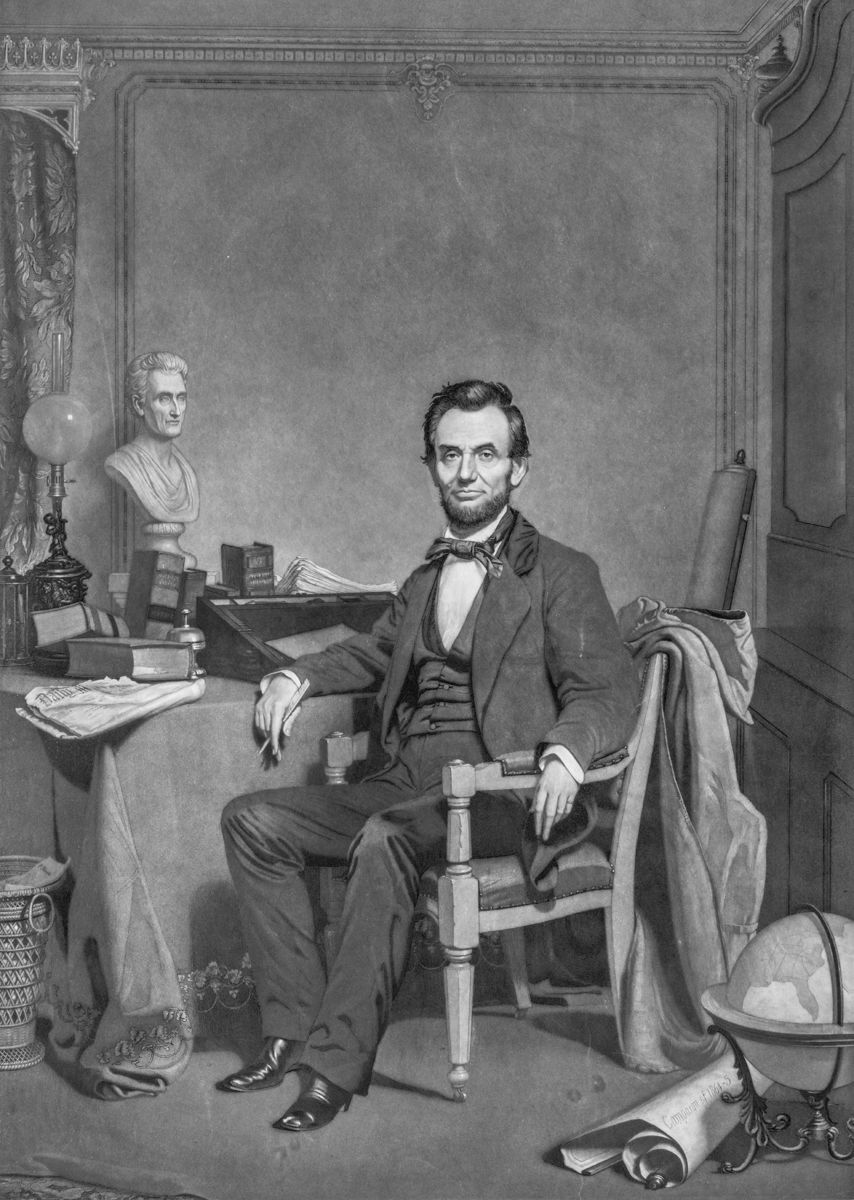
This occasional column highlights prints from the Civil War. It will discuss their meaning and most importantly, what the print maker or artist was trying to achieve. As we indicated in previous columns, print making in 19th century America was at the nexus of art and commerce. Not only were print makers concerned with creating “colored engravings for the people” as Currier and Ives did, they were also obliged to earn a profit. When the firm began, Nathaniel Currier quickly realized that his prints could be the first in a long line of worthy “news” items. In 1835 he produced a New York City fire picture that quickly sold thousands of copies. Capitalizing on the interest, Currier produced a print of a hotel fire that occurred in New Orleans in 1835 and five years later, the burning of the Steamboat Lexington. By the time of the Civil War, challengers to Currier and Ives (who joined in 1857) were everywhere and the competition heated up. It was not unheard of, and indeed common, for rival firms to directly copy subject matter from one another. Additionally, the urgency for timeliness caused printmakers to produce “an abundance of outright fakery,” that “found its way into the marketplace.” Prints of President Lincoln were a particularly popular subject. Various printmakers “occasionally resorted to the wildest chicanery to bring out products quickly.” Lincoln’s milestones: his nomination, election, the trip to Washington, inauguration, various speeches, last inaugural, and death were all fodder for the entrepreneurial printmaker. As one historian wrote: “in the clamor for ‘new’ images, expedience dictated that a number of retouched variants, mirror images, and other fakes and thefts be rushed to the public before some of the better works could be produced.”1 There are two remarkable examples of 19th century “photo shopping” Lincoln portraits that reveal the urgency of timeliness. The first is by Philadelphia oil painter and watercolorist John Sartain. Known as the father of mezzotint engraving in America, this London born
Photo A. Francis Preston Blair, Jr.
(All photos Library of Congress)
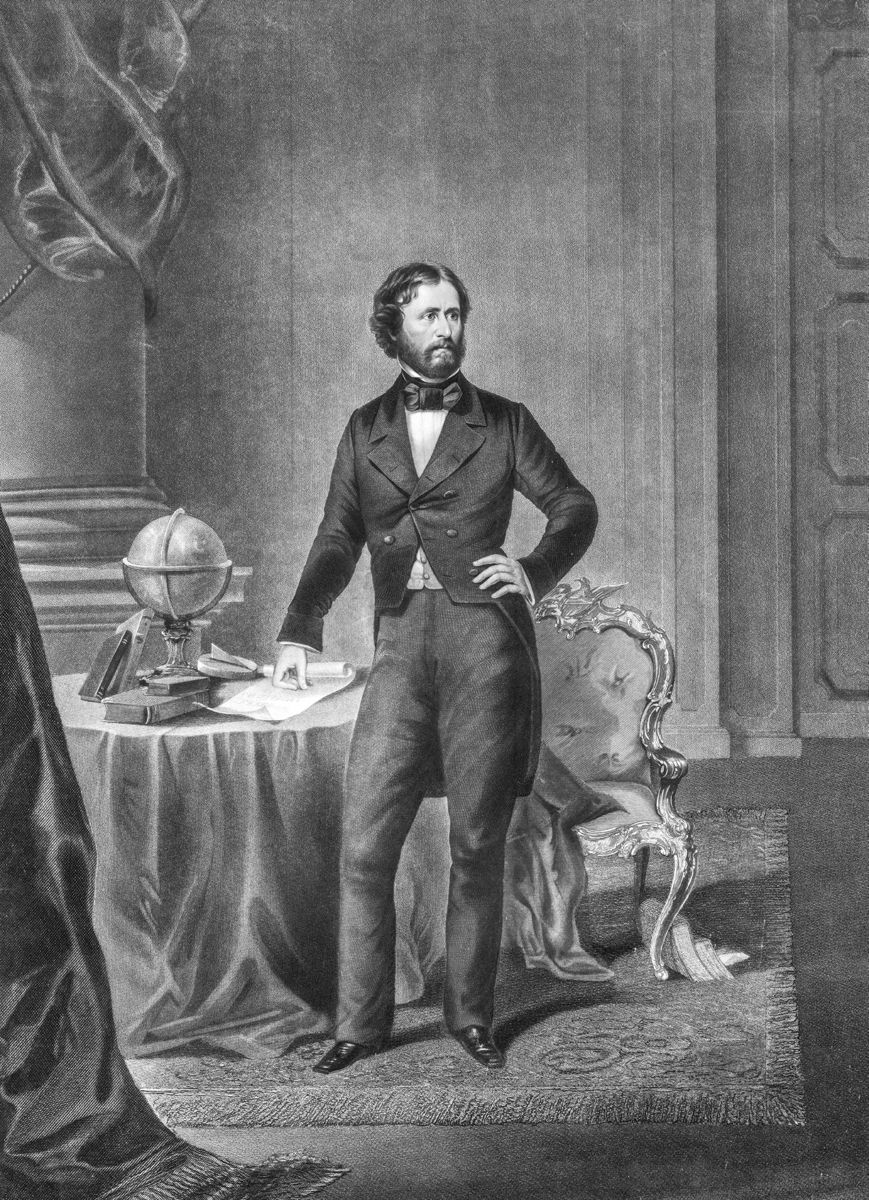
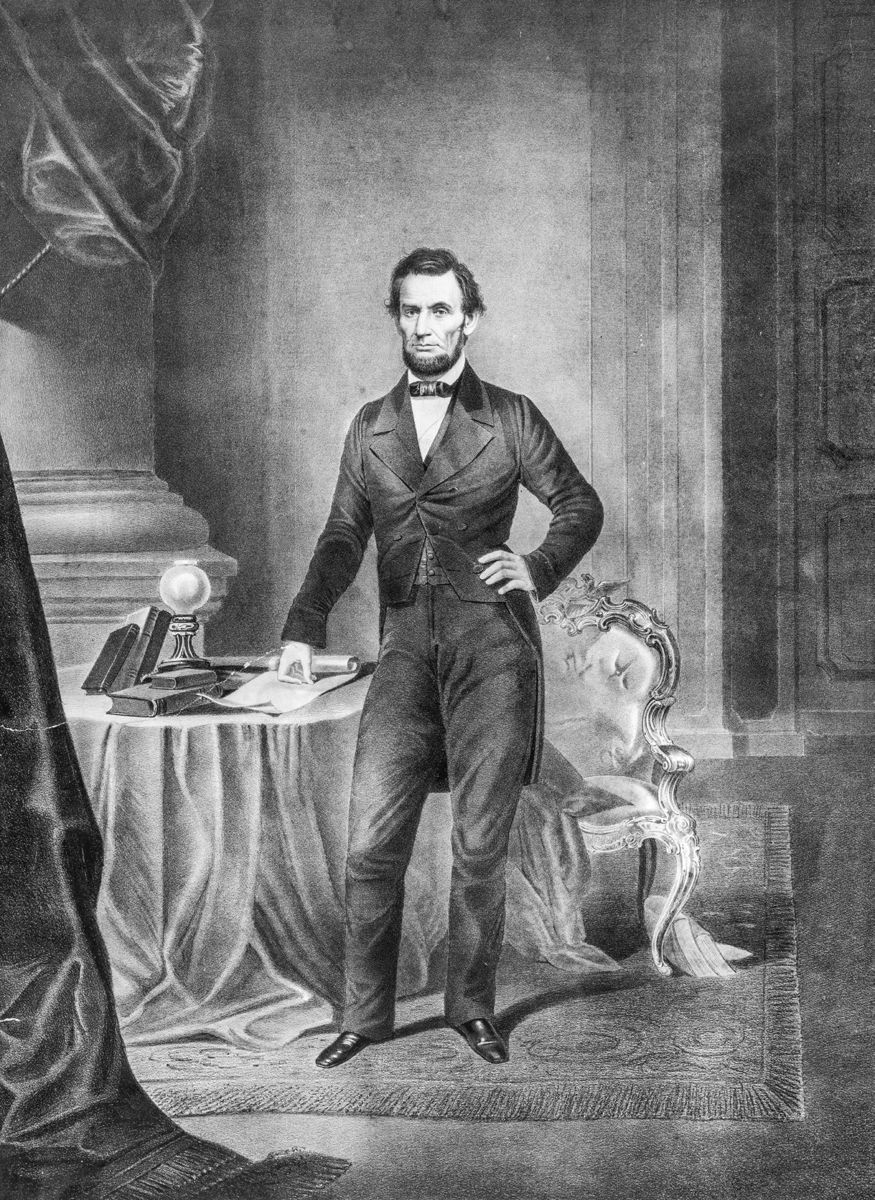
artist was also a publisher and arts administrator. His sons, daughters, and grandchildren were all artists.2 With Lincoln’s assassination, Sartain took an existing steel engraved plate depicting Francis Preston Blair Jr. (photo A) and, using an image of Lincoln’s head, superimposed it on Blair’s body (photo B). At least he had the decency to place an inscription on the lower left hand corner of the print giving credit to the artist of the head: “The head after a photograph from life, the picture by Boyle.” The “Boyle” mentioned here is thought to be Ferdinand Lee Boyle who painted Lincoln’s portrait. Neither the artist nor the printmaker, R.R. Landon of Chicago, changed anything else in the engraving. As Holzer points out, “this is one of several composite prints issued after Lincoln’s assassination for which slightly unscrupulous engravers adapted outdated portraits of former or less salable celebrities by substituting Lincoln’s head. Blair’s paunch is inappropriate and his fine hands never split wood.”3 The other, very similar example of printmaking chicanery is a likeness of Lincoln by John Chester Buttre. Buttre, born in Auburn, N.Y., in 1821, produced more than 3,000 engravings and lithographs. His work and life spanned nearly the entire 19th century, capturing the likenesses of political, military, and naval personalities. In 1880–1881, he published a three-volume work, The American Portrait Gallery, with his daughter. His portrait of Lincoln originally appeared as a portrait of John C. Fremont when Fremont was running for the Republican nomination in 1859 (exhibit C). When Lincoln received the nomination instead, Buttre burnished out Fremont’s face replacing it with Lincoln’s (exhibit D). The globe has been replaced with an oil lamp. This is the third version of the print, the first being Fremont; in the second Lincoln is clean-shaven, and the third he has a beard.4 And we thought Photoshop was a new concept.
Endnotes: 1. Harold Holzer, Gabor S. Boritt, Mark E. Neely, Jr. The Lincoln Image: Abraham Lincoln and the Popular Print. (New York) Scribner Press, 1984, 204–205. Hereafter Holzer, Lincoln Image. See also, for general information on all union prints, Harold Holzer and Mark E. Neely, Jr. The Union Image: Popular Prints of the Civil War North. Chapel Hill: The University of North Carolina Press, 2000. 2. Katherine Martinez, Page Talbott, eds. Philadelphia’s Cultural Landscape: The Sartain Family Legacy. Philadelphia: Temple University Press, 2000. 3. Holzer, Lincoln Image, 206. 4. See also Milton Kaplan, “Heads of State.” Winterthur Portfolio 6 (1970): 136–7.
Salvatore Cilella is retired after 43 years in the museum field. His last position was President and CEO of the Atlanta History Center. He is the author of several articles and books. His most recent books are Upton’s Regulars: A History of the 121st New York Volunteers in the Civil War (U. Press Kansas, 2009) and he edited The Correspondence of General Emory Upton, 1856– 1881 (U. Tennessee Press, 2017).