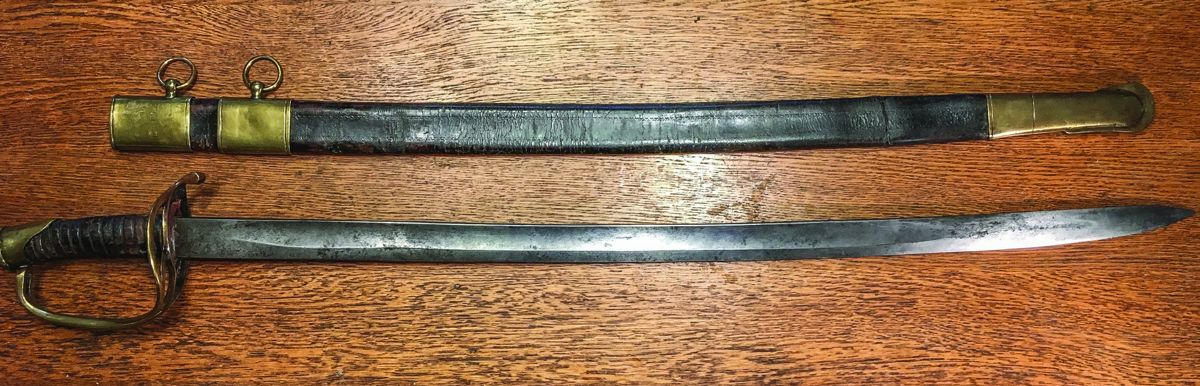
Great Grandfather’s Civil War Sword
By John Sexton · Originally published April 2018 · p. 24
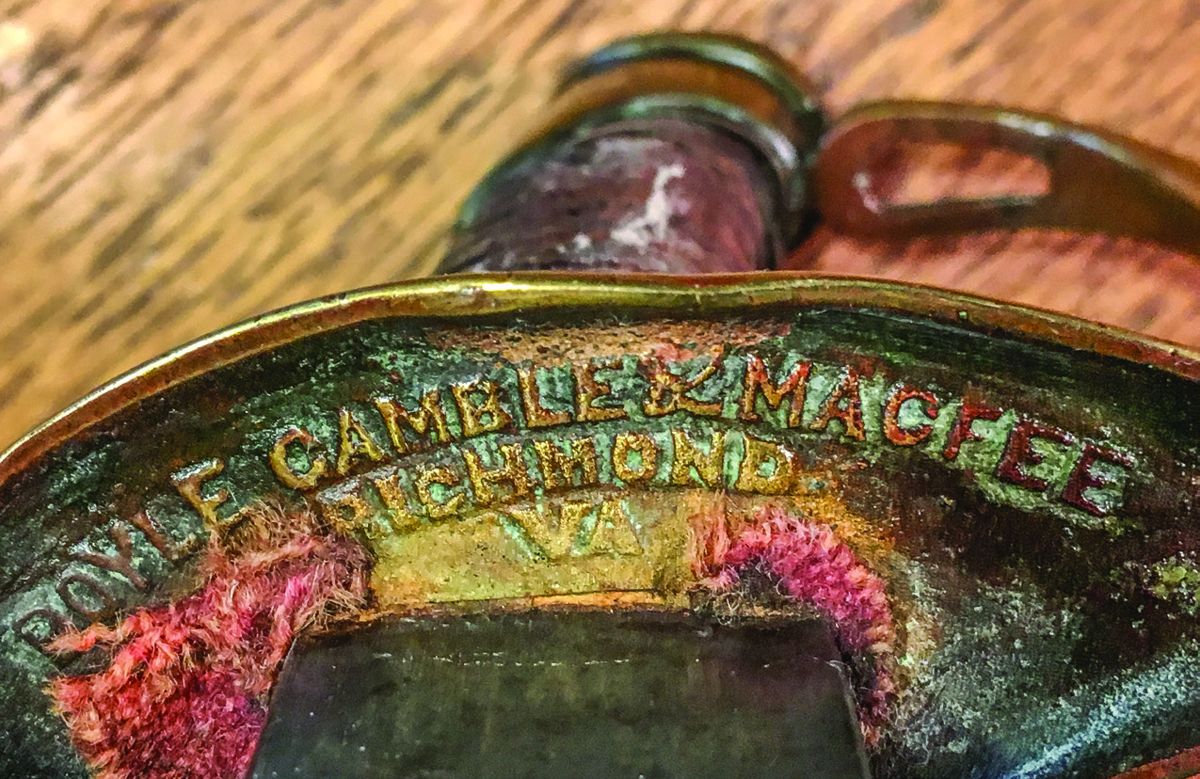
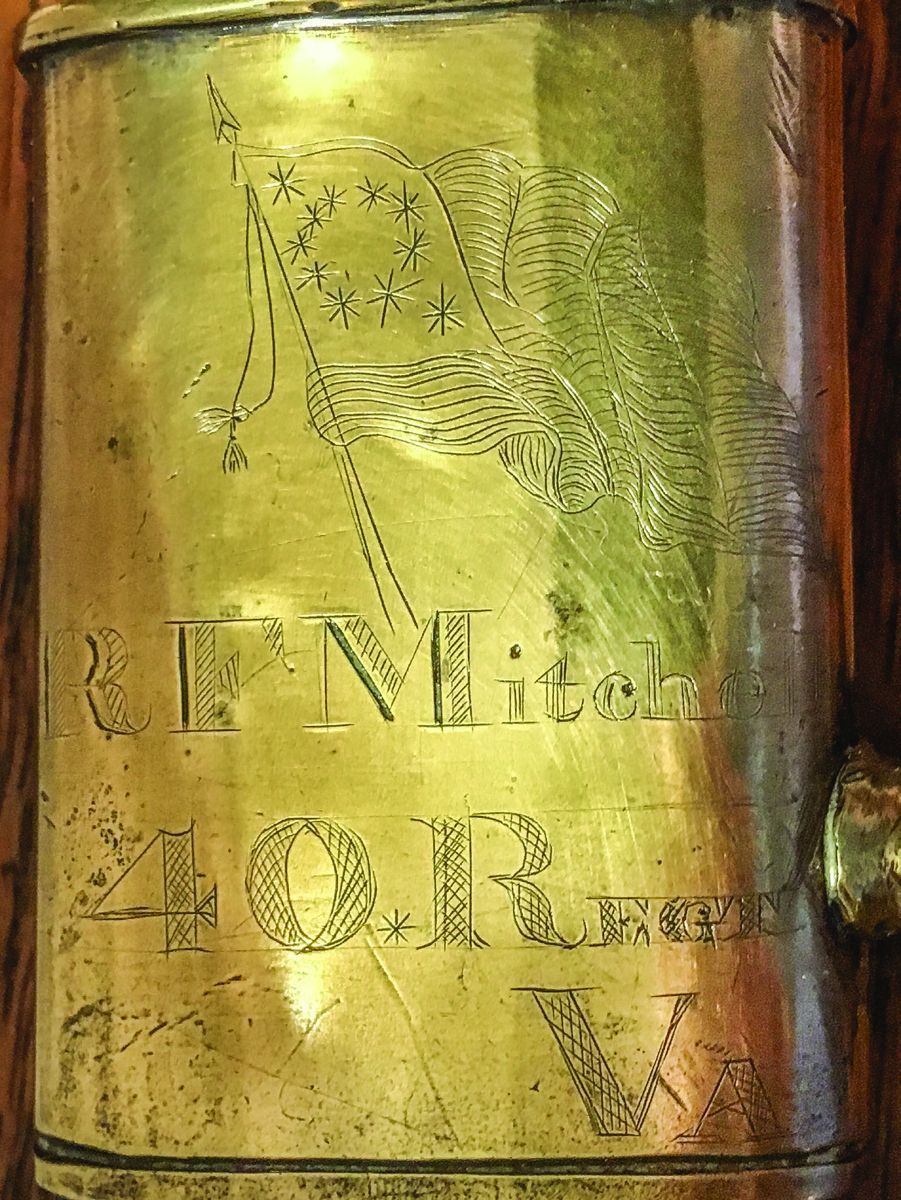
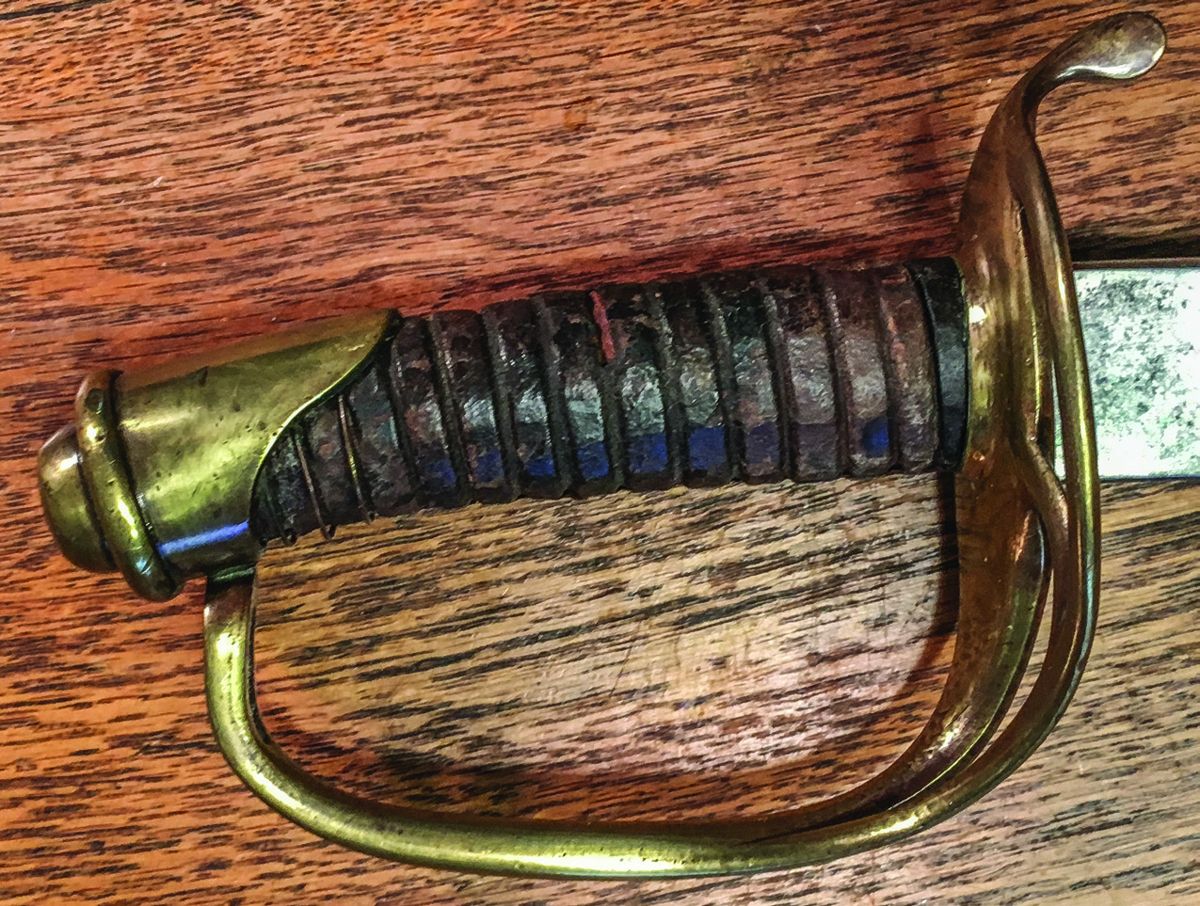
Dear John Sexton: It was a pleasure talking to you on Friday. I appreciate all of your guidance on my Great Grandfather Robert F. Mitchell’s CSA Civil War sword. The sword’s provenance: Captain Robert Fairfax Mitchell of Grove Mount, Warsaw, Va., was the great grandson of Priscilla Carter of Nomini Hall, Westmoreland, Va., and Robert Mitchell. He enlisted June 4, 1861, in Co. E, 40th Va. Inf. He was wounded in the hand at Frazier’s Farm, Oct. 3, 1862. On Nov. 7, 1863, he resigned due to the effects of his wounds. Captain Mitchell died in 1911 and was buried at Burned House Farm, Warsaw, Va. I look forward to hearing from you. Robert M. Dear Robert: Your sword fits among the often encountered makermarked Confederate swords. Boyle, Gamble & Macfee made numerous edged weapons in Richmond, Va., during the Civil War. While this sword is not rare, this is a nice complete example in very good condition with only a small crack repair to the leather just above the drag. The inscription on the top mount was done either by your ancestor or a professional “artist” in the camp. It is quite striking and could possibly double the price of the sword uninscribed. Similar swords with no inscriptions are typically priced in the market today between $6,500-8,500. In my opinion, this sword with the beautifully-inscribed Confederate First National flag and unit designation on the top scabbard mount could easily sell at auction for $15,000 or even more. The last identified BG&M foot officer’s sword of which I am aware of publicly sold in October 2009 at James D. Julia Auctions,
Lot 2482. It had only a painted inscription that it was taken by a Union drummer boy as a souvenir; this one had a replaced scabbard and sold for $13,800. Your sword is much more desirable in my opinion. If I were valuing this sword for insurance replacement value, I would ask for an agreed value of $20,000, and I am sure your insurance carrier would be happy to charge you the millage at that level. The 40th Virginia Regiment, of which your ancestor was a part, was part of General John M. Brockenbrough’s small brigade, in A.P. Hill’s division. The regiment was raised in and around Gloucester County, Va., and objects that turn up associated with this unit are typically of Richmond manufacture. If by any chance there is a photograph in the family, it is probably by Rees of Richmond as other identified officers’ photographs of this unit are known.
John is an certified appraiser with International Society of Appraisers specializing in Civil War memorabilia. He authenticates and evaluates other rare and valuable historic items as well. His website is www. civilwardealer.com. He is coauthor of the book Confederate Bowie Knives (2012) by Jack
Melton, Josh Phillips and John Sexton, that was published by Mowbray Publishing Inc. Send “Ask The Appraiser” questions and photographs to [email protected].