Caring For Your Antique Textiles
By Jessica Hack · Originally published April 2018 · pp. 28–29
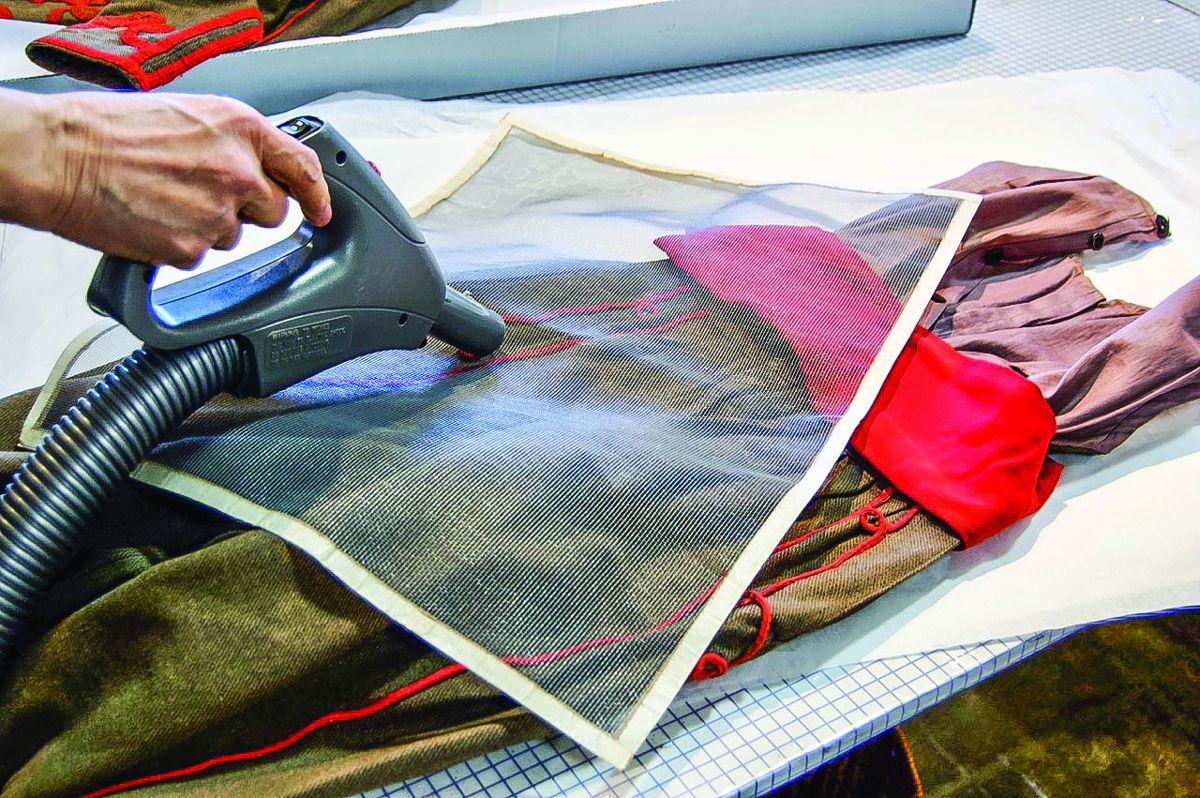
I asked Jack Melton recently what he thought his readers might want to hear about from me. He suggested that I write an article about things that collectors can do themselves to care for textiles in their collection, as well as when you should call a professional conservator to care for an object. One of the most important things we can do to care for a textile is to make sure that it is clean. There is no telling exactly where it has been all the years since it was made, used, or worn. For collectors of Civil War textiles, many of these objects look like they have been through a war—because they have! They have been smoked over a campfire, dragged through the dirt, gotten wet over and over again, and more. Cleaning is not only the most basic of treatments; it is a significant action adding to a textile’s longevity. In addition to war related effects, the textiles were likely at some point to have been stored in an acidic environment, i.e. wrapped in paper, stored in a wooden trunk, or on wooden shelves. Removing dirt and dust from the textile’s surface, and that embedded in the fibers, is a major part of the cleaning process. This can be done with a low suction vacuum cleaner. Please do NOT use the heavy-duty suction cleaner you use for cleaning carpeting in your house! I would also suggest vacuuming through a screen of fiberglass mesh (as used in screen doors). You need about a 12 inch square. It is also good to bind the edges of the screening with masking tape. The screening is soft, but the cut edges can scrape or tear delicate fabrics. Place the square of screening down flat on a section of the textile (for example, a jacket or a flag), then run the open end of the vacuum hose carefully over the screen, in passes of a few inches at a time. This is a time consuming process, but yields results you can see on the surface, as well as knowing that dirt has been removed from fibers inside the woven material. The next step in a cleaning process would be wet or dry cleaning of the object. You can actually wash a lot of things. However, if the object is colored, it is a wise idea to test the wet
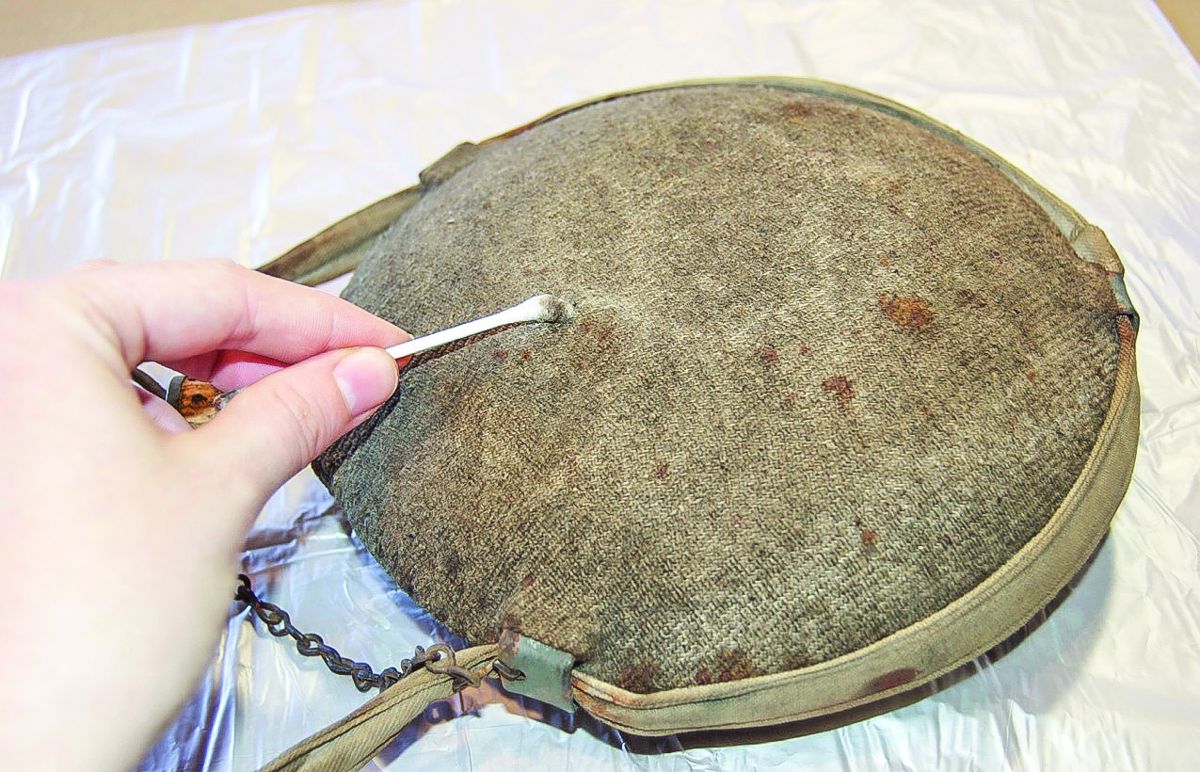
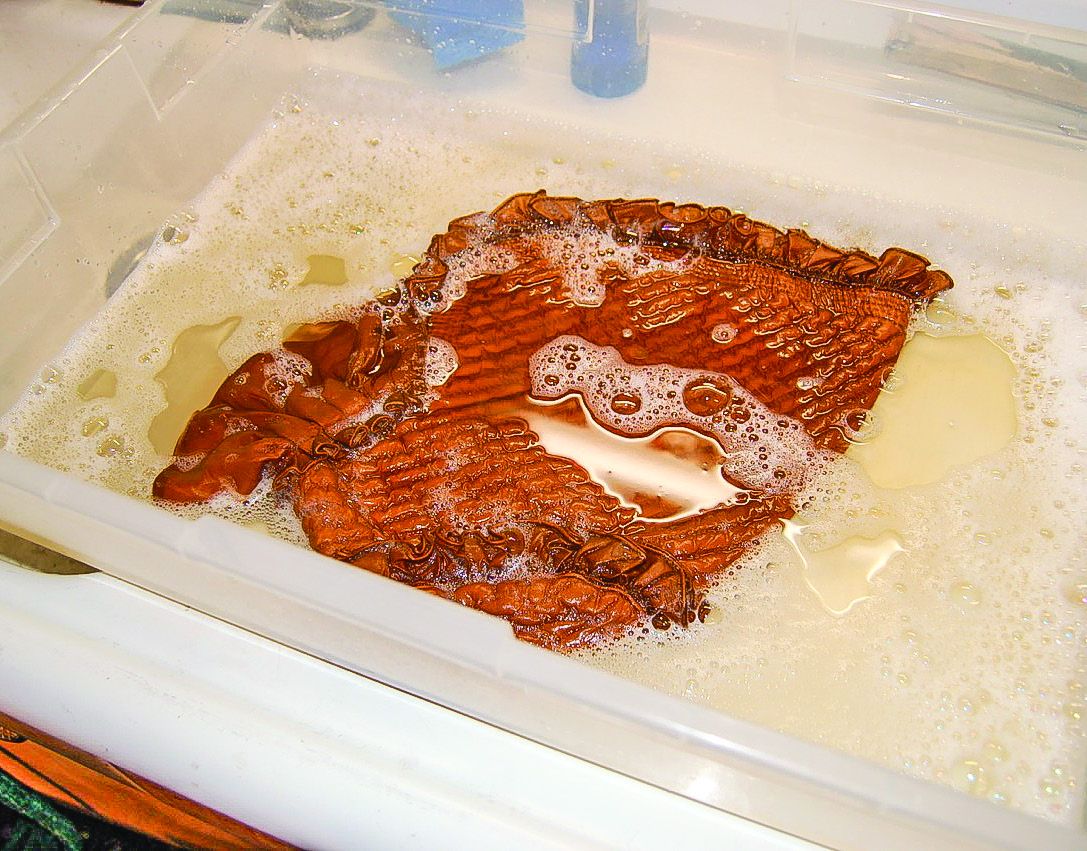
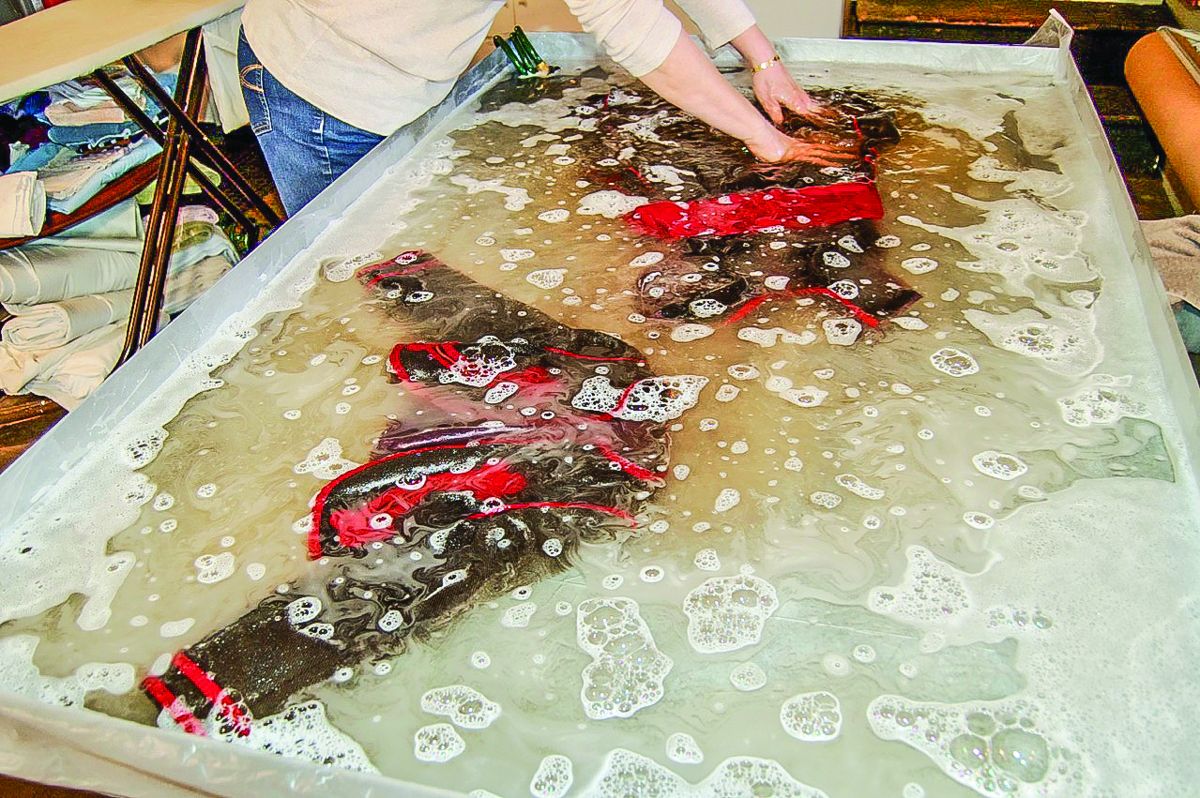
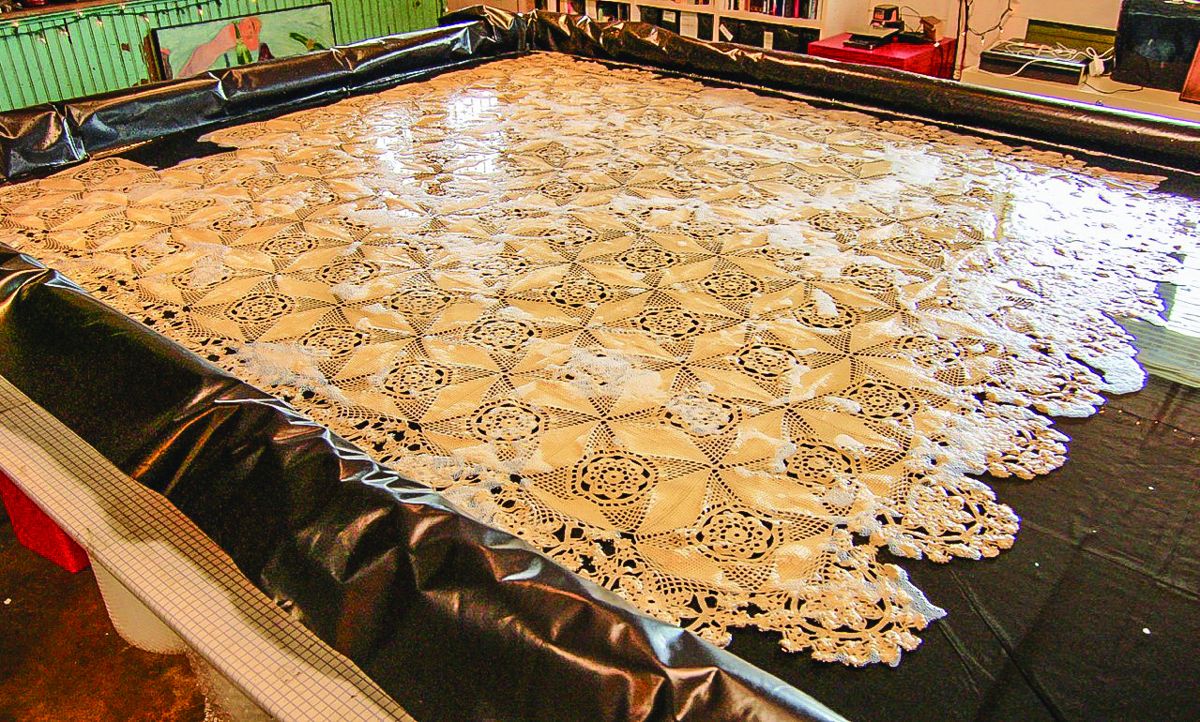
fastness before you do so. You can test by wetting a cotton swab with distilled water (with or without soap) and putting it on each area of a different color. Place a piece of blotting paper (can be paper towel) under the textile, and weigh down the cotton swab from above. Remove when the swab is dry. Generally speaking, Civil War era artifacts like uniforms and flags have been exposed to water many times in their lives already. If there is no evidence of dye bleed or staining, it is likely a good candidate for wet cleaning if it is made of wool and/or cotton. Silk is another matter. I clean a lot of silk political ribbons, flags, bandannas, and dresses, usually by hand dry cleaning. This is better left to a conservation professional, and not your local dry cleaner. If you plan to wet clean an object, you will need a basin or tank to do it in. If it is a small object, and can be laid out in a container, like a plastic sweater storage box, use that. It is best that an object lays flat during the washing process. I have a custom fabricated stainless steel wash tank, but for larger objects, you can make a wash tank with PVC piping, lined with plastic sheeting. The accompanying photo shows a large tank made with 6 inch PVC pipe, but you can easily make a much smaller one with a smaller diameter pipe. Draining the tank is a challenge, and a small pump is really helpful. There is also a lot of rinsing involved along with the washing. About this time, sending it to a professional starts sounding good, not that you couldn’t do it yourself! I wet clean textiles in distilled water with a neutral pH surfactant, sodium lauryl sulfate (either sold as Orvus WA paste; or LOC, an Amway product). Remember that textiles are most vulnerable when they are wet. It is a good idea to place them on a sheet of fiberglass mesh screening during the washing process so that the textile can be safely lifted in and out of the bath on the supporting screen. Thorough rinsing is necessary to flush out all soap and any remaining contaminants in the water. Towel blotting and air drying flat complete the process. With uniforms, pressing, or steaming
Padded coat hanger.
Bonnet after treatment.
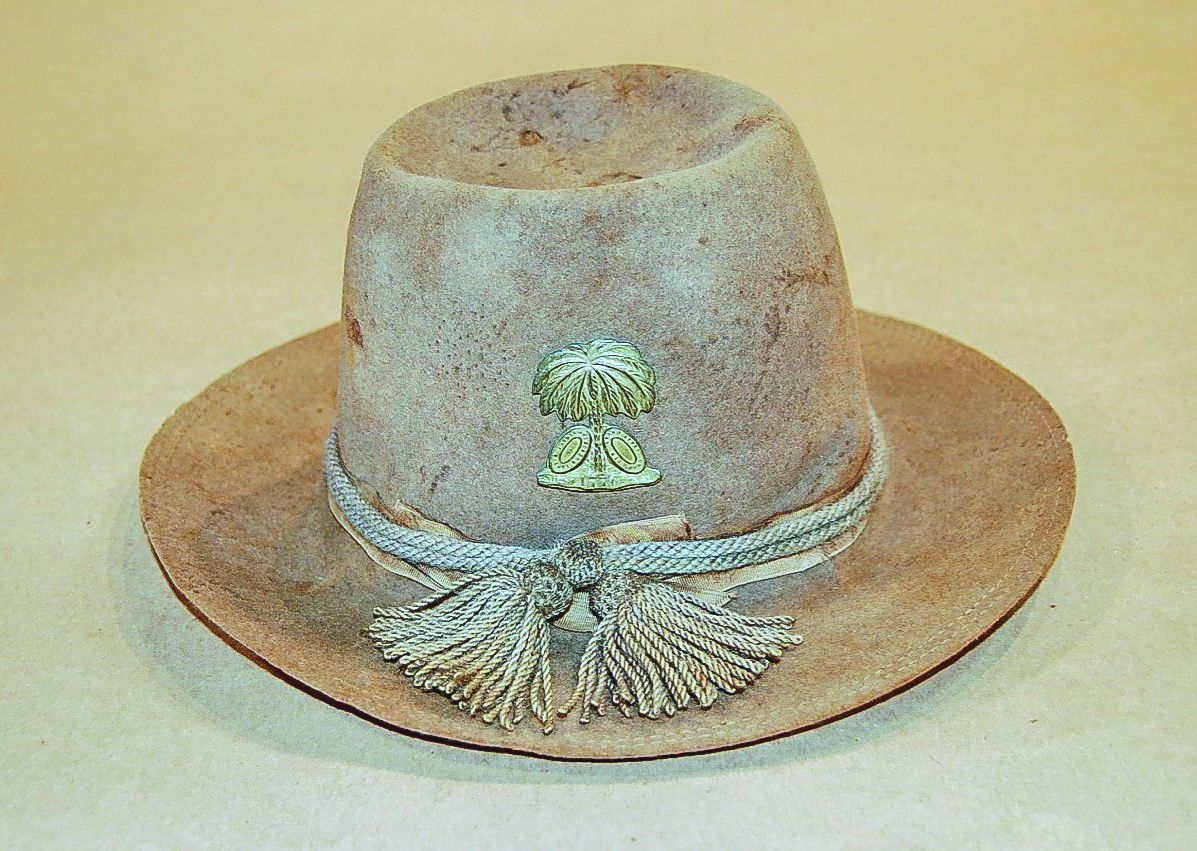
Hat, after treatment.
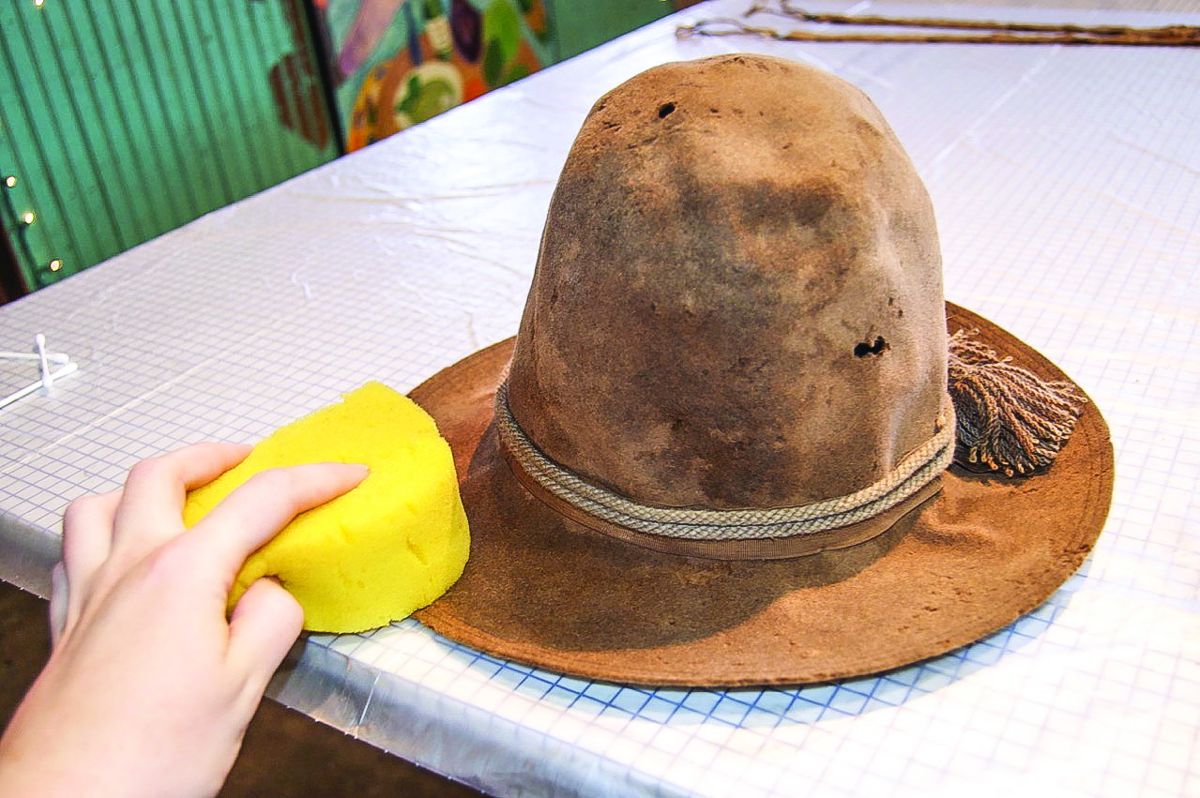
will then be required. Small flat textiles can be hand pressed out flat before drying. If an artifact cannot be submerged in water, surface cleaning can be done with a damp sponge or cotton swabs moistened with surfactant suds and a little water. Another important aspect of care is the way your textiles are stored. Housing them in acid free storage boxes is ideal, if you have the room to store them flat. Wrapping textiles in pre-washed cotton material or a pillowcase for storage is another option. If storing textiles on wooden shelves, the shelves should be painted, coated with polyurethane, or covered with a barrier of mylar sheeting to prevent acid migration from the shelves into the textiles. Storing them in a climate controlled environment is imperative. I have done surveys of many textile collections where clothing and uniforms are hanging on ill-fitting wire coat hangers. If you want to hang a jacket, it is preferable to use a padded coat hanger. They can be made by covering a wooden coat hanger with a muslin casing filled with polyester fiberfill batting. The shoulder area of the jacket is then well supported for long term hanging. Muslin slip covers can also be used for hanging storage to give the textiles added protection from dust and dirt. Hopefully this article has given you encouragement, or at least food for thought!