
A Southerner’s Perspective on Sherman’s March
By Stephen Davis · Originally published April 2018 · pp. 22–23
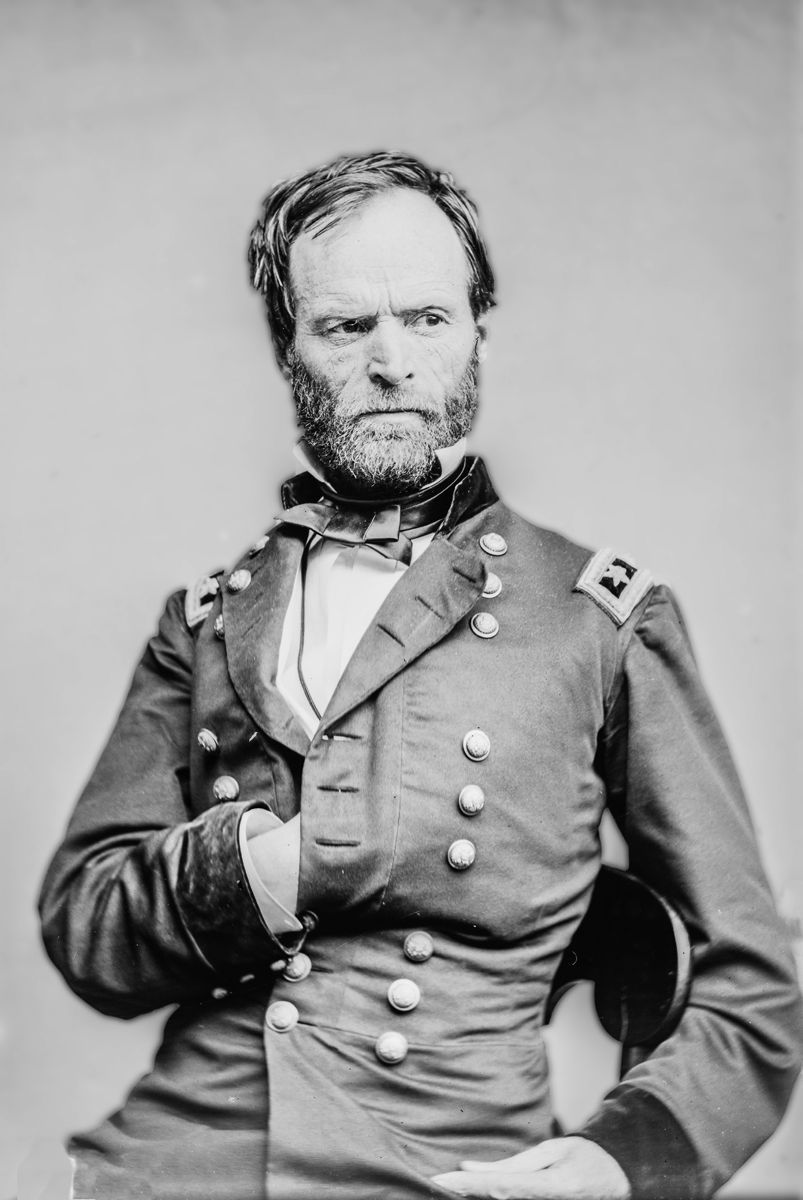
In 1897, Englishman Arnold Toynbee was pondering his country’s Diamond Jubilee, a celebration of England’s wealth and international power under Queen Victoria. “There is, of course, a thing called history,” he later wrote, “but history is something unpleasant that happens to other people.” Britons were “comfortably outside all that,” Toynbee reasoned; “if I have been a small boy in New York in 1897 I should have felt the same;” But then he added, “if I had been a small boy in 1897 in the Southern part of the United States, I should have known from my parents that history had happened to my people in my part of the world.” The famed Southern historian C. Vann Woodward used this story to reinforce his argument, made in an essay published in 1953, that the South’s experience in the Civil War had set it apart from the rest of America, aligning it instead with much of the rest of the world. “The South had undergone an experience that it could share with no other part of America,” Woodward explained, “though it is shared by nearly all the peoples of Europe and Asia— the experience of military defeat, occupation, and reconstruction.”1 To Woodward, this experience informed white Southerners’ world view in ways that only they could understand. For those of us Southerners who study the Civil War, Toynbee/Woodward’s argument brings forth ideas and emotions about one of the war’s most storied campaigns: Sherman’s march to the sea and through the Carolinas. It also explains why the name of Sherman, 150 years later, still brings forth strong feelings in this region. A perusal of Burke Davis’ Sherman’s March (1980) reminds us of the excesses taken by Northern soldiers during the march. In Milledgeville, they looted the state capitol, stole books and trampled others in the dirt. Molasses was poured down a church pipe organ. Kate Nichols, a 27-year-old lying sick in bed, was raped. “Mrs. Nichols was to die later in a mental institution,” Davis adds. Burke—I met him in Atlanta in 1980 when he was touring for his book—tells how Eliza Andrews of Washington County followed the path of Sherman’s army. She saw burned and pillaged homes; carcasses of butchered livestock lined the road. Eliza arrived at the town of Gordon: “there was nothing left of the poor little village but ruins, charred and black as Yankee hearts.” Near the Ogeechee River, the Federals came upon the Canning plantation. They demanded that old man Canning give over his gold. When he protested that he had none, they strung him up by the neck till he passed out. Looking for valuables, the Northerners dug up a recently buried child. They burned the outbuildings, drove off stock, cut well ropes, and even stole the shoes from the feet of Canning’s slaves. “What kind of folks is them Yankees?” a dazed woman asked. Things got worse in South Carolina. Judson Kilpatrick, Davis writes, “amused himself during the pillaging of Barnwell by burning the town.” Sherman laughed when he read Kilpatrick’s message, “We have changed the name of Barnwell to Burnwell.” In South Carolina’s capital, fires spread from cotton bales ignited by Confederates during their evacuation of Columbia. The situation got out of control when Sherman’s soldiers entering the city found liquor. Davis quotes David Conyngham, a Union officer who doubled as reporter for the New York Herald, who saw “drunken soldiers rushing from house to house, emptying them of their valuables and firing them.” William Gilmore Simms, the famed novelist, later wrote of soldiers raping AfricanAmerican women: “regiments, in successive relays, subjected scores of these poor women to the torture of their embraces.” This led Davis to conclude, “there were no reports of raped white women, but black women of the city suffered terribly.” North Carolina received more leniency from Sherman’s men. “Though few houses were burned in North Carolina,” Davis asserts, “the plundering continued to terrorize the women who lived in the army’s path.” In Wadesboro, for instance, Judson Kilpatrick’s cavalrymen “swept through the town systematically, taking everything of value from the houses.” As for their commander, Davis notes, “Sherman was aware that such depredations were creating havoc in Confederate armies, and did little to halt them.”2 Burke Davis wrote more than a century after Sherman’s march. His tone is measured, but his facts are salient about the excesses and abuses visited by Sherman’s troops upon the people of the South.
Even before the march, Sherman’s name was reviled in the Confederacy. In August 1864, Henry Watterson, the veteran journalist writing as “Grape” for the Augusta Constitutionalist, editorialized at length against Sherman. “Of all the Yankee Generals he is the poorest, the vainest, the meanest,” he began; “he is without honor as a man, or conscience as a human being.” “A paltry villain, a currish knave, the very Fawkes of society,” Watterson went on, mentioning the villain who tried to blow up Parliament, “a dull sharper, a cheat and shame upon the name of soldier, the very embodiment of an ill-begotten, ill-bred and -destined caterpillar, clinging only to sloth and mildew, climbing no higher than the scum of a rank and putrid atmosphere.”3 After the war, former Confederates constructed a virtual library of invective against Sherman for his march. Ex-president Jefferson Davis led the way with his reminiscences, published in 1881. “When it is incontrovertibly true that the line of his march could be traced by the burning dwelling-houses,” Davis charged, “and by the wail of women and children pitilessly left to die from starvation and exposure in the depth of winter, his plea of ‘not guilty’…can not free him from the reprobation which outraged humanity must attach to an act of cruelty which only finds a parallel in the barbarous excesses of…the Thirty Years’ War.”4 It especially galled Southerners that Sherman’s barbarous march was being hailed in the North as a brilliant military campaign. Even General Lee weighed in, though he did so in his characteristically gentlemanly manner. “I have never understood,” Dabney Maury quoted him as once commenting, “why General Sherman has been so much commended for that march, when the only question before him to decide was whether he could feed his army by consuming all the people had to eat.”5 Charles Colcock Jones Jr., of Savannah, emerged after the war as an influential critic of Sherman among Georgians. In 1884 he spoke to Confederate veterans on the infamous march, which he claimed was “conducted in many respects in manifest violation of the rules of civilized warfare.” Jones found it offensive that “multitudes have come to regard this holiday excursion”— meaning the festive air that many of Sherman’s men felt during their march—“as a triumph of consummate military skill and valor—as one of the most wonderful exploits in the history of modern warfare.”6 The “violation of the rules of civilized warfare” mentioned by Jones formed the context for Kentuckian William D. Pickett’s article in the Confederate Veteran (1906), entitled “Why General Sherman’s Name is Detested.” Pickett, who had served on William J. Hardee’s staff, enumerates those violations: sending women and children working in Roswell textile mills to Louisville and dumping them there, far from their homes; giving no warning of his artillery bombardment to the people of Atlanta before his guns opened fire; expulsion of almost all of Atlanta’s civilian population after he had captured the city; “plundering and ill treatment of women and children” by soldiers during their march.7 Pickett’s list of outrages continued, of course, but an interesting point is that today women historians are calling Sherman’s soldiers out for them. “Both black and whites joined in condemning Sherman’s men for malicious damage, especially for the indiscriminate slaughtering of livestock,” writes Jacqueline Glass Campbell in When Sherman Marched North from the Sea: Resistance on the
Confederate Home Front (2003). The condemnation increased when the people realized that the killing of farm animals was only to deny them food after the Yankees had carried off all they wanted. Wrecking plantations and farms was bad enough; injury turned to insult when Union soldiers entered dwellings whose only occupants were women and children. “In South Carolina,” Campbell explains, “a woman described Yankees scattering and trampling upon ‘pictures, old letters, locks of hair, pressed flowers and other hallowed mementoes of the dead.’” The historian continues: “a Georgian woman wrote of how wretched she felt when Yankees pried into ‘sacred’ items, ‘even into her father’s papers and relics of the dead.’” Rather than experiencing demoralization in the face of such outrages, Campbell concludes that Southern women who confronted Sherman’s marchers actually became more patriotic and defiant Confederates.8 An example of this phenomenon is documented by Lisa Tendrich Frank in her essay, “Confederate Girls and Sherman’s Home Front Campaign.” When Sherman marched through Georgia and the Carolinas, children experienced the ordeal of Yankees violating their homes. Soldiers ransacked their possessions, stealing or destroying girls’ trinkets,
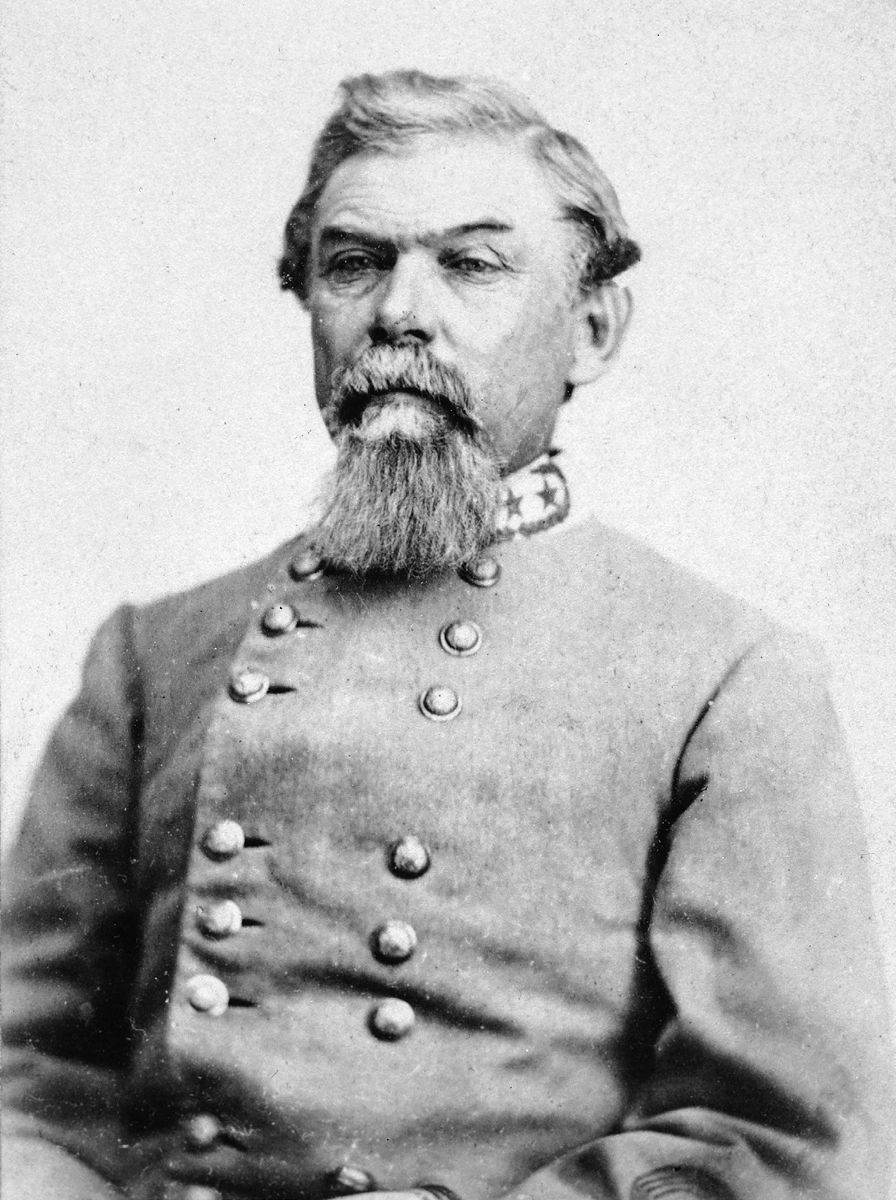
C.S. Maj. Gen. Dabney Herndon Maury.
dresses, or diaries. No wonder Emma Le Conte, aged seventeen as Sherman’s army neared Columbia, wrote that after four years of hardship, “I would rather…bear much more than submit to the Yankees.”9 Southerners’ memories of Sherman and his march have even given rise to a genre of scholarly literature. Recent titles on this growing bookshelf include Edward Caudill and Paul Ashdown, Sherman’s March in Myth and Memory (2008); Wesley Moody, Demon of the Lost Cause: Sherman and Civil War History (2011) and Anne Sarah Rubin, Through the Heart of Dixie : Sherman’s March and American Memory (2014). Caudill and Ashdown’s conclusion about Sherman’s march bears quoting; “The North tended to see a tragic necessity, a virtuous military action in which Sherman was a progressive innovator…..But for the South, the same event was an assault on civilization.”10 What’s more, those memories endure to our present day, more than a century after the war. In 2001 Lee Kennett, author of a Sherman biography, wrote an article in the Atlanta JournalConstitution, in which he argued that the Northern general was not so bad, and that the black marks on his reputation were undeserved. The newspaper published readers’ responses to Kennett’s article a week later, and they uniformly disagreed with the biographer. “May you soon join your hero, Sherman, for eternity,” snapped one respondent, “burn with him.” “Lee Kenett’s effort to sell Sherman as a nice guy is about as effective as selling a skunk as a perfume factory. After 157 years, Sherman still smells,” wrote John Black; “he was a terrorist, plain and simple.” Beau Williamson, of a north Atlanta suburb, argued, “The man is no hero. If on Earth in 2001, Sherman would be on trial in the Hague and would make a great war criminal.”11 And I suspect that it will continue, this thing between white Southerners and W.T. Sherman. I happen to be a male Caucasian, born in Virginia, and raised in Georgia, whose paternal ancestors fought in the Confederate army during the War for Southern Independence. That ancestry and identity influences my perspective on many subjects in my study of Civil War history, none more strongly than Sherman’s march through Georgia. As the Talmud, the body of Jewish law, reminds us, “We don’t see things as what they are, (Library of Congress) we see things as who we are.”
Endnotes
C. Vann Woodward, The Burden of Southern History, Revised Edition (New York, 1969), 135–36. Burke Davis, Sherman’s March (New York, 1980), 64–67, 79– 80, 84–86, 149, 165–67, 209–10. “Grape” [Henry Watterson], “Trying to Burn Atlanta— Vandalism Gone Mad— Sherman the Viper…,” Augusta Constitutionalist, Aug. 28, 1864. Jefferson Davis, The Rise and Fall of the Confederate Government, 2 vols. (New York, 1958 [1881], vol. 2, 629). Dabney Herndon Maury, Recollections of a Virginian in the Mexican, Indian, and Civil Wars (New York, 1894), 239. Carol Reardon, “William T. Sherman in Postwar Georgia’s Collective Memory, 1864-1914,” in Joan Waugh and Gary W. Gallagher, ed., Wars within a War: Controversy and Conflict over the American Civil War (Chapel Hill, 2009), 230 (Jones); Charles C. Jones, Jr., “General Sherman’s March from Atlanta to the Coast—Address Before the Survivors’ Association of Augusta, Ga., April 20th, 1884,” Southern Historical Society Papers, vol. 12, nos. 7–9 (July– September 1884), 297. William D. Pickett, “Why General Sherman’s Name is Detested,” Confederate Veteran, vol. 14, no. 7 (July 1906), 295–96. Jacqueline Glass Campbell, When Sherman Marched North
(Library of Congress)
from the Sea: Resistance on the Confederate Home Front (Chapel Hill, 2003), 73–74, 87, 91. 9. Lisa Tendrich Frank, “Children of the March: Confederate Girls and Sherman’s Home Front Campaign,” in James Marten, ed., Children and Youth during the Civil War Era (New York, 2012), 110. 10. Edward Caudill and Paul Ashdown, Sherman’s March in Myth and Memory (Lanham Md., 2008), 181; Wesley Moody, Demon of the Lost Cause: Sherman and Civil War History (Columbia, Mo., 2011); Anne Sarah Rubin, Through the Heart of Dixie: Sherman’s March and American Memory (Chapel Hill, 2014). 11. Stephen Davis, What the Yankees Did to Us: Sherman’s Bombardment and Wrecking of Atlanta (Macon, 2012), 437.
Steve Davis of Atlanta is a regular contributor to Civil War News and is the Book Review Editor. His book, A Long and Bloody Task: The Atlanta Campaign from Dalton through Kennesaw Mountain to the Chattahoochee River May 5–July 18, 1864, was published as part of Savas Beatie’s Emerging Civil War paperback series. The companion volume, All The Fighting They Want: The Atlanta Campaign From Peachtree Creek To The City’s Surrender, July 18–September 2, 1864, was published Spring 2017.