
Through The Lens
No Joy In Lovejoy
By Stephanie Hagiwara · Originally published September 2017 · p. 9
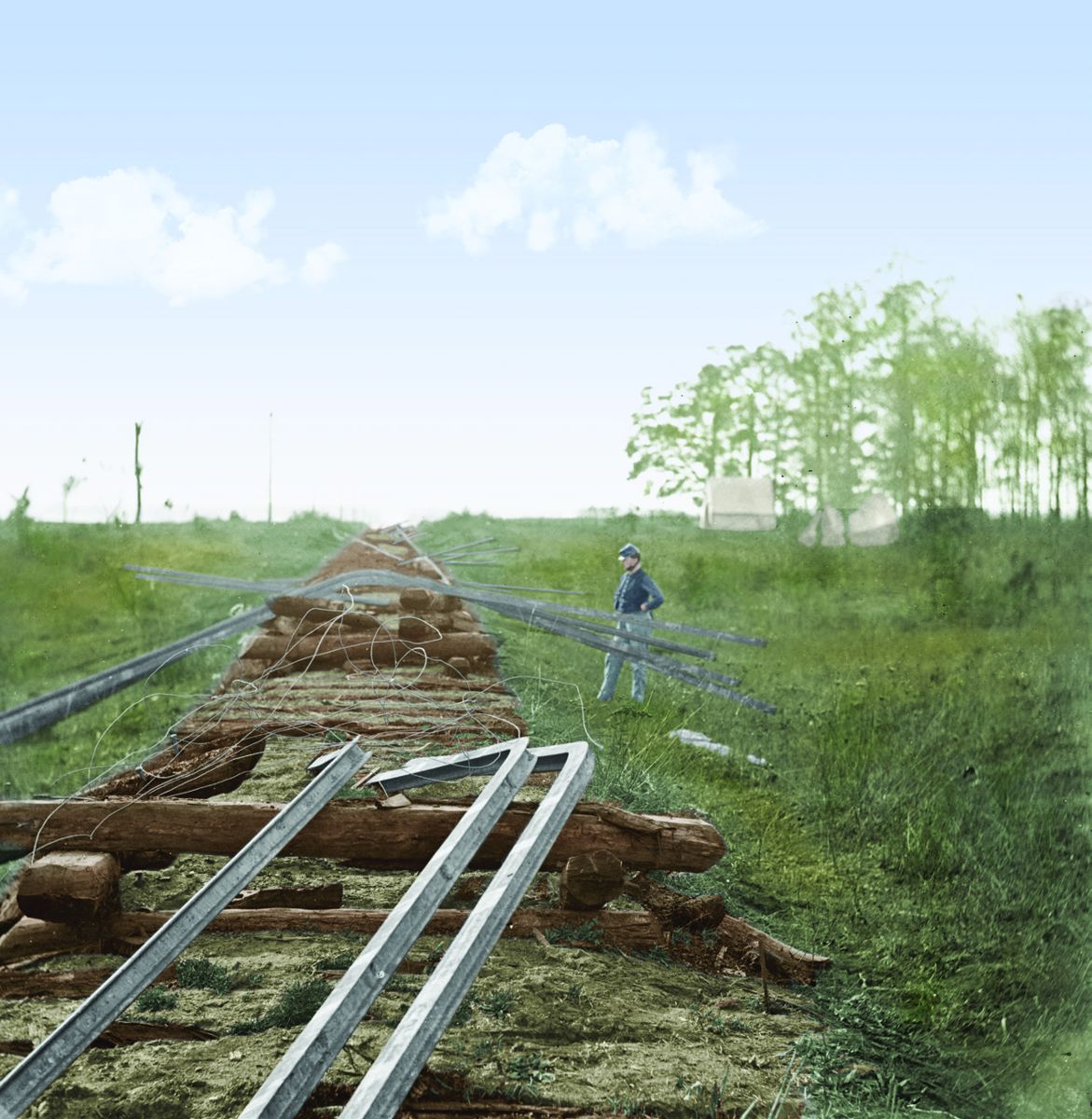
Through The Lens By Stephanie Hagiwara No Joy In Lovejoy “My God! Captain, look at that thousand legged worm.” – U.S. 1st Ohio cavalryman spotting rebels approaching through the head high rows of corn. In May of 1864, U.S. Gen. Tecumseh Sherman was ordered to capture Atlanta, Ga. Both Sherman and Atlanta were dependent on the railroads to keep supplied. Both sides used their cavalry to destroy the enemy’s railroad supply lines. Within days both sides would have the tracks repaired. After the capture of both U.S. Gen. George Stoneman’s and U.S. Gen. Edward McCook’s cavalry, Sherman was convinced that infantry was needed to wreck defended railroads. As he was planning an infantry sweep, C.S. Gen. John Hood ordered C.S. Gen. Joseph Wheeler out of the area to attack the Union’s supply railroad. Sherman ordered U.S. Gen. Hugh Judson Kilpatrick’s cavalry to wreck the Macon & Western, the last supply line for Atlanta. Kilpatrick took with him 4,000 men consisting of two divisions of cavalry and the Chicago Trade Board [Flying] Artillery Battery with eight 10-pdr. Parrott cannons. On August 18, Kilpatrick’s men immediately began tearing up tracks on arrival at Jonesboro, Ga. On the 19th they burned the supply depot. On the 20th, Kilpatrick arrived at Lovejoy Station just after the C.S. 48th Tenn. Infantry arrived by train. The Confederates immediately spread out into a long line. On the south side of the road was a big cornfield, 400 yards long and 200 yards wide, which was the only clear space. As the Federals charged, “an orange sheet of flame blazed down the length of the Rebel line.” The Battery began firing at the approaching enemy. Still, the Confederates moved forward. The Federals continued to pound the approaching force. The outnumbered rebels were running low on ammunition and slowed their forward momentum. Then the disquieting sound of gunfire came from the Federal’s rear. C.S. Gen. Lawrence Sullivan Ross and his Texans were arriving from Lee’s Mill, Ga. “A fierce battle seemed now to be going on in every direction, but which was the front or main point of the attack I could not for the life of me tell,” said U.S. Lt. William Webb of the 4th Regulars. “About this time one of Kilpatrick’s aides dashed up and directed Webb to take his battalion to some high ground on the left and build a barricade. ‘Which way shall I face it?’, asked Webb. ‘Suit yourself,’ the aide shouted as he galloped away.” Unlike his brethren Stoneman and McCook, when faced with the enemy Kilpatrick charged. Kilpatrick sent for the highly regarded Col. Robert Minty. Kilpatrick announced, “Col. Minty, we are surrounded. You know what is in our front; [C.S. Gen.
William ‘Red’] Jackson with 5,000 cavalry is in rear of our left, and Pat Cleburne with 10,000 infantry is closing on our right; our only salvation is to cut our way out. We will form here, facing our present rear; you will form line on the right of the road, Colonel Murray will form on the left; you will charge simultaneously.” Minty studied the ground Kilpatrick had indicated, an old field, cut up by several deep gullies and two small fences. “General,” he said, “I will form in any way you direct; but, if it was left to me, I would never charge in line over this ground; when we strike the enemy, if we ever do so, it will be a thin, wavering blow that will amount to nothing.” “How, then, would you charge?” Kilpatrick asked. “In column, sir,” Minty replied. “Our momentum would be like that of a railroad where we strike, something has to break.” Kilpatrick pondered this for a moment and then said, “Form in any way you please.” It would be a sabre charge, “in column of fours; the regiments of my [Minty’s] brigade side by side.” Kilpatrick told Minty, “You will break them … Long will follow with his brigade and clean them out.” Swinging his saber overhead, Minty yelled, “Charge! … The bugles echoed [the order]. A wild cheer rose in the throats of a thousand troopers as three compact columns of fours surged up and over the crest. Boot to boot, stirrup to stirrup, they spurred hellfor-leather, here-we-come down the gullied slope, their upraised sabers flashing in the sun. About a dozen men Minty had detailed from each column to race ahead on foot pulled down sections of the rail fence at the bottom of the hill and the horsemen hurtled through the gaps.” The Texans threw down their guns and ran. The cavalrymen slashed with their sabers anyone who didn’t surrender. “Our horses went kiting over the fences,” wrote Capt. Robert Burns. “The muddy ground trembled under the urgent fury of pounding hooves. The smoky air shook with each fiery blast of case shot and canister. Horses screamed in agony, men shouted, and the clanging of camp kettles strapped the backs of panicked pack mules, said one Officer, ‘beat any noise I ever heard.’” Ross was in the process of pulling out his men when the charge came. “No order was heard; not a word was spoken noted Lt. Sam Barron of the 3rd Texas; “every officer and every man took in the whole situation at a glance; no one asked or gave advice; no one waited for orders. The line was maintained intact for a few seconds, the men emptying their pieces at the heads of the columns. This created a momentary flutter without checking their speed, and on they came in fine style.” Twice Ross ordered Lt. George Young to leave his howitzer and save his men. “Not while I have a shot left!” Young replied. “Finally, Ross gathered about thirty men and led them to the top of the knoll. ‘Well, Young,’ he said, ‘if you are determined to stay with your gun, we will stay with you.’” “Our men stood manfully and fought like madmen,” declared a Rebel gunner. “Ramming home canister and case shot, they fired in three or four different directions, cutting down men and horses in midstride.” As they thundered past, the Federals could feel the howitzer’s “hot breath on their faces.” Afterward, U.S. Col. Eli Long’s troops of the 3rd Ohio held off the Confederates as the Federals reorganized and moved out. About 6 p.m. torrential rain fell. The exhausted, sleep deprived men sluggishly moved forward as thunder and lightning punctured the dark night. At dawn, the troops came to the rain swollen Cotton Indian Creek. A country stream had turned into a raging torrent. It was an ordeal crossing 4,000 troops, the wounded, horses, mules, cannons, and wagons across the water. The troops persevered across the river and the many miles to the Union lines at Decatur, Ga. They had traveled from the right end of the Union line southwest of Atlanta, around the city, the Confederate army and reached the left of Sherman’s fortified position.
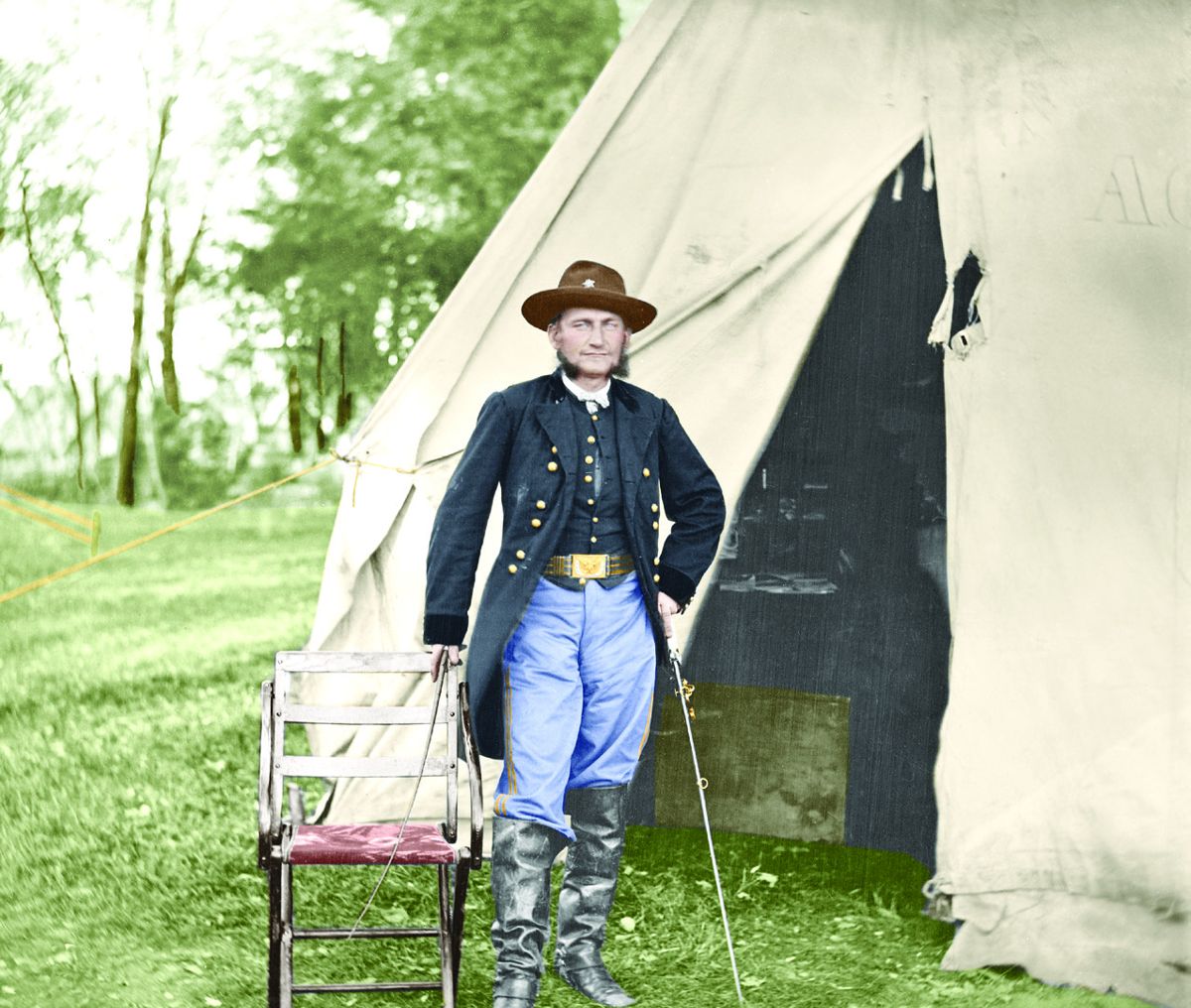
That evening, on August 22, Kilpatrick went to see Sherman at his headquarters near Atlanta. Kilpatrick boasted that it would take days to repair the damage he caused to the enemy’s railroad. In the distance, the sound of the whistle of a supply train could be heard approaching Atlanta. Kilpatrick’s true accomplishment at the Battle of Lovejoy Station was keeping the cavalry intact for Sherman’s March to the Sea. Sherman would justify assigning Kilpatrick to the March by saying, “I know that he is a hell of a damned fool, but that is just the sort of man I want for my cavalry.” Sources: • David Evans, Sherman’s Horsemen: Union cavalry operations in the Atlanta Campaign • Samuel J. Martin, Kill-Cavalry: Sherman’s merchant of terror: the life of Union General Hugh Judson Kilpatrick • Homer L. Keer, Fighting with Ross’ Texas cavalry brigade, C.S.A. The diary of George l. Griscom, Adjutant, 9th Cavalry Regiment • Joseph G. Vale, Minty and the Cavalry: a history of cavalry campaigns in the western armies • Richard M. McMurry, Atlanta 1864 Stephanie Hagiwara is the editor for CivilWarinColor.com and CivilWarin3D.com. She also writes a weekly column for HistoryinFullColor.com that covers stories of photographs of historical interest from the 1850’s to the present. Her articles can be found on Facebook, Tumblr and Pinterest.