
New Book on J.E.B. Stuart’s Communication with Confederate Headquarters before Gettysburg
Originally published September 2017 · p. 23
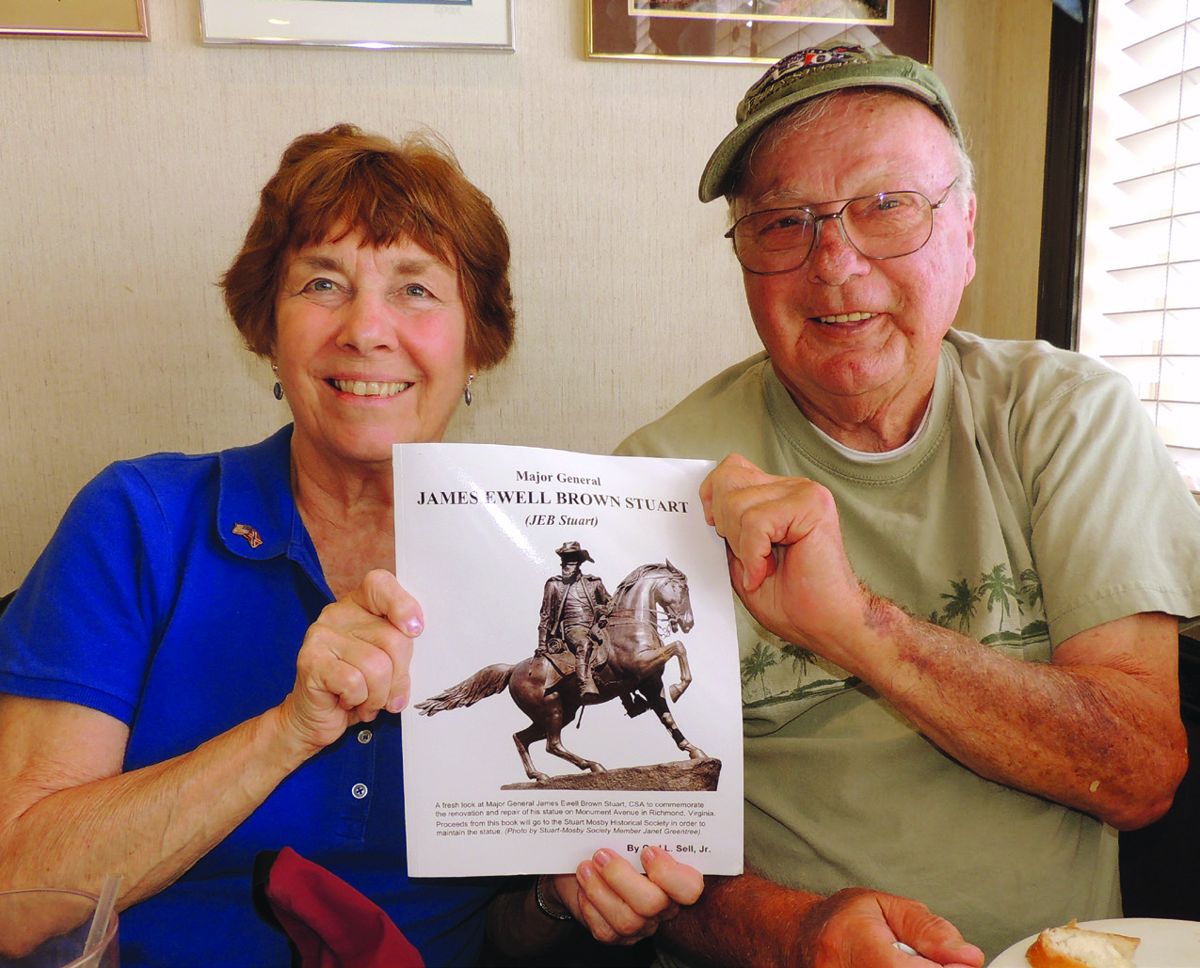
New Book on J.E.B. Stuart’s Communication with Confederate Headquarters before Gettysburg A new book includes proof that Jeb Stuart did communicate with Confederate headquarters in Richmond during his ride to Gettysburg. A dispatch, written and signed by Maj. Gen. Stuart on June 27, 1863, announces that he has taken possession of Fairfax Court House and the Union Army is on its way to Leesburg, Va.
The dispatch was published in the Richmond Whig newspaper on July 3, 1863, proving that it did reach the War Department and was released for publication. It is the first evidence uncovered that Stuart advised the Confederate hierarchy of his whereabouts. Stuart has been criticized by many in the years since for not communicating his location while on the way to Gettysburg. The copy of the dispatch was uncovered by author Carl Sell as part of his research for the book, written in coordination with the restoration of the Stuart monument in Richmond. The Stuart-Mosby Historical Society commissioned the work and raised the funds necessary for the work completed in May 2016 by Bronze et al, Ltd. All proceeds from the book have been earmarked by the Society to a fund that will maintain the statue in the future. Sell wrote the book as a gift to the Society and a private anonymous donor paid for the printing. The striking cover picture of the restored Stuart statue was taken by Society member Janet Greentree. Sell found a reference to the dispatch and its publication date. He asked Society member Don Hakenson to search electronic records to see if it could be found. Close scrutiny of the Whig published that day resulted in success. The copy of the dispatch is printed with this story and is part of Sell’s introduction in the book. The book also includes a copy of a letter published July 2, 1863, in the Philadelphia Press that proved Stuart stopped in Brookeville, Md., on June 29. The letter is from a clergyman whose home Stuart used as headquarters that night. Reverend W. Kent Boyle described Stuart and staff as “polite, behaving themselves with perfect decorum.” The Confederates released prisoners taken in nearby Rockville but did appropriate numerous local horses in Brookeville. Also included in the book is a heretofore unpublished letter written by Stuart on April 20, 1863, that announces he is sending a “notorious rascal” to authorities in Richmond. Jay Harvey Sherman, a Union spy, had been captured in northern Virginia. The letter was provided by Lewis Leigh Jr., a Civil War historian and collector whose uncle, Dr. John T. Day, is mentioned in Stuart’s letter. The book is available at the Stuart-Mosby Cavalry Museum in Centreville, Va. The price is $25 for Society members and $30 for non-members. Make checks payable to Stuart-Mosby Historical Society and include $6 for shipping and handling. Mail orders to Stuart-Mosby Cavalry Museum, 13838 Braddock Road, Centreville, VA 20120. Sales of the book by outlets and individuals are limited to those who will contribute proceeds to the Society. Copies can be ordered electronically through franconiamuseum.org. Click on the e-store page. The Franconia Museum is a sister organization of the Stuart-Mosby Historical Society and will forward all book proceeds to Stuart-Mosby. Carl Sell is a member of the Stuart-Mosby Historical Society and currently serves as president of the Franconia Museum. He has written two books about his relatives who fought for the Thirty-Eighth and Fifty-Third Va. Inf. His great-grandfather and great-uncle both were wounded and survived Pickett’s Charge. Sell can be reached at sellcarl@ aol.com
This dispatch was published in the Richmond Whig newspaper on July 3, 1863. (GenealogyBank.com)