
Civil War History for World War II Veterans
Originally published September 2017 · p. 7
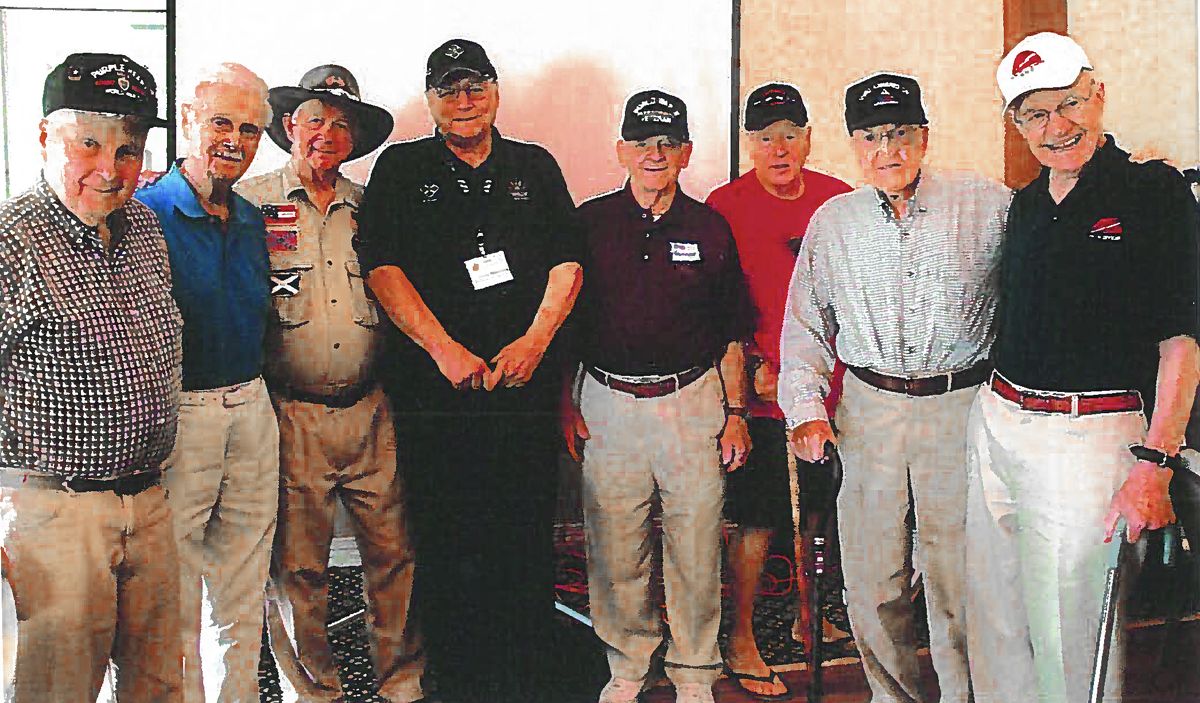
Civil War History for World War II Veterans ROCKAWAY, N.J—The Battle of The Bulge Assn. meets monthly at Picatinny Arsenal near the town of Rockaway, N.J., and is a chapter member of the parent national association formed Dec. 16, 1981. The group is named after the famous World War II battle; their monthly meeting often features a WWII speaker. A member asked that a Civil War historian be contacted and invited as a guest speaker at a future event. The battle veterans liked the idea of learning about the history of the Civil War from an expert. John A. Punola, a Civil War Historian who writes for Civil War News, was chosen to present a Civil War program for the WWII vets who survived the Battle of the Bulge. For Civil War readers, there are probably plenty who are not familiar with WWII’s Battle of the Bulge. Briefly, in the latter days of the war, the allied armies were strung out in a long defensive position, resting and regrouping before the final offensive into the German homeland. The line extended from Holland/Belgium area, southward along the French border with Germany. Suddenly, with swiftness and precision, the German army struck the weakest position and surged westward, creating a large bulge in the Allied defensive line, with St. Vith and Bastone the major battle sites. The Americans badly outnumbered and under heavy attack at both places, were holding their positions. Swift reinforcements under Gen. George S. Patton arrived to save the Bastone position; St. Vith was aided by British and American forces. The Battle of the Bulge was stalled forcing the decimated German survivors to retreat back into Germany. This was a battle that hastened the end of World War II. Soon afterwards, the Americans crossed the Rhine River into the German heartland, ending the war May 8, 1945. Aged veterans of the famous Battle of the Bulge are getting fewer every day, but the remaining veterans are bonded by their monthly meeting. They are faithful to their veteran brothers and still inspire others by their patriotic spirit and faith of their commitment to the Battle of the Bulge Assn. For them, Punola prepared a program the veterans would enjoy, and was assisted by photographer Nancy Punola, who also appeared in full Civil War dress. Jeff Chandler, a veteran reenactor familiar with guns and ammo, showed standard Union Army issue items i.e., mess kit, utensils, canteen, personal items for grooming and writing letters. Jeff pointed out to the
WWII vets the wide difference in basic equipment issued in 1862 compared to 1944 equipment. Picatinny Arsenal denied us permission to display an array of muskets, bayonets, and pistols. John wanted to connect the Civil War to the WWII Battle of the Bulge, and he had the perfect connection. The highly publicized American general in the European Theatre of Operations was George S. Patton who commanded the celebrated Third Army. Patton’s Third Army led a dramatic thrust into and thru German occupied territory, opening a relief corridor thru and around Bastone, Belgium, which was under siege and heavy attack by elite troops of the German army. John pointed out that Patton was from a military family that featured six great uncles who served in the Confederate Army of Northern Virginia commanded by Robert E Lee. Two of his uncles, W.T. Patton and George S. Patton were killed at the battle of Gettysburg. W.T. Patton was seriously wounded on day one, and died a week later. George S. Patton was killed on day three as he led his unit as part of Pickett’s charge. Hugh Patton was killed during the 1864 battle at Winchester, Va. All the Civil War Pattons were Confederates and related to George Patton who led the U.S. Third Army to victory during WWII. Another surprising revelation was the mention that more than 50,000 Canadian recruits served with the Union Army. At the battle of Gettysburg, 50 plus Canadians died early the first day as their unit, Buford’s Cavalry, took the initial brunt of the Confederate attack. Many Canadian flags fly from gravesites in the National Cemetery in Gettysburg, Pa. The WWII vets were surprised to learn that Civil War battle casualties, 1861-1865, are estimated by the official Union records to have been 620,300, combined for both the Union and Confederate forces. The total for American armed forces for 1941-1945 is 292,315 killed. When you add in the Americans killed during other wars to the WWII losses, they are LESS than the total killed during the Civil War. The highlight of the Civil War program was a Powerpoint presentation about the July 15, 1864 train wreck at a small Pennsylvania town, Shohola. The train was carrying the first scheduled delivery of Confederate prisoners to the new POW camp at Elmira, N.Y. In the aftermath of the wreck, it was discovered that two N.C. Confederates left to recover at a private home had disappeared. The family told the
Union Army the two soldiers had died and were given a Christian burial at an undisclosed location. The story revealed how John and Nancy Punola located the lost Confederates in a graveyard in Barryville, N.Y. They decided to place flags on the site and when in the area they check to see if replacement flags are needed. To date, no one has disturbed the site or taken the flags. In 1911, all the Confederates buried in a mass grave at the site of the train wreck were disinterred and buried in the National Cemetery at the site of the former Elmira, N.Y., POW Camp. The Battle of the Bulge vets were active during the Civil War program and asked many questions. There was not a strong interest in specific battles, or any particular generals, however, there was strong interest in lesser known events and associated stories. Behind the scenes events were nicely presented and the audience loved the interaction. The veterans clearly enjoyed learning about the Civil War. President Jerry Manning, who arranged the appearance of Punola and associates, stated the approval comments were overwhelmingly positive and the 60 in attendance voiced their interest in learning Civil War History. The Battle of the Bulge vets showed little to no interest in discussing their military life and there was no pressure to do so. In closing the meeting, President Jerry Manning presented nice certificates to John A. Punola, Nancy Z. Punola and Jeff Chandler, thanking them for a well done Civil War presentation.