
Civil War Vengeance: Murder in the First!
By Joseph F. Wilson · Originally published October 2017 · pp. 16–17
When a soldier falls in battle, he’s rightly mourned as a patriot and hero who died for his country. It’s quite a different story for a totally innocent soldier being held captive to be unjustly executed outside the accepted rules of warfare. Being put to death by the opposing army in retaliation for some devious act of which the prisoner had no knowledge or responsibility is outright murder. Such barbaric behavior happened, frequently involving prisoners during the Civil War, but is rarely recorded in the history books. Honor and glory gave way to savagery and brutality in what many still incorrectly believe to be the last “Gentleman’s War.” Abraham Lincoln ignited the retaliatory confrontations in 1861, when he set in motion plans to hang the captured crew of the CSS Savannah as criminals. Although the President never carried out the threat against the crew, other vulnerable soldiers weren’t so lucky. Jefferson Davis later declared, “This government will deal out to the prisoners held by it the same treatment and the same fate as those captured by the Union.” Lincoln countered with his own threats. Caught in the web of reprisal killings, the unwavering President Lincoln issued his own order number #252 that stated: “For every soldier of the U.S. killed in violation of the laws of war, a rebel soldier shall be executed.” Helpless prisoners often made for convenient victims. Lincoln made good on his promise by approving numerous executions of rebel prisoners. Throughout the war, countless boys on both sides suffered an undeserved death on the altar of vengeance where political foes unlawfully mitigated their differences. A depraved policy exacting a pound of flesh from the slaughter of innocents infected the highest levels of command. In Palmyra, Mo., during 1862, Union Col. John McNeil callously slaughtered ten Confederate soldiers in what became known as “The Palmyra Massacre.” McNeil’s wrath boiled over at the disappearance of his 60 yearold Union informant thought killed by the Confederates. The avenging Colonel immediately proceeded to satisfy his lust for revenge by holding a lottery to select ten unfortunate souls from among his rebel captives for execution, a steep price for a single informant. None of the prisoners chosen to die had any idea what was happening. Whether the informant was indeed dead still remains a mystery. When the body never surfaced, McNeil lined up the men before a firing squad in front of ten freshly constructed pine boxes and shot them to death. Jefferson Davis argued vehemently for the arrest of McNeil, but the area’s ranking Union officer, Gen. Samuel Curtis, ignored him. No action was taken against Col. McNeil. Instead, a month later, he was promoted to Brig. Gen. Missouri hosted another round of reprisal killings after the 1864 Battle of Pilot Knob. Union Maj. James Wilson and the men of the 3rd Mo. Cav. held their own in the fight until finally captured by Confederate Gen. Sterling Price’s troops. Wilson and his men proceeded to march under guard for the nearest railhead until a Rebel major galloping hard from the rear caught up to the captives. Major Tim Reves demanded custody of the prisoners from the officer in charge. The irate major harbored hard feelings toward the men of the Third for killing seven of his men in battle. The Confederate major refused to accept that men killed on the field of battle aren’t victims of criminal activity. To exact revenge, Reves lined up seven 3rd Mo. Yanks, including Major Wilson, and shot them dead. Three weeks later, Union authorities found the bodies in a ravine half eaten by hogs. Four days after discovering their remains, Union officials in St. Louis marched seven Confederate prisoners before a firing squad. No
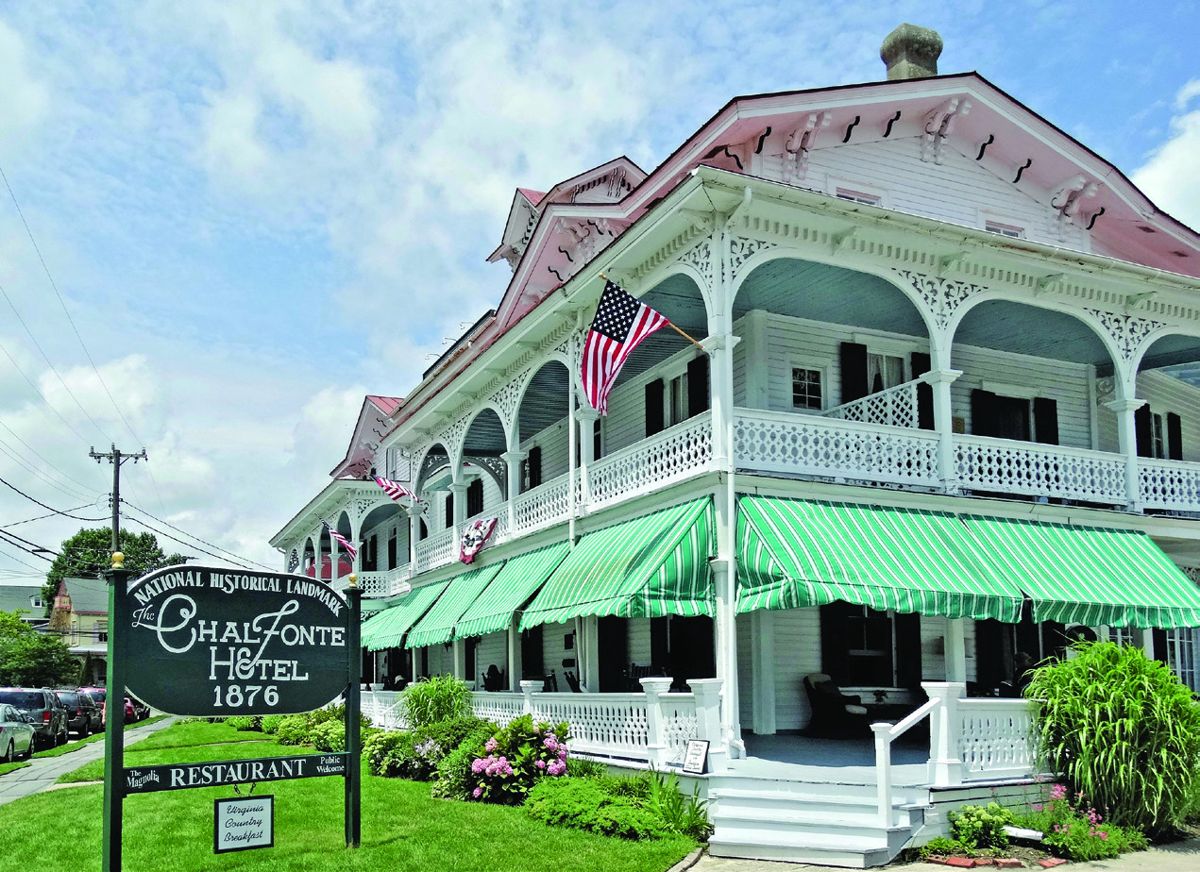
The Chalfonte Hotel in Cape May, N.J. explanation accompanied their death sentence. Musket fire rang out and dropped the bullet riddled bodies to the ground. Another thirst for blood was quenched by extinguishing the life of seven blameless young boys. Often the punitive directives came from the highest levels of command. A frustrated Gen. Ulysses S. Grant sent word to Gen. Philip Sheridan that should any of Col. John Singleton Mosby’s command fall into his hands, they should be executed on the spot. That’s exactly what happened in Front Royal, Va., on June 12, 1864. Six of Mosby’s men were either shot or hung in the center of town without trial solely for being members of Mosby’s 43rd Va. Cav. Bn. The order was thought by many to have been carried out by Gen. George Armstrong Custer, who held a deep seated animosity towards Mosby’s partisan raiders for an earlier ambush sprung on his command. Some historians point out that had the North lost the war; Grant could have been tried for war
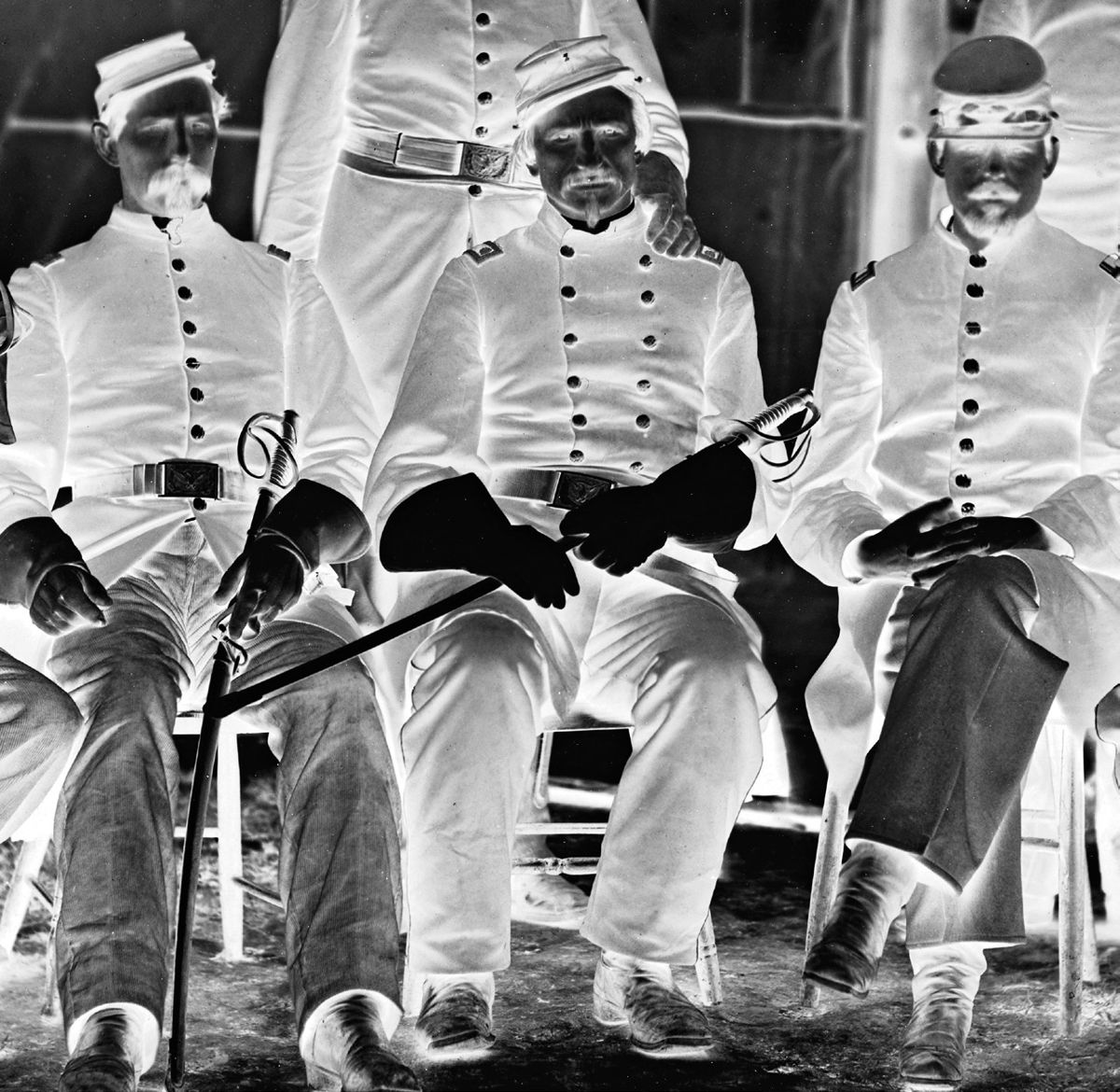
General William Fitzhugh “Rooney” Lee. crimes. As it turned out, he was twice elected President. Even Sherman felt a surge of power when wrote a letter to Judge Advocate General Joseph Holt seeking to hold speedy trials in the field for alleged criminals to “save the courts time.” Judge Holt wisely rejected the offer in favor of due process. In the Shenandoah Valley, several of Mosby’s men turned up hanging from trees with placards around their neck warning of further lynchings should they persist in engaging in guerilla tactics. In turn, dead Union men soon dangled by a hangman’s noose from tree branches along the main roads for all to witness. And so the killings spiraled out of control. One of the most infamous cases took place in 1863 after Union Gen. Ambrose Burnside executed two Confederate captains who were recruiting in Kentucky. Burnside insisted that the captains, dressed in civilian clothes, be hanged as spies. In Richmond, Capt. Thomas Turner, commandant of Libby Prison, quickly acted on Special Order Number #160, which ordered that two Union captains be chosen by lottery to be put to death in revenge for the Kentucky captains executed by Burnside. The two officers chosen, Capt. Henry Sawyer of the 1st N.J. Cav. and Capt. John Flynn of the 51st Ind. Inf. both made their peace as their date with the executioner was scheduled to be carried out in ten days. In Washington, the Lincoln administration decided it was time to test the resolve of the Confederate government by threatening the family of the most cherished and respected Confederate leader. General Robert E. Lee had tried to stay above the fray regarding retaliation killings, but now his son’s life was on the line. General William Fitzhugh “Rooney” Lee fell into Union hands. Lee’s son now nervously waited, locked away in a northern prison with the threat of death hanging over his head. General Rooney Lee fought at the Battle of Brandy Station in June 1863 and suffered a serious wound to his thigh that required medical attention. He was transported to an estate in Hanover County, Va., for treatment and to recuperate. In a stroke of good luck, aided by a careless Richmond editor, Union Col. Samuel Spear of the 11th Penn. Cav. noticed an article detailing the plight of the younger Lee. The newspaper foolishly reported where Lee was recovering. The Union colonel’s command was already operating in Hanover County with a force of 1,000 horsemen not far from the estate. The colonel seized the opportunity and converged on the estate with little resistance.
Spear carried off Rooney Lee for an eight month stay in Yankee prisons, first at Fort Monroe, and then at Fort Lafayette in New York harbor. Lincoln didn’t mince words when he told Jefferson Davis that if Sawyer and Flynn faced execution, he would surely wrap a rope around the neck of Rooney Lee and hang him. All the harsh words and threats coming out of Richmond suddenly softened. Not surprisingly, the date for Sawyer and Flynn to die came and went without any action being taken. Both Union captains breathed a bit easier. From the highest ranking Confederate officer, to the lowest ranking Union private, all knew the Confederates would never allow the son of Robert E. Lee to be executed. As the heated rhetoric cooled, Sawyer and Flynn returned from special confinement to the general prison population. The Union captains would indeed live happily ever after. When the storm passed, plans worked out for the famous Confederate son’s exchange allowed Rooney Lee to go home. Behind the scenes it was decided to exchange Gen. Rooney Lee and two captains for Union Gen. Neal Dow, Sawyer, and Flynn. On March 14, 1864, all parties left their prisons as free men. Sawyer and Flynn both owe their lives to an irresponsible journalist whose negligence spared them from the hangman’s noose. Not much is known about Flynn’s post war years. After the war, Henry Sawyer, now a colonel, returned to his hometown, Cape May, N.J., a celebrated hero. Besides his famous episode in prison, Col. Sawyer was an admired soldier who suffered six wounds in battle. He opened a boarding hotel, the Ocean House, in the summer resort town and served nine years on Cape May’s City Council. In 1876 he built the more luxurious “Sawyer’s Chalfonte Hotel” which he owned and operated for many years. Soft summer breezes and hardy Civil War tales flowed freely at the Chalfonte. The hotel still operates today. Sawyer died in 1893 and was laid to rest in the Old Cold Spring Presbyterian Cemetery not far from his beloved seaside home. Locals still talk about Cape May’s favorite son and Civil War hero, Colonel Henry Sawyer. Joseph F. Wilson is the writer and producer of the new film documentaries, “Civil War Prisons – An American Tragedy” and “Remarkable Tales of the Civil War.” He also lectures on Civil War Topics and offers authentic Civil War artifact displays. Contact Joseph F. Wilson at joef21@ aol.com or 856 627-5401.