
Mosby Ranger’s Saddle Bags
By Shannon Pritchard · Originally published May 2017 · p. 9
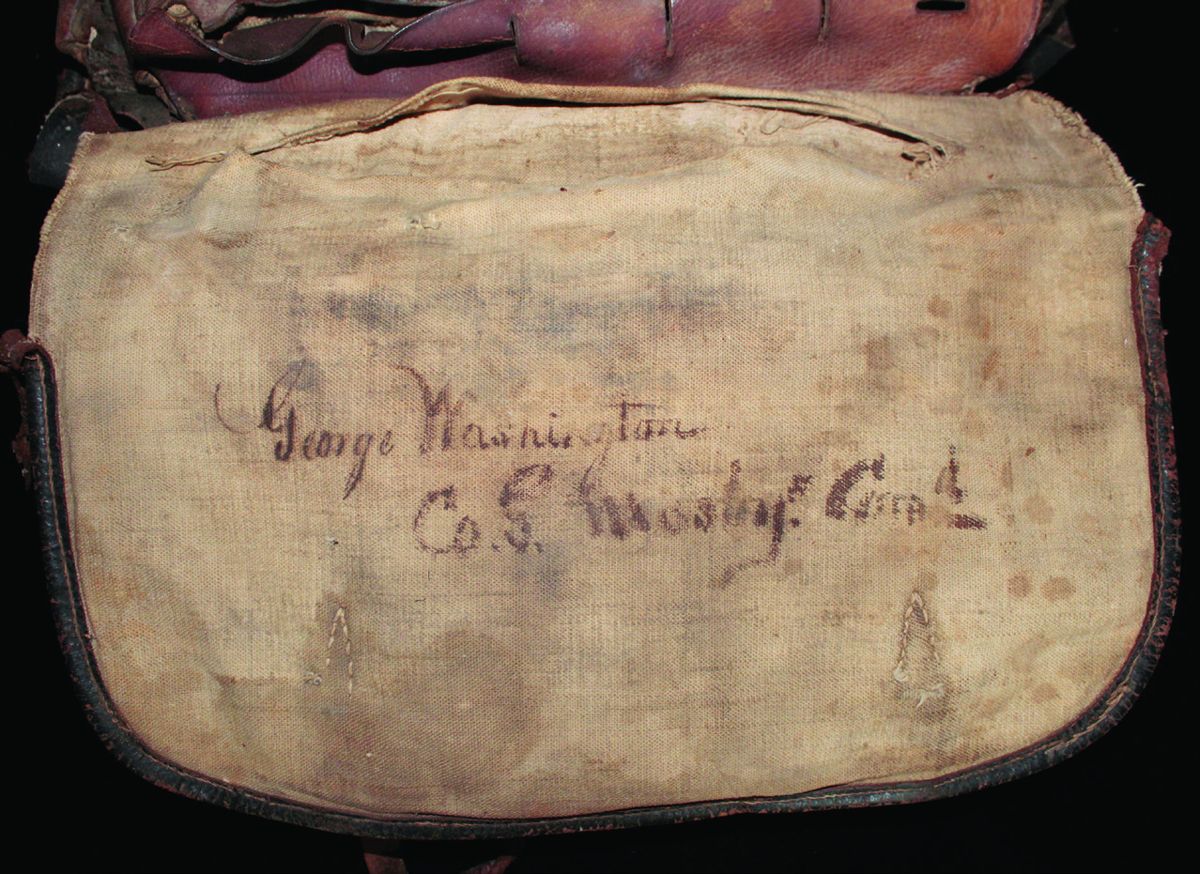
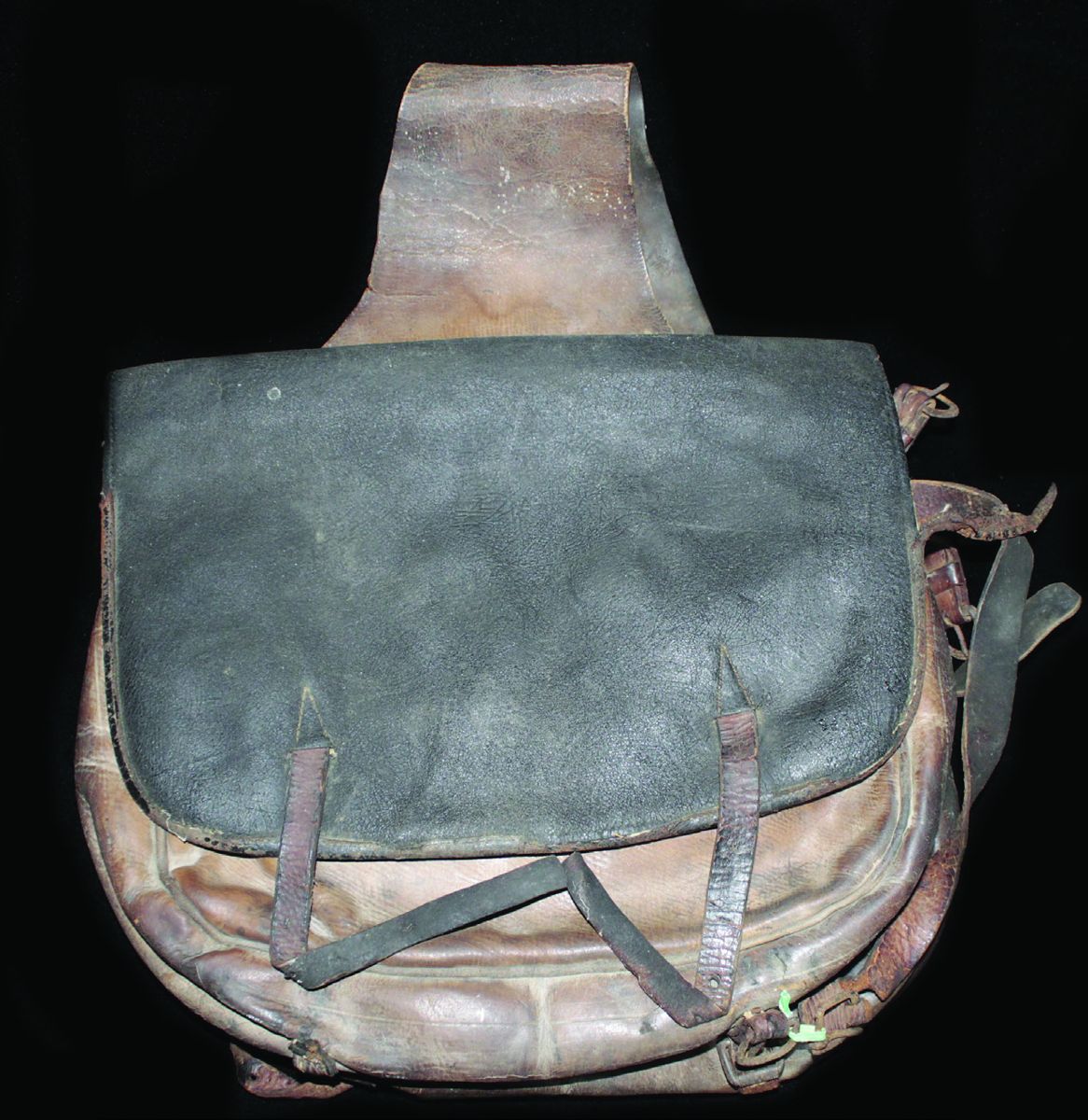
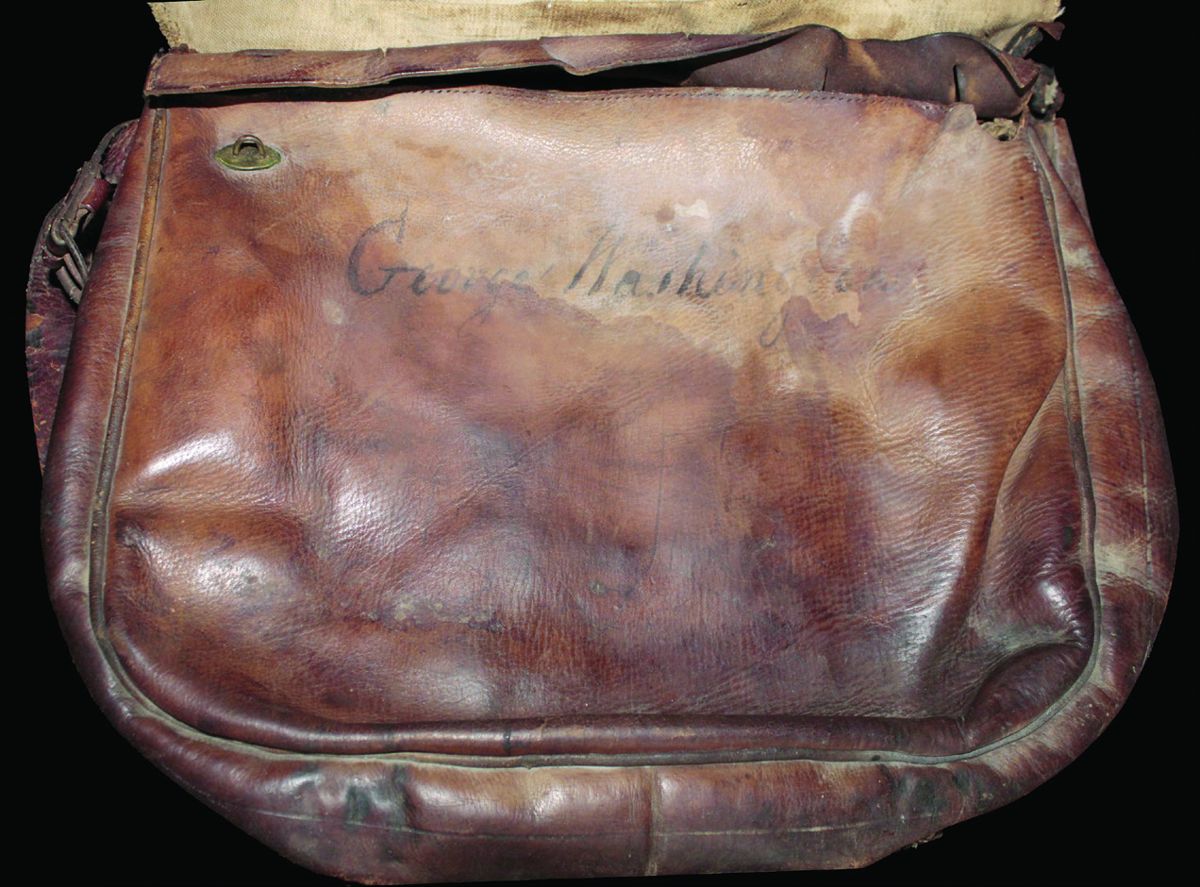
This wonderful pair of russet saddle bags has a name neatly painted on the body underneath the black patent, waterproof outer flap: “George Washington” in period script. Out of curiosity I checked, there are twenty-seven George Washington’s shown as being in the Confederate Army. Not surprisingly, eight were from Virginia. Then, of course, there is no guarantee that the George Washington who wrote his name on the saddle bags was even a Confederate, after all, there were an astounding 842 Yankee soldiers named George Washington, and not a one to Old Virginia’s credit was from within her borders. George Washington was so very proud of his unit, that he added on the underside of the waterproof flap: “George Washington Co G, Mosby’s Com’d”. He had a right to be proud; Mosby’s Command was one of the most feared, respected and admired that the Confederacy produced. According to his service record, George Washington of Company G, 43rd Regiment Virginia Cavalry was captured September 19, 1864 at Winchester, Va., and sent to Point Lookout Prisoner of War Camp on Sept. 23. He arrived at Harper’s Ferry on Sept. 26, and took his oath of amnesty on May 29, 1865 at Ashland, Va., which suggests that he may have been released from Point Lookout prior to the end of the war and returned to his command. The official records are very lean on details, but that is not surprising given Mosby’s command. After the war, he returned to his home and family in Alexandria, Va., and took up the toils of rebuilding in what was now a foreign land to him. He died there in 1896 and is buried at Alexandria’s Christ Episcopal Church. The 5’11”, blue eyed, Private Washington was born in Westmoreland County, Va., in 1824. He was named after his grandfather’s brother, General George Washington. When “he was quite a young man when he came to” (Alexandria), where “he was engaged in the commission business, under the firm of Washington & Herbert.”1 Washington could not stay at home in a city occupied by Virginia’s invaders, so “At the breaking out of the late war, he joined the Black Horse Cavalry”2 Company H, 4th Virginia Cavalry. On May 25, 1863, Washington was brought into Richmond, dead, killed by a gunshot at Kennon’s Farm, Charles City County, which lies 20 miles or so east of Richmond on the Virginia Peninsula.3 Mosby’s command was not formed until June 10, 1863. If you did not catch that, Washington was killed a few days before Mosby formed his command. The first reaction to this would be to assume that he was a different George Washington; however, both his obituary and his tombstone agree that the Mosby Guerilla George Washington previously served in the Black Horse Troop.4 So who is the lonely soldier that lies moldering in Richmond’s Hollywood or Oakwood Cemeteries? Col. John S. Mosby, C.S.A (Library of Congress)
Inside reads “George Washington”.
Headstone of George Washington.
of
George
Sources: 1. Obituary 2. Obituary
- Official Records 4. Tombstone, Christ Episcopal Church, Alexandria, Virginia