
Contributions From The American Civil War Museum: “A Tale Of Two Virginians”
By Ruth Ann Coski · Originally published May 2017 · pp. 18–21
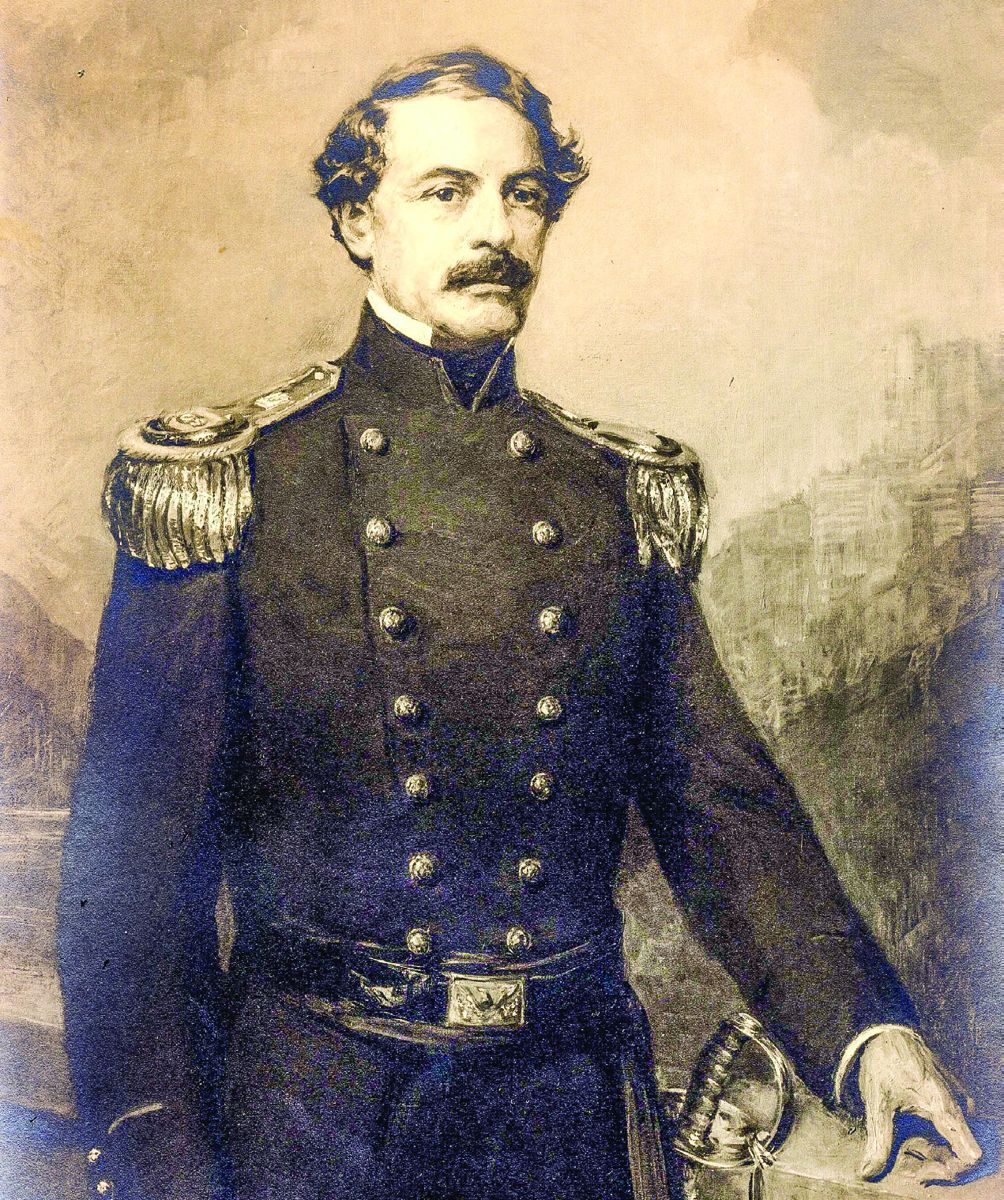
Publisher’s note: With this article Civil War News is proud to begin an occasional series, “Contributions from the American Civil War Museum.” The ACWM in Richmond, formed in 2014 from the combination of The Museum of the Confederacy (opened in 1896) and the American Civil War Center at Historic Tredegar (opened in 2006) is one of the nation’s leading institutions in shaping Americans’ ongoing conversations about the Civil War and its meaning. This article first appeared in The Museum of the Confederacy Magazine, Spring 2012. By Ruth Ann Coski Special Correspondent It was only just past noon on May 31, 1862, but Gen. Joseph E. Johnston was already having a bad day, a very bad day. At his headquarters east of Richmond near the small settlement of Seven Pines, confusion reigned. His plan to pounce on units of Gen. George B. McClellan’s Federal army had lost its element of surprise. The Confederate artillery had commenced firing late and from the wrong direction. Couriers came and went; as best Johnston could figure, Maj. Gen. James Longstreet was on the wrong road, blocking Maj. Gen. Benjamin Huger’s troops, and both commanders were embroiled in an argument over rights-of-way. Maj. Gen. Daniel Harvey Hill was itching to engage the enemy despite Brig. Gen. Robert Rodes’ warning that he couldn’t possibly reinforce him in time. Concerned about the fragile mental and physical health of his second-in-command, Maj. Gen. Gustavus W. Smith, Johnston had deliberately kept Smith out of the loop and off the field. But now that decision haunted him in the form of Smith himself, dogging Johnston’s footsteps throughout the morning. In the midst of this strained atmosphere, Johnston looked up and saw an unwelcome sight: an old Army buddy coming to offer aid. A capable veteran of many campaigns, Johnston wanted some time to think. He did not want help, however guilelessly offered, from Gen. Robert E. Lee.
Fathers and Sons Joseph E. Johnston and Robert E. Lee had a history. They were cadets together at West Point, the only Virginians to complete all four years and graduate with the Class of 1829. While not best friends they were friendly; each recognized the other as studious and intense. Along with the ties of geography and ambition, the boys discovered that Johnston’s father, Peter Johnston, had served as a private under Lee’s father, “Light Horse Harry” Lee, during the Revolutionary War. The elder Lee, having famously eulogized
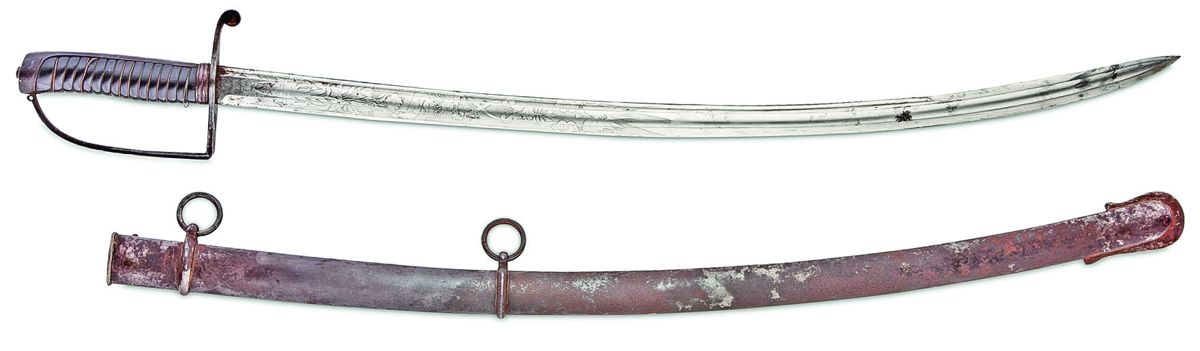
R. E. Lee’s father, “Light Horse Harry” Lee, was a lieutenant colonel of cavalry in the Continental Army during the American Revolution (promoted in 1798 to major general in the U.S. Army). Among the soldiers who served under his command during the American Revolution was Pvt. Peter Johnston, father of Joseph E. Johnston.
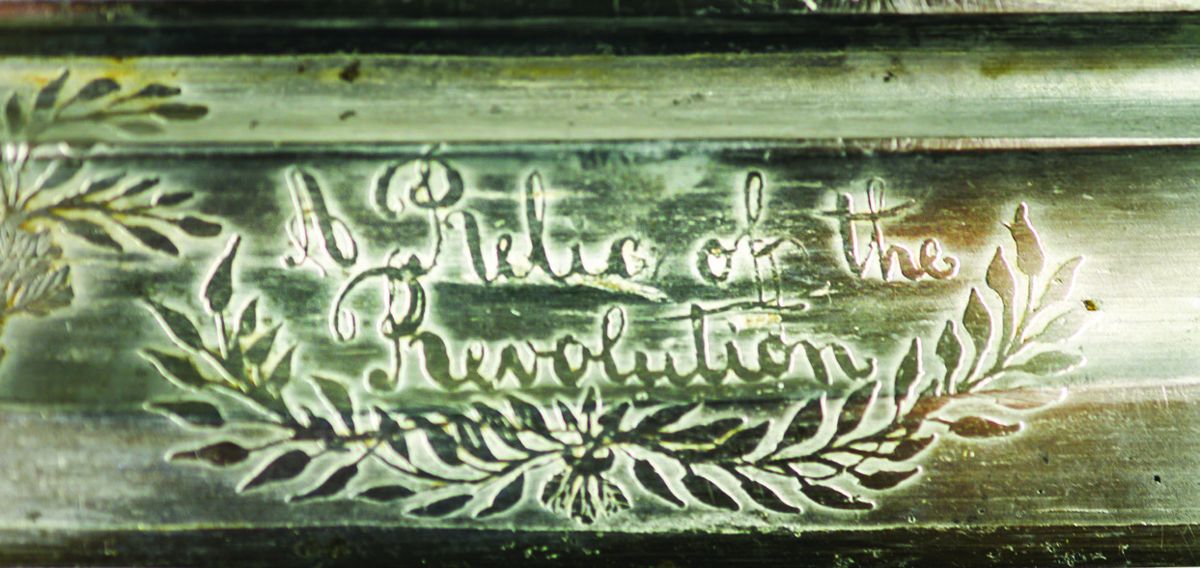
George Washington (“First in war, first in peace, first in the hearts of his countrymen”) and served as a governor of Virginia, sank into poverty and disgrace over business dealings and died when his youngest son was 10. Harry Lee’s legacy of shame likely motivated Robert E. Lee’s high standards, according to his modern biographers. Peter Johnston’s fortunes rose as his former commander’s fell, becoming a respected judge. When the senior Johnston died in 1831, son Joseph acquired his old Revolutionary War sword, and carried it with him throughout his military career.
Brothers in Arms Robert E. Lee, second in the Class of 1829, won a commission with the elite Corps of Engineers. Joseph E. Johnston, graduating 13th in the class, chose the Artillery. While their paths and assignments diverged over the years, both men grew restless with the Army’s slow pace of promotion. Johnston left in 1837 to join the Topographical Bureau in Washington, D.C., only to rejoin the army in 1838 as a 1st lieutenant in the newly created Corps of Topographical Engineers. Lee persevered because he had a wife and a growing brood of children to consider. Cautious bachelor Johnston finally married Marylander Lydia McLane, 13 years his junior, in 1845. Mrs. Johnston, like Mrs. Lee, suffered from fragile health. Unlike the redoubtable Mary Custis Lee, Lydia Johnston bore no children. It was a great disappointment for both Johnstons; Lydia called her husband her “only baby.” The Mexican War brought Johnston and Lee together again. In December 1846 they shared a steamer cabin out of New Orleans to south of the border. Johnston endured seasickness while Lee went about his business. When Johnston’s beloved nephew, Preston, was killed in action during August 1847, it was Lee who sought out Johnston, recovering from wounds, to gently break the news. Lee and Johnston distinguished themselves in Mexico and received brevet promotions, but only Johnston spent the next eight years attempting to get the War Department to make the brevet promotion permanent. Lee, as the fair-haired favorite of Gen. Winfield Scott, was more
Carte-de-visite photograph of Joseph E. Johnston in his U.S. Army uniform. philosophical about rank. Finally in 1860, after transfers and wrangling, Johnston achieved brigadier general as Quartermaster General of the Army. Lee was not amused, and wrote his son Custis that Johnston “has thrown more discredit than ever on the system of favoritism and making brevets.” In the spring of 1861, Lee achieved permanent rank of full colonel, only to have less than a month to savor it.
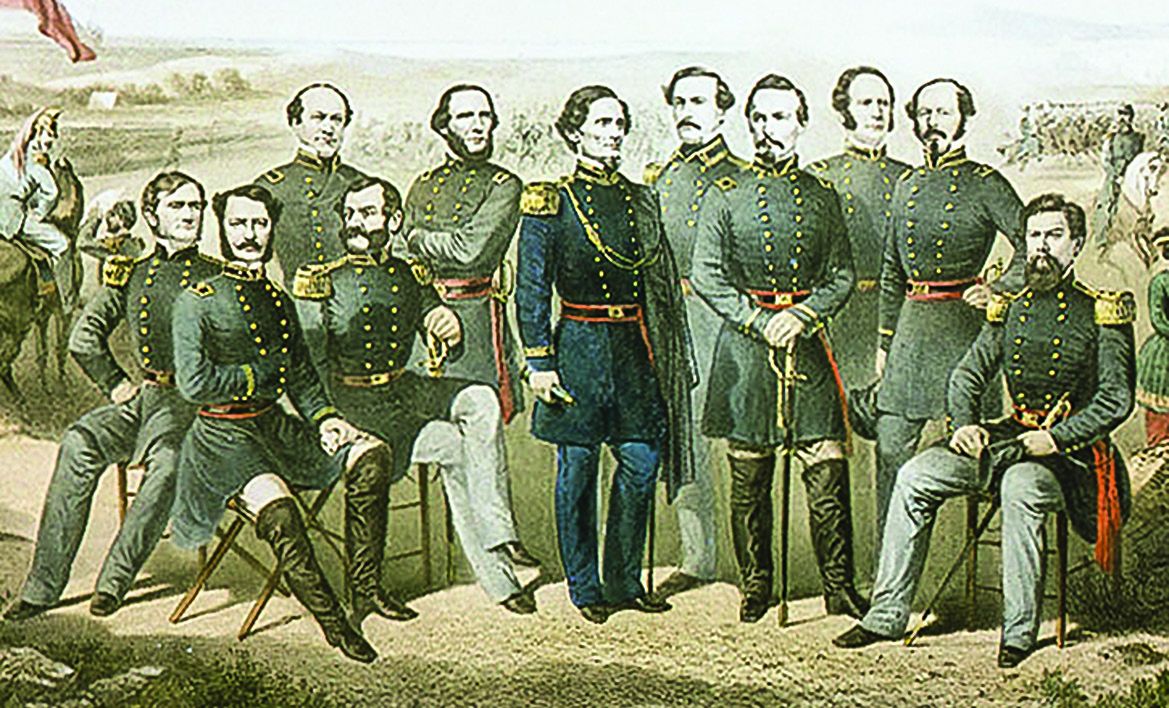
Two Generals and their President In April 1861, Johnston and Lee resigned from the U.S. Army and accepted commissions from their native state of Virginia and, soon after, from the Confederacy. Their new commander-in-chief, West Pointer Jefferson Davis, was a known entity to Johnston and Lee. Both had ultimately answered to Davis from 1853-1857 when he served as U.S. Secretary of War. President Davis knew Lee’s steadfast qualities firsthand and wanted his guidance. Lee spent much of 1861 in Richmond as an adviser to Davis, punctuated by unhappy field commands in western Virginia and on the South Carolina-Georgia coast. Meanwhile, Joseph E. Johnston covered himself with glory as the commander of victorious Confederate forces at Manassas on July 21, 1861. By August, however, Johnston was annoyed that Gen. P.G.T. Beauregard was getting better press for his performance at Manassas; more importantly, Johnston began a petty and self-destructive feud with Jefferson Davis over rank. Despite Johnston’s imprudent comments, Davis retained him as commander of the Confederacy’s major field army in Virginia. In the spring of 1862, as Maj. Gen. George B. McClellan’s massive Army of the Potomac began its Peninsula Campaign toward Richmond, Johnston convinced the president that it was best to cede territory and engage the enemy carefully and strategically. Johnston feared Davis’ interference, and rarely communicated with his commander-in-chief. (Even Johnston’s friend and fellow general, Dabney Maury, admitted Johnston “was reticent and ever averse to those whom he did not like.”) Johnston forced Davis’ hand. Davis turned to Lee, a general whose keen mind and cool temperament the president trusted and who also outranked Johnston. Lee disagreed with Johnston’s argument of falling back toward Richmond. Although grateful for Lee’s efforts to reinforce and reequip his army, Johnston proved no more forthcoming with Lee
than he had been with Davis. On April 14-15, 1862, a meeting to discuss the feasibility of defending the Yorktown lines began in Jefferson Davis’ downtown office. The president and Generals Johnston, Lee, James Longstreet, Gustavus W. Smith, and Confederate Secretary of War George Randolph conferred through the day, broke for dinner, and reconvened in the Confederate White House. Gen. Smith remembered the talk between Lee and Johnston became “very heated.”
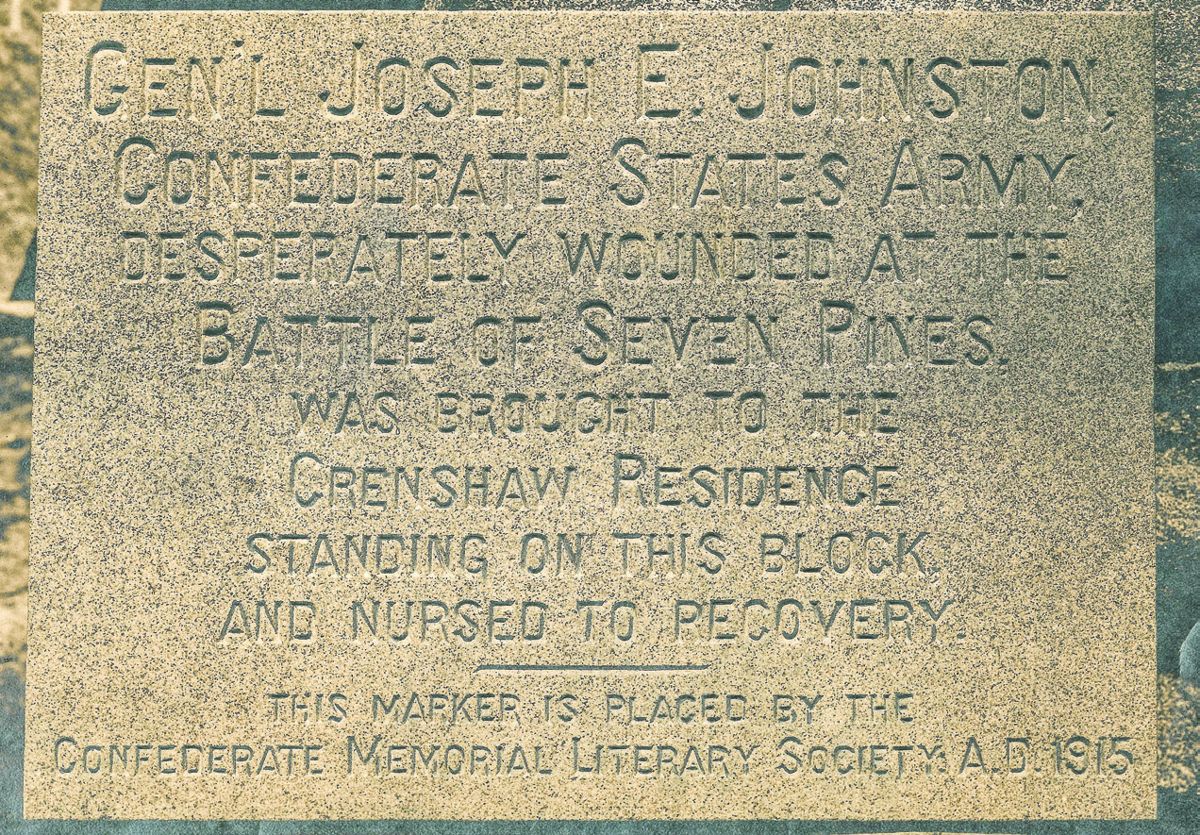
Fall and Rise at Seven Pines Although hundreds had fled Richmond by late May 1862, the commanding general and the Confederate president were determined to hold the line against Union advances. Rain had swollen the Chickahominy River and cut off two corps from McClellan’s army, a tempting situation for attack. As Gen. After his wounding at Seven Pines, Johnston’s staff took him to the home of Joseph H. Crenshaw in Richmond’s Church Hill neighborhood. Crenshaw was the brother of Lewis D. Crenshaw, whose home became the White House of the Confederacy. In 1915 the Museum’s parent organization, the Confederate Memorial Literary Society, dedicated a stone marker on the sidewalk where the Crenshaw house once stood (it was demolished in the 1880s). The stone tablet remains.
“Genl. J. E. Johnston is severely wounded,” Jefferson Davis wrote on June 2, 1862 to his wife, Varina, who had taken the family south to Raleigh, N. C. “The poor fellow bore his suffering most heroically.” Davis visited him the following day and also saw Johnston’s wife, Lydia. “They are at Mr. Crenshaw’s house on Church Hill. I offered to share our house with them, but his staff obtained a whole house and seemed to desire such arrangements.” He then added matter-offactly: “Genl. Lee is in the field comdg.”
Johnston pondered, McClellan’s army began to move. The Confederates needed to strike. Johnston biographer Craig L. Symonds observes that Johnston’s army needed “clear orders, an efficient staff, and cooperative subordinates.” Johnston’s orders, so clear in his own mind, had been misunderstood and reinter-
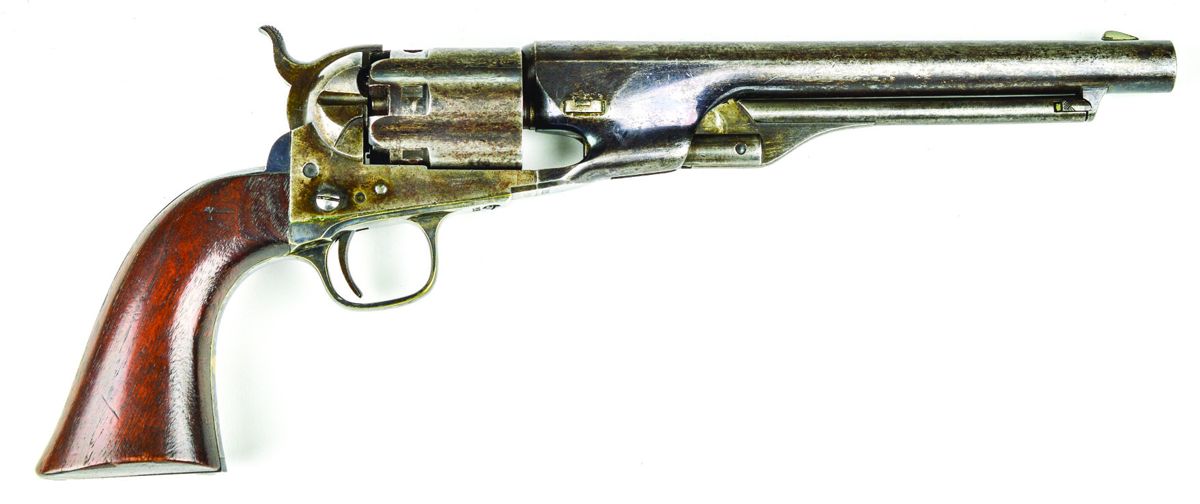
preted. Confederate troops were getting in each other’s way, and the attack on May 31 was hours late. Johnston had given Maj. Gen. Gustavus Smith’s brigades to Brig. Gen. W.H.C. Whiting. At loose ends, Smith had been shadowing Johnston at his headquarters most of the day; he was joined by Lee in the early afternoon. Around 4 p.m., President Davis rode out to join the onlookers. Johnston decided that headquarters was crowded and Whiting’s men needed his leadership. From the field around 6 p.m. Gen. Johnston gave orders for the men to sleep where they were and renew the fight on June 1. Just as the fight subsided, Johnston was wounded. A musket ball struck his shoulder and seconds later, a shell fragment wounded him seriously in the chest. Borne on a litter to relative safety, Johnston remained conscious. He asked for someone to retrieve his sword and pistols: “That sword was the one worn by my father in the Revolutionary War, and I would not lose it for $10,000.” Jefferson Davis rode to Johnston. “When he was about to be put into the ambulance to be removed from the field,” Davis later wrote to his wife, “I dismounted to speak to him, he opened his eyes smiled and gave me his hand.” On the afternoon of June 1, 1862, Davis asked Lee to take command of Johnston’s army. Johnston’s troops were famously devoted to him, but Lee gradually won their respect and confidence. In the following months, the Army of Northern Virginia became Lee’s army, body and soul.
East and West
Joseph Johnston recovered slowly. He followed the triumphal progress of his old army through its victories at the Seven Days, Second Manassas, and the capture of Harper’s Ferry. Even he realized that he had no chance of regaining his command. Instead in November 1862 he was given oversight of the Department of the West, an unwieldy super department between the Appalachian Mountains and the Mississippi River. Johnston despaired of the organization and his own fate. On hearing of Lee’s victory at Fredericksburg in Dec. 1862, he expressed disgust. “What luck some people have. Nobody will ever come to attack me in such a place.” In Dec. 1863 Davis gave
Johnston command of the Confederacy’s other major field army, the Army of Tennessee, and quickly made it his own. He won his soldiers’ affection by tending to their camp comforts and never heedlessly risking their lives. Falling back before Atlanta in 1864, as he had before Richmond in 1862, Johnston again fell out of favor with Jefferson Davis, who replaced him in July 1864 with Lt. Gen. John Bell Hood. Hood’s aggressive style failed to save Atlanta and led the Army of Tennessee to disaster in its namesake state. Davis turned to Johnston in Feb. 1865 to reconstitute the army and stop Maj. Gen. William T. Sherman’s relentless march northward through the Carolinas. With the Confederacy collapsing around them in April 1865, Lee and Johnston depended on each other for survival. As Lee led his Army of Northern Virginia west from Petersburg and Richmond, his last best hope was to link up with Johnston’s Army of Tennessee on the Virginia-North Carolina border. Lee’s surrender at Appomattox Court House left Johnston little choice but to negotiate the surrender of his own army to Sherman on April 26.
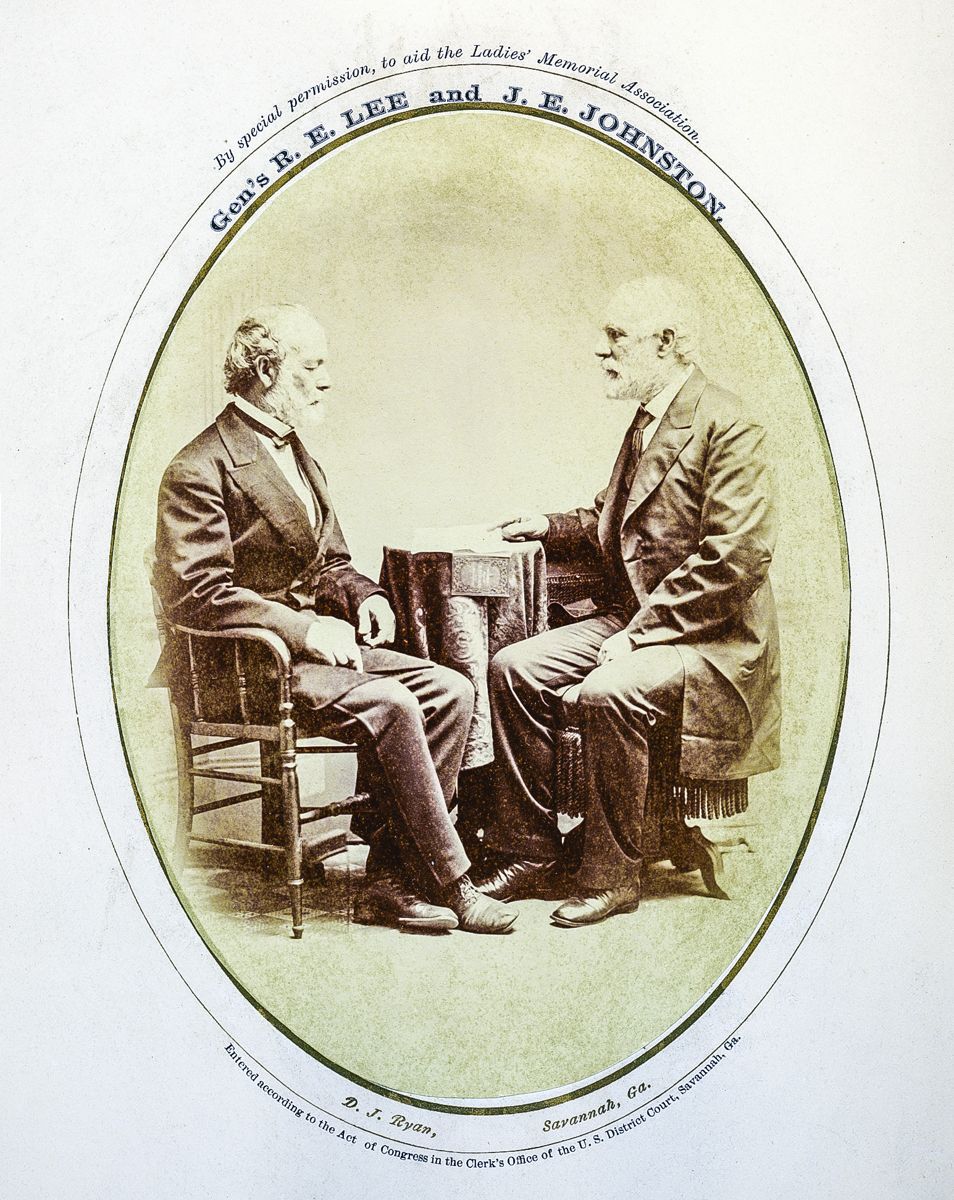
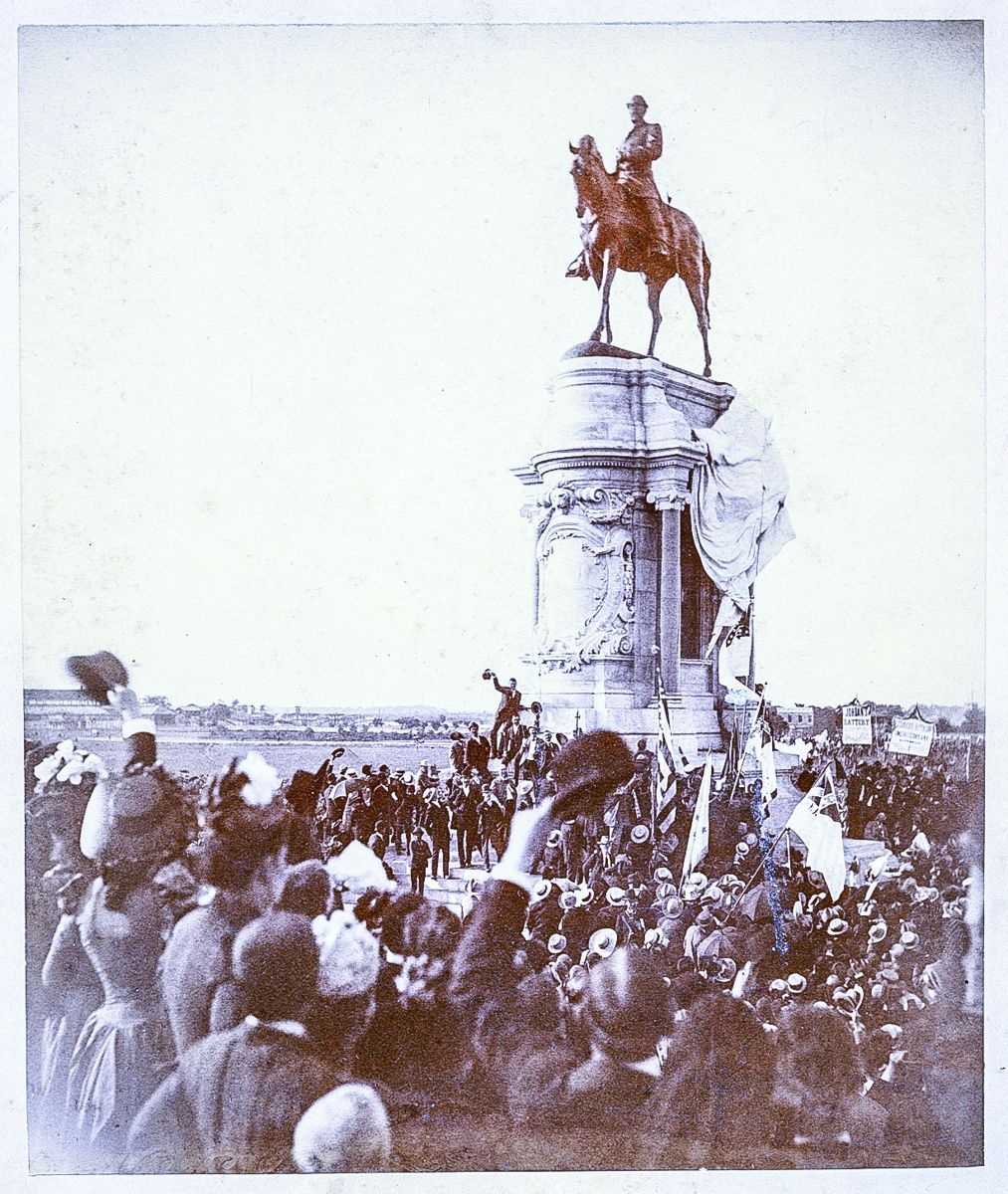
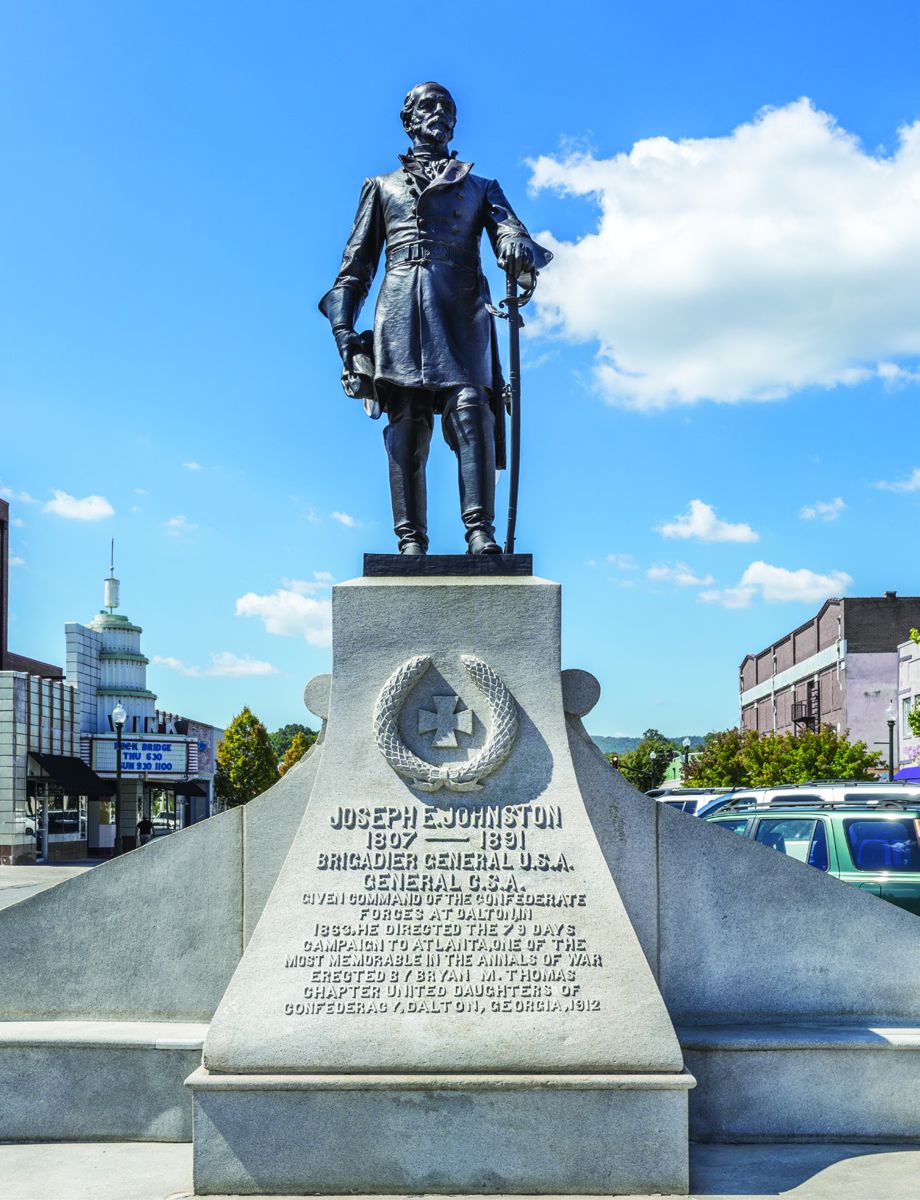
Old Warriors after the War The old warriors met only one more time, in Savannah, Ga., in April 1870, a few months before Lee’s death. Lee was president of Washington College in Lexington, Va.; Johnston was employed in Savannah as an agent for a London-based insurance company. Johnston later returned to Va. and served one term in Congress, then retired to his Washington, D.C., home in 1889. In his last years Lee avoided politics and advised other former Confederates to avoid controversy. He postponed writing his own memoirs to write a biography of “Light Horse Harry” Lee, burnishing his father’s tarnished reputation. Johnston published his contentious Narrative of the war in 1874, saving his worst invective for Jefferson Davis and John Bell Hood. The private’s son outlived the general’s son by more than 20 years, enjoying the bittersweet distinction of burying many former classmates, colleagues, and one-time enemies. Serving as an honorary pallbearer for W.T. Sherman in Feb. 1891, Johnston refused to cover his head, declaring that were the situation reversed, Sherman would do the same. Johnston died the next month. Months before he died, Johnston attended the unveiling of the equestrian monument of R. E. Lee in Richmond. Johnston’s former chief of staff, Archer Anderson, delivered the address and “old Joe” himself unveiled the statue. Although his war service was and remains controversial, Johnston inspired much loyalty among his troops; he received his own statue in Dalton, Georgia – where he had assumed command of the Army of Tennessee – in 1912. The Sons of Confederate Veterans dedicated another monument to him at Bentonville, North Carolina, in 2010. Nevertheless, it was in that moment at Seven Pines, in the waning daylight hours of May 31, 1862 when Johnston lost the command that could have brought him immortality. All images accompanying this article have been generously provided by the American Civil War Museum (unless otherwise designated). We call attention particularly to Jefferson Davis’ letter, which is among the Museum’s holdings. We thank Dr. John M. Coski, Historian at the Museum, for his assistance in arranging for Ruth Ann’s article to be reprinted in Civil War News.