The Art Of War
By Shannon Pritchard · Originally published March 2017 · p. 20
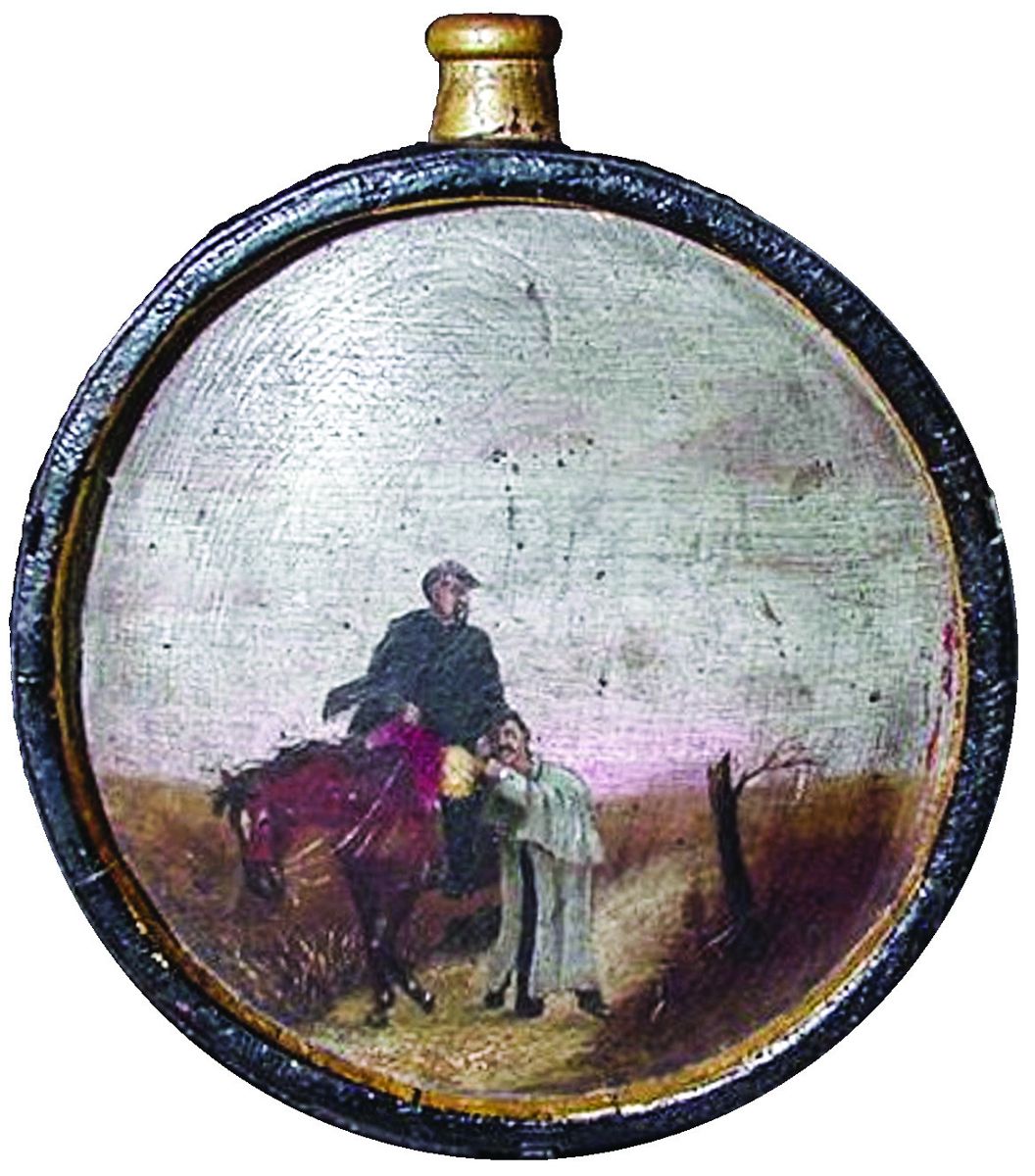
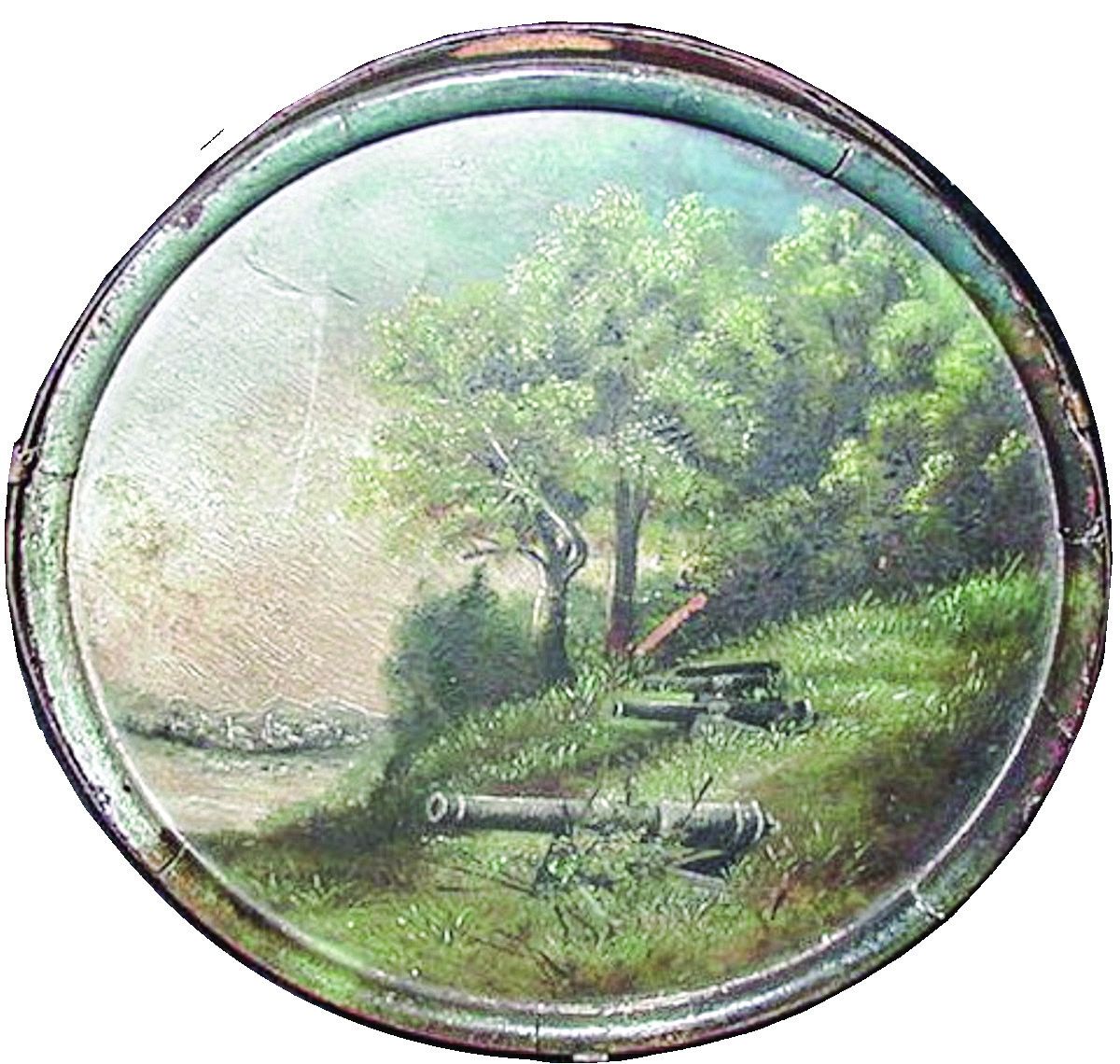
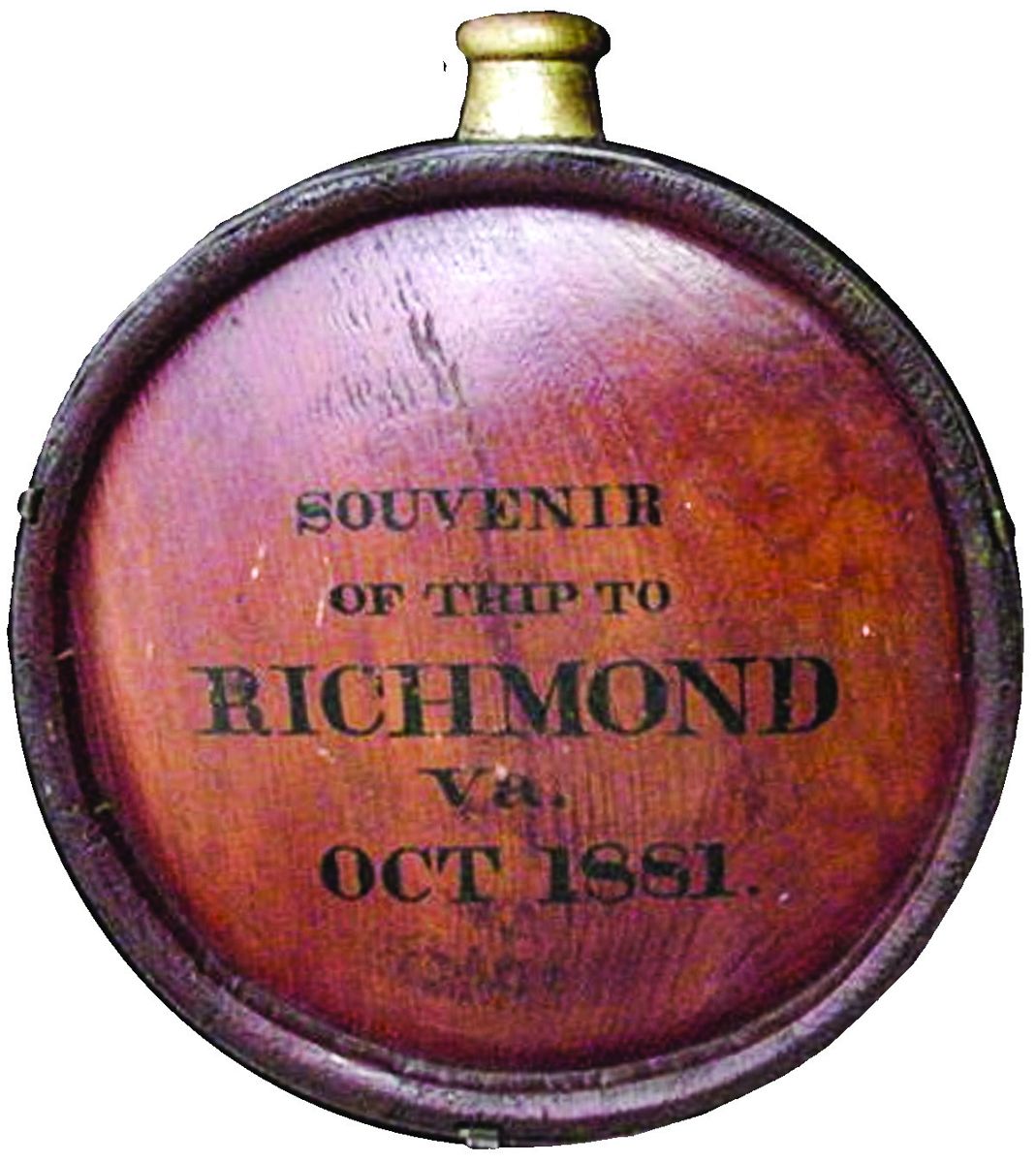
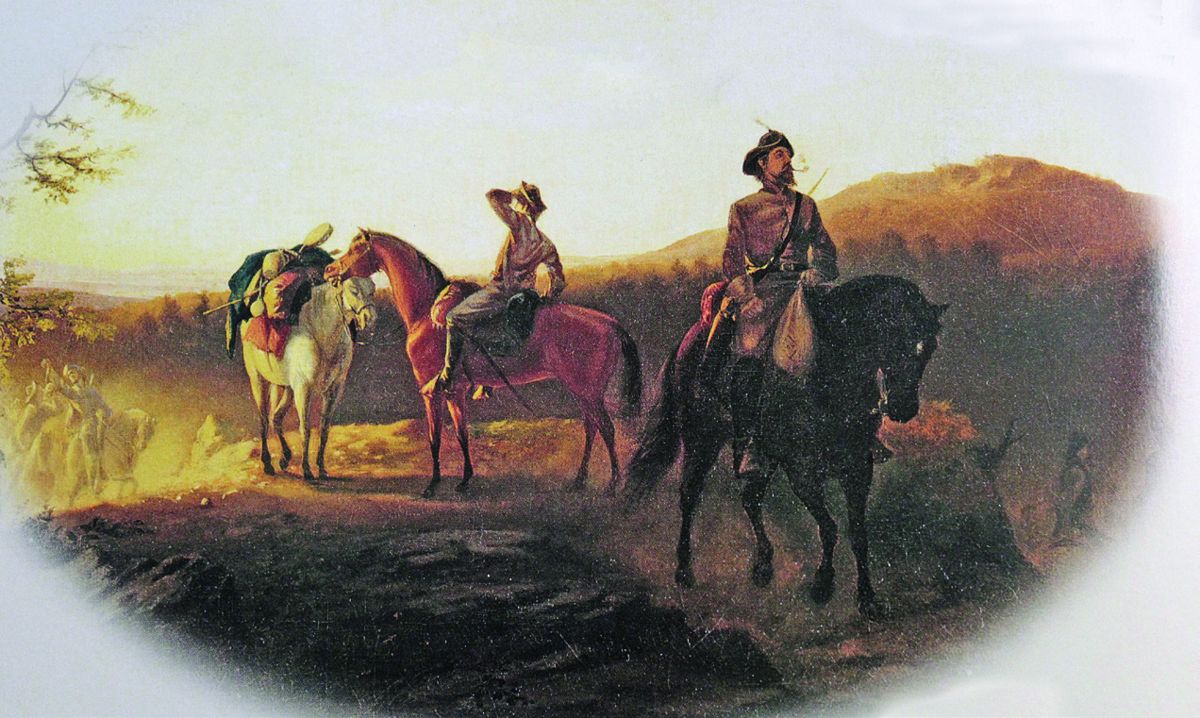
The first oil painted, Confederate wooden canteen shown here depicts a Confederate cavalryman wearing a grey kepi, an oilcloth raincoat, yellow pants and knee high riding boots. He is supporting his weary infantry companion who is wearing a grey jacket and dark pants under a full length grey greatcoat. The weary horse, rider, and infantryman are traveling through a war torn area in the rain; behind them, the sun is setting on the Confederacy. Both are unarmed and both have despairing countenances; the artist was depicting the road home after Appomattox. The painting is outlined in gold, which is still brilliant. The spout is also painted gold. The lettering on the reverse, “Souvenir of the trip to RICHMOND Va Oct. 1881”, gives great insight into the history of these painted canteens. Just above the date, lightly written in pencil is “Yorktown Centennial”. October 1881 was the centennial of Cornwallis’ surrender at Yorktown. In 1881, meetings of Confederate veterans were still very much frowned upon by the Federal government and evidently the veterans gathered in Richmond under the auspices of celebrating the centennial. At that gathering two prominent Confederate artists donated work to the ladies bazaar; one was Alan Shepard and the other John Adams Elder. Elder painted the first canteen shown here and later, it would be the model for one of his most famous works “After Appomattox” executed in 1886. The second painted canteen appears to depict the view from Bellona Arsenal toward the hills of Richmond overlooking heavy artillery and a prisoner of war camp at Belle Isle. Both canteens were painted by John Adams Elder in Richmond, which lends credence to my impression that the artillery scene is indeed Bellona. Another painted Confederate canteen exists that has a Yorktown related historic theme. It has a Ft. Wagner capture history written on one side in the same
Elder’s Appomattox sketch. gold paint and a painting of a Continental soldier on the opposite side which indicates that it was done at the same time and by same artist. The discovery of the dated and addressed canteen sheds light on other painted canteens. Since both were painted and sold as souvenirs of the trip to Richmond, it is likely that many surviving painted canteens adorned with a military scene were painted at the same time by the same artist. Shannon Pritchard has authored numerous articles relating to the authentication, care and conservation of Confederate antiques, including several cover articles and is the author of the definitive work on Confederate collectibles, the widely acclaimed Collecting the Confederacy, Artifacts and Antiques from the War Between the States, and Confederate Faces in Color.